
Security Contract Mobilisation Plan: 2026 Guide for Guarding Tenders
Learn how to write a high-scoring security contract mobilisation plan for UK guarding tenders, covering TUPE, SIA checks, rotas, site readiness, KPIs, Martyn’s Law and day-one assurance.
mytender.io Research Team
Procurement & Bid Writing Specialists
Security Contract Mobilisation Plan: 2026 Guide for Guarding Tenders
A security contract is not really won on award day. It is won again on day one, when the buyer sees whether the supplier can turn a tender promise into a safe, staffed, compliant service without drama. That is why mobilisation plans have become one of the most important sections in UK security services tenders.
For manned guarding, keyholding, patrols, reception security and public-facing estate protection, mobilisation is where risk concentrates. Officers may transfer under TUPE. Site keys, radios, patrol devices and access cards need to be controlled. Assignment instructions must be reviewed. SIA licence checks need to be complete. Rosters have to cover every post. The control room must know the estate. Client teams need confidence that nothing will be missed at handover.
Yet many bids still treat mobilisation as a generic timetable. They include a few dates, a kick-off meeting, some training and a promise that the supplier has mobilised similar contracts before. That is not enough in 2026. Public sector buyers are under more pressure to evidence value, manage supplier performance and avoid public service disruption. A thin mobilisation plan makes the bidder look risky, even when the underlying operation is strong.
This guide explains how to write a security contract mobilisation plan that evaluators can score highly. It covers the structure, evidence, TUPE approach, SIA and vetting checks, site readiness, technology, Martyn’s Law preparation, KPI baselining, social value mobilisation and day-one assurance. It is written for bid teams responding to local authority, NHS, education, housing, transport, FM and central government security tenders.
For broader context, pair this with our guides to security services tender writing, TUPE in public sector tenders, method statements, FM mobilisation plans and Martyn’s Law in FM and security tenders.

Security officers and bid managers reviewing a UK security services tender mobilisation plan
---
Why Mobilisation Carries So Many Marks
Security buyers are not only evaluating the future steady-state service. They are evaluating the transition risk between the incumbent arrangement and your proposed model. That risk is immediate, visible and operationally sensitive.
A failed mobilisation can mean uncovered shifts, confused officers, missing keys, untested alarm escalation, incomplete vetting records, poor incident handover, client complaints, union concerns, payroll errors or reputational damage. For a public building, hospital, university or housing estate, those failures are not minor admin issues. They affect safety and public confidence.
This is why mobilisation questions often carry 10-20% of the quality score, even when the word count looks modest. Evaluators are trying to answer five questions:
- Will this supplier understand the contract quickly enough?
- Can they protect service continuity during transfer?
- Do they have a realistic TUPE and workforce plan?
- Will the buyer have visibility of progress and risk?
- Is day-one readiness evidenced, not assumed?
The best mobilisation responses answer those questions directly. They do not hide behind experience. They show a controlled transition with owners, milestones, dependencies, risks, evidence and escalation routes.
---
Start With the Buyer’s Risk, Not Your Company History
A common mistake is opening the mobilisation answer with a paragraph about company scale, years of experience and national coverage. That may be true, but it does not address the evaluator’s concern. The evaluator wants to know how this specific site, workforce and service will be transitioned.
Start instead with the buyer’s outcome. For example: uninterrupted security cover, legally compliant workforce transfer, fully briefed officers, tested systems, verified access arrangements, live reporting and a stable first month. Then explain the plan that delivers those outcomes.
A strong opening makes the risk visible and controlled. It might say that mobilisation will be managed through a named mobilisation lead, a weekly tracker, workstream owners, a joint risk register, readiness gates and daily stabilisation checks after go-live. That tells the evaluator there is a system behind the promise.
The answer should also reflect the contract type. A 24/7 hospital guarding contract needs different emphasis from a civic office reception contract. A multi-site housing estate patrol contract needs different controls from a single university building. Tailoring is not decoration. It is evidence that you have understood where the transition could fail.
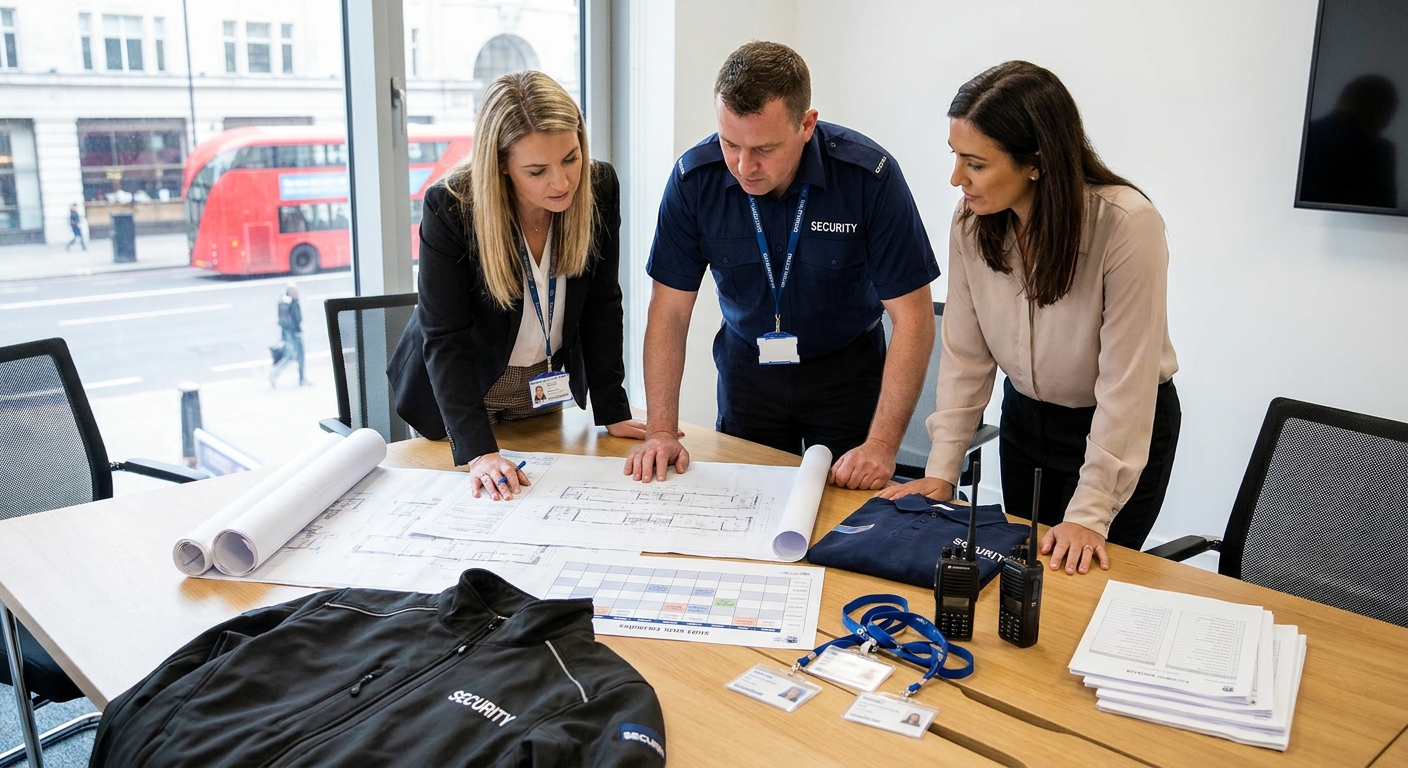
Security contract mobilisation planning with site maps, radios, rotas and access cards
---
The Mobilisation Plan Structure Evaluators Expect
Most security mobilisation plans should be built around phases. The exact timing depends on the notice period, contract size and TUPE complexity, but the structure is usually similar.
| Phase | Purpose | Evidence evaluators expect |
|---|---|---|
| Award to day 5 | Set governance and request information | mobilisation lead, kick-off meeting, risk register, data request log |
| Week 1-2 | Understand people, estate and contract detail | site surveys, ELI review, assignment instruction review, system requirements |
| Week 2-4 | Build the operating model | rota, relief plan, supervisor structure, training matrix, equipment plan |
| Final week | Prove readiness | dry run, access checks, control room test, officer briefings, client sign-off |
| Day one to day 30 | Stabilise and improve | daily issue log, KPI baseline, welfare calls, lessons learned review |
Use practical evidence. Mention a mobilisation tracker, a RACI matrix, a joint risk register, a document request schedule, a training matrix, a uniform and equipment log, an access pass register, a control room test record and a day-one readiness checklist. These are not glamorous, but they are exactly what evaluators need to trust the plan.
---
The Mobilisation Workstreams That Matter Most
A security mobilisation plan is easier to score when it is broken into workstreams. This stops the answer becoming a long timeline with no operational depth.
Governance and communications
Set out the mobilisation team. At minimum, include a mobilisation lead, contract manager, HR or TUPE lead, compliance lead, training lead, scheduling lead and control room contact. For larger contracts, add finance, IT, health and safety, fleet and social value roles.
Explain the communication rhythm. A good answer will usually include a mobilisation kick-off meeting, weekly progress meetings until final week, daily calls close to go-live, a shared issue log and clear escalation routes. The buyer should know who to call and how quickly issues will be answered.
TUPE and people transfer
If TUPE applies, treat it as a central workstream, not a footnote. Explain how you will receive and review employee liability information, issue measures communication, consult with affected employees, verify terms, check licences and right-to-work, assess training gaps and onboard people onto payroll and HR systems.
The tone matters. Officers may be anxious about transfer. A high-scoring answer shows empathy and structure: early communication, one-to-one meetings, welfare support, clear FAQs, protected terms and practical help with uniform, systems and reporting changes.
Compliance and vetting
Security mobilisation depends on compliance readiness. The plan should explain how SIA licence checks, BS 7858 screening where required, DBS checks where relevant, right-to-work verification, training status and site eligibility are confirmed before deployment.
Include exception handling. What happens if a transferring officer has an expiring licence? What if vetting records are incomplete? What if a role requires enhanced checks and they are not finished by go-live? The answer should show a reserve staffing plan that protects service continuity without compromising compliance.
Site survey and assignment instructions
A site survey should cover more than a walkaround. It should review access points, patrol routes, alarm panels, CCTV interfaces, lone working risks, key control, lock-up and unlock procedures, incident hotspots, emergency contacts, fire arrangements, public interface risks, welfare facilities and escalation routes.
Assignment instructions should then be updated and agreed. These are the operating manual for officers. If they are vague or out of date, mobilisation risk stays high.
Rostering and relief cover
Show how the rota will be built, tested and communicated. Include core officers, supervisors, relief officers, holiday cover, sickness cover and short-notice escalation. If you have a local relief pool, say how officers are selected and briefed for this contract. If the contract needs specialist competence, explain how relief staff will meet the same standard.
Equipment, uniform and systems
Security contracts depend on practical assets: radios, phones, body-worn cameras, patrol devices, NFC tags, keys, access cards, uniforms, PPE, occurrence books, reporting apps, lone worker devices and client portal access. The plan should list how these are procured, configured, issued, tested and recorded.
Control room and incident escalation
If a 24/7 control room supports the contract, mobilisation must include control room briefing. Operators need the site profile, officer contact list, escalation matrix, emergency contacts, alarm instructions, lone worker process and client notification rules. A control room test before go-live is a strong piece of evidence.
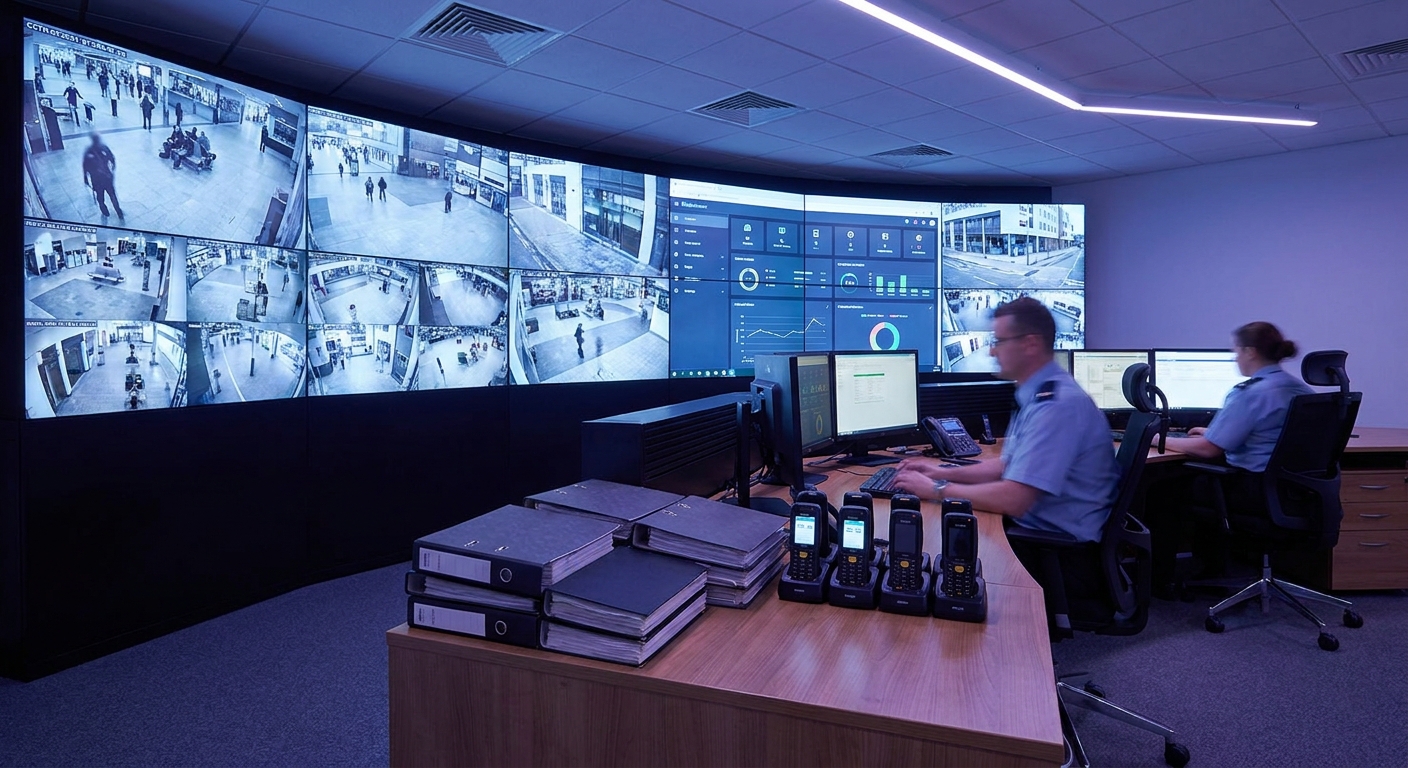
Security control room with CCTV, incident reporting and contract evidence dashboards
---
Writing the TUPE Section Without Creating Alarm
TUPE can make buyers nervous because it introduces legal, emotional and operational uncertainty. The way you write it should reduce that anxiety.
Do not simply state that you comply with TUPE legislation. That is a baseline. Evaluators want to see how compliance becomes a smooth transition.
A strong TUPE narrative covers four points.
First, legal and HR governance. Explain that the process is led by qualified HR support, based on accurate employee data and managed through clear consultation records.
Second, workforce reassurance. Explain how transferring officers will be contacted, what information they receive, how questions are answered and how you avoid rumours or confusion.
Third, operational continuity. Explain how officers are matched to posts, how licence and vetting checks are completed, how training gaps are closed, and how temporary cover is arranged if any individual cannot be deployed.
Fourth, buyer visibility. Explain what updates the buyer receives, without exposing confidential employee information. The buyer should know that the workstream is on track, but personal data must still be handled correctly.
Avoid aggressive language about replacing incumbent staff. Security is a relationship service. A respectful transfer plan signals maturity.
---
SIA, Vetting and Training Readiness
In a security tender, day-one readiness is impossible without compliance readiness. The mobilisation plan should show that no officer is deployed until the required checks are complete.
Useful evidence includes:
- SIA licence verification date and recheck schedule
- right-to-work confirmation
- BS 7858 screening status where required
- DBS status where relevant to the site
- site induction completion
- assignment instruction sign-off
- conflict management training
- safeguarding or vulnerable person awareness where required
- ACT awareness and counter-terrorism awareness where relevant
- first aid, fire, radio and incident reporting training
- lone worker and welfare process briefing
The strongest tender responses explain how this is tracked. A training matrix is better than a paragraph. A named owner is better than a vague promise. A readiness gate is better than hope.
For example, the plan can state that officers will not be rostered until mandatory checks are marked complete in the mobilisation tracker. That kind of control gives evaluators confidence.
---
Martyn’s Law and Protective Security Mobilisation
Martyn’s Law has made protective security preparedness more visible in public-facing estates. Mobilisation plans should not overclaim responsibility, but they should show that the security service will support the buyer’s arrangements.
During mobilisation, this may include reviewing emergency procedures, confirming evacuation and invacuation roles, briefing officers on suspicious activity reporting, updating incident escalation routes, testing emergency contacts, understanding lockdown procedures where relevant and aligning assignment instructions with the site’s protective security plan.
If the premises may fall into standard or enhanced tier planning, be careful with wording. The client or premises controller owns statutory duties. The security provider supports delivery through trained officers, reporting discipline, incident response, communication and practical site knowledge.
The tender response should show maturity: proportionate, calm and operational. Avoid dramatic language. Buyers want preparedness, not fear.
---
Technology Setup: Make the System Live Before Day One
Guard tour systems, incident reporting apps and client dashboards often sound good in a tender, then cause frustration if they are not configured properly before go-live. Mobilisation should include system setup as a distinct workstream.
Explain how patrol points are mapped, devices are configured, user permissions are created, officers are trained, exception alerts are tested and reports are agreed with the buyer. If the client needs access to a portal, include training or a walkthrough.
The answer should also explain data flow. If a patrol is missed, who receives the alert? If an incident is logged, when does the client see it? If an officer fails a lone worker check, what is the escalation? If trends emerge, who reviews them?
Technology only scores when it supports control. A mobilisation plan should prove it will be working before the first shift starts.

Digital compliance and KPI dashboard for SIA checks, vetting records and security patrol data
---
Day-One Readiness Checklist
A day-one readiness checklist is one of the simplest ways to strengthen a mobilisation answer. It turns promises into visible controls.
A good checklist covers:
- signed contract mobilisation plan
- named mobilisation lead and client contacts
- confirmed rota and relief cover
- completed SIA and right-to-work checks
- completed vetting checks where required
- site inductions completed
- assignment instructions signed by officers
- keys, passes and access cards issued and logged
- uniforms and PPE issued
- radios, phones and patrol devices tested
- control room briefed and tested
- emergency contacts verified
- incident reporting process live
- client reporting dashboard agreed
- payroll onboarding complete
- first week supervisor visits scheduled
- day-one check-in and end-of-shift review booked
For larger contracts, add a dry run. This may involve testing access routes, patrol checkpoints, alarm escalation, lock-up procedures, body-worn camera process and reporting templates before go-live. A dry run is powerful because it shows the buyer you intend to find issues before the public or staff experience them.
---
The First 30 Days: Stabilisation Is Part of Mobilisation
Mobilisation does not end at midnight on day one. The first month is where small issues surface. A good tender response explains how you will stabilise the contract.
The first 30 days should include daily contact during the first week, supervisor site visits, welfare checks with transferring staff, review of incident reports, patrol completion checks, client feedback, payroll issue monitoring, training gap closure and an end-of-month lessons learned review.
This period should also establish the KPI baseline. Do not wait for the first quarterly review to discover performance patterns. Use the first month to validate assumptions, adjust rotas, refine assignment instructions and agree any continuous improvement actions.
This is especially useful when the tender includes published performance or contract management expectations. A bidder who can show early visibility and correction looks safer than one who promises everything will be fine.
---
Mobilising Social Value Commitments
Social value is often written separately from mobilisation, but the two should connect. If your bid promises local recruitment, apprenticeships, veteran pathways, community safety engagement, Real Living Wage, wellbeing support or greener patrols, the mobilisation plan should show when those commitments start.
For example, local recruitment should have named channels and dates. Training pathways should have owners. Uniform recycling or electric vehicle deployment should be built into mobilisation assets. Officer wellbeing support should be introduced during transfer, not three months later.
This matters because social value commitments are increasingly contractual. They need owners, timelines and reporting methods from the start.
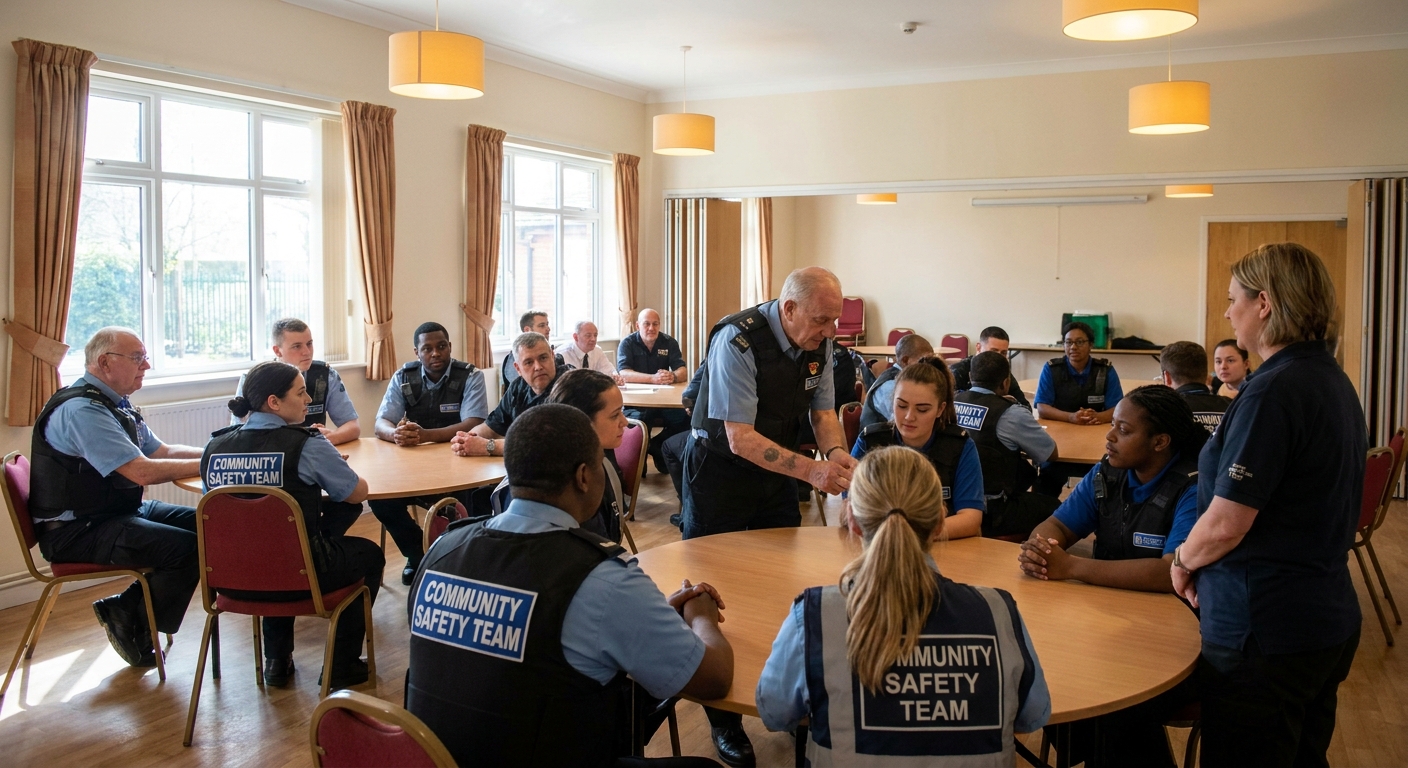
Security officers receiving inclusive workforce and community training for social value commitments
---
Common Weaknesses That Lose Marks
The most common weakness is a plan that is too generic. If the same mobilisation answer could be used for a cleaning contract, a catering contract and a guarding contract, it is not detailed enough.
The second weakness is missing dependencies. If you need employee data, site access, keys, system permissions or client approvals, say so. Evaluators know mobilisation is collaborative. They just need confidence that dependencies are identified and managed.
The third weakness is weak contingency planning. A credible plan explains what happens if employee data is late, officers decline transfer, vetting is incomplete, access cards are delayed or equipment fails.
The fourth weakness is treating systems as an afterthought. Reporting, patrol verification and control room escalation must be live before go-live.
The fifth weakness is not showing buyer visibility. Mobilisation should not feel like a black box. Include meetings, trackers, issue logs and sign-off gates.
---
How mytender.io Helps Bid Teams Write Better Mobilisation Plans
Mobilisation answers need input from operations, HR, compliance, training, finance and contract management. That is why they often become messy. Evidence sits in different folders. Old mobilisation plans are copied without checking whether they still match current practice. Tender writers chase subject matter experts too late.
mytender.io helps by breaking down the tender requirements, identifying the evidence needed for each answer and drafting from approved content rather than guesswork. A bid team can keep mobilisation templates, TUPE processes, training matrices, compliance certificates, KPI examples and case evidence in one place. The platform then helps turn that evidence into a tailored first draft that the operational team can review.
The result is not generic AI prose. It is a faster route to a structured, evidence-led answer that still needs human review, operational judgement and final sign-off. For security suppliers bidding repeatedly across frameworks and renewals, that repeatability matters.
---
Build a Mobilisation Risk Register Evaluators Can Trust
A risk register is one of the most useful mobilisation exhibits because it shows that the bidder is not pretending transition is risk-free. The trick is to make it practical. Do not include a generic corporate risk table with vague controls. Include the risks that genuinely affect security mobilisation.
Useful mobilisation risks include late employee liability information, incomplete vetting records, expiring SIA licences, officer reluctance to transfer, delayed access cards, missing keys, untested alarm escalation, poor patrol point placement, equipment delivery delays, client system access delays, inconsistent assignment instructions and first-week absence spikes.
For each risk, include likelihood, impact, owner, mitigation, contingency and reporting route. The owner matters. If every risk is owned by the mobilisation manager, the plan looks thin. HR should own TUPE data and consultation risks. Compliance should own vetting and licence risks. Operations should own rotas and relief cover. IT or systems should own reporting and device setup. The contract manager should own client communication.
A good risk register also shows trigger points. For example, if access cards are not issued five working days before go-live, the issue escalates to the client lead and temporary visitor access is agreed. If employee data is incomplete by a certain date, the HR lead creates a gap log and confirms which officers can safely be rostered. If patrol devices are delayed, paper patrol sheets and supervisor checks are used for the first 48 hours while the technology issue is resolved.
This kind of detail reassures evaluators because it sounds like real mobilisation, not bid theatre.
Show How Mobilisation Cost Is Funded
Mobilisation plans sometimes fail because the bid promises a high-touch transition but the commercial model does not fund it. Evaluators may not see the full cost build-up, but they can often sense when mobilisation is unrealistic.
If the tender allows a commercial narrative, explain how mobilisation is resourced. This can include dedicated mobilisation management time, HR and TUPE support, training delivery, supervisor site visits, uniform issue, equipment setup, system configuration, control room briefing and first-month stabilisation support.
You do not need to reveal confidential margin detail. You do need to show that the transition is not being delivered as an unfunded favour. In security, unfunded mobilisation usually means rushed induction, weak supervision, stressed officers and a messy first month.
Where pricing is tight, show efficiency without cutting control. For example, existing local supervisors may reduce travel time. A nearby relief pool may reduce recruitment risk. Existing control room infrastructure may reduce setup cost. A mature training platform may speed induction. Those are credible efficiencies. Simply saying you will absorb all mobilisation costs is less convincing unless the buyer can see how quality will be protected.
Include a Mini Case-Style Proof Point
Many tenders restrict named case studies, especially where security clients are sensitive. You can still include a short anonymised proof point if the ITT allows it.
A good proof point does not need confidential detail. It can say that you mobilised a multi-site public estate within six weeks, transferred officers under TUPE, completed licence and vetting checks before go-live, issued equipment ahead of day one and achieved full shift coverage during the first month. If you have numbers, use them carefully: number of sites, number of officers, mobilisation period, training completion rate, first-month shift fulfilment, incident reporting compliance or client review outcome.
The proof point should support the method. Do not drop it in as a marketing claim. Place it next to the mobilisation control it proves. If you are explaining TUPE, include a TUPE transfer proof point. If you are explaining system setup, include a patrol reporting proof point. If you are explaining first-month stabilisation, include KPI evidence.
This makes the answer feel experienced without overloading the evaluator.
Align the Plan With the Procurement Act Environment
The Procurement Act 2023 has pushed public sector procurement towards greater transparency, performance visibility and supplier accountability. Mobilisation plans should reflect that shift.
For security suppliers, this means avoiding promises that cannot be evidenced later. If you say all officers will complete a specific training module before deployment, your mobilisation plan should show how completion is recorded. If you promise monthly KPI reporting, the first-month plan should show when the baseline will be created. If you commit to social value outcomes, the mobilisation plan should show how those outcomes are launched and reported.
Buyers are increasingly alert to the difference between bid commitments and delivery commitments. A mobilisation response that translates promises into trackers, owners and reporting cycles is stronger because it shows the buyer how the contract will be managed after award.
This also protects the supplier. A disciplined mobilisation process reduces the risk of over-promising, missing a contractual commitment or creating a performance issue that later appears in contract management reviews.
Example 30-Day Security Mobilisation Timeline
A simple timeline can make a long mobilisation answer much easier to score. The exact dates will vary, but this example shows the level of detail evaluators expect.
Days 1-3: mobilisation kick-off, confirm governance, issue information requests, create mobilisation tracker, open risk register, agree meeting rhythm and confirm buyer dependencies.
Days 4-7: review employee liability information, complete initial TUPE risk review, schedule officer consultations, complete site survey, review assignment instructions and identify equipment requirements.
Days 8-14: verify SIA licence status, start or confirm vetting checks, build draft rota, identify relief officers, prepare training matrix, order uniforms and equipment, configure reporting systems.
Days 15-21: complete consultation meetings, finalise rota, deliver supervisor briefings, issue draft assignment instructions, map patrol points, test incident reporting, confirm control room escalation details.
Days 22-28: complete officer induction, issue uniforms and access equipment, test patrol devices, verify emergency contacts, complete dry run, close high-risk mobilisation actions and prepare readiness pack.
Days 29-30: hold readiness review with the buyer, confirm day-one cover, distribute final contact list, agree first-week meeting rhythm and complete mobilisation sign-off.
Days 31-60 after go-live: monitor daily issues, complete welfare checks, review KPI baseline, update assignment instructions if needed and agree first continuous improvement actions.
This type of timeline helps evaluators see that mobilisation has a beginning, middle and stabilisation period. It also shows that the bidder understands security mobilisation as a controlled project, not an admin handover.
---
Final Checklist Before Submission
Before submitting your mobilisation response, check that it answers these questions:
- Does it show the buyer’s specific transition risks?
- Does it name workstreams, owners and milestones?
- Does it explain TUPE clearly and respectfully?
- Does it prove SIA, vetting and training readiness?
- Does it include site survey and assignment instruction controls?
- Does it show rota, relief and contingency planning?
- Does it configure technology before day one?
- Does it test control room escalation and emergency contacts?
- Does it include a day-one readiness checklist?
- Does it cover stabilisation during the first 30 days?
- Does it connect social value commitments to mobilisation?
- Does the buyer have visibility through trackers and meetings?
If your answer passes that test, it will read like a controlled transition rather than a hopeful promise.
A strong security contract mobilisation plan gives evaluators what they need most: confidence. Confidence that officers will be ready. Confidence that the workforce will be treated properly. Confidence that systems will work. Confidence that risks will be surfaced early. Confidence that day one will feel boring, safe and under control.
That is what wins marks. In security, boring day-one delivery is not dull. It is the point.
Tags
Ready to Transform Your Tender Writing?
See how MyTender's AI can help you write winning tenders in a fraction of the time.