

Below-Threshold Tenders in 2026: How SMEs Can Win Smaller Public Contracts Without Wasting Bid Time
Below-threshold contracts are often the fastest route into public sector work for SMEs. This guide explains how to find them, qualify them, and write stronger short tender responses in 2026.
mytender.io Research Team
Tender Writing & Bid Management Specialists
Below-Threshold Tenders in 2026: How SMEs Can Win Smaller Public Contracts Without Wasting Bid Time
Smaller public contracts look easier than major tenders.
They are shorter. The values are lower. The buyer may ask for fewer documents. Sometimes the response window is tight enough to make the whole thing feel informal.
That is exactly why suppliers underestimate them.
Below-threshold tenders can be one of the best routes into public sector work for SMEs. They are also one of the easiest places to burn bid time on opportunities that were never really yours to win.
The trick is not to bid for everything. The trick is to build a fast, disciplined process that lets you spot the right smaller contracts, make a quick bid/no-bid call, and submit a response that feels more credible than the size of the opportunity suggests.

Small supplier bid team reviewing below-threshold public sector contract opportunities
What is a below-threshold tender?
A below-threshold tender is a public sector contract below the financial value that triggers the full set of Procurement Act rules for above-threshold procurements.
The exact threshold depends on the type of contract and the buyer. Goods and services, works, central government, sub-central authorities and utilities all have different limits.
For suppliers, the legal detail matters less than the practical effect.
Below-threshold contracts usually give buyers more flexibility. They may use simpler notices, shorter competitions, lighter documents and faster evaluation. They still need to treat suppliers fairly and spend public money properly, but the process is often less heavy than a large framework or strategic outsourcing tender.
That makes them attractive to SMEs.
You can use them to get a first public sector reference, build buyer familiarity, test a new sector, or win a tightly scoped piece of work without carrying the full bid burden of a seven-figure procurement.
Why below-threshold work matters more in 2026
The Procurement Act has pushed more procurement activity into public view.
Suppliers now have better ways to monitor upcoming opportunities, buyer notices and contract activity through the Central Digital Platform. At the same time, public buyers are under pressure to make procurement more accessible to SMEs and voluntary sector organisations.
That does not mean small suppliers suddenly have an easy ride.
It means the opportunity is more visible. Visibility increases competition.
A local facilities management company, niche software provider, consultancy, training provider or construction specialist can now find more relevant public sector work than before. So can every other supplier with a decent alerts setup.
The advantage goes to the supplier that responds faster without sounding rushed.That is the whole game.
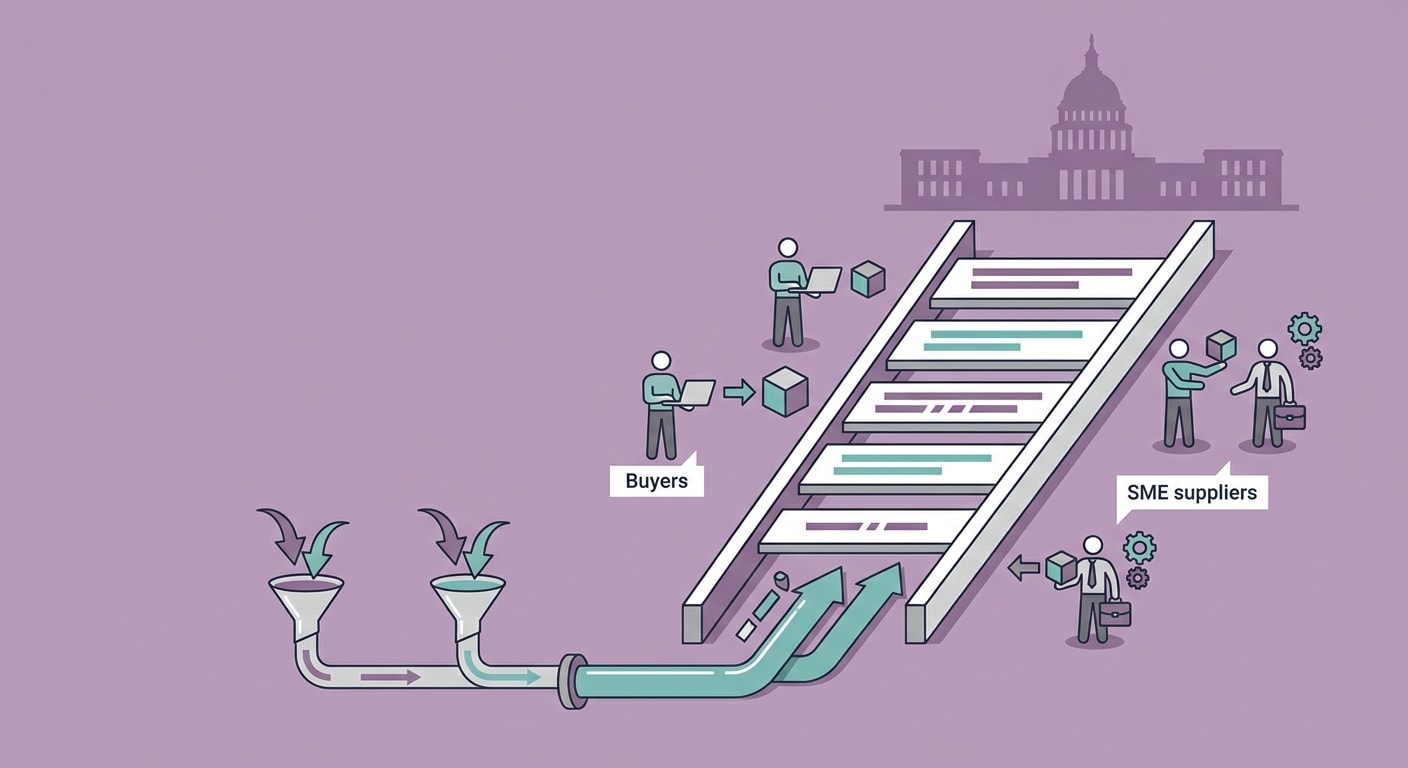
Procurement threshold ladder showing smaller public contracts becoming visible opportunities
The mistake SMEs make with smaller tenders
Most SME bid teams make one of two mistakes.
The first is treating every small public contract as worth a go. That feels proactive. It is usually just expensive optimism.
Even a short tender can take 8-20 hours once you include reading, qualification, internal chasing, pricing, writing, review and upload. If the buyer is not a fit, the incumbent is heavily favoured, or you cannot evidence the core requirement, that time is gone.
The second mistake is treating the response as a light admin task.
Because the tender is smaller, the team gives it to whoever has spare capacity. They reuse generic content. They answer the question but do not show enough evidence. They assume the buyer will understand their expertise from the website.
They will not.
Evaluators score what is in front of them. A smaller tender still needs a clear method, credible experience, risk control, deliverability and price logic.
The response can be concise. It cannot be lazy.
Where to find below-threshold opportunities
Start with the Central Digital Platform and any sector-specific portals your buyers use.
For many suppliers, the problem is not a lack of opportunities. It is noisy alerts. You get everything that vaguely matches your keyword, then waste time opening tenders that are too small, too far away, too specialist, already shaped around another supplier, or outside your delivery model.
Set alerts around buyer language, not just your internal service names.
A cleaning company should monitor cleaning, soft FM, building services, caretaking, janitorial, hygiene, washroom, planned maintenance and estate services if those terms match the work it can deliver.
A software company should monitor the problem it solves, not just the product category. Buyers may not search for your category name. They may describe workflow, case management, data migration, reporting, automation or compliance pain.
Then add geography, contract value, buyer type and deadline filters.
Your alert system should reduce noise, not create a second inbox nobody wants to open.
Build a fast qualification filter
Below-threshold tenders need a faster qualification process than major bids.
You do not need a two-hour strategy meeting for a £60,000 contract. You do need a consistent filter.
Use five questions:
- Can we deliver the requirement without stretching the business?
- Do we have direct evidence that matches the buyer's need?
- Is the contract value worth the bid effort and delivery risk?
- Can we produce a strong response before the deadline?
- Would winning this contract help us win the next one?
If the answer to two or more is no, walk away.
That sounds harsh. It is not. It protects your team from the slow leak of low-quality bidding.
The fifth question is the one many SMEs miss. A below-threshold contract can be valuable even if the margin is modest, but only if it creates a reference, sector credibility, buyer relationship or repeatable case study.
If it does none of that, it is probably just work.
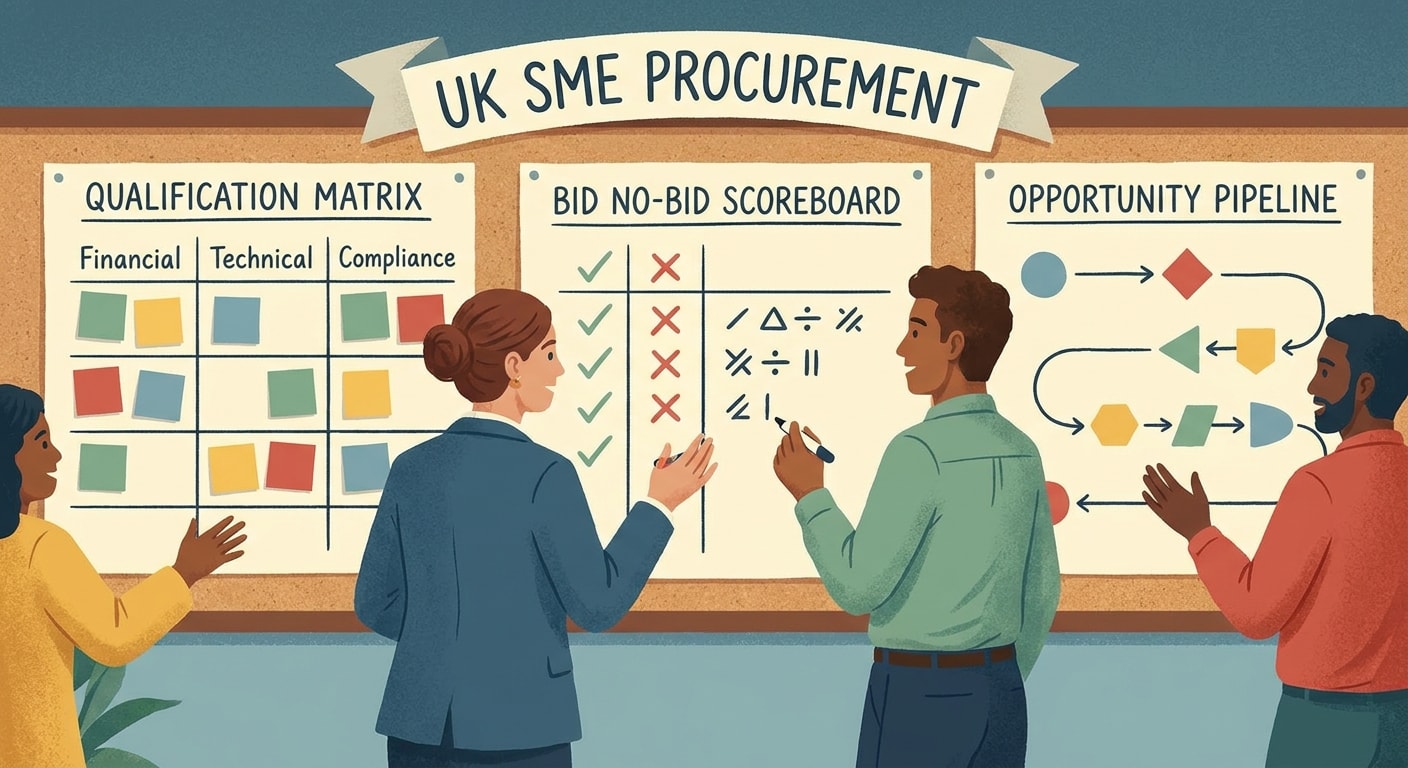
Bid no-bid scoring board for SMEs choosing which public sector tenders to pursue
What buyers look for in smaller contracts
Below-threshold does not mean low standards.
Public buyers still want confidence. They want to know you understand the requirement, can mobilise quickly, will not create contract management headaches, and have priced the work properly.
In smaller competitions, evaluators often reward clarity more than polish.
They do not want a 40-page essay. They want the answer to the question, backed by enough evidence to trust it.
That means your response should make four things obvious:
- what you will do
- who will do it
- when it will happen
- how the buyer will know it is working
If a section does not support one of those four points, cut it.
Prepare the evidence before the tender lands
The fastest SME bid teams do not start from a blank document.
They maintain a small evidence pack that can be updated every month. It does not need to be complicated. In fact, if it becomes complicated, people stop using it.
Your below-threshold evidence pack should include:
- two or three relevant case studies
- insurance certificates
- core policies and accreditations
- standard mobilisation plan
- named team profiles
- health and safety evidence
- social value examples
- quality assurance process
- complaints and escalation process
- simple contract performance metrics
Keep each item short and current.
A buyer does not need your full corporate history for a small contract. They need proof that you have done similar work, controlled similar risks and delivered for similar customers.

Tender evidence pack with policies, case studies and contract documents ready for a short public sector response
Write shorter answers with sharper evidence
A short response is not a compressed long response.
It needs a different style. Lead with the answer. Then give the evidence. Then explain the control.
For example, if the buyer asks how you will mobilise within four weeks, do not begin with your company background.
Start with the plan:
"We will mobilise the contract in four weeks using a four-stage process: handover, resource confirmation, site setup and go-live assurance. The contract manager will own the mobilisation plan and report progress to the buyer twice weekly until go-live."
Then add proof:
"We used the same approach for a multi-site contract in 2025, moving from award to live service in 19 working days with no missed service dates."
Then add control:
"The mobilisation tracker covers people, equipment, access, risk assessments, reporting and escalation. Any red item is reviewed within 24 hours by the operations lead."
That is much stronger than three paragraphs about being committed to smooth mobilisation.
Use buyer language, not brochure language
Brochure language kills small tenders.
Phrases like innovative, customer-focused, high-quality and best-in-class do not help unless they are attached to something specific.
Use the buyer's own wording instead.
If the notice talks about rapid response, write about response times, escalation routes and evidence of meeting call-out targets.
If it talks about vulnerable service users, write about safeguarding, training, continuity of staff and communication.
If it talks about value for money, write about cost control, waste reduction, right-first-time delivery and contract management.
This is where AI can help if it is used properly. A tool like mytender.io can break down the tender documents, extract the buyer's priorities, and draft responses against the actual scoring criteria.
Generic AI will often make the prose smoother. That is not enough. You need the response to be structured around evaluation.
Price the contract like you expect to deliver it
Smaller tenders tempt suppliers into casual pricing.
That is dangerous.
If you underprice a below-threshold contract to win a first public sector reference, you may end up with a loss-making contract that damages delivery and weakens your case study. If you overprice it because you have not understood the scope, you lose before quality is read.
Build a simple pricing note for internal use.
It should cover labour, management time, materials, travel, subcontractors, mobilisation, reporting, risk allowance and margin. It should also flag assumptions.
Even if the buyer only sees the final price, your internal pricing logic will improve the response. You will write with more confidence because you know exactly how the service will be delivered.
Make social value proportionate
Social value still matters in smaller public contracts, but proportion matters.
Do not promise a full apprenticeship programme for a small, short contract unless you can genuinely deliver it. Evaluators can smell fantasy.
Better commitments are often smaller and more local:
- advertising vacancies locally
- offering work experience linked to the contract
- using local suppliers where practical
- providing staff training that improves service quality
- volunteering a small number of skilled hours
- reporting on local employment and spend
The test is simple: could you report this commitment during contract management without embarrassment?
If not, rewrite it.
Turn every small bid into reusable learning
The best reason to bid for below-threshold contracts is not just the contract itself.
It is the learning loop.
Every smaller tender can improve your bid library, your qualification process and your market understanding. After each submission, record what changed:
- Which buyer language appeared?
- Which evidence was missing?
- Which answers took too long?
- Which policies were out of date?
- Which questions keep repeating?
- What would make the next response faster?
This is how a small supplier builds bid maturity without hiring a full bid team.
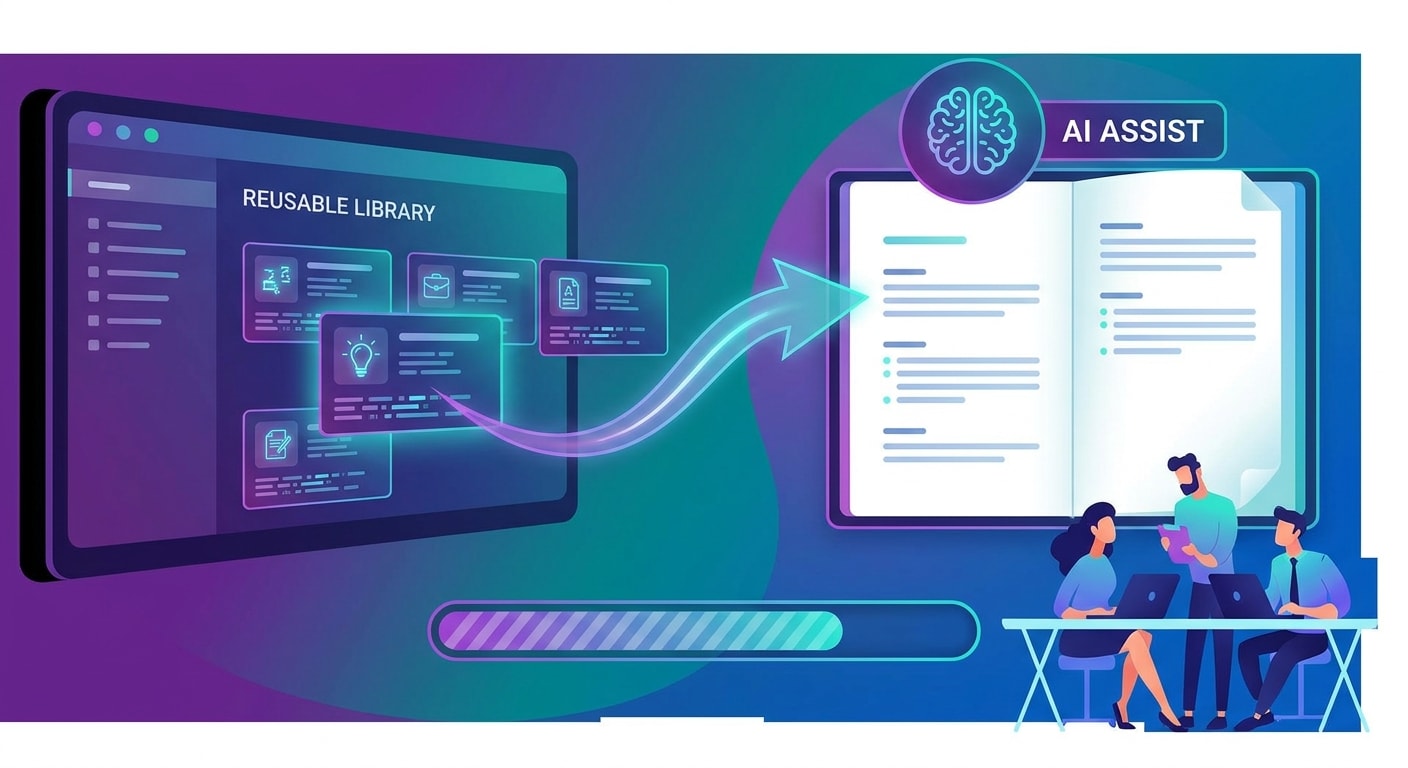
Reusable bid library workflow turning tender documents into stronger public sector responses
A simple below-threshold tender workflow
Here is the workflow I would use for most SME teams.
Day 1: qualify hard. Read the notice, documents and scoring criteria. Make the bid/no-bid call the same day. Day 2: map the response. Create the answer plan, evidence list, owners and pricing assumptions. Days 3-4: draft quickly. Use your bid library, case studies and tender breakdown to produce a complete first draft. Day 5: review for scoring. Check every answer against the question and evaluation criteria. Remove fluff. Day 6: final checks. Proofread, check attachments, confirm declarations and upload early.For very short deadlines, compress the timeline. Do not skip qualification or final checks. Those are the two places where rushed bidders lose marks.
How mytender.io helps SMEs respond faster
Below-threshold tenders are a perfect fit for AI-supported bidding because speed matters, but accuracy still wins.
mytender.io helps bid teams analyse tender documents, identify requirements, build first drafts from previous content and keep responses aligned to the buyer's criteria.For SMEs, the biggest benefit is not replacing judgement. It is removing the blank-page work that slows everything down.
Your team still decides whether to bid. Your subject matter experts still check the truth. Your commercial lead still owns the price.
But the platform helps you move from tender documents to a structured draft in minutes rather than days. That matters when the deadline is close and everyone already has a day job.
The bottom line
Below-threshold tenders are not small because they are unimportant.
They are small because the contract value sits below a formal threshold. For the right SME, they can become the first public sector reference, the warm-up before a framework, or the proof point that opens a larger account.
But only if you treat them properly.
Find them early. Qualify them hard. Prepare your evidence before the clock starts. Write short answers with real proof. Learn from every submission.
That is how smaller contracts become a serious growth channel, not just another drain on bid time.
Tags
Ready to Transform Your Tender Writing?
See how MyTender's AI can help you write winning tenders in a fraction of the time.