

Lifecycle Costing in Construction and FM Tenders: The Complete 2026 Guide to Winning Long-Term Value Contracts
Master lifecycle cost analysis for construction and facilities management tenders. Learn DBOM strategies, MAT evaluation criteria, and how to demonstrate total cost of ownership under the Procurement Act 2023.
mytender.io Team
Construction & FM Procurement Specialists
In 2026, the construction and facilities management sectors are witnessing a fundamental shift in how public sector contracts are evaluated and awarded. The implementation of the Procurement Act 2023 has accelerated a transformation that was already underway: the move from selecting suppliers based purely on initial capital costs to choosing partners who can demonstrate the lowest total cost of ownership across a facility's entire lifecycle.
This shift from "cheapest upfront" to "best long-term value" represents both a challenge and an opportunity for contractors, consultants, and FM providers. Those who master lifecycle cost analysis (LCCA) and can articulate comprehensive value propositions are winning contracts worth millions, whilst competitors still focused on competitive pricing alone are increasingly left behind.
This comprehensive guide explains everything you need to know about lifecycle costing in construction and facilities management tenders for 2026, including practical strategies for demonstrating value, building compelling proposals, and aligning your approach with the new Most Advantageous Tender (MAT) evaluation framework.
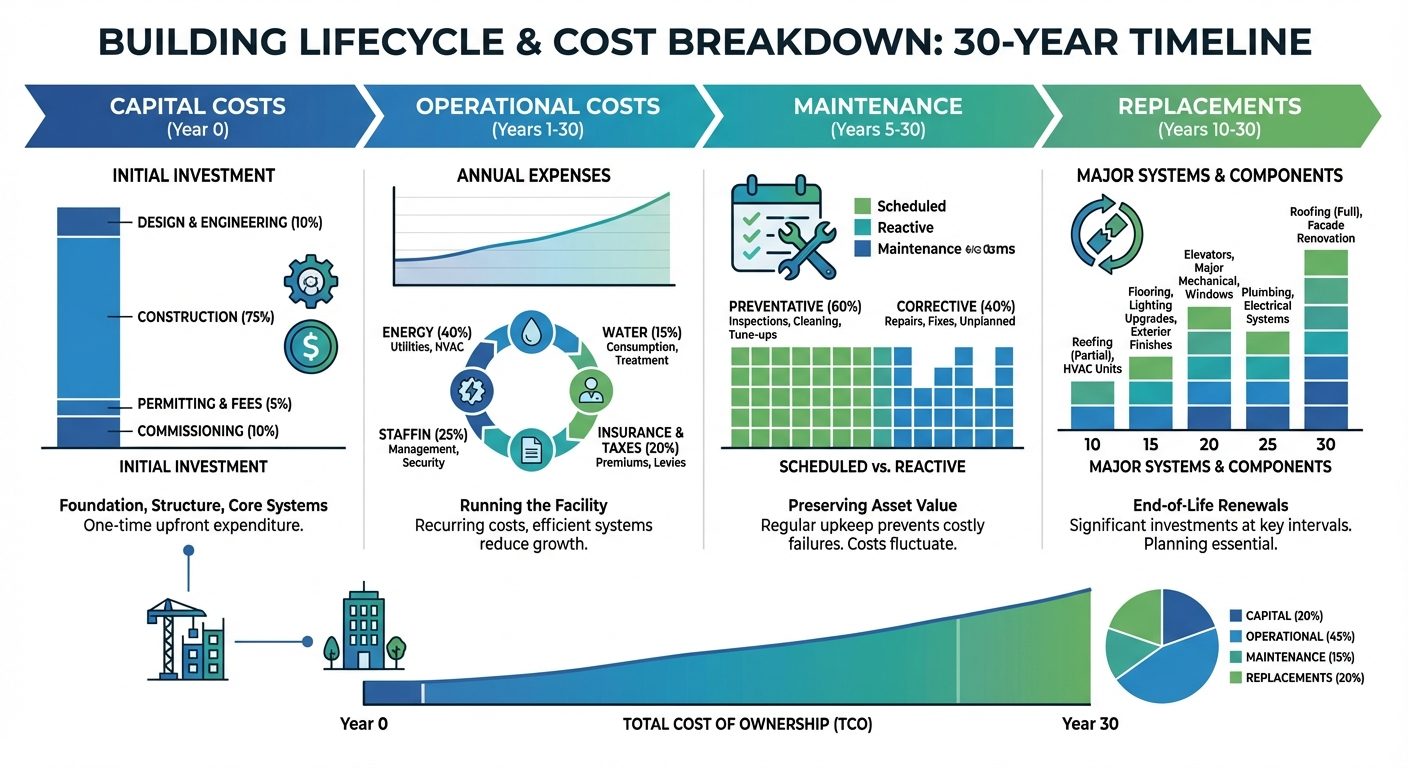
Building lifecycle cost timeline showing capital costs, operational expenses, and maintenance over 30 years
Understanding Lifecycle Cost Analysis: Beyond the Initial Price Tag
Lifecycle cost analysis represents a fundamental change in procurement thinking. Rather than selecting the bidder with the lowest construction or installation cost, contracting authorities now evaluate the total financial impact of a facility from inception through to eventual decommissioning or disposal.
The traditional approach focused narrowly on capital expenditure. A client would issue a tender for a new school building, receive bids ranging from £8 million to £12 million, and typically award to the £8 million option, assuming they were getting good value. This approach ignores a critical reality: construction costs typically represent only 20-30% of a building's total lifecycle costs over a 30-40 year operational period.
The remaining 70-80% comprises operational costs (heating, cooling, lighting, water), maintenance and repairs, periodic replacements of major systems, adaptations to changing needs, and eventual demolition or repurposing. A building that costs £8 million to construct might generate £35 million in operational and maintenance costs over its lifetime, whilst a £10 million building with superior energy efficiency, robust materials, and maintainability features might only cost £22 million to operate over the same period.
When viewed through this lens, the "expensive" option actually delivers £11 million in savings—a compelling proposition that lifecycle costing makes visible to decision-makers.
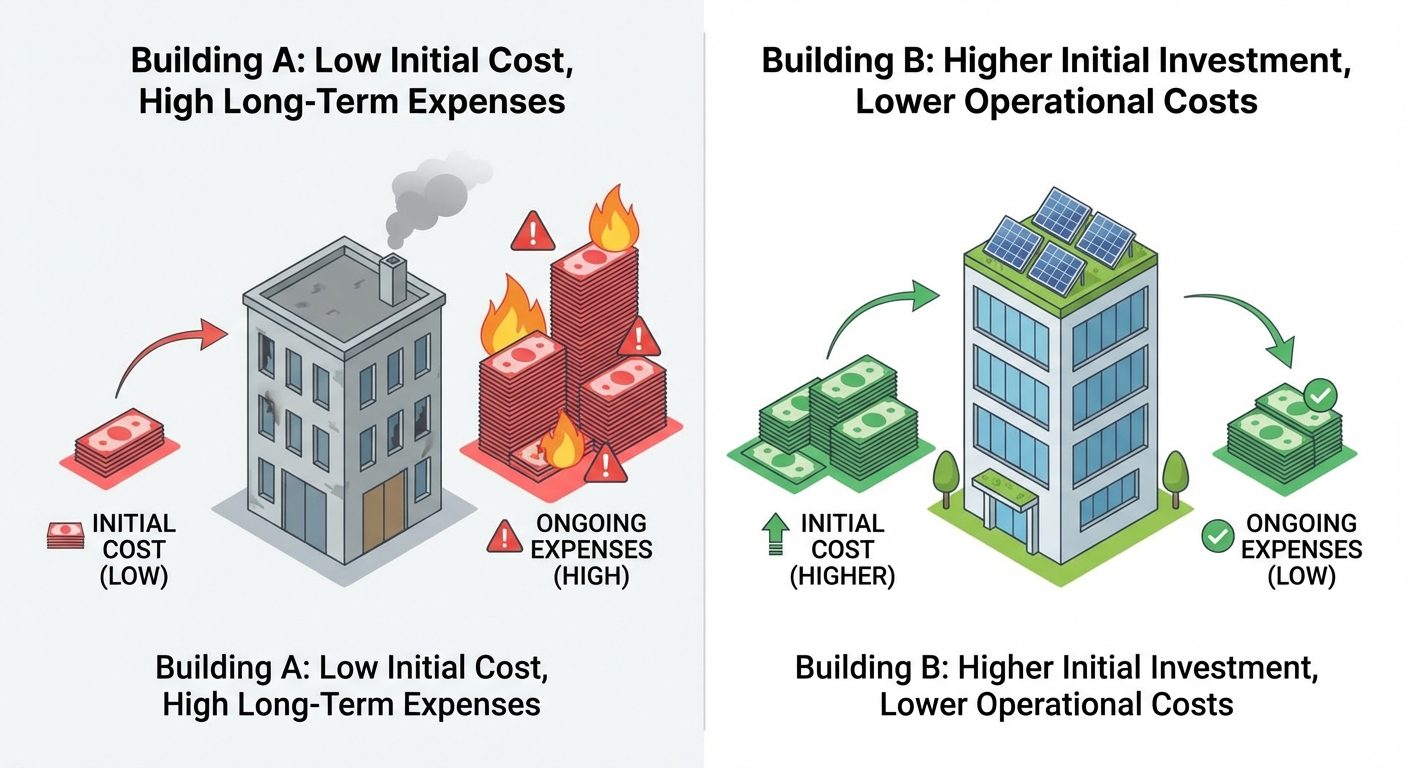
Comparison diagram showing low initial cost vs high lifecycle cost versus high initial investment with low lifecycle cost
The Procurement Act 2023 and the MAT Framework
The Procurement Act 2023, which came into full effect in February 2025, formalises this shift through its introduction of the Most Advantageous Tender (MAT) evaluation framework, replacing the previous Most Economically Advantageous Tender (MEAT) approach.
Whilst MEAT technically allowed for broader considerations beyond price, in practice it often defaulted to cost-focused evaluation. MAT explicitly requires contracting authorities to consider "best value" holistically, encompassing economic, social, and environmental factors throughout a contract's lifecycle.
For construction and facilities management contracts specifically, this means procurement teams are now obligated to assess total cost of ownership rather than simply comparing initial quotes. They must evaluate energy efficiency projections, maintenance schedules, replacement cycles, operational flexibility, environmental impact, and long-term reliability when making award decisions.
This legislative change levels the playing field for contractors and FM providers who invest in quality, sustainability, and innovation but historically struggled to compete with low-ball bids focused solely on construction costs. It rewards those who can demonstrate genuine long-term value through robust lifecycle costing methodologies.
Key Components of Lifecycle Cost Analysis in Construction FM Tenders
A comprehensive lifecycle cost analysis for construction and facilities management tenders should encompass several critical cost categories, each requiring careful estimation and robust supporting evidence.
Capital costs form the foundation—the initial expenditure to design, construct, or install the facility or system. This includes professional fees, construction labour and materials, equipment procurement, commissioning, and project management. Whilst these are the most visible costs, they're also the most straightforward to calculate with reasonable accuracy. Operational costs represent the ongoing expenses of running a facility day-to-day. Energy consumption for heating, ventilation, air conditioning, lighting, and equipment typically dominates this category. Water usage, waste management, security services, cleaning, and routine consumables also contribute significantly. For a typical commercial building, energy costs alone can exceed the original construction cost within 10-15 years of operation. Maintenance and repair costs cover both planned preventative maintenance and reactive repairs. This includes regular servicing of mechanical and electrical systems, building fabric maintenance, grounds upkeep, and equipment repairs. Deferred maintenance can dramatically increase costs down the line, making realistic maintenance budgeting crucial to accurate lifecycle costing. Replacement and refurbishment costs account for the periodic renewal of major building components that wear out before the facility's end of life. Roofing typically needs replacement every 20-25 years, mechanical systems every 15-20 years, interior finishes every 10-15 years, and IT infrastructure every 5-7 years. These significant periodic expenses must be factored into long-term cost projections. Adaptation costs reflect the reality that building uses change over time. Offices need reconfiguring, schools require additional classrooms, hospitals expand departments. Facilities designed with flexibility and adaptability reduce the costs of inevitable changes, whilst rigid designs require expensive alterations. Environmental and social costs are increasingly important under the MAT framework. Carbon emissions carry both direct costs (carbon pricing, energy costs) and indirect costs (reputational risk, regulatory compliance). Social value considerations—local employment, apprenticeships, community engagement—now factor into tender evaluation with a minimum 10% weighting in many public sector contracts. Disposal costs at end of life include demolition, materials disposal or recycling, site remediation, and potentially costs associated with relocating operations. Design decisions made during construction significantly impact these eventual costs.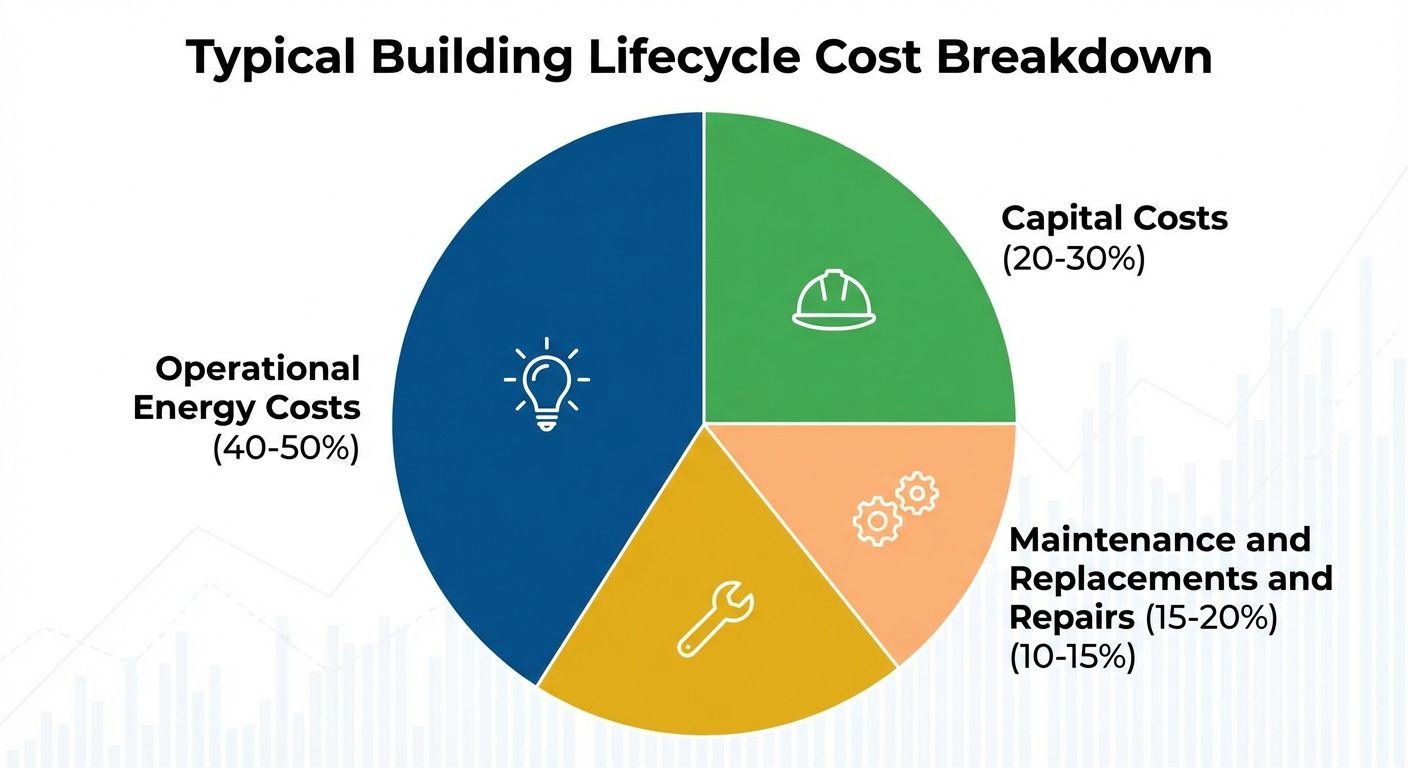
Pie chart showing typical building lifecycle cost breakdown by category
DBOM Contracts: Integrating Design, Build, Operate, and Maintain
One procurement model that naturally aligns with lifecycle costing is Design-Build-Operate-Maintain (DBOM), which integrates all phases of a facility's lifecycle under a single contract with one delivery partner.
In a DBOM arrangement, the contractor takes responsibility not just for designing and constructing the facility, but also for operating and maintaining it over a defined period—typically 20-30 years. This model creates powerful incentives for lifecycle thinking because the design and construction decisions the contractor makes directly impact their own operational costs for decades to come.
If the contractor installs cheap HVAC systems that fail frequently, they bear the cost of repairs and replacements. If they design a building envelope with poor thermal performance, they pay higher energy bills. Conversely, investments in quality materials, energy-efficient systems, and maintainability features reduce their own long-term costs whilst delivering better value to the client.
DBOM contracts are awarded through competitive tendering processes where bidders submit a single lifecycle price covering design, construction, and a defined period of operation and maintenance. This makes comparing total costs straightforward whilst incentivising innovation in design and construction approaches that reduce whole-life costs.
For contractors bidding on DBOM opportunities, success depends on demonstrating expertise across all phases. Your design team must work closely with operations and maintenance specialists to ensure buildability and maintainability. Your cost estimators need robust data on operational performance and maintenance requirements. Your proposal must articulate how specific design choices reduce lifecycle costs and deliver better long-term outcomes.
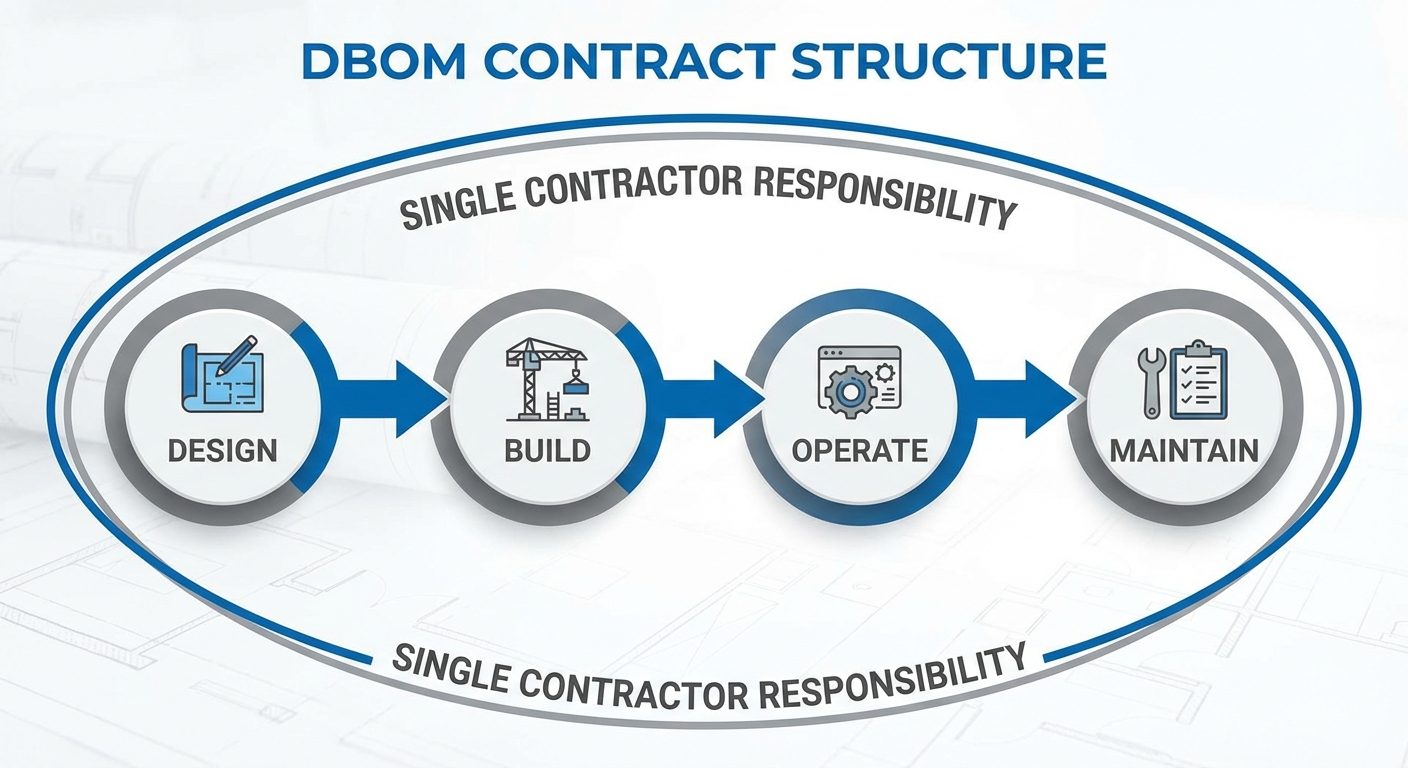
DBOM contract structure flowchart showing Design, Build, Operate, and Maintain phases with single contractor responsibility
Demonstrating Lifecycle Value in Your Tender Response
Winning construction and facilities management tenders in the MAT era requires more than simply stating that your solution offers good lifecycle value. You must provide clear, credible, evidence-based analysis that allows evaluators to compare your total cost of ownership against competitors.
Start with clear baseline assumptions that evaluators can verify and understand. Specify your assessment period (typically 25-30 years for construction projects, 5-10 years for FM contracts), discount rate (usually 3-6% for public sector projects), inflation assumptions for different cost categories, and any exclusions or limitations in your analysis. Transparency builds credibility and allows fair comparison. Break down costs into clear categories matching the structure outlined above. Don't simply provide a single total lifecycle cost figure—show capital costs, annual operational costs, periodic replacement costs, and other categories separately. This allows evaluators to verify individual assumptions and understand where your solution delivers savings. Provide robust evidence for all claims. If you assert that your proposed HVAC system uses 30% less energy than alternatives, provide manufacturer performance data, case study evidence from similar installations, modelling results from recognised software, and third-party verification where possible. Unsubstantiated claims damage credibility and rarely survive evaluation scrutiny. Use recognised methodologies and tools. Industry-standard approaches like ISO 15686-5 for lifecycle costing, RICS NRM for cost planning, BREEAM or LEED for environmental performance, and BIM for lifecycle information management demonstrate professionalism and allow evaluators to have confidence in your analysis. Where possible, use tools or software the client recognises and trusts. Include sensitivity analysis showing how your lifecycle costs change under different scenarios. What if energy prices rise faster than assumed? What if occupancy rates change? What if maintenance intervals need shortening? Demonstrating that your solution remains advantageous across a range of realistic scenarios strengthens your proposal significantly. Clearly articulate your value proposition in simple, accessible language before diving into technical detail. Open your lifecycle costing section with an executive summary stating: "Our solution delivers £X million in lifecycle savings over Y years compared to conventional approaches through: Z% energy reduction, improved maintenance efficiency, and extended component life." Then provide the detailed evidence. Connect lifecycle costs to MAT evaluation criteria. If the tender specifies weightings for cost (40%), sustainability (20%), social value (10%), and innovation (10%), structure your lifecycle analysis to address each criterion explicitly. Show how lifecycle thinking delivers benefits across all evaluation areas, not just initial cost.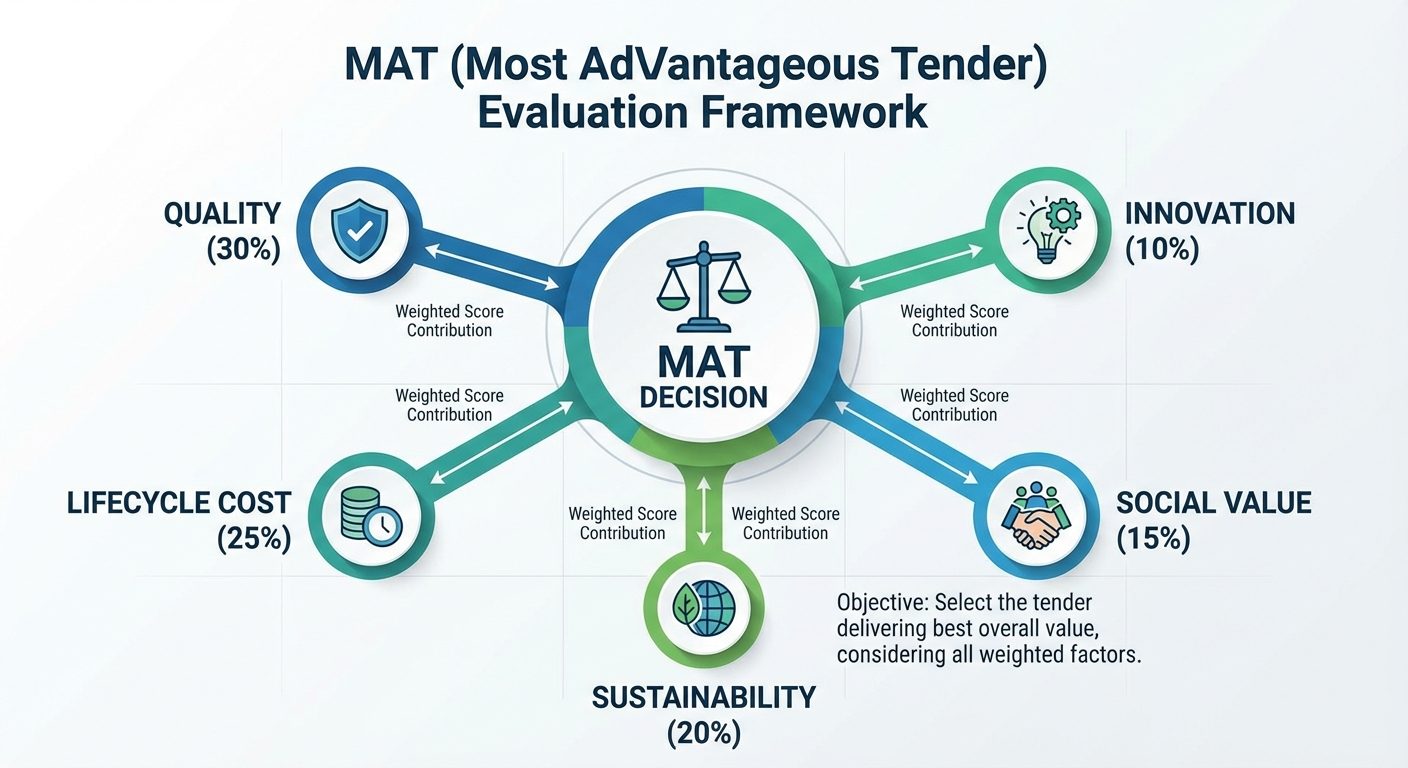
MAT evaluation framework showing weighted criteria including lifecycle cost, social value, sustainability, and innovation
Practical Strategies for Reducing Lifecycle Costs
Successful lifecycle cost proposals demonstrate specific, credible interventions that reduce total cost of ownership. The following strategies represent proven approaches across construction and facilities management sectors.
Energy efficiency measures typically offer the highest return on lifecycle investment. High-performance building envelopes with superior insulation and airtightness reduce heating and cooling loads by 40-60%. LED lighting with intelligent controls cuts lighting energy by 60-80%. High-efficiency mechanical systems, heat recovery ventilation, and renewable energy integration further reduce operational costs whilst improving environmental performance. The key is demonstrating realistic, achievable performance through properly commissioned and maintained systems, not theoretical maximums that depend on perfect conditions.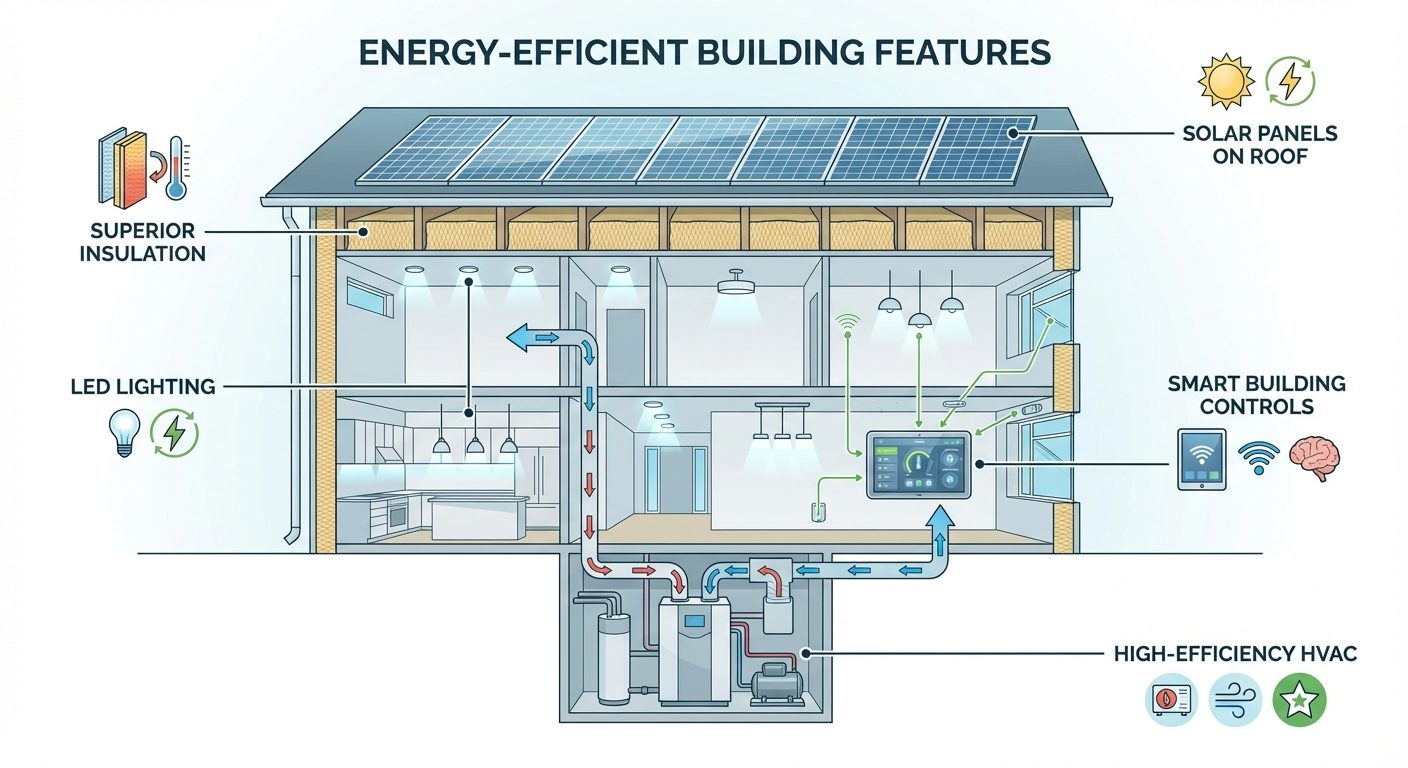
Energy-efficient building features diagram showing insulation, LED lighting, HVAC systems, and solar panels
Common Pitfalls in Lifecycle Costing and How to Avoid Them
Despite growing sophistication in lifecycle cost analysis, several common pitfalls continue to undermine tender proposals and ultimately project outcomes.
Overly optimistic operational performance assumptions represent perhaps the most prevalent issue. Contractors claim energy savings of 60% based on theoretical modelling that assumes perfect commissioning, optimal operation, and consistent maintenance. In reality, buildings rarely perform as modelled due to commissioning defects, operational compromises, maintenance shortcuts, and occupant behaviour. Conservative, evidence-based assumptions grounded in actual performance data from similar facilities carry far more credibility than optimistic predictions. Incomplete cost categories create unrealistic lifecycle projections. Some bidders exclude categories like adaptation costs, major refurbishments, or disposal because they're difficult to predict or they inflate lifecycle costs. Evaluators recognise these omissions. A complete, honest assessment that includes all relevant cost categories—even if they require assumptions and ranges—demonstrates competence and builds trust. Inconsistent time horizons make comparing bids difficult. If one bidder assesses costs over 25 years, another over 30 years, and a third over 40 years, direct comparison becomes impossible. Always use the assessment period specified in tender documents or, if not specified, adopt industry-standard periods for the project type and clearly state your assumption. Neglecting discount rates and inflation leads to comparing unlike with unlike. Money has time value—£1 million spent in 20 years is worth less than £1 million spent today. Different cost categories often inflate at different rates—energy costs typically rise faster than general inflation, whilst technology costs may fall. Apply appropriate discount rates and inflation assumptions consistently, and clearly document your approach. Lack of risk consideration undermines credibility. All long-term cost projections involve uncertainty. Technology changes, usage patterns shift, regulations evolve, climate changes. Acknowledge these uncertainties and, where appropriate, include contingency allowances or present sensitivity analyses showing how costs might vary under different scenarios. Evaluators respect realistic assessment of risks over unrealistic certainty. Insufficient supporting evidence remains a persistent weakness. Bold claims about energy savings, maintenance efficiency, or component longevity unsupported by credible evidence simply won't survive evaluation scrutiny. Every significant assumption requires supporting evidence—manufacturer data, case studies, third-party verification, industry benchmarks, or academic research. Build an evidence library you can draw upon for tender responses. Misalignment between design and operation represents a fundamental flaw in many lifecycle cost proposals. The design team produces sophisticated lifecycle cost analysis, but the proposed operational approach doesn't align with those assumptions. If your analysis assumes quarterly preventative maintenance on all mechanical systems, your proposed maintenance schedule must reflect that frequency. Evaluators will spot misalignments and question the credibility of your entire analysis.Industry-Specific Considerations
Different sectors face unique lifecycle costing challenges and opportunities. Understanding these sector-specific factors strengthens tender responses significantly.
Healthcare facilities operate 24/7 with minimal downtime tolerance, critical infection control requirements, and rapidly evolving medical technology. Lifecycle costing must account for high energy intensity, rigorous maintenance standards, frequent adaptations to accommodate new equipment and procedures, and stringent regulatory compliance costs. Flexibility and redundancy cost more upfront but avoid far more expensive operational disruptions. Successful healthcare FM tenders demonstrate understanding of operational complexity and clinical imperatives, not just engineering efficiency. Educational facilities face fluctuating usage patterns, tight budget constraints, and diverse user needs from young children to adult learners. Lifecycle costing should address robust, vandal-resistant materials that withstand intensive use, adaptable spaces that accommodate changing curricula and teaching methods, and energy efficiency that reduces ongoing costs for budget-constrained authorities. Social value often carries significant weight in education tenders—local employment, apprenticeships, and community engagement should feature prominently in proposals. Office and commercial facilities prioritise flexibility, operational efficiency, and occupant wellbeing. Lifecycle costing should emphasise workplace adaptability as organisations restructure and working patterns evolve, smart building systems that optimise energy use whilst maintaining comfort, and sustainable design that supports corporate ESG commitments and attracts quality tenants. Employee productivity impacts—whilst difficult to quantify—increasingly factor into lifecycle value assessments. Industrial and manufacturing facilities focus on operational reliability, process efficiency, and expansion capability. Lifecycle analysis must address robust infrastructure that supports demanding processes, redundancy and resilience to avoid production downtime, and scalability to accommodate growth without complete rebuilds. Maintenance access, spare parts availability, and rapid repair capability often outweigh energy efficiency in importance. Transport infrastructure requires extreme durability, minimal maintenance disruption, and long service lives measured in decades rather than years. Lifecycle costing should address whole-life costs over 50-100 year assessment periods, maintenance methodologies that minimise service disruptions, and materials selection that prioritises longevity and weather resistance. Innovation in construction methods that reduce future maintenance requirements and disruption carries significant value.Lifecycle Costing Tools and Resources
Numerous tools, standards, and resources support robust lifecycle cost analysis for tender responses.
ISO 15686-5:2017 provides the international standard methodology for lifecycle costing of buildings and constructed assets. It establishes consistent terminology, calculation principles, and presentation formats that procurement teams worldwide recognise and accept. Familiarising your team with this standard and referencing it in tender responses demonstrates professional competence. RICS New Rules of Measurement (NRM) offers standardised approaches to cost planning and lifecycle costing aligned with UK procurement practice. NRM3 specifically addresses order of cost estimating and cost planning for building maintenance works—directly relevant to FM tenders and DBOM contracts. Building Research Establishment (BRE) environmental assessment methods like BREEAM provide frameworks for evaluating environmental performance that correlates closely with lifecycle costs. Higher BREEAM ratings typically indicate lower operational costs through energy efficiency, water conservation, and sustainable materials selection. Building Information Modelling (BIM) enables sophisticated lifecycle cost analysis by providing comprehensive asset information, facilitating "what-if" scenarios, and enabling handover of rich operational data. Level 2 BIM is now mandatory on UK government projects, whilst Level 3 BIM offers even greater capabilities for lifecycle analysis and asset management. Specialist lifecycle costing software like BLCC (Building Life Cycle Cost), ATHENA Impact Estimator, or modules within cost planning tools like CostX and Causeway provide structured frameworks for lifecycle analysis, default data libraries, and sensitivity analysis capabilities. Whilst not mandatory, such tools can improve efficiency and credibility. Industry benchmarking data from sources like BCIS (Building Cost Information Service), CIBSE energy benchmarks, and facilities management databases provide realistic baselines for operational costs, maintenance requirements, and replacement cycles across different building types and systems. Grounding your assumptions in recognised benchmarks strengthens credibility significantly.Winning Integrated Facilities Management Tenders
Whilst construction projects involve discrete lifecycle costing for capital projects, Integrated Facilities Management (IFM) contracts present ongoing operational lifecycle considerations.
IFM tenders consolidate all hard facilities services (mechanical, electrical, building fabric) and soft services (cleaning, security, catering, waste management) under a single contract and provider. These contracts typically run 5-10 years with the possibility of extensions, representing significant long-term commitments for both client and contractor.
Successful IFM tender responses demonstrate how integration delivers lifecycle value compared to disaggregated service provision. Integration enables coordinated maintenance that reduces downtime and costs, consolidated contract management that reduces administrative overhead, unified performance monitoring and continuous improvement, and strategic alignment of FM services with organisational objectives.
Your lifecycle cost analysis for an IFM bid should clearly compare the total cost and performance of your integrated approach against the client's current disaggregated model. Show how coordinating maintenance activities reduces costs and disruption, how centralised management eliminates duplication, and how strategic service delivery planning improves outcomes and value.
Innovation and continuous improvement drive IFM lifecycle value. Demonstrate how you'll monitor performance against KPIs, identify improvement opportunities, implement efficiency measures, and share resulting savings with the client. Gain-share models that reward innovation create win-win relationships and differentiate winning bids.
Technology enablement increasingly defines IFM success. Computer-Aided Facilities Management (CAFM) systems, mobile workforce management, IoT sensors for predictive maintenance, and data analytics for performance optimisation reduce costs whilst improving service quality. Show how technology investments during contract mobilisation deliver ongoing operational savings and enhanced performance.
Social Value and Sustainability in Lifecycle Costing
The Procurement Act 2023 mandates minimum 10% weighting for social value in public sector tenders, whilst sustainability and net-zero commitments increasingly influence procurement decisions across both public and private sectors. These considerations integrate directly into lifecycle costing.
Environmental lifecycle costs include both direct costs (energy, carbon pricing, waste disposal) and indirect costs (reputational risk, regulatory compliance, transition risk from stranded assets). Quantifying these costs and demonstrating how your approach reduces environmental impact strengthens your MAT evaluation across multiple criteria.
Carbon emissions carry increasing financial implications. Current UK carbon pricing mechanisms, future carbon taxation, and corporate net-zero commitments mean that high-emission designs and operations face rising costs over facilities' lifetimes. Low-carbon design that minimises embodied carbon in construction materials and operational carbon through energy efficiency delivers both environmental and financial benefits.
Circular economy principles reduce lifecycle costs through materials reuse and recycling, design for disassembly and adaptation, and extended product lifespans. Whilst initial costs may increase, avoided disposal costs, reduced materials consumption in future adaptations, and potential value recovery from decommissioned materials reduce whole-life costs whilst demonstrating environmental leadership.
Social value quantification increasingly features in lifecycle cost assessments. Local employment and apprenticeships, SME and social enterprise engagement in supply chains, community benefit initiatives, and skills development programmes all deliver social returns that procurement teams now must consider alongside financial costs. Articulate these benefits clearly and, where possible, quantify them using recognised social value measurement frameworks like the National TOMs (Themes, Outcomes, and Measures) used in UK public procurement.
Case Study: Lifecycle Costing in a Real DBOM Tender
A concrete example illustrates how effective lifecycle costing wins contracts and delivers value.
A local authority issued a DBOM tender for a new secondary school serving 1,200 students. The contract covered design, construction, and 25 years of operation and maintenance. Three consortia submitted bids with initial construction costs of £28 million, £32 million, and £34 million respectively.
The £28 million bid focused on minimising capital costs through standard specifications, basic energy efficiency measures meeting minimum building regulations, and conventional construction methods. Their 25-year operational cost estimate totalled £42 million, producing a lifecycle cost of £70 million.
The £32 million bid proposed enhanced energy efficiency through improved building fabric, high-efficiency mechanical systems, LED lighting, and a photovoltaic array. Their design incorporated adaptable teaching spaces, accessible maintenance zones, and robust materials. Their operational cost estimate totalled £31 million over 25 years (26% lower than the cheapest bid), producing a lifecycle cost of £63 million—£7 million lower than the cheapest construction option.
The £34 million bid took lifecycle thinking further with a Passivhaus-standard envelope, heat pump technology, extensive renewables, advanced BMS, and premium materials throughout. They estimated 25-year operational costs of £24 million (43% lower than the cheapest construction bid), producing a lifecycle cost of £58 million—£12 million lower than the cheapest upfront option.
Crucially, all three bids provided detailed evidence supporting their operational cost estimates. The winning bid (the £34 million option) supplied:
- Thermal modelling validated by independent consultants showing 65% energy reduction versus building regulations baseline
- Case study evidence from three similar Passivhaus schools demonstrating actual performance matching predictions
- Manufacturer performance data and warranties for all major mechanical and electrical systems
- Detailed maintenance schedules with time and cost estimates based on manufacturer recommendations
- Third-party verification of PV performance predictions for the specific site conditions
- Comprehensive risk assessment and sensitivity analysis showing lifecycle costs under various scenarios
The bid also addressed social value through commitments to 15 apprenticeships during construction, 85% local labour, engagement with local SMEs, and a comprehensive schools engagement programme during construction. Sustainability credentials included embodied carbon 30% below baseline, operational carbon net-zero through renewables, and BREEAM Excellent certification.
The procurement team could verify every significant assumption, compare lifecycle costs on a like-for-like basis, and confidently recommend the higher capital cost option based on compelling whole-life value. Five years into the contract, actual performance has closely matched predictions, validating the lifecycle analysis and delivering the promised savings.
Preparing Your Organisation for Lifecycle Costing Success
Winning lifecycle cost-focused tenders requires organisational capability beyond individual bid writing skills. Building this capability demands strategic investment and cultural change.
Develop robust data and evidence libraries documenting the actual performance and lifecycle costs of your previous projects. Rather than relying on theoretical predictions, show procurement teams real-world evidence of how your designs and operations perform over time. This requires monitoring and documenting outcomes from completed projects—an investment that pays dividends in future bid competitiveness. Integrate design and operations expertise so that designers understand operational implications and operators inform design decisions. The most credible lifecycle cost analyses come from organisations where designers, engineers, and FM specialists collaborate from the outset, producing solutions optimised across the whole lifecycle rather than individual phases. Invest in lifecycle costing tools and training to build capability across your organisation. Ensure estimators, engineers, and bid managers understand lifecycle costing principles, can use relevant software competently, and stay current with evolving methodologies and standards. Regular training and professional development build competitive advantage. Establish partnerships and frameworks with technology providers, maintenance specialists, and sustainability consultants who can strengthen your lifecycle propositions. No single organisation excels at every aspect of lifecycle delivery—strategic partnerships fill capability gaps and demonstrate comprehensive solutions to procurement teams. Build a culture of continuous improvement where completed projects inform future tenders and lessons learned feed back into design, construction, and operational approaches. Organisations that systematically learn from experience, refine their methodologies, and continuously improve their lifecycle performance separate themselves from competitors still operating on a project-by-project basis.Conclusion: Embracing Whole-Life Value in 2026 and Beyond
The construction and facilities management sectors have fundamentally changed. The days when lowest upfront cost guaranteed contract awards are definitively over. The Procurement Act 2023, the MAT framework, mandatory social value requirements, and net-zero imperatives have created a procurement landscape where demonstrating comprehensive lifecycle value is not optional—it's essential for success.
This transformation rewards organisations that invest in quality, sustainability, and long-term thinking whilst challenging those still competing primarily on price. It creates opportunities for innovation, partnership, and delivering genuine public benefit rather than simply constructing buildings or delivering services to minimum specifications.
Mastering lifecycle costing requires investment in capabilities, tools, and evidence. It demands integration of design and operations thinking, robust data to support claims, and clear articulation of value propositions. It necessitates understanding sector-specific requirements, procurement evaluation criteria, and the broader policy context shaping procurement decisions.
For organisations willing to make this investment, the rewards are substantial. Lifecycle-focused contractors and FM providers are winning larger contracts, building stronger client relationships, and delivering projects that perform as promised over decades of operation. They're differentiating themselves in increasingly competitive markets and building reputations for quality and reliability that transcend individual projects.
The question is no longer whether to adopt lifecycle thinking, but how quickly and effectively you can build the capability to compete successfully in this transformed procurement landscape. The organisations that answer that question decisively will thrive in 2026 and the years ahead.
Tags
Ready to Transform Your Tender Writing?
See how MyTender's AI can help you write winning tenders in a fraction of the time.