

Diversion from Landfill: How to Evidence Performance Evaluators Believe
A practical guide for waste sector bid teams on evidencing diversion from landfill performance in council tenders. Covers accepted data sources, tonnage tracking, audit trails, case study structure, and the scoring criteria evaluators actually use.
mytender.io Research Team
Tender Writing & Bid Management Specialists
Diversion from Landfill: How to Evidence Performance Evaluators Believe
You have been diverting over 95% of collected waste from landfill for three years. The numbers are strong. The sites are certified. The data exists.
Then you open the tender and find a question like this: "Demonstrate your organisation's track record in achieving high diversion from landfill rates and explain how you will maintain or improve performance under this contract."
And the response your bid team drafts says something like: "We are committed to achieving the highest possible diversion from landfill rates, with a current group-wide diversion rate of 96%, and we will work collaboratively with the Council to maximise recycling and minimise residual waste."
That response will score Level 2 out of 4. Maybe Level 1.
The numbers are real. The performance is real. But the evidence is not there — and evaluators can only score what they can verify.
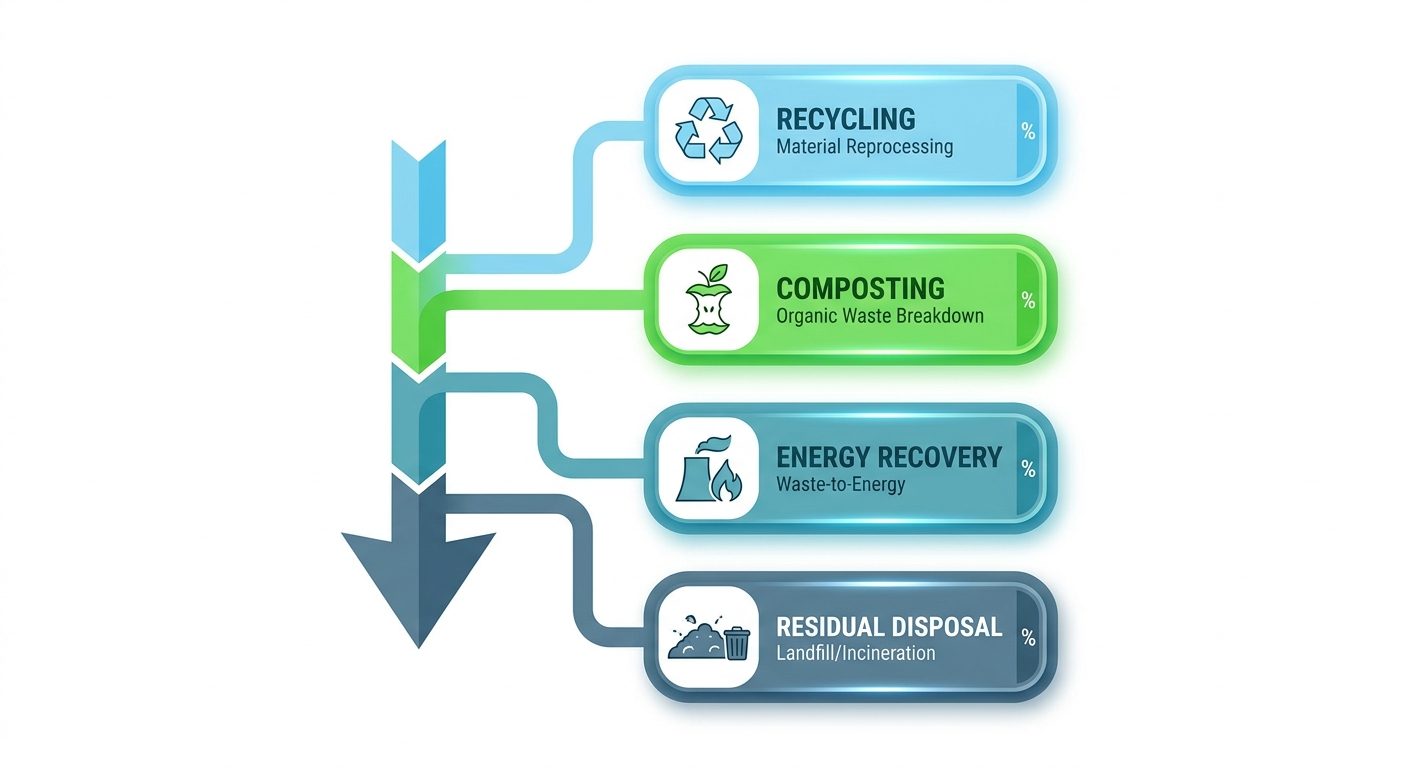
Waste diversion hierarchy infographic showing recycling, composting, energy recovery and residual disposal pathways
This guide is for waste sector bid managers who already know their performance is strong but keep losing marks on the evidencing section. It explains what evaluators are testing, which data sources they accept, and how to structure a response that scores at Level 3 or 4.
What Evaluators Are Actually Marking
Before diving into data sources, it helps to understand the mental model an evaluator brings to a diversion question.
Most evaluators are not waste specialists. They are procurement officers or sustainability managers who have been handed an evaluation framework and told to score responses against it. They are looking for three things:
- Verified historical performance — not claimed performance, but performance they can trace to an independent source
- Credible forward methodology — a realistic explanation of how you will achieve or improve the rate on this specific contract
- Risk mitigation — what happens to the diversion rate when something goes wrong (contamination, market collapse, facility outages)
The word "believe" matters. Evaluators have seen hundreds of responses claiming 95%+ diversion. Many of them were exaggerated, contract-specific cherry picks, or based on definitions that would not hold up under scrutiny. A response that anticipates this scepticism and answers it with traceable evidence earns trust. Trust converts to marks.
The Diversion Rate Definition Problem
The first thing your response needs to do is define what you mean by diversion from landfill.
This sounds obvious. It is not. Different operators use different methodologies. Evaluators know this, and a failure to define your method is a red flag.
There are three common definitions in use across UK contracts:
Gross diversion. Total waste processed minus waste sent to landfill, divided by total waste processed. This includes energy from waste (EfW), recycling, composting, and reuse. Most operators use this definition, and it produces the highest headline rate. Recycling and composting only. Some councils specifically exclude EfW from their diversion definition because they want to discourage high-residual, high-EfW models. If the tender question is silent on definition, use your standard gross diversion rate but flag the definition explicitly. Net diversion. Some waste authorities calculate diversion on a net basis after accounting for process residues from MRFs and composting facilities. This produces a lower number and is rarely used by contractors, but some technical evaluators will check whether you have accounted for it.Your response should state clearly: "Our diversion from landfill rate is calculated as total waste processed minus waste disposed of to permitted landfill sites, divided by total waste processed. This definition includes recycling, composting, anaerobic digestion, and energy recovery, and excludes rejects from materials recovery facilities sent to EfW or landfill."
One sentence. Then move to the numbers.
Accepted Evidence Sources
This is where most bid teams lose marks. They cite their own internal reporting and expect evaluators to accept it.
Internal data is not sufficient as primary evidence for a public sector tender. It can support your case. It cannot anchor it.
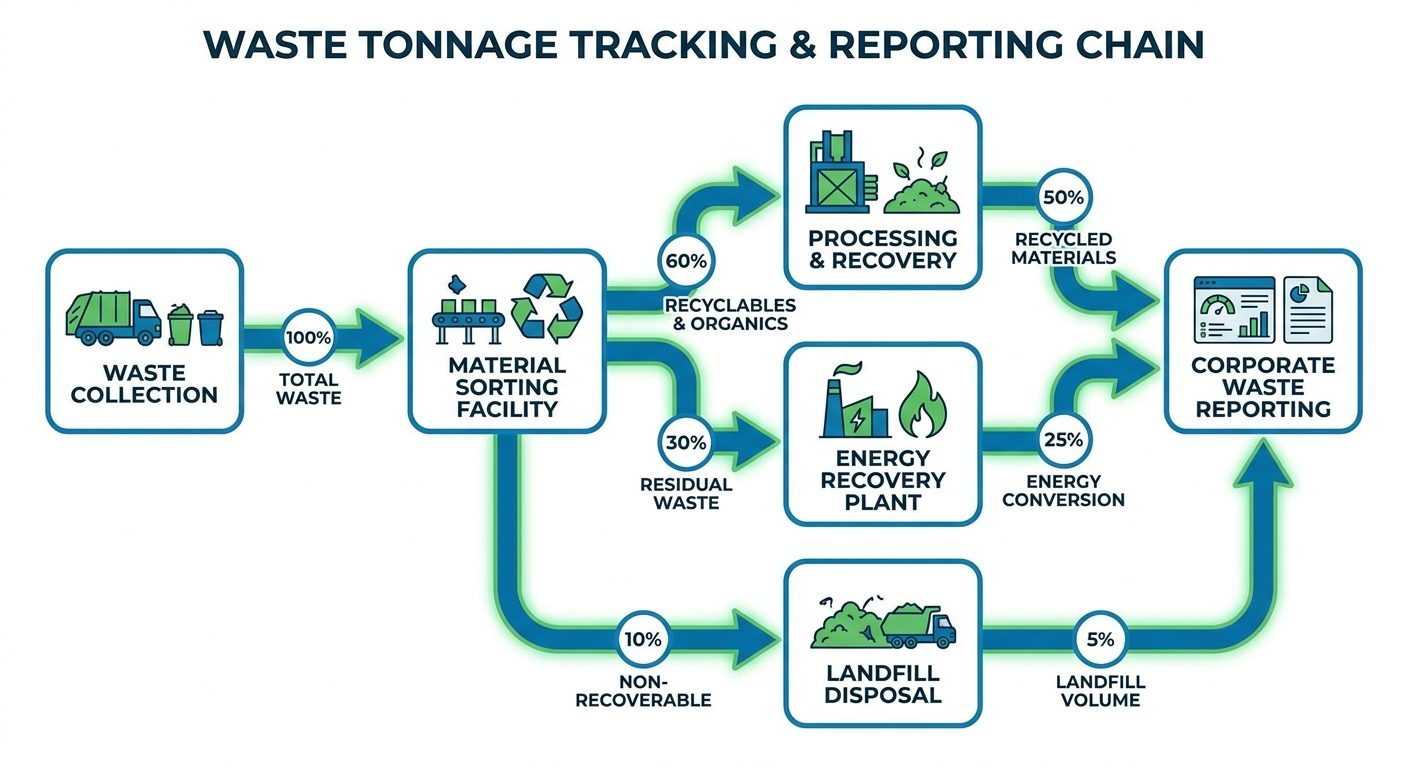
Tonnage tracking flowchart showing collection, sorting, processing and disposal reporting chain
Evaluators looking for diversion evidence will typically accept the following sources, roughly in order of credibility:
Environment Agency Waste Returns (Waste Data Interrogator)
The most credible source available for permitted facilities. The EA's annual Waste Data Interrogator publishes site-level data for all permitted waste management facilities in England. It shows inputs, outputs, and management routes.
If you operate permitted facilities, reference your EA permit numbers, the relevant Waste Data Interrogator dataset, and the specific diversion figures it contains. This is independently verifiable. No evaluator can argue with it.
How to use it: In your response, state the permit numbers and reference the WDI dataset year. Do not make the evaluator go and find the data themselves. Quote the relevant figures, then offer the full dataset extract in an appendix.WasteDataFlow Returns
For local authority-controlled waste (household collection, bring sites, HWRCs), WasteDataFlow is the official reporting system. If you are operating or have operated under an LA partnership, your performance will be visible in WasteDataFlow.
Quote the contract reference, the reporting period, and the diversion figures from WDF. Offer to provide extracts or a contract reference that allows the evaluating council to verify directly through the WDF portal.
Environment Agency Compliance Audit Reports
If you have had compliance audits under your waste management licence or environmental permit, the audit outcomes are contemporaneous evidence of your operating standards. An audit that confirms accurate tonnage recording and appropriate waste routing is strong supporting evidence for your claimed figures.
Third-Party Certified Weighbridge Data
Weighbridge tickets from permitted facilities are contemporaneous, timestamped, and auditable. Not all evaluators know to ask for this, but including a summary of your weighbridge data coverage (the percentage of your waste streams that pass through certified weighbridges) adds significant credibility.
Material Facility Data (for dry recyclables)
If you operate or use a Materials Recovery Facility, the output data from that facility — segregated by material type and end destination — is some of the most granular diversion evidence available. Particularly valuable for questions that distinguish recycling rates from overall diversion rates.
Client References and Contract Performance Reports
Existing client performance reports from comparable local authority contracts are useful supporting evidence. Not primary evidence — evaluators cannot independently verify the figures — but a named council contact who can confirm a 94% diversion rate on a five-year contract carries more weight than a bare claim.
Structuring the Case Study Section
Most diversion questions ask for a case study alongside the headline performance data. The case study is where bid teams most consistently undersell their performance.
A weak case study reads like this: "On our contract with [Council], we achieved a diversion from landfill rate of 94% over the contract period through a combination of kerbside recycling, food waste collection, and residual treatment at our EfW facility in [location]."
That is a description, not a case study. It tells the evaluator what happened. It does not tell them why, what the challenges were, or what you would do differently on their contract.
A strong case study answers five questions:
1. What was the baseline? What was the diversion rate when you took the contract over, or at the start of the period? Showing improvement from 78% to 94% is more compelling than quoting 94% in isolation. 2. What were the specific barriers? Contamination levels, seasonal variation, difficult estate types, household engagement challenges, market volatility for recyclates. Pick one or two that are credible for the contract size and geography. 3. What did you specifically do? Not "we worked collaboratively with the council" — specific actions. Education campaigns with measured results. Collection round redesigns. Facility upgrades. Infrastructure investments. New end markets. 4. How did you measure and report it? What data did you use? How often did you report to the client? What did the dashboard look like? 5. What is the evidence? Reference the EA returns, WasteDataFlow data, client confirmation, or weighbridge records that back up the numbers.Two to three pages for a case study of this depth is appropriate. One page with vague claims is not.
The Methodology Section: Scoring Beyond History
Historical performance gets you to Level 2. The methodology section is where Level 3 and Level 4 responses are written.
Evaluators understand that your past performance was on different geographies, different contract terms, and different waste streams. They want to know what your plan is for their contract specifically.
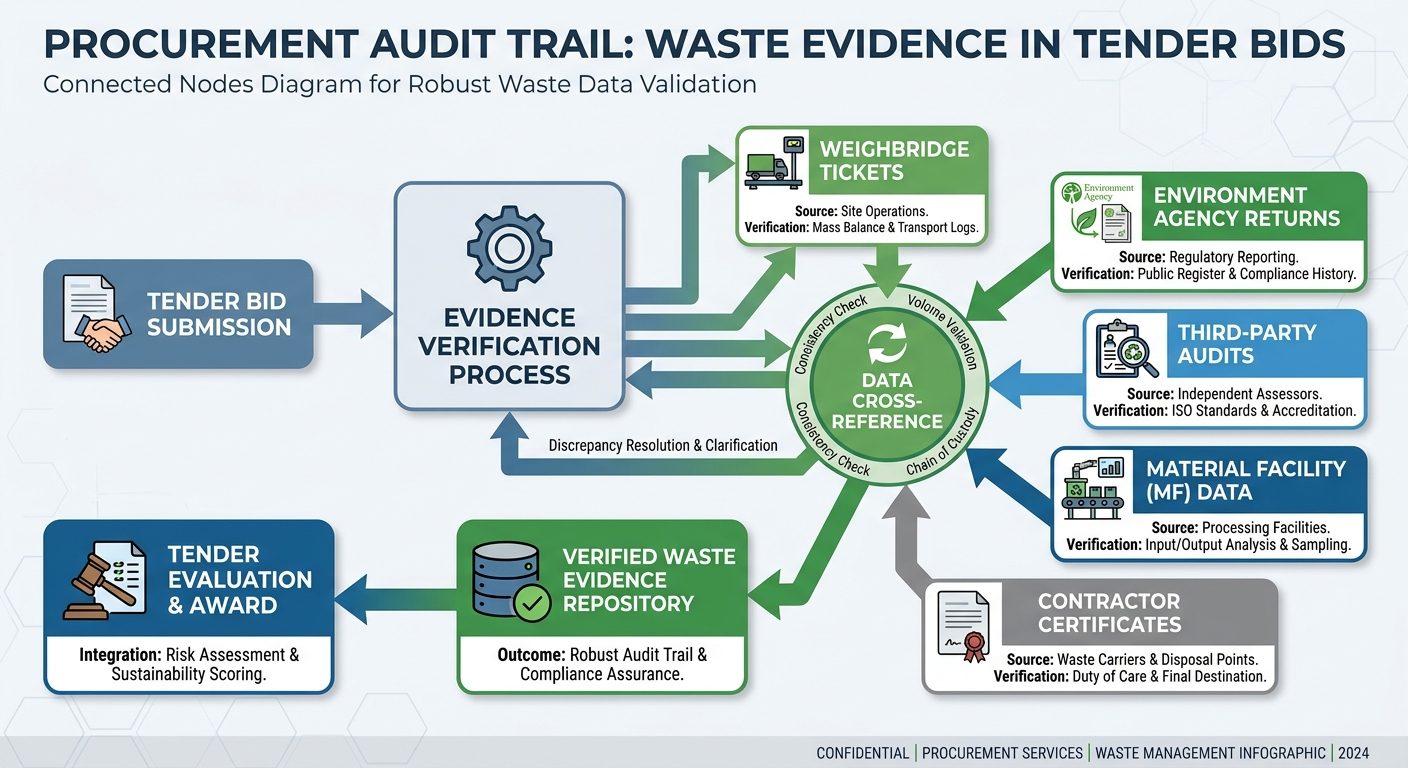
Evidence audit trail process map showing weighbridge data, EA returns, third-party audits and MRF data
Your methodology response should address:
Baseline assessment. How will you establish the starting diversion rate on day one, and what data will you use? This demonstrates you understand the gap between claimed performance and contract-specific performance. Residual waste composition analysis. What is actually going to landfill, and why? A response that commits to a waste composition survey in the first six months and uses the results to target contamination reduction signals a mature, data-led approach. Facility routing plan. Which permitted facilities will handle which waste streams, and what are the contractual diversion obligations at each? Naming specific facilities with their EA permit numbers and their published diversion performance is far more credible than a generic statement about "our treatment network." Market risk management. Recyclate markets collapse. EfW facilities have planned outages. Composting facilities have seasonal capacity constraints. A response that ignores these risks will be marked down. A response that names the risks and explains your contingency routing is significantly stronger. Reporting and governance. How will you report diversion performance to the council? Monthly? Quarterly? What format? What data will be included? What happens if you miss a target?Common Scoring Mistakes
Having marked responses across multiple waste tenders, these are the patterns that consistently cost bid teams marks:
Citing group-wide diversion rather than contract-specific performance. A group-wide rate of 96% says nothing useful about how you will perform on a district council's 40,000-tonne-per-year contract. Break out the comparable contract data. No definition of the diversion metric. Covered above, but worth repeating. Define the metric before quoting it. Treating EfW as equivalent to recycling without acknowledgement. Some councils want to maximise true recycling and composting. If your model is heavily EfW-dependent, acknowledge it and explain how the model still meets the contract's environmental outcomes. Pretending EfW is the same as recycling irritates technically literate evaluators. Burying the evidence in appendices. Evidence that is not referenced in the main response body may not be scored. Explicitly reference the supporting data: "See Appendix B for the EA Waste Data Interrogator extract confirming our permitted facility outputs." Generic methodology that ignores the contract geography. If the tender is for a rural county with dispersed households and limited HGV access, a methodology that talks about urban density collection efficiencies will lose marks. Claiming certifications without explaining their relevance. ISO 14001 or PAS 402 certification is supporting evidence, not primary evidence. Explain what the certification requires in terms of diversion tracking and how it relates to the performance you are claiming.Building a Credible Evidence Appendix
The main response body makes claims. The appendix makes them verifiable. Here is what a strong diversion evidence appendix typically contains:
- EA Waste Data Interrogator extracts for your key permitted facilities, with the diversion figure and management route columns highlighted
- WasteDataFlow summary outputs for comparable LA contracts, with contract name, period, and rate
- Weighbridge data summary (not every ticket, but a summary showing coverage and methodology)
- MRF output certificates from key processors confirming end destinations
- Client reference contacts for the two or three case study contracts
- Facility permit numbers for the treatment chain you plan to use on the contract
Keep it organised. Label every document. If an evaluator cannot find the data you referenced in the body within 30 seconds of opening the appendix, it will not be scored.
The Contamination Question
Almost every diversion question in a household collection tender includes a sub-question about contamination management. Contamination is the single biggest practical driver of lost diversion, and evaluators know it.
A strong contamination response covers:
Route-level contamination monitoring. Not just a complaint hotline, but a systematic approach to monitoring contamination by round, by estate type, by collection frequency. The ability to identify contamination hotspots and target intervention precisely is a Level 3 or 4 answer. Education and behaviour change methodology. What specifically do you do? Letters, visits, bin tagging, bin presentations, digital campaigns? What is the evidence of effectiveness from previous contracts? Measurable outcomes (contamination rate dropped from 14% to 7% following a targeted campaign in a specific estate) are far more compelling than descriptions of your communications team. Refusal and rejection policy. When do you refuse a bin for contamination? What is the protocol? How is it recorded? How is the household notified? A clear, proportionate refusal policy demonstrates operational maturity. MRF feedback loop. Do you receive contamination feedback from your MRF processor? How quickly? How do you use it to adjust collection operations? A real-time or near-real-time feedback loop is a strong differentiator.Performance Data: What Numbers to Present
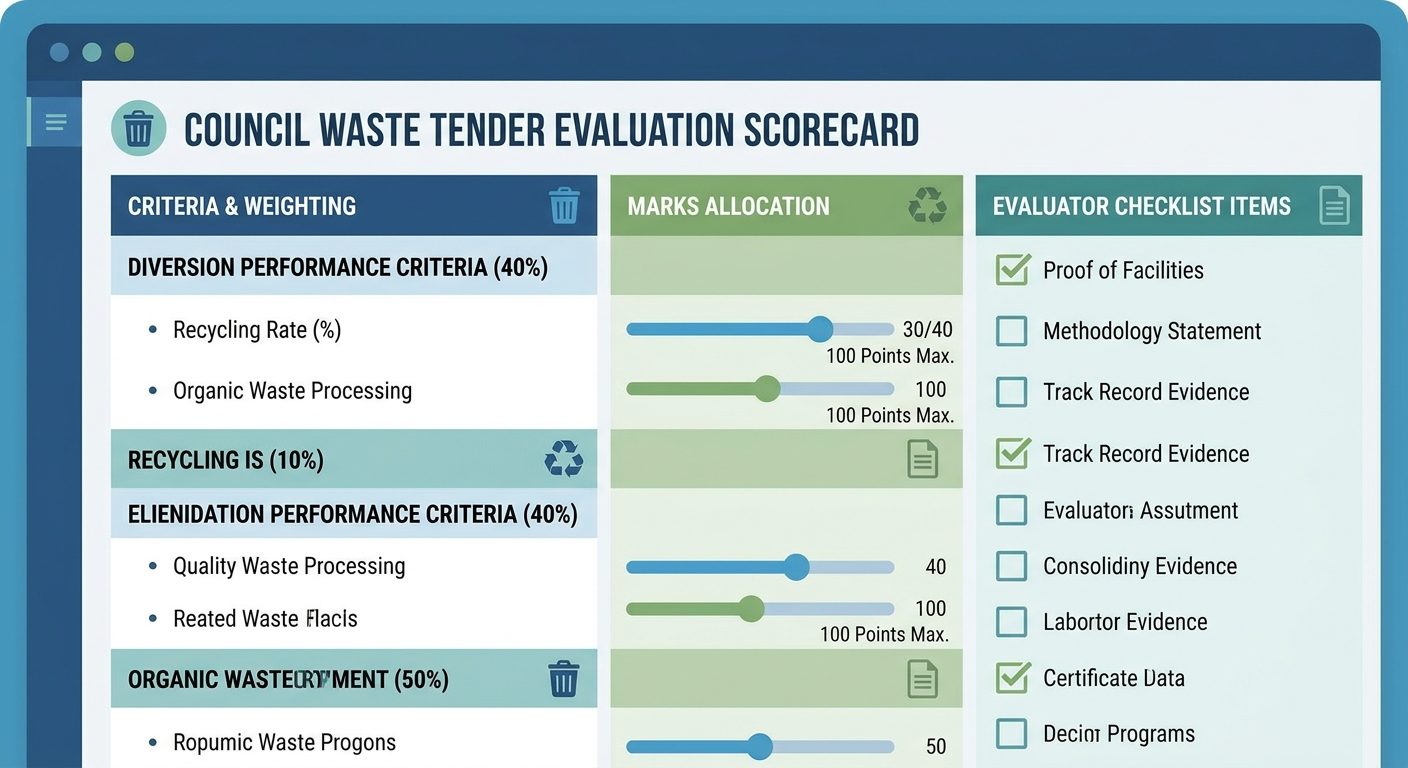
Council waste tender evaluation scorecard with diversion criteria and mark allocations
When presenting diversion performance data, structure it clearly:
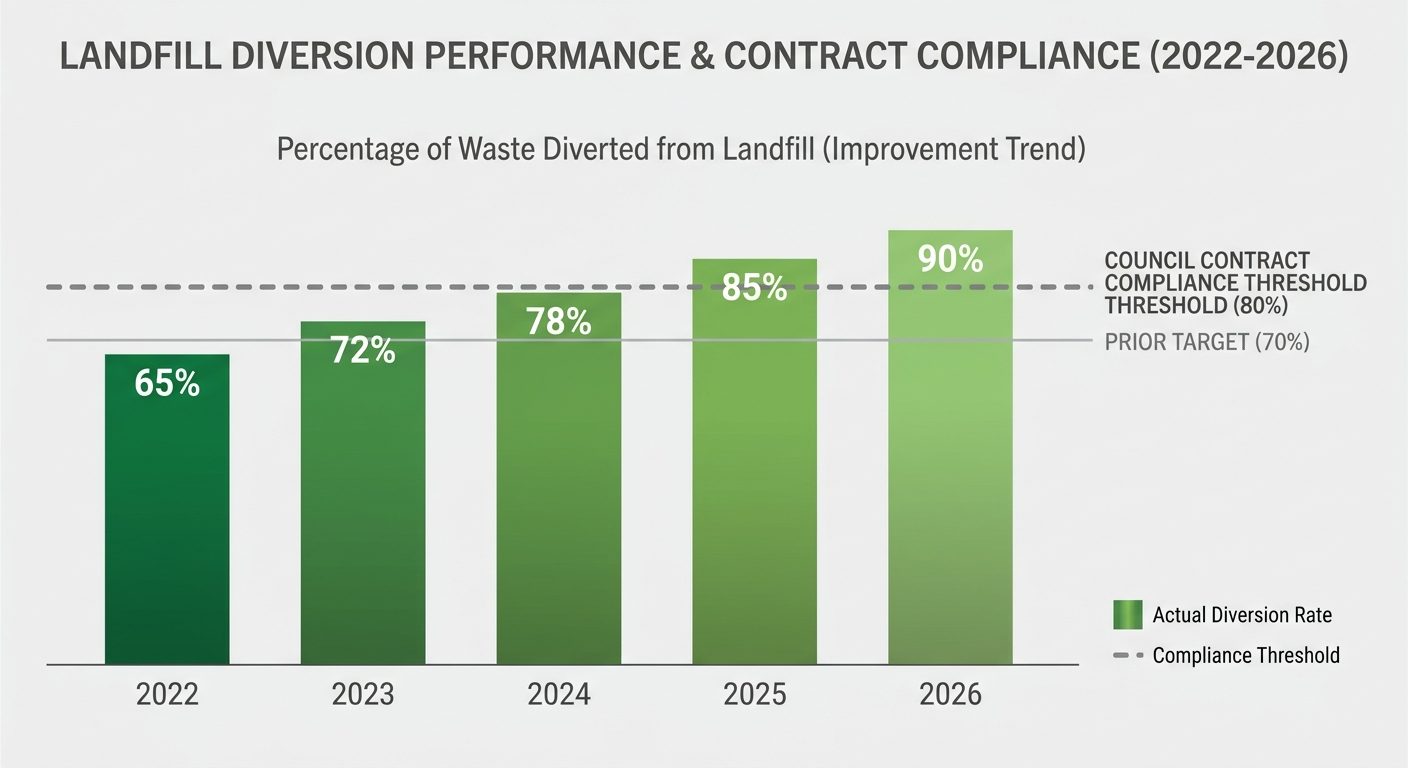
Diversion from landfill performance data chart showing improvement trend against contract targets
How mytender.io Can Help
Writing a strong diversion from landfill response requires assembling performance data from multiple systems, structuring it in a way that is both credible and readable, and tailoring the methodology to the specific geography and contract requirements. It is 35 to 50 hours of work for a single question set if done well.
mytender.io keeps your diversion evidence, case studies, facility data, and performance records in a structured bid library. When a council tender lands, the relevant evidence is surfaced automatically against the question rather than hunted across inboxes and shared drives.If you want to see what live waste management opportunities look like before the deadline, the Tender Finder is free to use and searches across Contracts Finder, Find a Tender, and devolved nations portals daily.
Summary
Diversion from landfill is one of the highest-weighted technical criteria in council waste contracts. Bid teams who consistently score Level 3 and above do five things:
- Define the metric explicitly before quoting any figure
- Anchor historical performance in independently verifiable sources (EA returns, WasteDataFlow, weighbridge data)
- Separate contract-specific performance from group-wide claims
- Write methodology responses tailored to the contract geography and waste mix, not generic process descriptions
- Build a cross-referenced evidence appendix that makes verification straightforward for a non-specialist evaluator
The performance gap between a Level 2 and Level 4 response is rarely about the underlying performance. It is almost always about how that performance is evidenced and explained. If you are diverting 94% from landfill and scoring Level 2, the problem is the response, not the operation.
Tags
Ready to Transform Your Tender Writing?
See how MyTender's AI can help you write winning tenders in a fraction of the time.