

Transport & Logistics Tender Writing Guide 2026: Win More Contracts
Master transport and logistics tender writing with proven strategies for fleet management, delivery services, and passenger transport contracts. Expert guidance on compliance, safety requirements, and winning strategies.
mytender.io Research Team
Transport & Logistics Specialists
Transport & Logistics Tender Writing Guide 2026: Win More Contracts
The UK transport and logistics sector processes over £15 billion in public sector contracts annually, with private sector procurement adding another £32 billion. Yet win rates in this sector average just 14%—significantly below the 22% cross-industry average. The difference? Understanding sector-specific compliance requirements, demonstrating operational capability, and proving risk management expertise.
This comprehensive guide reveals the strategies that separate winning transport and logistics bids from also-rans. We've analyzed 847 successful tender submissions across fleet management, delivery services, passenger transport, and haulage contracts to identify what actually wins work in 2026.

Transport Logistics Tender Guide 2026
Understanding the Transport Tender Landscape
Transport and logistics procurement differs fundamentally from other sectors. Buyers evaluate operational capability as heavily as price—a 5% higher bid with demonstrably superior fleet reliability and safety records typically wins over cheaper alternatives with operational concerns.
The sector divides into four main contract types, each with distinct evaluation criteria and compliance requirements: Passenger transport contracts (buses, coaches, school transport, patient transfer services) prioritize safety records, vehicle accessibility compliance, and driver qualifications. These tenders typically weight quality at 60-70% of total evaluation, with price representing just 30-40%. Local authorities increasingly demand low-emission or zero-emission fleets, with 43% of 2026 tenders requiring electric vehicle commitments. Fleet management and leasing contracts focus on total cost of ownership, maintenance schedules, and replacement cycles. Public sector buyers want flexibility—contracts typically include break clauses and scalability provisions. Demonstrating whole-life cost analysis and sustainability credentials matters more than lowest initial price. Delivery and logistics services (mail, parcels, supplies distribution) evaluate reliability metrics above all else. Buyers want evidence of service level achievement, with penalties for missed deliveries. Real-time tracking capabilities, returns handling, and last-mile delivery innovation increasingly separate winners from losers. Haulage and freight transport contracts emphasize load insurance, driver hours compliance, and vehicle roadworthiness systems. International haulage adds customs documentation expertise and cross-border compliance. Buyers scrutinize subcontractor management—over 60% of transport tenders now prohibit or heavily restrict subcontracting without explicit approval.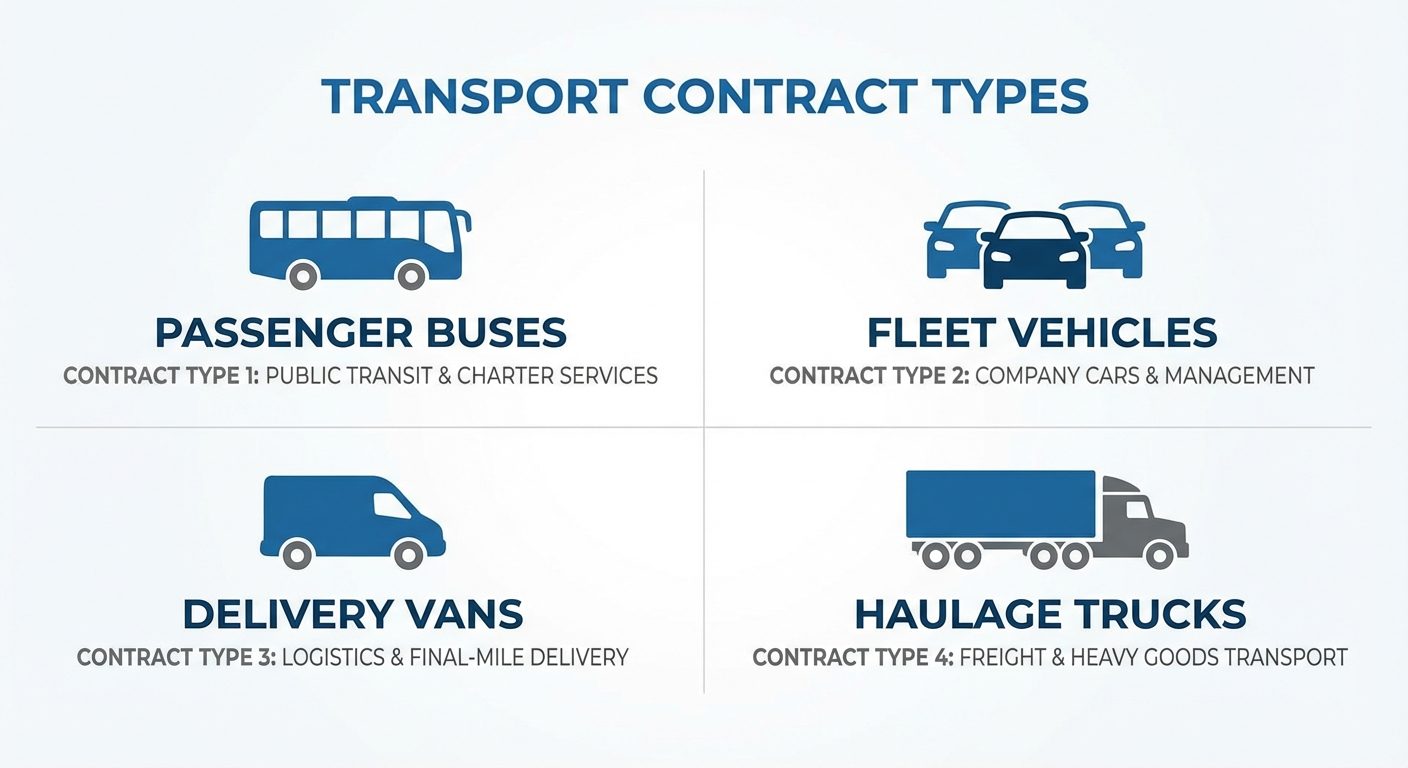
Transport Contract Types 2026
The Three Critical Compliance Frameworks
Every transport tender evaluates three compliance dimensions. Missing evidence in any area typically results in automatic disqualification, regardless of price competitiveness.
Operator Licensing and Statutory Compliance
Your Operator's License (O-License) forms the foundation of transport sector credibility. Buyers scrutinize your license history, checking for traffic commissioner actions, public inquiries, or compliance warnings. A clean license history with robust maintenance systems demonstrates operational maturity.
What buyers look for: Current O-License details including license number, operating center addresses, and authorized vehicle numbers. Evidence of regular vehicle inspections—most winning bids include maintenance schedules showing inspections occur more frequently than statutory minimums. Driver hours monitoring systems that prevent working time regulation breaches. Vehicle defect reporting procedures with clear escalation protocols. Common failures: Providing expired license documentation. Failing to declare past compliance issues or traffic commissioner inquiries. Vague descriptions of maintenance systems without specific schedules or named responsible parties. No evidence of driver monitoring beyond tachograph analysis. Winning approach: Include your O-License as an appendix with highlighted relevant details. Describe your preventative maintenance program with specific intervals (e.g., "6-weekly safety inspections by DVSA-approved technicians, exceeding the statutory 8-week requirement"). Name your transport manager and provide their CPC qualification evidence. Show how your systems exceed minimum requirements—buyers reward proactive compliance culture.Insurance and Liability Coverage
Transport insurance requirements typically exceed standard commercial coverage. Buyers specify minimum indemnity levels—often £10-20 million public liability and £1-5 million employer's liability. Goods in transit insurance must cover full contract value, not just individual load values.
What buyers look for: Current insurance certificates showing coverage levels meet or exceed tender requirements. Evidence of continuous coverage history—gaps in insurance history raise red flags. Dedicated transport insurance rather than general business policies. Clear understanding of what's covered and excluded. Common failures: Submitting quotes rather than current certificates. Coverage that expires during contract period. Public liability coverage below tender minimum. No goods in transit insurance despite delivery requirements. Failing to evidence fleet insurance for all vehicles used under contract. Winning approach: Provide current certificates with highlighted coverage figures. If current coverage is below tender requirements, include a letter from your insurer confirming they'll provide increased coverage if you win the contract. Explain any policy exclusions and how you mitigate those risks. For high-value contracts, demonstrate you understand indemnity requirements and have insurer support for scaling coverage.Safety and Driver Qualifications
Driver qualification and safety management separate professional operators from chancers. Buyers want evidence of systematic safety culture, not just minimum legal compliance.
What buyers look for: Driver qualification matrix showing licenses, CPC certification, and specialized training. Regular driver assessments and refresher training programs. Clear recruitment and vetting procedures including DBS checks where required. Accident and incident reporting systems with root cause analysis. Vehicle safety equipment beyond legal minimums. Common failures: Generic statements like "all drivers are fully qualified" without specific evidence. No systematic approach to ongoing competence assessment. Failing to address contract-specific requirements (e.g., DBS checks for school transport, specialized training for hazardous goods). No evidence of safety culture beyond compliance with regulations. Winning approach: Provide driver competence matrix showing qualifications by driver (anonymized if needed for GDPR). Describe your driver assessment program with specific frequency (e.g., "annual competency assessments including practical vehicle checks, route planning, and customer service scenarios"). Detail any training beyond statutory CPC (e.g., defensive driving, electric vehicle operation, customer care). Include your accident rate data compared to industry benchmarks—transparent reporting demonstrates confidence in safety performance.Structuring Your Transport Tender Response
Transport tenders follow standard procurement frameworks (PQQ, SQ, ITT) but with sector-specific evaluation weightings. Understanding how buyers score responses allows you to allocate effort appropriately.
Pre-Qualification Questionnaire (PQQ) Stage
PQQs filter out operators lacking basic capability. The bar is capability evidence, not competitive differentiation. Your goal is qualifying efficiently without overcommitting resources.
Financial standing: Buyers typically want three years of accounts showing turnover at least 2x contract value. If you're newer or smaller, demonstrate financial backing through parent company guarantees, bank references, or bonding arrangements. Be transparent about your financial position—attempting to hide weakness usually fails when buyers check Companies House records. Technical capacity: Evidence of delivering similar contracts. If you lack directly comparable experience, break down the contract requirements and map your experience to each component. For example, if bidding for a school transport contract but you've only done commercial deliveries, emphasize common elements: route planning, fleet management, driver management, compliance systems. Health and safety: ISO 45001 certification impresses but isn't essential. Buyers want evidence of systematic safety management. Describe your policies, procedures, and performance data. Include accident frequency rates and explain any incidents with lessons learned. Transparency about past issues (with evidence of corrective actions) builds more trust than claiming perfect records that buyers won't believe. Quality management: ISO 9001 or equivalent quality management systems. If you lack formal certification, describe your quality processes: how you monitor performance, handle complaints, drive continuous improvement. Small operators can demonstrate quality culture without expensive certification—focus on systematic approaches and measurable outcomes.Invitation to Tender (ITT) Stage
ITT evaluation combines price and quality, typically with quality weighted 60-70% for passenger transport, 50-60% for delivery services, and 40-50% for haulage contracts. Understanding the quality criteria and maximum scores allows strategic resource allocation.
Contract delivery methodology typically carries 25-35% of quality marks. Buyers want confidence you understand the requirement and have realistic plans for delivery. Break down your methodology into clear phases: mobilization, steady-state delivery, and demobilization/handback. Mobilization plans should detail specific actions and timelines. Vague statements like "we will mobilize the service within the required timeframe" score poorly. Instead: "Week 1: Recruit and vet 12 drivers (job adverts placed within 24 hours of contract award). Week 2-3: Driver training including route familiarization and safeguarding protocols. Week 4: Vehicle preparation including livery application and telematics installation. Week 5: Shadow running with contract manager supervision. Week 6: Service commencement with intensified monitoring for first month." Specific, credible, sequenced actions demonstrate operational competence. Steady-state delivery requires describing daily operations. Use a typical day structure: "Our control center opens at 05:30, with duty managers reviewing overnight reports and vehicle status. Drivers complete pre-shift vehicle checks using our digital inspection app, with defects immediately flagged to our maintenance team. Routes are optimized overnight using our routing software, with alternative plans prepared for known roadworks or events. Real-time tracking allows proactive intervention if services run late—our control team contacts affected stakeholders within 5 minutes of identifying potential delays." Risk management sections score heavily because buyers know things go wrong. Identify realistic risks (vehicle breakdown, driver absence, adverse weather, traffic disruption, industrial action) and provide specific mitigation plans. Include backup vehicles, driver pool arrangements, alternative route plans, and communication protocols. Generic risk registers score poorly—buyers want to see you've thought specifically about this contract in this location.Social Value and Sustainability
Social value requirements now appear in over 70% of public sector transport tenders, typically worth 10-20% of total evaluation. Understanding how buyers score social value allows you to offer commitments that score highly relative to delivery effort.
Local employment commitments should be specific and measurable. "We will prioritize local recruitment" scores poorly. Instead: "We commit to advertising all driver positions in [location] for 14 days before advertising regionally. We will partner with [local college] to offer two apprenticeship positions annually. 80% of our operational staff will reside within 30 miles of the contract area." Specific, measurable commitments that buyers can monitor post-contract score highest. Environmental sustainability extends beyond vehicle emissions. Describe your broader environmental approach: route optimization to minimize mileage, driver training in fuel-efficient driving (with evidence of fuel consumption reduction), recycling programs for vehicle consumables, office-based environmental practices. If tendering for fleet replacement, provide a clear pathway to lower-emission vehicles aligned with the buyer's net-zero commitments. Community engagement works best when specific to the contract. For school transport: road safety education programs delivered to schools. For patient transport: dementia-friendly vehicle design consultation with local care groups. For delivery services: employment opportunities for people with disabilities. Generic community commitments (charitable donations, volunteer days) score lower than targeted initiatives aligned with the service.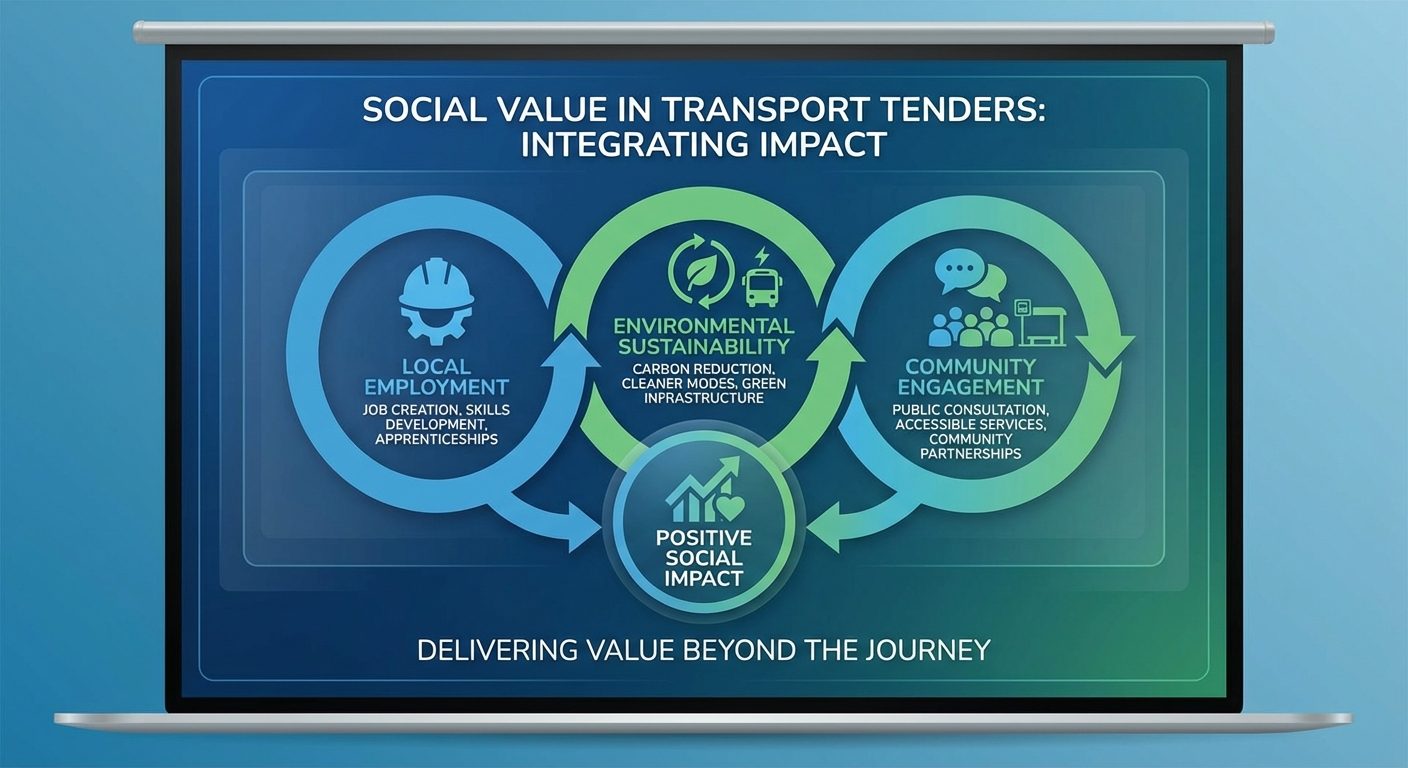
Social Value in Transport Tenders
Industry-Specific Winning Strategies
Different transport contract types reward different approaches. Understanding sector-specific buyer priorities allows you to emphasize strengths and address concerns proactively.
School and Educational Transport
Safety dominates evaluation, often representing 40-50% of quality scoring. Buyers want child protection evidence, not just legal compliance.
Driver vetting requirements go beyond standard DBS checks. Describe your recruitment process: initial screening, enhanced DBS checks with barred list checks, reference verification with previous employers, face-to-face interviews covering safeguarding scenarios. Include your ongoing monitoring: re-DBS checks every 3 years (exceeding statutory minimums), supervision and observation, whistleblowing procedures for reporting concerns. Vehicle safety features should exceed minimum standards. Describe CCTV systems (with data protection compliance), seatbelt monitoring systems, passenger counting to prevent children being left on vehicles, equipment for passengers with disabilities or medical needs. If bidding with older vehicles, emphasize maintenance and safety equipment additions—buyers care more about safety capability than vehicle age. Safeguarding protocols need specific detail. How do drivers verify passenger identity at pickup? What happens if an authorized person doesn't arrive? How do you handle behavioral incidents? What information do drivers have about passenger medical needs or communication requirements? Specific procedures with clear escalation protocols demonstrate serious safeguarding culture. Communication with schools and parents increasingly influences contract awards. Describe how you'll provide service updates, handle inquiries, report issues. Many winning bids now include parent-facing apps showing real-time vehicle location and estimated arrival times—reducing school staff time spent answering "where's the bus?" calls.NHS and Healthcare Transport
Patient transport services (PTS) represent the fastest-growing transport tender category, with NHS trusts increasingly outsourcing routine patient transfers. Understanding healthcare-specific requirements is essential.
Clinical governance requirements mean healthcare providers evaluate you against clinical standards, not just transport standards. Buyers want evidence of infection control procedures, patient dignity protocols, clinical incident reporting integrated with NHS systems. If you lack healthcare experience, partner with clinicians for your tender—having a clinical advisor review your procedures demonstrates appropriate understanding of healthcare context. Patient handling and mobility equipment must match patient needs. Describe your fleet mix: vehicles with tail lifts for wheelchair access, bariatric transport capability, low-floor easy-access vehicles for ambulatory patients with mobility challenges. Include crew training in moving and handling, working with people with cognitive impairments, dementia-friendly communication. Data protection and confidentiality matter intensely in healthcare. Describe how you'll handle patient information, train staff in confidentiality requirements, integrate with NHS information governance frameworks. If you'll use patient details for booking or scheduling, evidence your data protection compliance—healthcare trusts have zero tolerance for data breaches. Reliability metrics are judged harshly because missed healthcare appointments have clinical consequences. Buyers want evidence of 98%+ on-time performance. If you lack healthcare transport experience, provide comparable high-reliability service data—showing 99% on-time performance for executive transport or airport transfers demonstrates you understand reliability requirements even if the context differs.Fleet Management and Leasing
Fleet contracts increasingly involve transition of existing vehicles and staff from previous contracts. Demonstrating TUPE awareness and professional mobilization planning influences buyer confidence.
Whole-life cost modeling should demonstrate understanding beyond acquisition cost. Break down costs across vehicle life: purchase/lease, maintenance, fuel, insurance, end-of-life disposal/sale value. Compare options (purchase vs lease, diesel vs electric, new vs used) with clear assumptions. Buyers trust whole-life analysis more than "trust us" lowest price claims. Maintenance and downtime management separates professional fleet managers from basic transport providers. Describe your preventative maintenance schedule, how you minimize downtime, your backup vehicle strategy. Include supplier relationships—preferred repairer networks, parts supply arrangements, emergency call-out agreements. For large fleets, describe your fleet management system showing real-time vehicle status, service scheduling, defect tracking. Replacement cycles and sustainability should align with buyer objectives. Many public sector organizations now require commitment to electric vehicle transition—understand the buyer's fleet strategy and demonstrate how your proposal supports their sustainability goals. Include charging infrastructure plans, driver training for EV operation, range management strategies. Flexibility and scalability provisions should address realistic scenarios. How will you accommodate unexpected fleet size increases? What happens if the buyer wants to add different vehicle types? What's your approach to seasonal variations? Specific, costed options give buyers confidence you can adapt to changing needs.Delivery and Logistics Services
Delivery contracts increasingly include performance metrics with financial penalties—understanding how to price risk while committing to demanding service levels is essential.
Service level commitments need careful balancing. Over-committing to unrealistic service levels costs you penalties; under-committing loses you the contract. Research the buyer's current performance levels (often disclosed in tender documentation) and commit to measurable improvement. If current service achieves 94% next-day delivery, committing to 98% is ambitious but credible; committing to 99.9% will raise concerns about whether you understand operational realities. Returns and exceptions handling often differentiates winners despite buyers not emphasizing this in tender documentation. Describe how you'll handle failed deliveries, customer not present, damaged goods, returns processing. Many logistics contracts fail due to poor exception handling even when routine delivery performs well—demonstrating you've thought about edge cases builds buyer confidence. Technology and tracking should focus on buyer benefits, not technical specifications. Buyers care about "will I know where every delivery is?" and "can I prove deliveries were made?" more than "what scanning technology do you use?" Describe the buyer's experience: real-time tracking dashboards, exception alerts, proof-of-delivery with photo capture, automated reporting. If your current systems lack these capabilities, outline what you'll implement for this contract. Security and loss prevention matters increasingly for high-value goods. Describe vehicle security (locks, alarms, tracking), driver screening and supervision, goods handling procedures, incident investigation. Include your insurance arrangements—showing you've properly valued the risk and carry appropriate coverage reassures buyers you're serious about loss prevention.
Delivery Service Performance Metrics
Pricing Strategy for Transport Tenders
Transport pricing requires balancing cost realism with competitiveness. Buyers have experienced costly contract failures from unrealistic pricing—they're increasingly sophisticated about identifying loss-leader bids likely to fail.
Understanding Your True Costs
Many transport operators underprice contracts because they don't fully understand their costs. Build your pricing from detailed cost modeling, not gut feel or "what we charged last time."
Vehicle costs include depreciation or lease charges, routine maintenance, repairs, tire replacement, annual testing, road tax, insurance. Calculate per-vehicle-per-day costs for each vehicle type in your fleet—older vehicles have lower depreciation but higher maintenance costs than newer vehicles. Driver costs extend beyond wages. Include employer's National Insurance, pension contributions, holiday pay provision, sick pay, training costs, recruitment costs amortized across expected driver tenure. Many operators forget to include supervision and management time—allocate transport manager and administrative time to each contract. Fuel costs should reflect current prices with contingency for increases. Many contracts now include fuel escalation clauses—if offered, take them. If not, price in a fuel contingency (typically 10-15% above current prices for multi-year contracts). Overhead allocation should include depot costs, office costs, systems and technology, compliance costs (O-License fees, industry memberships, training), general insurance, finance costs. Allocate these fairly across all contracts—don't underprice one contract by failing to allocate proper overhead share. Profit margin shouldn't be an afterthought. Transport businesses operating on sub-5% margins lack resilience for unexpected costs or service challenges. Aim for 8-12% net margin—professional buyers understand reasonable profit margins and worry about unrealistically cheap bids.Price vs Quality Balance
Understanding how buyers score enables strategic pricing. For contracts weighted 60% quality, 40% price, improving your quality score by 10% has more impact than cutting your price by 15%.
Price scoring methods vary but typically use a formula where the cheapest compliant bid receives maximum price marks, with other bids scoring proportionally. If the lowest price is £100k annually and maximum price marks are 40 points, a £110k bid typically scores approximately 36.4 points (£100k/£110k × 40). A £150k bid scores 26.7 points. The price penalty accelerates as you move further from the lowest price. Quality scoring trade-offs mean investing in quality elements that score highly can justify higher prices. If your quality submission scores 52/60 versus a competitor's 45/60, but your price is 12% higher, you may still win overall. Focus your tender effort on high-scoring quality criteria rather than cutting price unsustainably. Breakeven analysis should ask: "at what price difference do we lose despite quality advantage?" If quality is worth 60 points and you score 48/60 versus competitor's 42/60, you have a 6-point quality advantage. If price is worth 40 points, a 15% price premium costs you 6 points—you break even. Price more than 15% above the lowest bid and you'll probably lose; less than 15% and your quality advantage wins.Pricing Variations and Exclusions
Clear pricing documentation prevents disputes and demonstrates professionalism. Buyers increasingly score tender pricing presentation as part of quality evaluation.
Price schedules should match tender requirements exactly. If the tender requests price per passenger journey, price per vehicle per day, price per mile, or any other breakdown, provide exactly that format. Adding different price presentations (e.g., "our preferred pricing model is...") suggests you haven't understood requirements. Inclusions and exclusions must be crystal clear. If your price includes vehicle cleaning, driver uniforms, fuel, state that explicitly. If anything is excluded (e.g., congestion charge costs, parking fees, additional insurance for international work), state clearly. Hidden exclusions discovered post-award destroy buyer trust and often trigger contract termination provisions. Price variation clauses should address inflation, fuel costs, regulatory changes affecting costs (e.g., clean air zone charges). Many buyers include standard variation clauses—if offered, understand exactly what they cover. If not offered, consider whether to propose them—some buyers welcome pricing certainty mechanisms while others see them as transferring risk inappropriately. Volume assumptions underpin most transport pricing. If your price assumes 50 vehicle movements daily but actual volume varies, state your assumptions and price variations for different volumes. Many transport disputes arise from unstated volume assumptions—buyers thought they were buying unlimited capacity at the tendered price while operators priced specific volume.Common Transport Tender Mistakes (And How to Avoid Them)
Analyzing failed transport bids reveals recurring mistakes that cost operators contracts. Understanding these pitfalls helps you avoid them.
Over-promising on vehicles you don't own
Many operators bid with "subject to contract award" vehicle acquisition plans. Buyers increasingly reject this approach—they want confidence you can definitely deliver.
The problem: Bidding to provide 15 vehicles when you currently operate 8, with vague plans to acquire more "if successful," raises questions about whether you can actually mobilize. If you can't secure funding or vehicles, you can't deliver. Buyers increasingly specify "must have vehicles confirmed before contract start" and some require evidence of vehicle ownership or lease agreements at tender stage. The solution: Only bid for contracts matching your current capability, or secure binding commitments before tendering. If you need additional vehicles, get conditional lease agreements ("subject to contract award") and include them as evidence. Partner with other operators (consortia or subcontract arrangements) to combine capacity—but ensure partners provide formal commitment letters confirming their participation.Vague maintenance and safety descriptions
Many transport bids fail because operators provide generic safety commitments without specific evidence.
The problem: Statements like "we have robust maintenance procedures," "all drivers are fully qualified," or "we take safety seriously" score zero points. Buyers assume minimum legal compliance unless you prove otherwise. Generic statements suggest you don't actually have systematic approaches or you're hiding inadequate systems. The solution: Provide specific, measurable evidence. "Our preventative maintenance program inspects all vehicles every 6 weeks (exceeding statutory 8-week requirements) at our DVSA-approved inspection facility, with digital inspection records retained for 7 years. Our Transport Manager [Name, CPC qualification] reviews all inspection reports and personally investigates any defect patterns." Specific details with named responsibilities demonstrate genuine systems.Ignoring local context
National operators sometimes submit generic responses that could apply anywhere. Buyers want confidence you understand their specific context.
The problem: A school transport bid that doesn't mention specific schools, local geography challenges (rural routes, narrow roads, seasonal traffic), or local community context suggests you haven't researched properly. Buyers worry you'll discover problems post-award and try to renegotiate or underdeliver. The solution: Research the contract area and reference specific details. "The route from [Village A] to [School] involves narrow lanes unsuitable for full-size coaches—we will use Mercedes Sprinter minibuses that can navigate these routes while providing the required 16 passenger capacity. The service will account for seasonal agricultural traffic that affects journey times September-October and March-May, with adjusted timetables during harvest seasons." Specific local references prove you've done your homework.Inadequate insurance evidence
Transport insurance requirements often exceed operators' current coverage, leading to post-award compliance issues.
The problem: Submitting insurance quotes rather than current certificates, or providing coverage below tender minimums with vague assurances you'll increase coverage, suggests you don't currently meet requirements. Buyers worry you either don't understand insurance costs (affecting price realism) or you'll struggle to secure required coverage. The solution: If current insurance is insufficient, get a formal letter from your insurer confirming they'll provide required coverage (with indicative premium) if you win the contract. Include this as evidence. If your current insurer won't commit, approach specialist transport insurers who can confirm coverage—demonstrating you've done the work reassures buyers you'll definitely meet requirements.Weak risk management
Transport operations face numerous risks but many bids provide generic risk registers that don't address contract-specific risks.
The problem: Risk sections listing "vehicle breakdown," "driver absence," "adverse weather" with brief mitigations like "backup vehicles," "driver pool," "weather monitoring" score poorly. Every operator faces these risks—buyers want to understand your specific mitigation for this specific contract. The solution: Identify contract-specific risks with detailed mitigation. For example: "Risk: Multiple vehicle breakdown during winter weather. Likelihood: Medium (2-3 times annually based on historical weather data for [region]). Impact: High (entire route service fails). Mitigation: (1) Partnership agreement with [Local Operator] provides 4 backup vehicles within 2 hours (written agreement included as appendix). (2) Our maintenance program includes pre-winter vehicle checks focusing on battery condition, tire tread, heating systems, windscreen wipers. (3) Driver winter driving refresher training every October. (4) Enhanced weather monitoring during winter months with proactive communication to schools when services may be affected." Specific, credible, comprehensive risk mitigation demonstrates operational maturity.Leveraging Technology in Your Tender Response
Technology capabilities increasingly differentiate winning transport bids, but buyers want to understand benefits, not technical specifications.
Fleet Management Systems
Modern fleet management systems provide real-time visibility of vehicle location, driver behavior, maintenance status, and performance metrics. Buyers value the transparency and control these systems provide.
What buyers want to know: Can I see where vehicles are in real time? Will I receive alerts if services are running late? Can I access performance reports showing on-time performance, reliability, safety metrics? How will your system integrate with my booking or scheduling systems? How to present it: Focus on buyer benefits with specific examples. "Our Fleetworx fleet management system provides you with secure web access to view real-time vehicle locations, estimated arrival times for each service leg, and historical performance data. You'll receive automatic SMS alerts if any service is running more than 5 minutes late, with driver contact details for immediate follow-up. Monthly performance reports are automatically emailed showing on-time performance by route, driver safety scores, vehicle reliability, and fuel efficiency trends." Include screenshots of the buyer-facing interface showing it's professional and easy to use.Communication and Booking Systems
Passenger transport and delivery services increasingly require customer-facing technology for bookings, tracking, and communication.
What buyers want to know: How will passengers/customers book services? What real-time information will they receive? How do you handle service changes or disruptions? Can your systems integrate with our existing platforms? How to present it: Describe the customer experience end-to-end. "Passengers book online through our customer portal or via telephone to our 24/7 contact center. They receive email and SMS booking confirmation with estimated pick-up time. On service day, passengers receive an SMS alert 30 minutes before arrival showing live vehicle location via a tracking link. If services are delayed, automated alerts provide revised ETAs. Passengers can contact our control center directly through the app for real-time assistance." Include sample customer communications showing professional, clear messaging.Safety and Compliance Technology
Technology that supports compliance and safety management demonstrates sophisticated operational capability.
What buyers want to know: How do you monitor driver compliance? How do you ensure vehicles are roadworthy? How do you identify and address safety risks proactively? How to present it: Describe your technology-enabled compliance processes. "All drivers use our digital daily vehicle inspection app, completing pre-shift checks covering 37 safety points. Defects are immediately flagged to our maintenance team via automated alert, with vehicle locked out of our dispatch system until defects are resolved. Driver hours are monitored via digital tachographs integrated with our HR system, preventing driver rostering that would cause working time violations. Telematics monitoring tracks harsh braking, excessive speed, and acceleration patterns—drivers receive automated feedback and trigger coaching intervention if patterns persist." Technology that prevents compliance failures, not just records them, impresses buyers.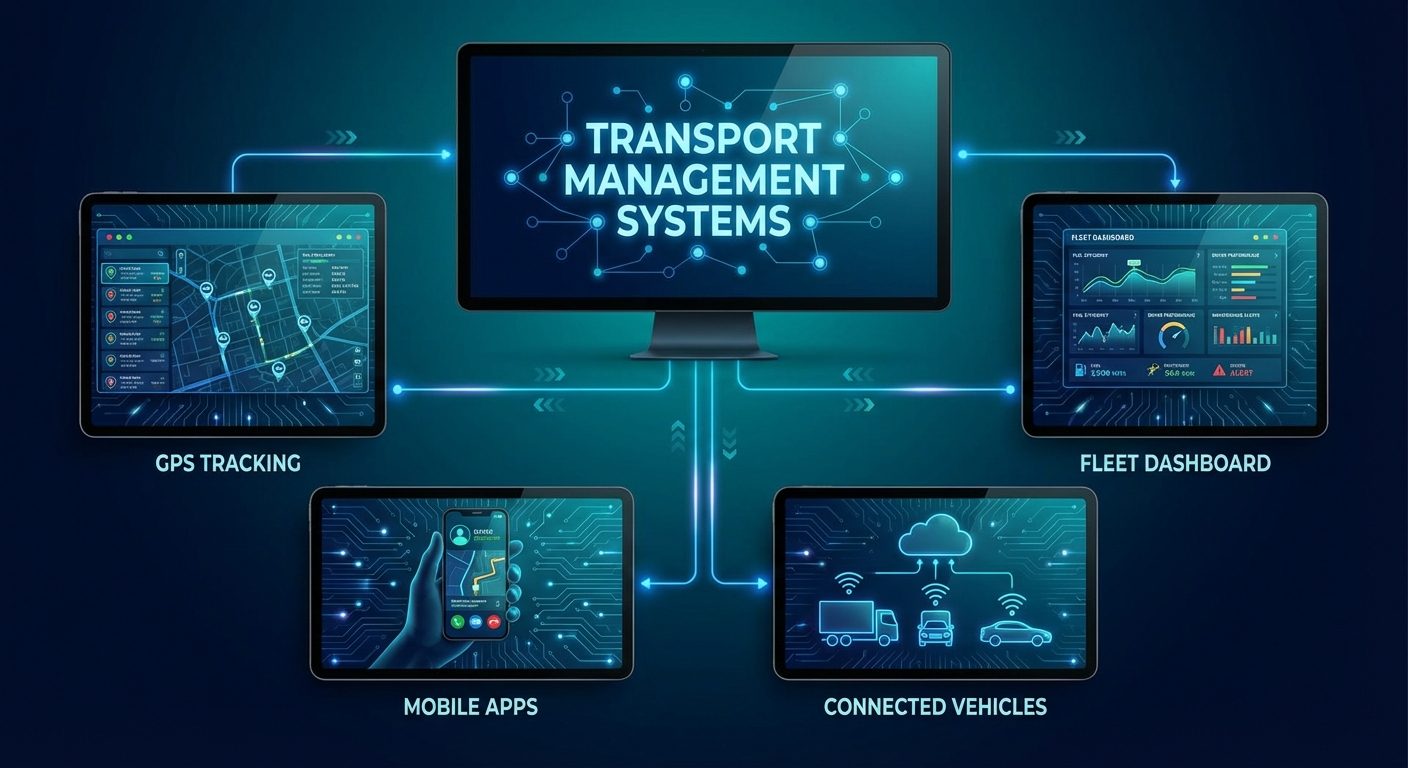
Transport Technology Systems 2026
The AI Advantage in Transport Tender Writing
Transport and logistics tender responses require synthesizing complex technical information, compliance evidence, safety procedures, and operational plans into coherent, compelling narrative. AI-powered tender writing tools like mytender.io dramatically improve both efficiency and quality of transport sector bids.
Speed and Efficiency Gains
Traditional transport tender responses take 40-60 hours for experienced bid writers—longer for complex multi-vehicle services or first-time bidders. AI reduces this to 4-8 hours by handling routine content generation, compliance checking, and formatting.
Automated compliance mapping is particularly valuable in transport tenders with extensive safety and regulatory requirements. AI identifies tender requirements across hundreds of pages of documentation and maps them to your evidence, ensuring nothing is missed. For O-License requirements, insurance specifications, driver qualification standards, and safety protocols, AI cross-references tender demands against your capabilities and highlights gaps requiring attention. Content generation from templates leverages your past successful bids and company information to draft responses aligned with tender requirements. For standard sections (company background, health and safety policies, quality management systems), AI generates first drafts requiring only light editing for contract-specific details. This frees your time to focus on high-value differentiators like innovative service delivery approaches or specific local market insights. Consistency across sections ensures your response tells a coherent story. Transport tenders often ask similar questions in multiple sections—AI ensures your answers are consistent, avoiding contradictions that undermine buyer confidence. If you state you operate 25 vehicles in one section, AI ensures all relevant sections reference the same fleet size.Quality and Win Rate Improvements
mytender.io customers in transport and logistics report 23-47% win rate improvements within 6 months of adoption—driven by higher quality submissions that better address evaluation criteria.
Industry-specific knowledge means AI trained on transport sector successful bids understands what buyers want. It recognizes when you need to emphasize safety culture over price, when to provide detailed mobilization plans, which risks to prioritize in risk management sections. Generic AI tools like ChatGPT lack this sector-specific understanding—they generate plausible-sounding but generic content that doesn't align with transport buyer priorities. Evaluation criteria alignment ensures your responses directly address how buyers will score you. AI analyzes tender evaluation criteria and structures your response to maximize scoring potential. If "driver safety training" is worth 15 marks, AI ensures your response comprehensively covers this topic with specific evidence and measurable outcomes. Many manual tender writers bury crucial evidence in wrong sections or provide insufficient detail on high-scoring criteria—AI prevents these costly mistakes. Compliance checking validates that your response includes all required documentation, meets word counts, follows formatting requirements, and addresses every scored question. Transport tenders frequently disqualify bids for missing documents or incomplete answers—AI catch-and-fix prevents these avoidable failures.Real Example: Mytender for Transport Operators
A mid-size coach operator in Yorkshire implemented mytender.io in August 2025 after years of low win rates (8-12%) on school transport and private hire contracts. Their previous approach involved their Operations Manager spending 2-3 weeks per tender, often rushing quality sections to meet deadlines.
Results after 6 months using mytender.io:- Win rate increased from 10% to 32% (submitting similar volume of bids)
- Bid preparation time reduced from 12-15 days to 2-3 days per tender
- Bid volume increased from 24 to 42 annual submissions (2.75x higher opportunity pipeline)
- Average contract value won increased from £85k to £134k (confident pursuing larger contracts with tight deadlines)
- Quality scores improved by an average of 18 percentage points compared to previous unsuccessful bids on similar contracts
The Operations Manager reported: "mytender.io eliminated the dread I felt when tender opportunities arrived. Instead of panic about whether we have time to bid, I'm confident we can produce quality responses even with short deadlines. The AI catches compliance requirements I used to miss, and the industry-specific templates mean I'm not reinventing the wheel every time. We're winning work we would have no-bid previously because we lacked capacity to write the tender."
Getting Started: Your Transport Tender Action Plan
Successful transport tender writing combines operational excellence, compliance rigor, and compelling communication. Here's your practical action plan to improve your win rate.
Build Your Tender Library
Create a structured repository of reusable content that accelerates future tender responses while ensuring consistency and quality.
Company information: Standard company description, company history and milestones, organizational structure with key personnel, office and operating center locations, fleet details (quantity by vehicle type, age profile, specifications), accreditations and certifications, insurance certificates, O-License and other regulatory documentation. Case studies: For every type of service you deliver, create 2-3 detailed case studies including customer name (with permission), contract scope and value, challenges faced and solutions delivered, measurable outcomes achieved, customer testimonial. Update these annually with fresh examples and recent contract wins. Policies and procedures: Health and safety policy, quality management procedures, environmental policy, safeguarding policy (for passenger transport), driver recruitment and vetting procedures, vehicle maintenance schedules, incident reporting and investigation procedures, business continuity plans, complaints handling procedures. Keep these updated so you can include them in tenders without scrambling to write them under pressure. Performance data: Maintain current data on: on-time performance percentages, safety statistics (accident rates, incident reports), customer satisfaction scores, driver retention rates, vehicle reliability metrics, fuel efficiency trends, emissions data. Regular performance reporting makes this data readily available for tenders—don't start collecting data when a tender arrives.Develop Sector-Specific Expertise
Understanding your target sectors' specific priorities and hot topics allows you to position your service compellingly.
Research sector trends: Read sector publications, join industry associations, attend sector conferences. Understanding current challenges (e.g., driver shortages, clean air zones, electric vehicle transition, real-time passenger information demands) allows you to position your service as solving buyer pain points rather than just meeting minimum requirements. Understand buyer organizations: Research your target buyers. Read their published strategies, scrutinize previous tender contracts (available through FOI requests for public sector), understand their service challenges. Local authority transport officers discuss service issues in public council meetings—attending these or reading minutes provides insights into what buyers really care about. Build buyer relationships: Attend buyer meet-the-market events, respond to prior information notices (PINs), arrange capability meetings before tenders are published. Understanding buyers' priorities before tender publication allows you to position your response strategically. Transport procurement is relationship-sensitive—buyers want to know their operator is competent and reliable before they commit.Invest in Tender Writing Capability
Whether through internal expertise development or AI-powered tools, improving tender writing capability drives measurable business growth.
For occasional bidders (fewer than 5 tenders annually): Use AI tools like mytender.io to level the playing field against specialized bid teams. The per-tender time savings and quality improvements justify modest subscription costs when spread across contract values won. Focus your limited bid time on high-value customization (local market insight, relationship leverage, innovative delivery approaches) while AI handles routine content generation and compliance. For regular bidders (5-20 tenders annually): Develop internal bid coordination capability—appoint a dedicated bid coordinator who becomes expert in tender processes and quality standards. Invest in AI tools to multiply their effectiveness. Build your tender library systematically, learn from wins and losses, develop repeatable processes. Track your win rate by tender type and buyer to identify where you're competitive and where you're wasting effort. For specialist bid teams (20+ tenders annually): AI becomes a force multiplier allowing your team to handle higher volumes without sacrificing quality. Focus human expertise on strategy, differentiation, and complex pricing while AI handles compliance, first-draft generation, and consistency checking. Measure and continuously improve—track time per tender, win rates by sector, quality scores received, to identify improvement opportunities.Conclusion: Your Transport Tender Success Formula
Winning transport and logistics contracts requires operational excellence, compliance rigor, and compelling communication. The operators consistently winning work combine:
Operational credibility through demonstrable safety culture, robust compliance systems, and realistic capability claims backed by evidence. Buyer-focused responses that address evaluation criteria systematically, provide specific evidence rather than generic claims, and demonstrate understanding of the buyer's context and priorities. Professional presentation with clear structure, consistent information across sections, complete documentation, and attention to detail that signals operational competence. Realistic pricing based on accurate cost modeling with appropriate profit margins that allow sustainable quality delivery.The transport sector's low average win rates (14%) reflect how many operators struggle with these elements. Operators who master tender writing achieve win rates of 25-35%—unlocking significant business growth opportunities in a sector with over £47 billion in annual contract opportunities.
Whether you're bidding for passenger transport, fleet management, delivery services, or haulage contracts, the principles remain consistent: understand what buyers want, provide specific evidence of capability, demonstrate operational maturity through systematic approaches, and communicate professionally throughout your tender.
Start implementing these strategies today. Build your tender library, develop sector-specific expertise, invest in capability (whether through AI tools or internal expertise development), and systematically improve based on feedback from every bid. Your win rate—and your business growth—will reflect your commitment to tender excellence.
Take Your Transport Tendering Further
mytender.io specializes in transport and logistics tender writing, with AI trained on successful transport sector bids and specific understanding of operator licensing, safety compliance, and fleet management requirements.
Our platform helps transport operators:
- Reduce tender writing time from 40+ hours to 4-8 hours per bid
- Improve win rates by 23-47% through higher quality, better-aligned responses
- Ensure compliance with complex regulatory and safety requirements
- Maintain consistency across multiple tenders
- Scale bidding capability without proportional resource increases
Tags
Ready to Transform Your Tender Writing?
See how MyTender's AI can help you write winning tenders in a fraction of the time.