

How SMEs Can Win Government Contracts in 2026: A Complete Guide Under the Procurement Act
The Procurement Act 2023 has transformed how small businesses can access government contracts worth billions. Discover the strategies, tools, and insider knowledge SMEs need to compete and win public sector tenders in 2026.
mytender.io Research Team
Public Procurement Specialists
How SMEs Can Win Government Contracts in 2026: A Complete Guide Under the Procurement Act
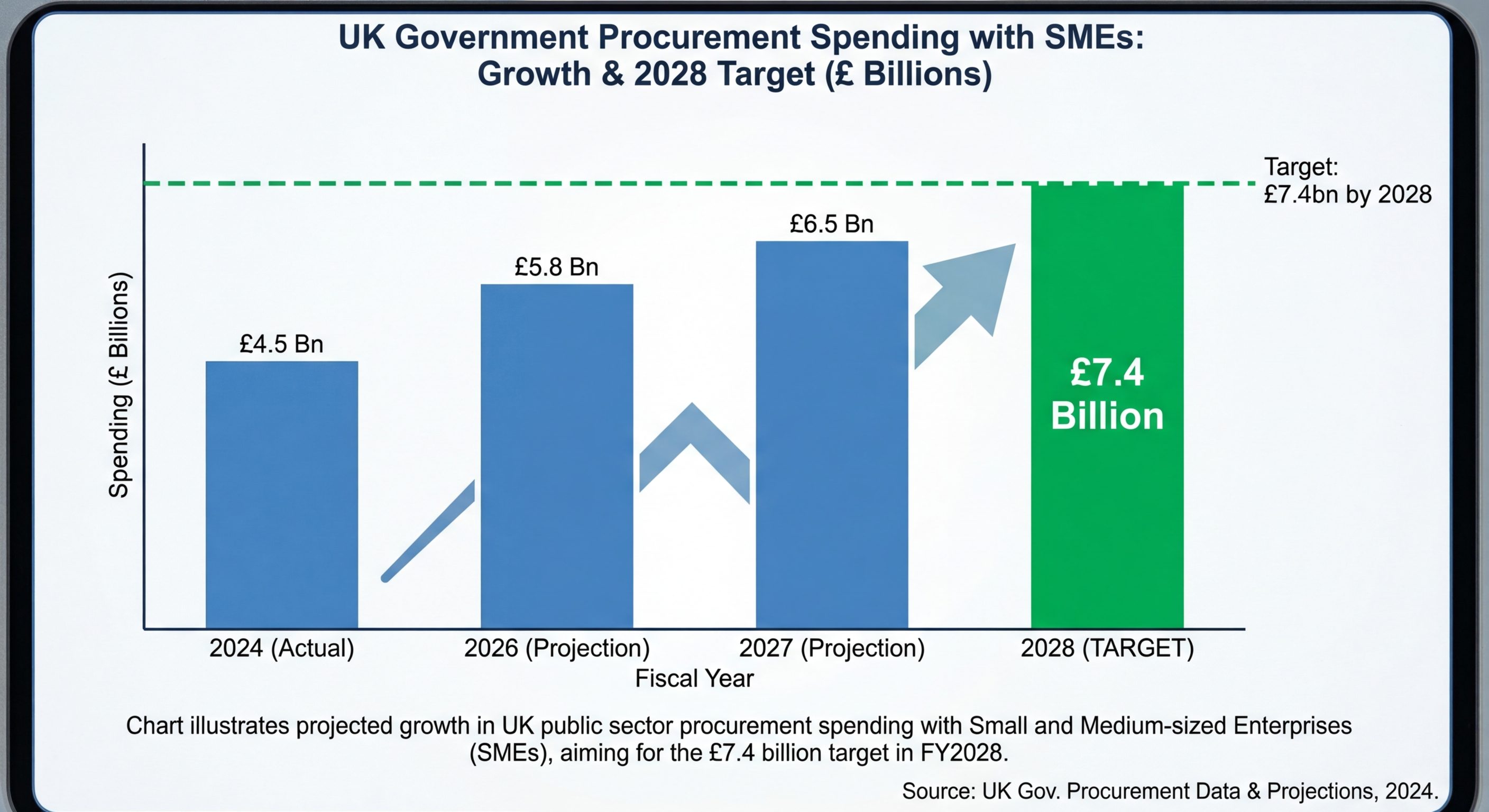
The UK government has made an extraordinary commitment: direct £7.4 billion annually in procurement spending to small and medium-sized enterprises by 2028. That figure represents a fundamental shift in how public money is spent—and it creates a genuine, concrete opportunity for small businesses that know how to navigate the system. The Procurement Act 2023, now fully operational with significant changes from April 2026, has rewritten the rules in ways that genuinely favour smaller suppliers.
This is not theoretical. Individual government departments now have specific SME spending targets, with some committing to allocate 40% of their procurement budgets directly to small businesses. The legal framework, the digital infrastructure, and the political will are all aligned behind one objective: making it easier for capable SMEs to compete for and win public contracts.
But capability alone does not win contracts. Thousands of competent SMEs submit losing bids every year—businesses with genuine expertise, competitive pricing, and real capacity to deliver. They lose because they do not understand how evaluation works, what buyers actually value, or how to present their strengths in ways that score well. This guide closes that gap.

SME winning government tender contracts UK 2026
Why 2026 Is Different for SMEs
The Procurement Act 2023 represents the most significant overhaul of UK public procurement in decades. Its full implementation means SMEs now operate in a fundamentally different environment from even two years ago. Understanding what has changed—and why it matters—is the starting point for any serious bid strategy.
The shift from MEAT to MAT changes the competitive dynamic significantly. The old "Most Economically Advantageous Tender" framework, while nominally considering factors beyond price, in practice often rewarded large suppliers with the lowest overheads and ability to absorb thin margins. The new "Most Advantageous Tender" criteria explicitly weight quality, innovation, social value, and delivery capability—areas where SMEs frequently outperform larger competitors.Smaller businesses tend to offer more direct access to senior expertise, more flexible delivery models, stronger local relationships, and greater genuine investment in individual contracts. Under MAT, these advantages can and should translate into higher evaluation scores. The critical question is whether your tender responses actually communicate them effectively.
Lot-splitting is now mandatory. Public sector buyers must actively consider breaking larger contracts into smaller components accessible to SMEs. This is not optional encouragement but a legal requirement. Where previously a facilities management contract worth £10 million might be awarded to a single national supplier as a matter of administrative convenience, buyers must now genuinely assess whether separate lots for cleaning, maintenance, and security might draw better competition from specialist SMEs.The practical impact is already visible: more contracts are appearing as multi-lot procurements, and more buyers are running genuinely competitive processes for sub-£1 million contracts that previously attracted little attention. SMEs that monitor the right platforms and respond promptly to these opportunities are winning business that was effectively inaccessible before.
30-day payment terms across the entire public sector supply chain address one of the most significant historical barriers to SME participation. Cash flow constraints that prevented smaller businesses from taking on larger contracts are being systematically removed. For SMEs whose previous reluctance to bid for government work stemmed partly from payment uncertainty, this change has real commercial significance. Open frameworks represent perhaps the most structurally important change for SMEs. Under the new rules, frameworks can remain open for up to eight years with entry points at multiple stages. SMEs that missed the original framework tender can now join at later points as their capability and track record develop. This transforms frameworks from exclusive clubs requiring perfect timing into accessible routes for businesses at different growth stages.The New Procurement Landscape: Where Opportunities Actually Are
Finding the right opportunities is not simply a matter of checking one or two websites periodically. Sophisticated SMEs build systematic monitoring across multiple channels, understand the pipeline of upcoming procurements, and position themselves before formal tenders are published.
The Central Digital Platform
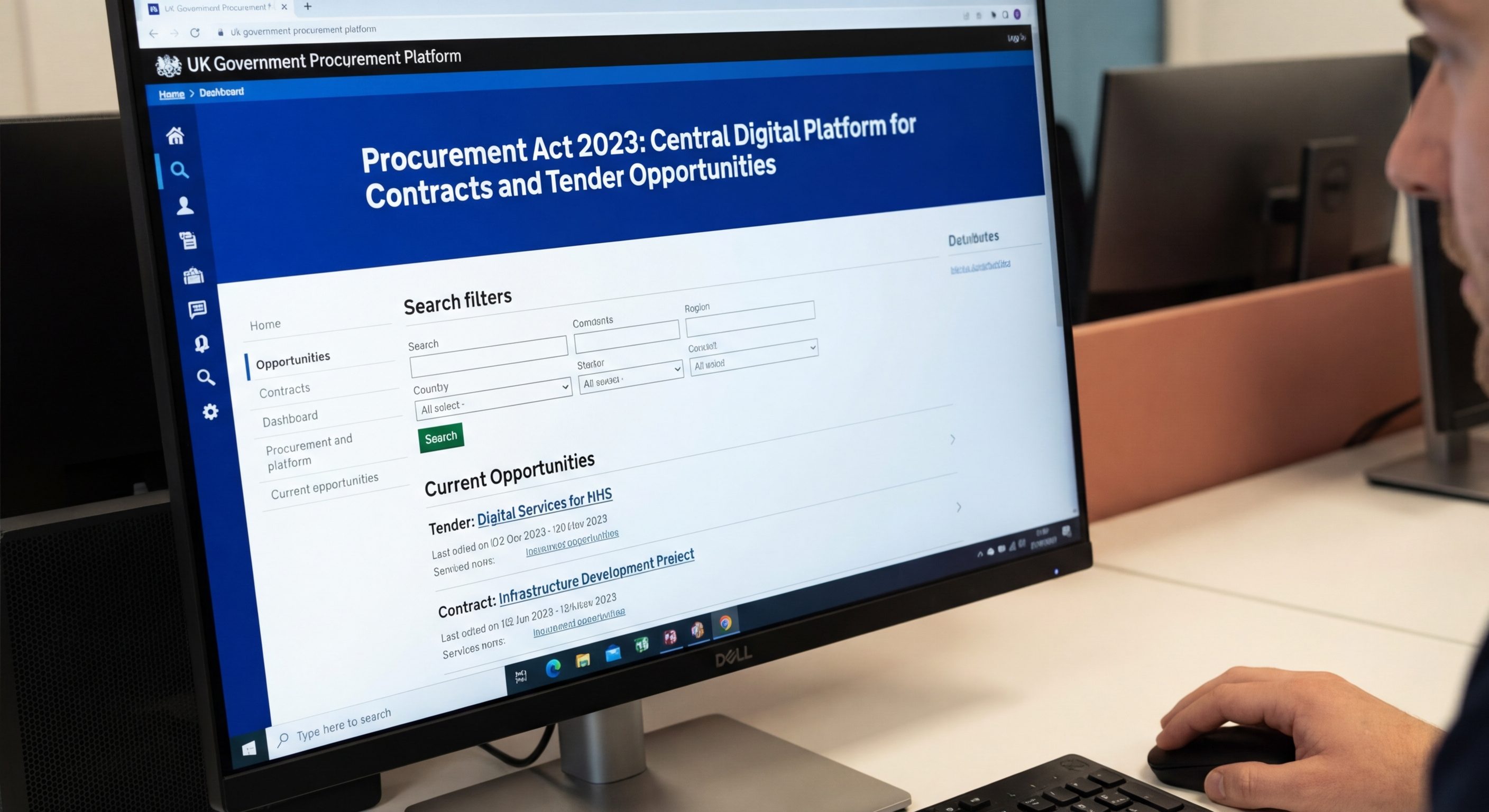
From 1 April 2026, the Central Digital Platform (CDP) replaces Contracts Finder as the primary hub for public procurement. This is a significant upgrade. Where Contracts Finder provided limited search functionality and inconsistent information, the CDP creates a genuinely centralised repository with standardised notices, supplier registration, and procurement documentation.
Registering on the CDP is now essential. The platform serves as a single point for your business information—turnover, financial standing, insurance, qualifications, and relevant certifications. Buyers can draw on this when assessing supplier capability, and pre-qualification processes are increasingly drawing from CDP data rather than requiring suppliers to submit the same information repeatedly.
The CDP also publishes "pipeline notices"—advance notification of planned procurements above £2 million. For SMEs, these notices provide weeks or months of lead time before formal tenders are published. That time is valuable: you can research the buyer, speak to stakeholders, understand strategic priorities, and begin drafting key sections of your response before the clock starts ticking on a formal submission window.
Find a Tender Service
For higher-value contracts (typically above £138,760 for most public bodies), Find a Tender (FTS) remains the primary notification channel. Set up automated alerts using specific CPV (Common Procurement Vocabulary) codes relevant to your services. Generic alerts generate noise; precise CPV codes surface relevant opportunities efficiently.
Reviewing buyer profiles on FTS provides intelligence beyond individual contract notices. Patterns in what a buyer has procured previously, at what values, and through which procedures tell you about their procurement maturity, preference for established suppliers versus appetite for new entrants, and likely evaluation approaches.
Frameworks and Dynamic Purchasing Systems
Framework agreements represent an important route to sustained public sector revenue for SMEs. Once awarded a place on a framework, you can bid for individual call-offs without going through full competitive procurement each time—reducing bid costs significantly.
Dynamic Purchasing Systems (DPS) are particularly valuable because they remain open to new suppliers throughout their lifecycle. An SME that has grown its capability over the past year can apply to join a relevant DPS and immediately access call-off opportunities. Major frameworks relevant to SMEs include Crown Commercial Service (CCS) frameworks across professional services, technology, and facilities management, plus sector-specific frameworks in NHS, local government, and education.
The key is selecting frameworks aligned with your genuine capability rather than attempting to be listed on everything. Framework managers prefer suppliers with specific expertise and a realistic pipeline of call-off activity. Being listed on five frameworks you never bid through damages your standing; being active and successful on two frameworks builds relationships and reputation that generate sustainable revenue.
UK government procurement central digital platform 2026
Building Your Bid Strategy: What Separates Winners from Losers
Analysis of successful SME tender submissions reveals consistent patterns. Winners share certain approaches; losers repeat the same mistakes. Understanding this distinction changes how you approach every tender.
Understand the Buyer Before You Write a Word
The most common failure mode in SME tender writing is treating procurement as an administrative exercise—read the specification, answer the questions, submit the form. Buyers can identify this approach immediately, and it scores poorly.
High-scoring responses demonstrate genuine understanding of the buyer's strategic context. Before writing anything, research:
The buyer's strategic priorities. Most public bodies publish multi-year plans, corporate strategies, or departmental objectives. These documents reveal what matters to decision-makers and how they frame success. Your tender response should reflect their language and demonstrate alignment with their goals. Recent procurement history. FTS and CDP data shows what the buyer has previously contracted for, at what values, and with which suppliers. This intelligence reveals their experience of managing contracts like yours, any known issues with previous providers, and their familiarity with evaluation criteria. Stakeholder landscape. Who uses the services you'd be delivering? What do end-users care about that procurement documents might not fully capture? For facilities management contracts, frontline staff and building occupants have perspectives that differ from those of finance directors. Demonstrating awareness of these different stakeholder needs makes responses more credible. Current challenges and pressures. Public bodies operate in a difficult environment—budget pressures, political scrutiny, recruitment challenges, digital transformation demands. Responses that acknowledge these realities and position your services as genuinely helping buyers navigate them score better than those that focus narrowly on contract specification requirements.Structure Responses Around Evaluation Criteria
Every scored question has a mark scheme. Evaluators allocate marks against specific criteria, not general quality. Responses that address evaluation criteria directly and comprehensively outscore well-written responses that answer slightly different questions.
The first step is mapping your response to the evaluation framework. Read each question carefully, identify the underlying criteria being assessed, and plan your response to address each criterion explicitly. Use the buyer's own language from the specification and evaluation criteria—this reduces evaluator cognitive effort and signals that you have genuinely read and understood what they are looking for.
For each scored section, follow a consistent structure:
Claim: State clearly what you will do or what you offer. Evidence: Provide specific, quantified evidence from relevant past experience. Method: Explain how you will deliver, not just what you will deliver. Benefit: Connect your approach to the outcomes the buyer cares about.Generic claims without evidence score poorly regardless of how well-written they are. "We have extensive experience in facilities management" scores nothing. "In our current contract with [public sector client], we have maintained 98.7% SLA compliance across 47 buildings over 36 months, including during the emergency RAAC inspection period when we stood up an emergency assessment team within 72 hours" scores well because evaluators can assess the claim and recognise genuine capability.
Social Value: The Differentiator SMEs Underuse
Social value evaluation now represents 10-20% of total tender scores across most public sector procurement categories. Despite this, most SME tender responses devote minimal effort to social value sections—submitting vague commitments that score poorly and leave significant points on the table.
The irony is that SMEs frequently have stronger authentic social value stories than large national competitors. Local employment, community roots, relationships with local charities and social enterprises, training partnerships with nearby colleges—these are genuine advantages that large competitors with standardised national approaches cannot match.
The problem is that SMEs fail to communicate these advantages in ways that align with evaluation frameworks. Buyers assess social value against specific themes and measures. Generic statements about being a good employer or caring about the community score nothing. Specific, measured, verifiable commitments score well.
For an SME bidding for a local government contract:
Weak: "We are committed to providing local employment opportunities and supporting our community." Strong: "We will recruit a minimum of 4 new direct employees from within [local authority] boundaries, prioritising candidates referred through [specific Jobcentre Plus district] and [named local employment initiative]. All positions will be offered at Real Living Wage (currently £12.00/hour, uprated annually). We will provide 240 hours of work experience annually to students from [named local college], including hands-on site visits and formal mentoring from our senior staff. Our existing partnership with [named local charity] for tool and equipment donation will continue, with a minimum value of £3,000 in donated items per year."The difference is specificity, measurability, and credibility. Evaluators can assess whether these commitments are proportionate, deliverable, and likely to be monitored. They can distinguish genuine investment from empty rhetoric.
Demonstrating Delivery Capability Without a Large Track Record
The most frequent objection SMEs raise about public sector procurement is that buyers prefer established large suppliers with extensive track records. This perception, while understandable, is not accurate for most public sector procurement categories.
Buyers are not looking for the largest supplier. They are looking for the most capable supplier for their specific requirements. An SME that has successfully delivered three contracts of similar scope and complexity to the one being tendered is a stronger candidate than a large organisation that delivers similar services as a peripheral activity.
The key is presenting your track record in ways that are directly relevant to the buyer's requirements. This means:
Selecting references carefully. Choose case studies that most closely match the contract being tendered—similar contract values, similar service types, similar client environments. A case study from a comparable public sector organisation carries more weight than a more impressive example from a different sector. Quantifying outcomes specifically. Every case study should include measurable outcomes: percentage improvement in KPI performance, cost savings delivered, satisfaction scores achieved, timeline adherence, issue resolution times. Buyers want evidence that you deliver, not just that you deliver. Addressing risk management proactively. A common evaluator concern with SME bids is resilience and business continuity. What happens if a key person is unavailable? How do you manage demand spikes? What's your subcontracting strategy? Addressing these questions before they are raised demonstrates maturity and reduces evaluator anxiety. Leveraging subcontracting relationships. Many SMEs underutilise their subcontractor networks as a bid asset. If you have established relationships with specialists who provide complementary services, these partnerships can effectively extend your apparent capability. Joint bids or formal teaming agreements with complementary SMEs can make smaller businesses more competitive on larger contracts.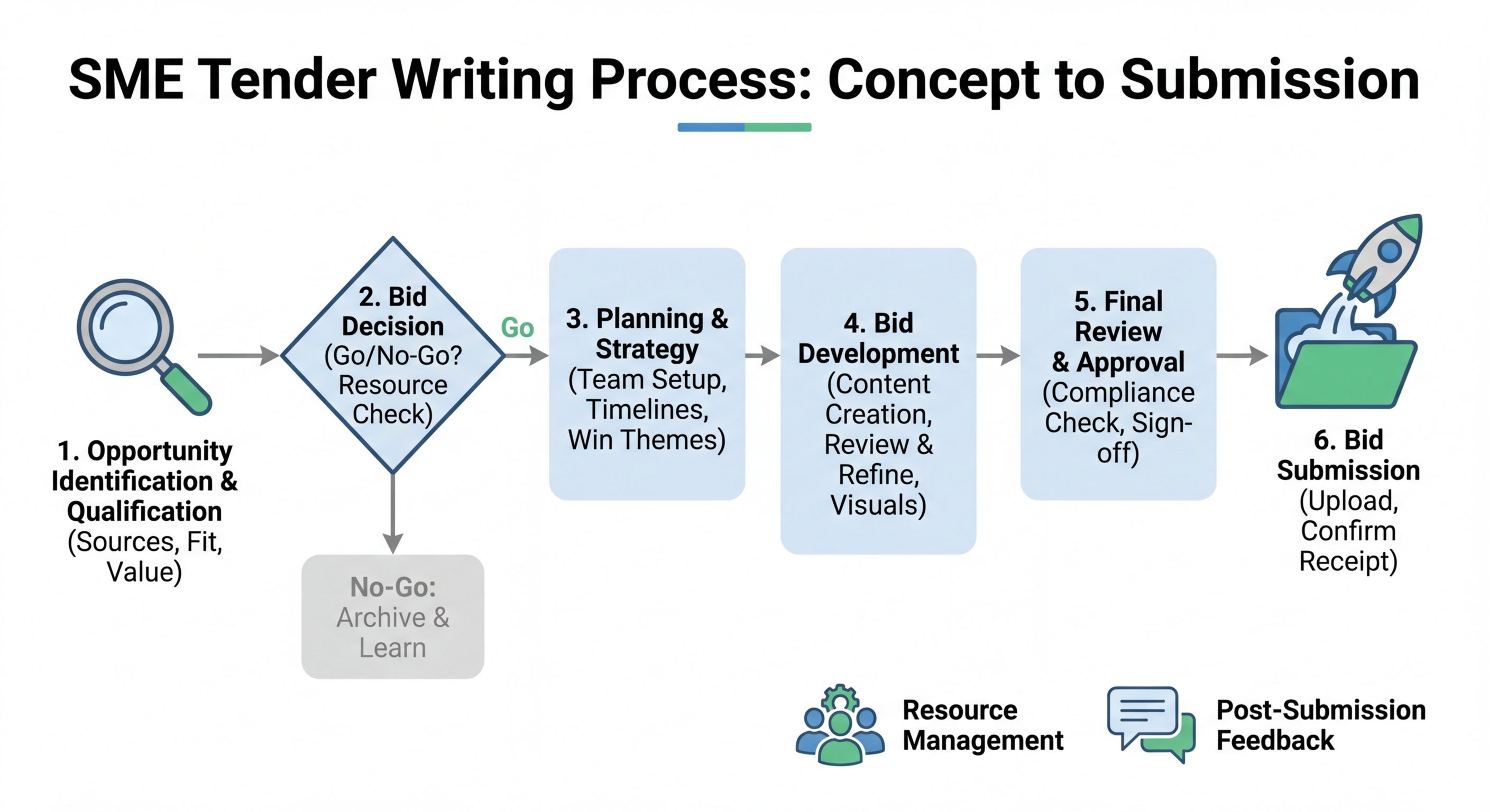
SME tender writing process flowchart guide
The Procurement Act 2026 Changes: What Kicks In From April
While the Procurement Act 2023 came into force in February 2025, several significant provisions take effect from 1 April 2026. SMEs that understand these changes can position themselves advantageously.
Central Digital Platform Becomes Mandatory
From 1 April 2026, the CDP replaces Contracts Finder for all central government procurement notices. Suppliers who have not registered will miss opportunities as legacy platforms are decommissioned. Registration requires:
- Business details including company number, registered address, and contact information
- Financial information including annual turnover for the past three years
- Insurance certificates (employers' liability, public liability, professional indemnity where relevant)
- Qualifications, accreditations, and certifications relevant to your services
- Previous public sector contract references
Completing your CDP profile comprehensively now—before it becomes urgent—gives you a competitive advantage. Buyers increasingly review CDP profiles during supplier shortlisting, and incomplete profiles create negative first impressions. Treat your CDP profile as a marketing document, not a compliance form.
Enhanced Transparency Requirements
The April 2026 changes strengthen transparency requirements in ways that benefit persistent SMEs. All procurement notices must now be published on the CDP, including those for below-threshold contracts where buyers previously had more discretion about publication. This significantly expands the visible opportunity pipeline for SMEs monitoring the platform.
Contract award notices must now include detailed information about why specific suppliers were selected and what scores were achieved by unsuccessful bidders. For SMEs that have been close to winning contracts without quite getting there, this feedback is genuinely valuable for improving future bids.
Mandatory debrief processes mean that unsuccessful bidders have a right to receive specific, actionable feedback within defined timeframes. This transforms debriefs from pro forma exercises into genuine improvement tools. If you are not currently requesting and acting on debrief feedback, you are missing one of the most valuable learning mechanisms available.
Social Value KPI Monitoring
For contracts over £5 million, social value Key Performance Indicators must now be assessed annually and reported publicly. This change has indirect but significant implications for SMEs. Buyers who must publicly report on whether their suppliers are delivering social value commitments will evaluate SME proposals with greater scrutiny—generic promises are both harder to make and easier to identify as inadequate.
The positive flip side is that SMEs with strong genuine social value delivery will be increasingly attractive to buyers who need credible, evidenced commitments they can actually report on. The shift from aspirational to accountable social value creates opportunity for businesses that genuinely embed community benefit in their operations.
Practical Bid Management for SMEs: Making the Process Work
Tender writing is resource-intensive. For SMEs without dedicated bid management teams, managing the process efficiently is as important as the quality of individual responses.
Building a Bid Library
The most effective SMEs develop standardised building blocks—pre-written, refined sections that can be adapted quickly for specific tenders. A well-maintained bid library includes:
Company overview and capability statement. A concise, compelling description of what your business does, your track record, and your key differentiators. This should be updated quarterly and available in multiple lengths (100 words, 250 words, 500 words) for different question formats. Case studies. Detailed write-ups of your five most relevant contracts, with quantified outcomes, client testimonials, and reference details. Keep these current—case studies more than three years old raise questions about whether capability is still current. Team CVs. Professional profiles for all team members likely to be named in tender responses. Focus on relevant experience and qualifications rather than general career history. Policies and procedures. Quality management, health and safety, environmental, equality and diversity, data protection, and business continuity policies. Keep these current and ensure they genuinely reflect your practices—buyers increasingly verify policy claims through contract management. Evidence documents. Certificates, accreditations, survey results, performance data, and testimonials that can be attached to support tender claims.A bid library does not guarantee quality responses—every tender requires specific tailoring—but it dramatically reduces the time required to produce strong first drafts and ensures you never start from scratch.
Tender Scoring and Decision-Making
Not every tender opportunity is worth bidding. SMEs with limited bid resources must make deliberate choices about where to invest effort. Develop a simple scoring framework to evaluate opportunities before committing:
Alignment: How closely does this contract match your core expertise? Score 1-5. Capability: Do you meet all mandatory requirements without significant gaps? Score 1-5. Relationship: Do you have any existing relationship with this buyer? Score 1-5. Competition: What is your realistic assessment of the competitive field? Score 1-5. Value: Does the contract value justify bid investment? Score 1-5. Timing: Can you commit the necessary resources given current workload? Score 1-5.Bids scoring below 18/30 should generally not proceed. Concentrating resources on genuinely competitive opportunities produces better results than spreading effort thin across marginal bids.
Using AI Tools to Improve Bid Quality
The most significant capability development for SME bid writing in 2026 is AI-assisted tender management. Tools like mytender.io now allow small businesses to produce bid-quality content at a fraction of the time previously required—effectively giving SMEs access to the kind of bid resource capability previously available only to large organisations with dedicated departments.
AI assistance is most valuable for:
First draft generation. Starting from a blank page is the most time-consuming part of tender writing. AI tools can generate structured first drafts based on your brief and question requirements, giving your team a solid foundation to refine rather than create. Consistency checking. Across long tenders with multiple sections, maintaining consistent messaging and avoiding contradictions is genuinely difficult. AI review catches inconsistencies that human reviewers miss under time pressure. Compliance verification. Ensuring responses address all elements of each question, meet word count requirements, and include required evidence types reduces the risk of losing marks to avoidable administrative failures. Strength and gap analysis. AI tools can identify where responses are strong, where they lack evidence, and where they fail to address evaluation criteria directly—allowing targeted improvement before submission.The key distinction is that AI assistance augments expert judgment rather than replacing it. The best tender responses combine AI efficiency with human expertise: genuine understanding of the buyer's context, real evidence from actual delivery experience, and authentic commitment to social value and quality. SMEs that use AI tools intelligently—as a capability multiplier rather than an answer generator—gain significant competitive advantage.
UK government SME spending targets 7.4 billion procurement
Industry-Specific Considerations for SME Bidders
Different public sector markets have distinct procurement cultures, buyer expectations, and competitive dynamics. SMEs that understand sector-specific nuances write better tenders.
Local Government
Local authority procurement has decentralised more significantly than other public sector markets. While frameworks and collaborative purchasing are common, many councils run standalone procurements for local services. This creates genuine opportunities for genuinely local SMEs that can demonstrate community roots and relationships.
Local authority buyers often weight local economic benefit more heavily than central government counterparts. Employment and supply chain spending within the local area can be decisive differentiators. Quantify your local economic footprint: how many employees live within the council boundary, what proportion of your supply chain spends locally, what community organisations you support.
Value for money scrutiny is particularly intense in local government given budget pressures. Ensure your pricing is transparent and demonstrably competitive. Buyers who face public accountability for procurement decisions need to be able to justify selection decisions to councillors and residents.
NHS and Healthcare
NHS procurement has historically been challenging for SMEs due to procurement fragmentation across trusts, demanding compliance requirements, and preference for established suppliers on major frameworks like NHS Supply Chain. The Procurement Act changes have not dramatically altered this landscape, but opportunities exist.
Focus on specific trust procurement rather than central NHS frameworks if you are an SME without substantial NHS track record. Individual NHS trusts have procurement teams with genuine flexibility to run competitive processes for local services. Estates management, specialist clinical support services, training, and patient experience services are areas where capable SMEs compete effectively.
NHS Supply Chain frameworks cover a wide range of goods and services. From April 2026, NHS Supply Chain requires "Evergreen Level 1" sustainability readiness for suppliers on its frameworks. If NHS contracts are strategically important, completing Evergreen assessment now is essential—it demonstrates procurement readiness and sustainability commitment simultaneously.
Central Government Departments
Central government procurement is most systematically managed, with procurement policy adherence monitored centrally. This creates both predictability and process demands. Suppliers must be fully Procurement Act compliant, must register on the CDP, and must demonstrate familiarity with government's supplier standards.
The Government's SME Action Plan commits specific departments to SME spending targets. HMRC, Department for Transport, Ministry of Justice, and DHSC all have explicit SME targets with senior accountability. Focusing bid effort on departments with strong SME commitments and track records of SME contract awards is strategically sensible.
Pre-qualification requirements for central government contracts are increasingly standardised through the CDP. Completing your profile once covers multiple opportunities rather than requiring repeated submission of identical information. This disproportionately benefits SMEs, who previously found repeated pre-qualification requirements a significant administrative burden.
Construction and Built Environment
Construction procurement has its own complexity for SMEs: framework requirements, project bank accounts, retentions reform, and social value expectations around local employment and apprenticeships.
Project bank accounts—increasingly mandatory for larger contracts—protect subcontractor cash flow but require familiarity with the administration involved. Understanding project bank account mechanics before they feature in a tender requirement avoids being caught out.
The Construction Industry Training Board (CITB) levy and Apprenticeship Levy create both obligations and opportunities. SMEs that leverage the levy effectively—accessing apprenticeship funding, CITB grants, and Skills Bootcamps—can train workforce at lower net cost and demonstrate genuine investment in industry capability when tendering.
Social value expectations in construction are among the most demanding of any sector. Local labour, apprenticeships, supply chain spend, community engagement, and environmental performance all feature prominently in evaluation. Construction SMEs with strong records in these areas should ensure tender responses quantify this evidence—it is genuinely differentiating.
Common Mistakes SMEs Make (and How to Avoid Them)
Pattern analysis of unsuccessful SME tenders reveals consistent failure modes. Avoiding these mistakes improves your win rate without requiring any fundamental change to your actual delivery capability.
Answering the wrong question. Tender questions often seem to ask one thing but are actually evaluating something different. A question about "your approach to quality management" is typically evaluating whether you have a formal QMS and can evidence compliance, not whether you care about quality in general. Read evaluation criteria carefully; answer what is being assessed. Generic claims without evidence. "We have extensive experience" is worthless without specifics. "We have delivered 17 similar contracts across the public sector over the past five years, maintaining an average SLA compliance rate of 96.2% and achieving customer satisfaction scores above 8.5/10 across all contracts" is worth something. Underselling SME strengths. Small businesses frequently apologise for their size rather than presenting it as the advantage it can be. Direct access to senior decision-makers, greater flexibility, stronger personal accountability, and genuine investment in individual contracts are real advantages. Present them confidently. Ignoring word limits and formatting requirements. Responses that exceed word limits are typically scored down or not scored at all. Responses that ignore formatting requirements waste evaluator time and signal that you may be equally careless in contract delivery. Follow every instruction precisely. Leaving social value to last. Social value sections are completed hastily by teams that have exhausted their energy on technical and commercial sections. Given that social value represents 10-20% of evaluation scores in most tenders, this allocation of effort is strategically wrong. Failing to proofread. Spelling errors, grammatical mistakes, and inconsistent formatting undermine the professional impression that everything else in your bid is working to create. A dedicated proofreading pass before submission is essential. Missing the submission deadline. Late submissions are typically rejected regardless of merit. Build in 48 hours of contingency from your target completion date to accommodate last-minute technical issues.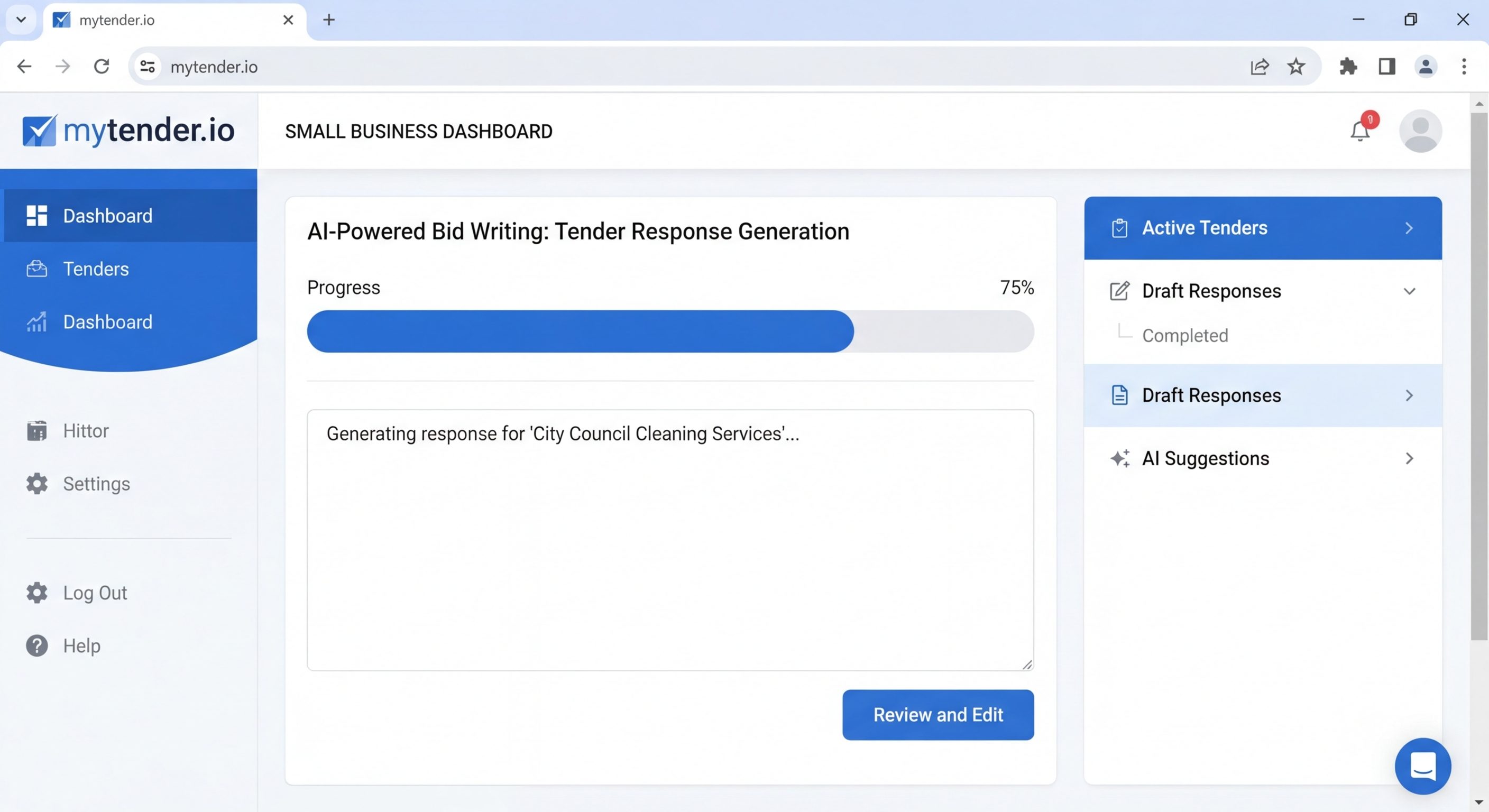
AI tender writing tool for SMEs mytender.io
Building a Sustainable Pipeline: Beyond Individual Bids
Winning individual contracts is valuable. Building a sustainable pipeline of public sector revenue requires thinking beyond individual bids to relationship development, market positioning, and capability investment.
Pre-Market Engagement
The Procurement Act explicitly encourages preliminary market engagement—dialogue between buyers and suppliers before formal tenders are published. For SMEs, this engagement is an extraordinary opportunity.
Pre-market engagement allows you to:
- Understand buyer requirements in depth before specification is finalised
- Influence how requirements are framed in ways that play to your strengths
- Establish relationship and name recognition that persists through evaluation
- Identify whether you are genuinely competitive before investing in bid preparation
Buyers publish requests for information (RFIs), hold supplier days, and conduct one-to-one conversations as part of market engagement. Responding to RFIs thoughtfully, attending supplier days, and requesting meetings with buyers demonstrates genuine market engagement and builds the relationships that support long-term pipeline development.
Framework Relationships
Once on frameworks, the quality of your relationship with framework managers and call-off buyers matters as much as the quality of individual bids. Buyers use framework call-offs to access suppliers they trust, and trust is built through consistent delivery, proactive communication, and demonstrated problem-solving.
Treat every framework call-off as a reference opportunity for future work. Buyers within frameworks talk to each other. Outstanding performance on one call-off generates referrals and positive reputation that improves your competitive position on subsequent opportunities.
Investment in Accreditation and Standards
Certain accreditations and certifications are functionally mandatory for meaningful public sector participation. SMEs that have not invested in relevant standards find themselves unable to bid for an increasing proportion of opportunities.
Essential for most public sector markets:
- ISO 9001 (quality management system)
- Cyber Essentials or Cyber Essentials Plus (for contracts involving data handling)
- GDPR-compliant data protection framework with documented DPO appointment
Valuable for specific markets:
- ISO 14001 (environmental management—increasingly required or scored in evaluation)
- ISO 45001 (health and safety management)
- Living Wage employer accreditation
- Disability Confident employer status
- Industry-specific certifications (CHAS, Constructionline, SafeContractor for construction)
The cost of these accreditations is an investment in market access, not an administrative overhead. They remove barriers, reduce buyer risk perception, and contribute to evaluation scores.
Getting Started: Your 90-Day Action Plan
If you are serious about building public sector revenue, a structured 90-day action plan gives you focus and momentum.
Days 1-30: Foundation- Register on the Central Digital Platform and complete your profile comprehensively
- Set up FTS and CDP alerts for CPV codes relevant to your services
- Identify 2-3 frameworks relevant to your capability and assess whether your business meets entry requirements
- Begin building your bid library: company overview, 3-5 case studies, team CVs, key policies
- Identify any certification gaps and create a plan to address them
- Review pipeline notices for upcoming procurements in your target markets
- Attend relevant supplier days and respond to any live RFIs
- Research 3-5 target buyers: review their strategic plans, recent procurement history, and published social value priorities
- Request debriefs on any recent unsuccessful bids and document lessons learned
- Identify subcontracting or teaming opportunities with complementary SMEs
- Submit your first bid using the improved approach this guide describes
- Score the experience: what worked, what was harder than expected, what you will do differently
- Refine your bid library based on learning from the submission
- Begin pre-market engagement conversations with 2-3 target buyers
- Assess AI bid writing tools that could improve your efficiency and output quality
Why mytender.io Is Built for SMEs
mytender.io was designed with the specific reality of SME bid writing in mind. Small businesses do not have the luxury of dedicated bid teams with weeks to invest in each tender. They need tools that dramatically improve efficiency without sacrificing quality—allowing expert knowledge to drive strong responses rather than being consumed by the mechanics of production.
The platform's AI-assisted tender writing generates high-quality first drafts from your company information and tender documents in minutes rather than days. Your team refines and strengthens these drafts using their expertise, rather than building from scratch under time pressure. Consistency tools ensure messaging holds across long tenders. Compliance checking ensures you answer what is being asked.
For SMEs taking their first serious steps into public sector procurement—or for established SME bidders looking to improve win rates—mytender.io provides the capability multiplication that levels the playing field with larger competitors. The government's ambition to direct £7.4 billion annually to small businesses is a real opportunity. The question is whether your business is positioned to capture it.
The Procurement Act 2023 has genuinely changed what is possible for SMEs in public sector markets. The barriers that historically excluded smaller businesses are systematically lower. The tools available to compete on quality are better than they have ever been. The question is not whether the opportunity exists—it clearly does. The question is whether you are going to take it.
---
mytender.io helps SMEs win more public sector contracts through AI-powered tender writing that combines intelligent automation with expert knowledge. Start your free trial and see how much faster you can produce winning bids.Tags
Ready to Transform Your Tender Writing?
See how MyTender's AI can help you write winning tenders in a fraction of the time.