
National Security in Procurement Act Tenders: A Supplier Guide to Evidence That Reassures Buyers
PPN 025 has made national security a practical bid issue, not just a legal exemption. This guide shows suppliers how to write credible security, supply chain and governance evidence without overclaiming.
mytender.io Research Team
Tender Writing & Bid Management Specialists
National Security in Procurement Act Tenders: A Supplier Guide to Evidence That Reassures Buyers
National security used to feel like somebody else's tender problem.
This article is part of our Procurement Act series. For an overview of what changed and links to every guide in the series, see our Procurement Act 2023 supplier's guide.
Defence suppliers worried about it. Sensitive technology providers worried about it. Most FM, construction, waste, logistics, professional services and software bidders could treat it as background noise.
That is changing.
PPN 025, published in 2026, gives central government buyers guidance on protecting national security through public procurement. It sits inside a wider Procurement Act world where transparency, exclusion risks, supplier resilience and contract performance all matter more than they used to.
For suppliers, the lesson is simple: if the buyer is worried about security risk, vague reassurance will not be enough.
You do not need to sound like an intelligence agency. You do need to show that you understand the risk, control the moving parts and can prove what you say.
National security procurement tender response hero showing secure supply chains, assurance documents and public sector risk controls
Why National Security Is Becoming a Live Bid Issue
The Procurement Act came into force in 2025. By 2026, buyers were no longer just learning the new language. They were starting to use it in live procurements.
That matters because the Act gives contracting authorities clearer routes to manage supplier risk across the whole commercial lifecycle. The tender is no longer the only moment that matters. Buyers are thinking about selection, award, notices, contract management, supplier performance and termination as one connected story.
PPN 025 adds another layer. It focuses on cases where national security concerns may affect procurement decisions, including use of the national security exemption.
Most suppliers will never face the full force of that exemption. But many will still see sharper questions about:
- who owns or controls the supplier
- where key services are delivered from
- which subcontractors touch sensitive work
- how data is protected
- how staff are vetted, trained and supervised
- what happens if a security incident occurs
- how dependencies are monitored during the contract
That is not just a cyber question. It is a trust question.
The buyer wants confidence that awarding the contract will not create a risk they cannot explain later.The Mistake: Treating Security as a Policy Dump
The weakest answers attach a few policies and hope for the best.
An information security policy. A business continuity plan. A modern slavery statement. A supply chain policy. Maybe an ISO certificate.
Those documents may be useful. They are not an answer by themselves.
Evaluators need to understand how your controls apply to this contract. A generic policy says, "we have rules." A strong tender response says, "these are the risks in this service, these are the controls we will use, this is who owns them and this is the evidence we will provide."
There is a big difference.
If the authority asks about national security, sensitive data or supply chain assurance, do not start by listing accreditations. Start by showing that you understand what could go wrong.
Then show how you prevent it.
What Buyers Are Really Testing
Security questions can look technical. Often, the test is more practical.
The evaluator is trying to answer five questions:
- Have you understood the specific risk in this contract?
- Are your controls mature enough for the sensitivity of the work?
- Can you control your subcontractors and suppliers?
- Will the contract team know what to do if something changes?
- Can the buyer evidence a defensible award decision?
That last point is easy to miss.
Public buyers do not only need a good supplier. They need a record that shows why choosing that supplier was reasonable. Under the Procurement Act, with more transparency and more lifecycle data, weak assurance is uncomfortable.
Your job is to make the evaluator's file stronger.
Give them clear evidence. Give them plain explanations. Give them a route from risk to control to proof.
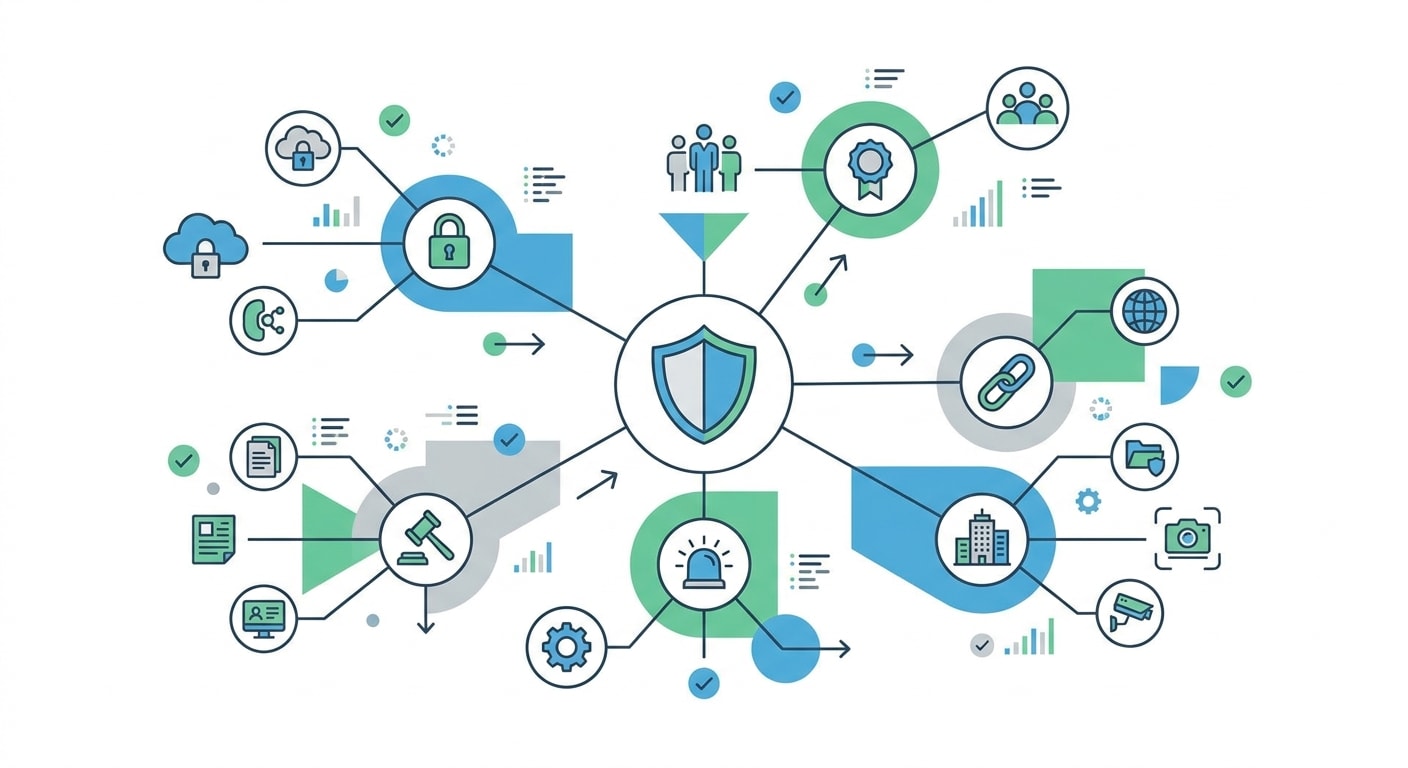
Evidence map for national security procurement responses covering data, people, supply chain, premises, incident response and governance
Build Your Answer Around Six Evidence Areas
A useful national security response does not need to be dramatic. It needs to be complete.
Most suppliers can structure the answer around six areas.
1. Data and information handling
Explain what information you will access, where it will be stored and who can see it.
Do not say "data is secure" and move on. Break it down.
Cover:
- classification or sensitivity of contract data
- user access controls
- audit trails
- encryption and secure transfer
- retention and deletion
- restrictions on offshore access, where relevant
- incident reporting routes
If the service does not involve sensitive data, say so. Then explain how you reached that view.
That honesty helps. Overstating the risk makes the answer feel theatrical. Understating it makes you look careless.
2. People and vetting
Many security failures are not caused by sophisticated attacks. They happen because the wrong person has the wrong access at the wrong time.
Set out how you will manage people risk.
For some contracts, that may mean formal vetting. For others, it may mean right-to-work checks, role-based access, induction, security awareness training, disciplinary controls and leaver processes.
The key is proportionality.
A cleaning contract in a government building may need different evidence from a software platform handling sensitive operational data. A construction project on a secure estate may need different controls again.
Do not copy and paste one answer across them.
3. Supply chain control
This is where many bids become thin.
The prime contractor says it will manage subcontractors. The evaluator quietly wonders how.
Name the control points:
- how subcontractors are selected
- what due diligence is completed before appointment
- which subcontractors will access sites, systems or data
- what contractual flow-downs apply
- how changes in ownership, location or delivery model are reported
- how performance and compliance are monitored
- what happens if a subcontractor creates unacceptable risk
If you rely on a critical supplier, be direct about it. Buyers are not reassured by hidden dependencies.
They are reassured by controlled dependencies.
4. Premises, assets and site access
For FM, construction, waste, logistics and maintenance contracts, security is often physical as well as digital.
Explain how you will control access to sites, keys, vehicles, equipment, drawings, devices, uniforms and waste streams.
This does not need to read like a fortress plan. It needs to show the evaluator that everyday operational details have been thought through.
For example:
- who authorises access to restricted areas
- how passes, keys and fobs are issued and recovered
- how visitors and subcontractors are supervised
- how lost devices or documents are escalated
- how vehicles and tools are secured
- how sensitive waste is segregated and tracked
Small controls win trust because they feel deliverable.
5. Incident response
Every supplier says incidents are unlikely. Serious buyers still want to know what happens if one occurs.
Your answer should explain:
- what counts as a reportable security incident
- who receives the first report
- how quickly the authority is notified
- who leads containment and investigation
- how evidence is preserved
- how lessons learned are captured
- how corrective actions are tracked to closure
Avoid heroic claims. "We will eliminate all risk" is not credible.
A better answer says, "We reduce likelihood through these controls, and if something happens, this is the response path."
6. Governance and assurance
This is the glue.
Controls fail when nobody owns them. A strong answer names the owner, meeting rhythm and evidence pack.
For example:
- Contract Manager owns monthly assurance review
- Security Lead owns incident review and control updates
- Procurement Lead owns subcontractor due diligence refresh
- HR owns vetting, induction and leaver evidence
- Operations Lead owns site-access audits
Then explain what the buyer will see. Dashboards, meeting minutes, audit logs, training records, incident reports, subcontractor reviews and risk registers all help.
The point is not to bury the buyer in paperwork. It is to make assurance visible.
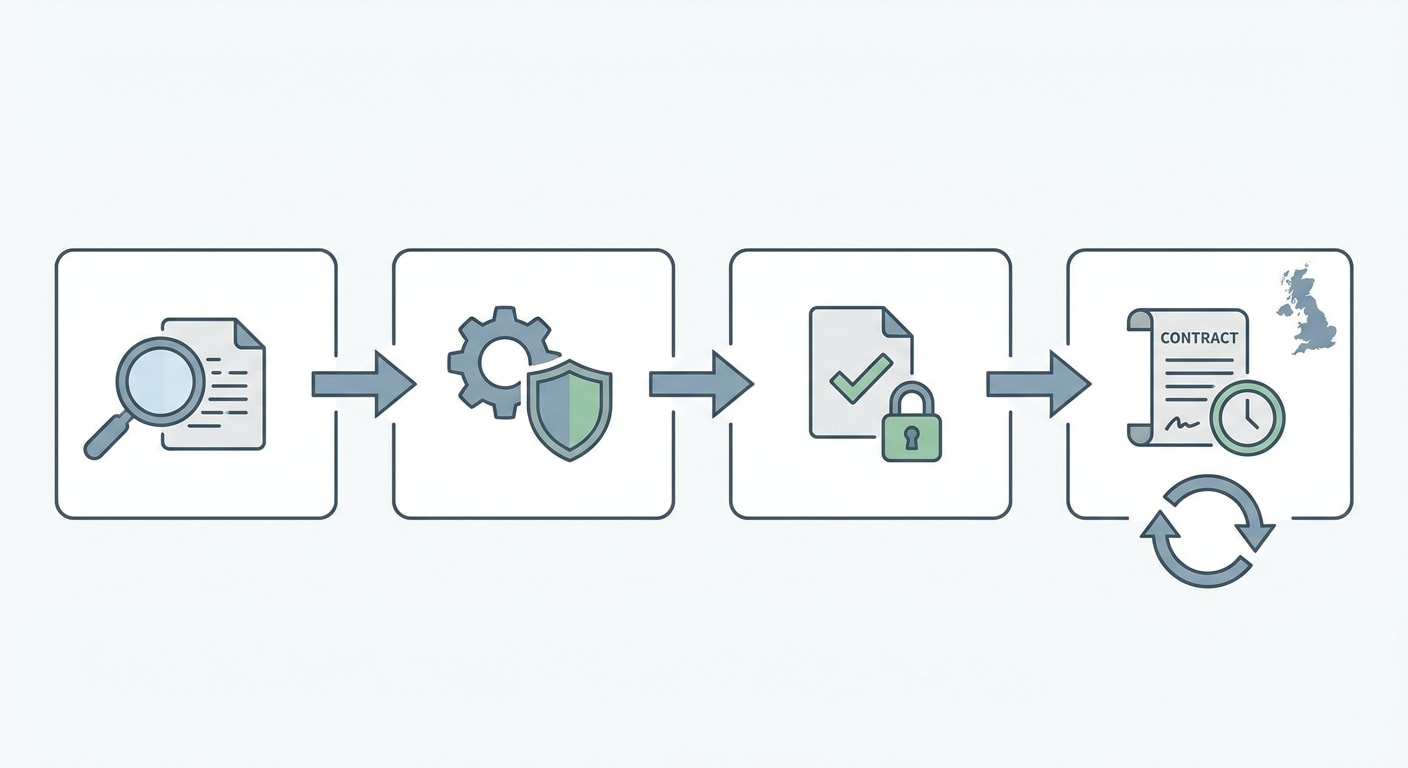
Bid team process flow for turning national security requirements into tender evidence and contract monitoring
Write the Response Like a Risk Register, Not a Brochure
Security tender responses often fail because they sound too polished.
The buyer asks about risk. The supplier answers with brand language.
Do the opposite. Write like a calm risk owner.
A useful structure is:
- Risk: what could affect the authority?
- Control: what you do to reduce likelihood or impact.
- Owner: who is accountable.
- Evidence: what proves the control is operating.
- Escalation: what happens if something changes.
Here is a simple example.
If subcontractors may access a restricted site, the risk is unauthorised or unmanaged access. The controls are pre-appointment due diligence, named personnel lists, site induction, pass control, supervised access and leaver recovery. The owner is the Contract Manager. Evidence includes induction logs, access lists, audit records and monthly subcontractor reviews. Escalation goes to the authority's contract lead within an agreed timeframe.
That is not fancy. It is credible.
How This Changes Sector-Specific Tender Writing
National security questions will not look the same in every sector.
For construction, the focus may be site access, design information, critical infrastructure, subcontractor chains and material provenance.
For facilities management, it may be building access, helpdesk data, statutory records, keys, mobile engineers and cleaning or security staff working out of hours.
For waste and environmental services, it may be route data, depot access, hazardous materials, critical public services, vehicle tracking and continuity during disruption.
For technology suppliers, it may be hosting location, administrator access, software dependencies, incident response, secure development and data separation.
For professional services, it may be document handling, conflicts, client confidentiality, overseas delivery teams and controlled access to sensitive policy or commercial information.
The best responses are sector-aware. They do not describe security in the abstract. They connect it to the service model.
Do Not Overclaim Certifications
Accreditations help. They are not magic.
If you have ISO 27001, Cyber Essentials Plus or sector-specific accreditations, mention them. Then explain what they cover and how they apply to the contract.
Do not imply an accreditation solves every risk. It will not.
A certificate may prove that a management system exists. The tender still needs to know how the contract will be delivered safely.
Use certifications as supporting evidence, not the whole answer.
A good sentence sounds like this:
"Our ISO 27001-certified information security management system provides the control framework, and the contract-specific controls below show how those requirements will be applied to authority data, user access, subcontractor interfaces and incident reporting."
That is much stronger than a lonely certificate number.
Supply Chain Evidence Needs Particular Care
The supply chain section is where buyers are becoming less patient.
It is not enough to say subcontractors will comply with your policies. Evaluators want to know how you check.
Map suppliers by risk, not by spend.
A small subcontractor with site access may carry more risk than a large office stationery supplier. A software dependency buried inside a workflow may matter more than an obvious operational supplier. An overseas support function may be more sensitive than a UK-based low-value purchase.
A simple tiering model helps:
- Critical: touches sensitive data, systems, restricted sites or essential service continuity
- Managed: supports delivery but has limited access or substitutable work
- Low-risk: no meaningful access to sensitive assets, data or operations
Then explain the due diligence for each tier.
Critical suppliers might need ownership checks, location checks, cyber assurance, financial resilience review, contract flow-downs and annual refresh. Low-risk suppliers may only need basic onboarding controls.
That proportionality makes the answer believable.
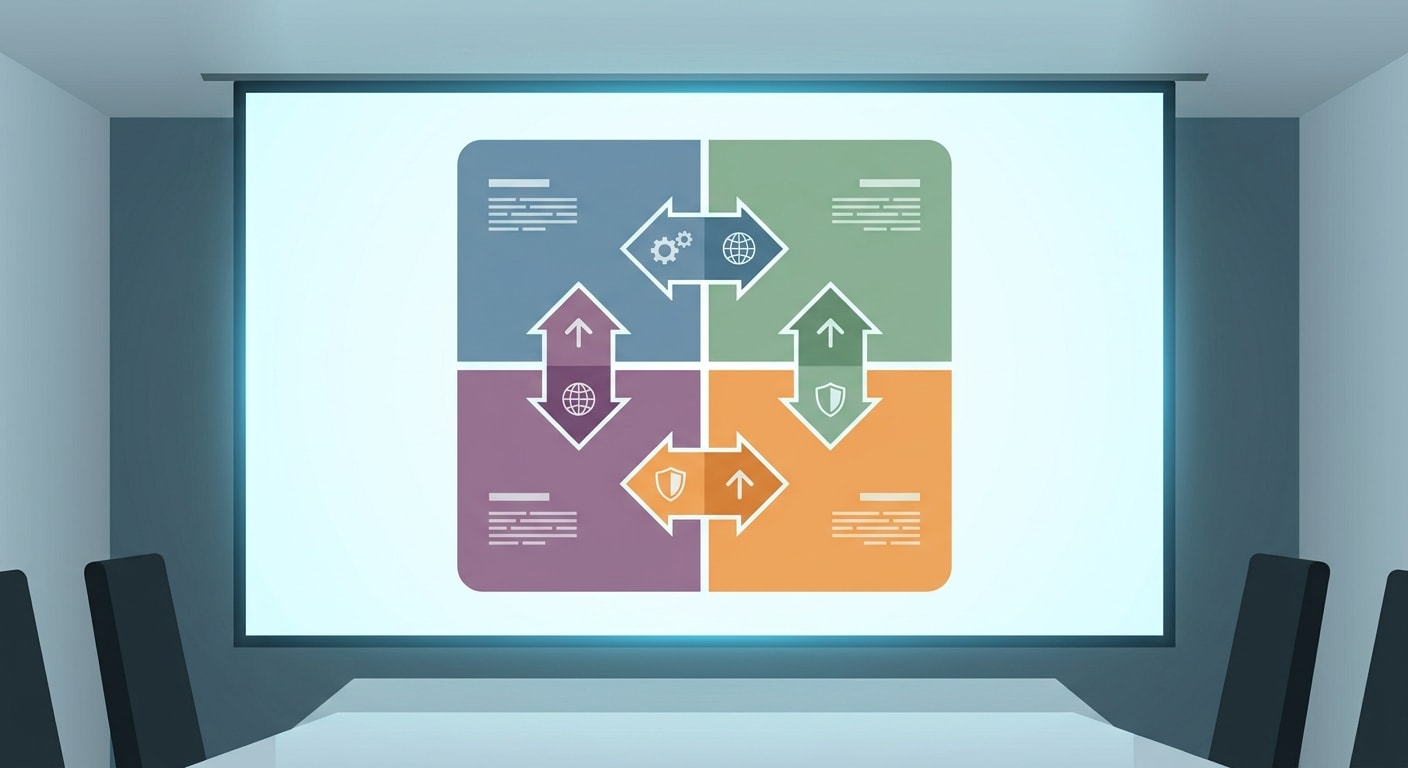
Supply chain risk matrix for public sector tender responses showing critical suppliers, assurance levels and controlled dependencies
What to Say If You Are an SME
Smaller suppliers sometimes panic when they see national security language.
Do not try to pretend you have a huge compliance department. Evaluators can tell.
Instead, show proportionate control.
You can still write a strong answer if you are clear on:
- who owns security decisions
- which systems hold contract data
- how access is granted and removed
- which suppliers you rely on
- how incidents are escalated
- what evidence you can provide during delivery
SMEs often have an advantage here. Shorter reporting lines can mean faster decisions and clearer accountability.
Say that, but prove it.
For example, explain that named directors review critical supplier changes, that user access is checked monthly, or that incidents are escalated directly to the contract lead within a defined timeframe.
Plain control beats inflated language.
The Procurement Act Transparency Angle
The Procurement Act increases transparency across procurement and contract management. That does not mean every security detail should be published. It does mean buyers are more aware of the record they create.
Your tender response should help them keep that record defensible.
That means avoiding claims that cannot be evidenced. It also means making clear which information is commercially sensitive or security-sensitive, where appropriate.
If a buyer asks for detail that should not be widely disclosed, handle it carefully. Provide enough assurance to answer the question, but do not publish sensitive operational details unnecessarily.
A good response can say:
"We can provide the authority with the full incident response escalation matrix and named security contacts through the secure clarification process or during mobilisation, rather than including sensitive contact routes in a widely circulated tender document."
That shows judgement.
Turn the Answer Into a Contract Management Plan
The best tender answers are easy to deliver after award.
Before you submit, ask whether your contract team could actually run the plan you have written.
If the answer is no, fix the bid.
Your final response should translate into a simple contract management rhythm:
- mobilisation security review
- named owner confirmation
- access and system setup checks
- subcontractor due diligence review
- monthly assurance dashboard
- incident log review
- quarterly risk refresh
- annual control review for longer contracts
This is where many suppliers can gain marks. You are not just reassuring the evaluator before award. You are showing how the authority will stay reassured after award.
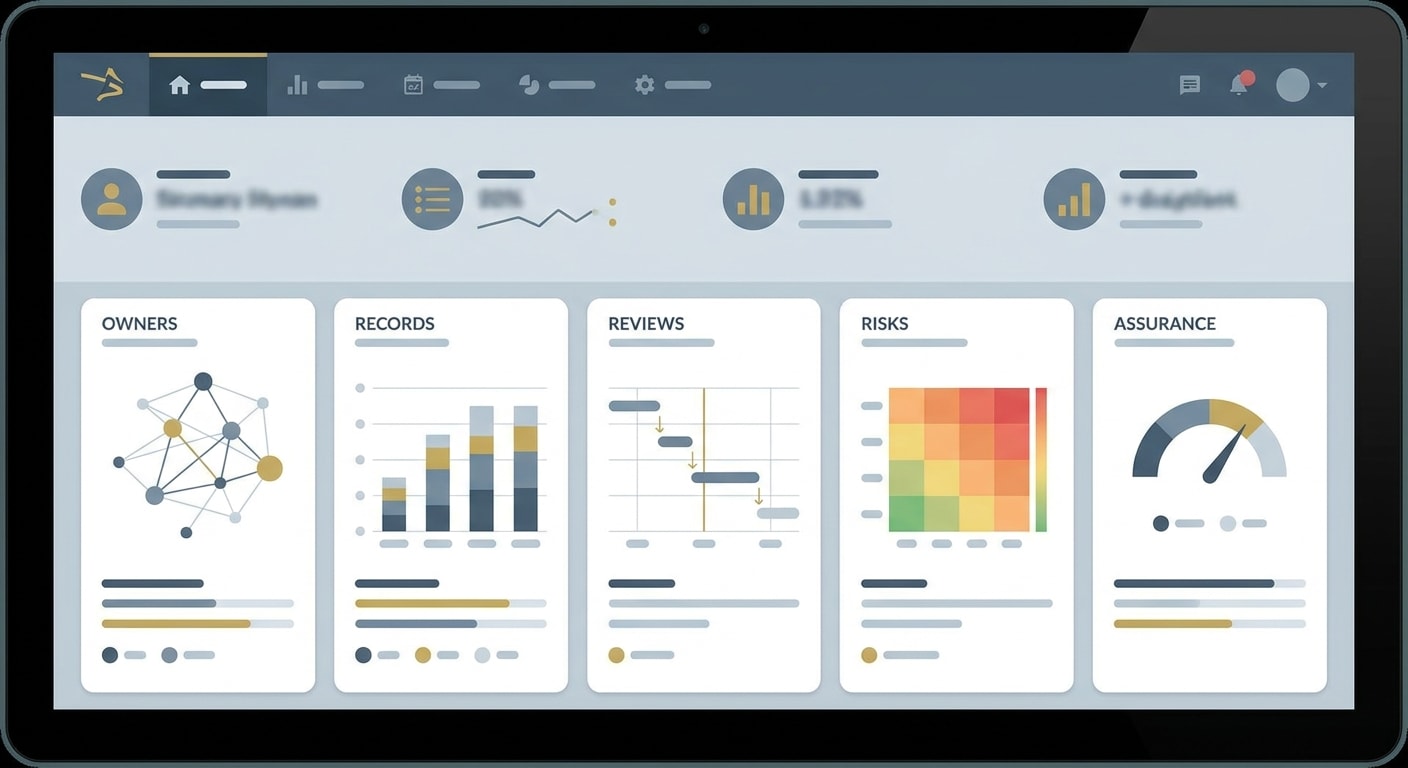
Governance dashboard for national security procurement assurance showing owners, reviews, risks and evidence records
A Practical Writing Template
Use this structure when the tender asks about national security, sensitive information or supplier assurance.
Opening paragraph
Start by acknowledging the contract-specific risk.
"We recognise that this contract requires reliable service delivery, controlled access to authority information and clear assurance over subcontractors who may interact with sites, systems or operational data. Our approach is based on proportional controls, named accountability and evidence that can be reviewed throughout delivery."
Risk and control section
Use a short table or set of subheadings covering data, people, supply chain, premises, incidents and governance.
For each one, include the risk, control, owner and evidence.
Evidence section
List what the buyer will receive during mobilisation and live delivery.
Examples include:
- access control register
- training completion log
- subcontractor due diligence record
- incident log and lessons learned tracker
- monthly assurance dashboard
- audit findings and corrective action tracker
Change control section
Explain how you will notify the authority if something material changes. That might include a new critical subcontractor, a change in hosting location, a security incident, a change in ownership or a service continuity risk.
Close
End with confidence, not fluff.
"This approach gives the authority a clear line of sight from identified risk to operational control, named ownership and auditable evidence. It also creates a practical assurance rhythm for contract management, so security remains controlled after award rather than treated as a one-off tender declaration."
Common Pitfalls to Avoid
Avoid these mistakes. They make good suppliers look risky.
Saying "not applicable" too quickly
If a requirement looks irrelevant, explain why. A short rationale is better than a blank dismissal.
Hiding subcontractors
If a supplier matters to delivery, mention the dependency and the control. Hidden dependencies worry evaluators.
Overloading the answer with policy names
Policies are evidence. They are not the operating model.
Forgetting leavers and role changes
Access removal is one of the simplest controls to describe and one of the easiest to miss.
Writing a cyber answer to a wider security question
Cyber is important, but national security risk can also involve people, sites, ownership, supply chains, continuity and information handling.
Promising instant notification for every issue
Be precise. Define reportable incidents and realistic notification times. Impossible promises reduce confidence.
Where mytender.io Fits
Bid teams often struggle with security questions because the evidence sits in too many places. Policies are in one folder. Subcontractor records are somewhere else. Past answers live in old submissions. Contract managers hold the operational detail in their heads.
That makes the tender harder than it needs to be.
A good bid library should hold approved security evidence, but it should also hold the context around it: when to use it, which contracts it suits, what needs tailoring and which owner should review it before submission.
That is the kind of knowledge discipline mytender.io is built to support. Not by turning security answers into generic boilerplate, but by helping teams find, tailor and reuse credible evidence quickly.
The Takeaway
National security in procurement is not just a legal edge case any more. It is part of a wider move towards more careful supplier assurance.
That does not mean every tender needs a heavy security response. It does mean suppliers need to stop treating security as an appendix.
The winning answer is calm, specific and evidenced.
Show the risk. Show the control. Name the owner. Prove the evidence. Explain the escalation route.
Do that, and you make the evaluator's job easier. More importantly, you make the award decision safer.
If you want to find public sector opportunities where security, compliance and sector evidence matter, the Tender Finder is free to use. It is a useful way to see the live tenders your team should be preparing for next.
Tags
Ready to Transform Your Tender Writing?
See how MyTender's AI can help you write winning tenders in a fraction of the time.