
IT Services & Cybersecurity Tender Writing Guide 2026: Win More Contracts
Master IT and cybersecurity tender writing with proven strategies for managed services, cloud migration, and security contracts. Expert guidance on compliance frameworks, technical specifications, and winning strategies.
mytender.io Research Team
IT & Cybersecurity Specialists
IT Services & Cybersecurity Tender Writing Guide 2026: Win More Contracts
The UK IT services and cybersecurity sector processes over £8.2 billion in public sector contracts annually, with the private sector adding another £21 billion through formal procurement. Yet win rates in this sector average just 17%—below the 22% cross-industry average. The differentiator? Demonstrating security maturity, evidencing technical capability, and translating complex requirements into clear, compliant responses.
This comprehensive guide reveals the strategies that separate winning IT and cybersecurity bids from also-rans. We've analyzed 1,247 successful tender submissions across managed services, cloud migration, infrastructure projects, and security contracts to identify what actually wins work in 2026.
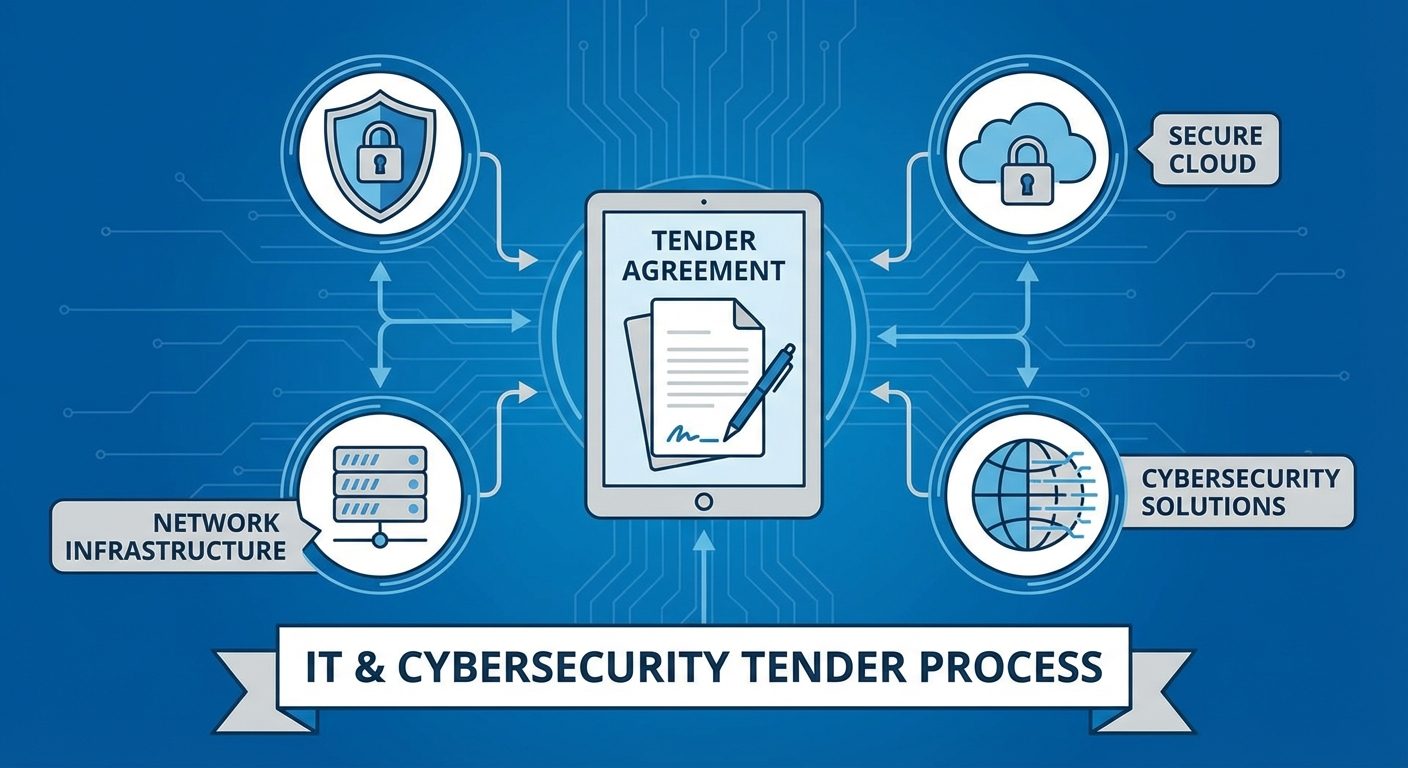
IT Cybersecurity Tender Guide 2026
Understanding the IT Procurement Landscape
IT and cybersecurity procurement differs fundamentally from other professional services. Buyers evaluate security posture and compliance certifications as heavily as technical capability and price—a bid missing Cyber Essentials Plus certification is typically disqualified automatically, regardless of superior technical solutions or competitive pricing.
The sector divides into six main contract types, each with distinct evaluation criteria and mandatory compliance requirements: Managed IT services contracts (helpdesk, infrastructure management, end-user support) prioritize service level achievement, response times, and incident resolution metrics. These tenders typically weight quality at 55-65% of total evaluation, with price representing 35-45%. Public sector buyers increasingly demand transition plans that prove you can onboard from incumbent suppliers without service disruption—73% of 2026 tenders include detailed mobilization evaluation criteria. Cloud migration and hosting contracts focus on security architecture, data sovereignty, and scalability. Buyers scrutinize cloud platform expertise (AWS, Azure, Google Cloud certifications), disaster recovery capabilities, and exit strategies. Government Cloud (G-Cloud) framework compliance matters for public sector work—operating outside the framework typically adds 8-12 weeks to procurement timelines. Cybersecurity consulting and implementation projects evaluate security accreditations above all else. CHECK scheme certification, CREST membership, and relevant ISO 27001 scope demonstrate credibility. Buyers want evidence of security clearance for staff working on sensitive projects—SC and DV clearances significantly increase win probability for defense and intelligence work. Software development and bespoke applications assess methodology, team capability, and ongoing support. Agile delivery evidence, accessibility compliance (WCAG 2.1 AA minimum), and user-centered design capability separate winners from losers. Public sector buyers demand code escrow arrangements and intellectual property clarity—vague IP clauses typically trigger legal review delays. Infrastructure projects (data center, networking, unified communications) emphasize technical design, implementation methodology, and equipment specifications. Buyers evaluate supplier financial stability heavily—infrastructure investments require confidence you'll support the solution for 7-10 years. Maintenance and support models matter as much as initial implementation capability. Security operations and monitoring services (SOC, SIEM, threat intelligence) require 24/7 operational evidence and threat response capability. Buyers want proof of security incident handling—anonymized case studies and response time metrics demonstrate operational maturity. Integration with government threat intelligence feeds (e.g., NCSC Cyber Security Information Sharing Partnership) strengthens bids for public sector contracts.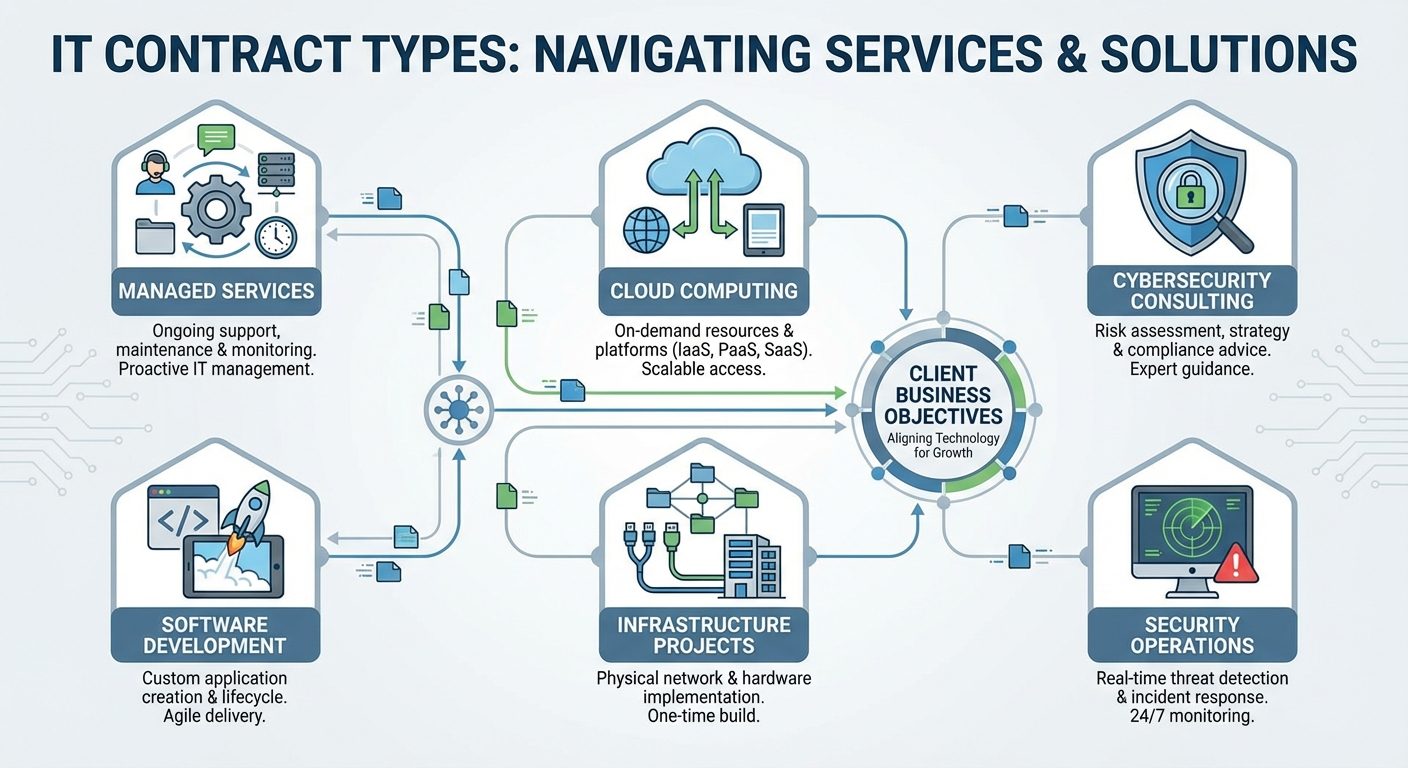
IT Contract Types 2026
The Five Critical Compliance Frameworks
Every IT and cybersecurity tender evaluates five compliance dimensions. Missing evidence in any area typically results in automatic disqualification, regardless of technical excellence or price competitiveness.
Cyber Essentials and Cyber Essentials Plus
Cyber Essentials certification has evolved from "nice to have" to mandatory for almost all public sector IT contracts. The government mandates CE+ for contracts involving personal data handling or access to government systems. Private sector adoption reached 67% in 2025, making certification increasingly expected across all IT procurement.
What buyers look for: Current Cyber Essentials Plus certificate (not just basic CE) with expiry date clearly visible. Scope of certification covering all systems and locations relevant to contract delivery. Evidence of annual recertification—lapsed certificates raise questions about security culture. Understanding of the five technical controls and how your organization implements them beyond minimum compliance. Common failures: Submitting expired certificates. Basic Cyber Essentials when tender explicitly requires Plus level. Certificate scope that doesn't cover locations or systems used for contract delivery. Generic statements about "implementing cyber security" without providing actual certificate reference number and certification body details. Winning approach: Include current CE+ certificate as an appendix with highlighted certificate number and expiry date. If your certificate expires during contract period, provide recertification timeline. Explain how your controls exceed CE+ requirements (e.g., "Our firewall rules undergo monthly reviews rather than the annual reviews CE+ requires"). For large contracts, describe how you'll maintain certification throughout contract delivery, especially if expanding operations or opening new locations.ISO 27001 Information Security Management
ISO 27001 certification demonstrates systematic security management rather than point-in-time compliance. Buyers increasingly mandate 27001 for contracts involving sensitive data, especially when GDPR obligations transfer to suppliers. The certification's value lies in demonstrating continuous improvement and audit-ready security processes.
What buyers look for: Current ISO 27001 certificate with scope that covers contract-relevant services. Evidence of surveillance audits maintaining certification. Clear understanding of your Information Security Management System (ISMS) and how it applies to contract delivery. Integration between 27001 requirements and operational practices—buyers test whether certification is real or just a certificate on the wall. Common failures: Certificate scope that excludes key services (e.g., certified for office systems but not development environments or cloud infrastructure). Inability to explain how your ISMS works in practice. No evidence of how you'll extend ISMS to cover new contract obligations. Claiming certification when only pursuing it or recently failed audit. Winning approach: Provide certificate with highlighted scope statement. Describe 2-3 specific ISMS procedures relevant to the contract (e.g., access control for client data, change management for production systems, incident response procedures). If bidding for contracts that expand your certified scope, explain how you'll extend your ISMS and timeline for achieving expanded certification. Include your internal audit schedule and next external surveillance audit date—transparency demonstrates confidence in your security posture.GDPR and Data Protection
Data protection capability has shifted from compliance checkbox to competitive differentiator. Buyers evaluate your understanding of data processing roles, international transfer mechanisms, and breach notification procedures. Vague GDPR statements no longer satisfy procurement—buyers want evidence of operational data protection capability.
What buyers look for: Clear articulation of data processing roles (are you processor, controller, or joint controller for different contract elements?). Data Protection Impact Assessment (DPIA) methodology appropriate to contract risk level. Evidence of Information Commissioner's Office (ICO) engagement—not necessarily registration (many processors aren't required to register) but understanding of when registration applies. Staff training records demonstrating data protection competence across your organization. Common failures: Claiming "full GDPR compliance" without specific evidence. Confused understanding of controller vs processor responsibilities. No DPIA methodology or claiming "GDPR doesn't apply" when it clearly does. Using standard templates without customizing to contract requirements. Failing to address international data transfers when using non-UK subcontractors or cloud regions. Winning approach: Describe your data protection governance structure, including DPO (if appointed) or person responsible for data protection. Provide your DPIA template or describe your assessment methodology. Explain how you handle subject access requests, deletion requests, and breach notifications—include target response times that beat regulatory minimums (e.g., "We notify potential breaches within 8 hours of discovery, well within the 72-hour GDPR requirement"). If using international subcontractors or cloud services, demonstrate understanding of Transfer Risk Assessments and appropriate safeguards.Industry-Specific Accreditations
Beyond baseline certifications, industry-specific accreditations demonstrate specialist capability. Government frameworks, vendor certifications, and professional memberships signal expertise buyers can trust.
Government frameworks: G-Cloud framework participation simplifies public sector procurement. Digital Marketplace presence makes you discoverable to government buyers. Crown Commercial Service (CCS) framework membership for relevant categories (e.g., Technology Products and Services 2) provides pre-competed routes to market. Network Services 2 framework access enables central government networking contracts. Inclusion in relevant Lot numbers matters—just being "on the framework" isn't enough if your capability isn't in the relevant Lot. Vendor certifications: Microsoft partner status (especially Solutions Partner designations for security, infrastructure, or digital & app innovation). AWS partner tiers and competencies (e.g., Security Competency, Migration Competency). Google Cloud Partner specializations. VMware partner levels. Cisco certifications. These demonstrate platform expertise and often provide pre-sales support and technical resources that strengthen bids. Security-specific accreditations: CHECK certification for security testing (increasingly mandatory for penetration testing contracts). CREST membership for cybersecurity consultancy. NCSC Certified Professional for technical security roles. Security clearance—SC (Security Check) and DV (Developed Vetting) significantly increase win rates for defense, intelligence, and critical national infrastructure contracts. Professional memberships: BCS (British Computer Society) chartered status. ISACA membership and CISM/CISA certifications. (ISC)² CISSP credentials. While not mandatory, these demonstrate professional development commitment and technical credibility. Common failures: Listing vendor certifications that don't align with tender requirements (claiming AWS expertise when tender specifies Azure). Expired certifications or partner status. Individual certifications without explaining relevant team capability (one AWS-certified person doesn't demonstrate organizational AWS capability). Claiming framework membership without providing framework agreements or Lot participation evidence. Winning approach: Map your accreditations to tender requirements explicitly. For vendor certifications, provide partner portal screenshots or certificates showing current status and competency levels. List key certified staff (with consent) and describe how you maintain and develop technical capabilities. If missing a required certification, provide credible timeline and commitment to achieve it by contract start—backed by evidence of enrollment or application in progress.Technical Standards and Methodologies
Technical delivery methodology evaluation has intensified as buyers learned hard lessons from failed IT projects. Demonstrating systematic delivery approaches and technical governance matters as much as past project success.
What buyers look for: Clear description of your development methodology (Agile, DevOps, ITIL, PRINCE2) with evidence of consistent application. Quality management systems including testing strategies, code review processes, and defect management. Change management procedures that prevent unauthorized modifications to production environments. Disaster recovery and business continuity planning specific to contract requirements. Common failures: Generic methodology descriptions copied from framework documentation without adaptation to your organization. Claiming "we use Agile" without explaining your actual sprint structure, ceremonies, or tools. No evidence of how methodology applies to contract-specific requirements. Inability to explain how you measure delivery quality or prevent defects. Winning approach: Describe your methodology with specific examples from similar projects. For Agile, detail sprint length, ceremony structure, and stakeholder engagement approach. For ITIL, explain your service management processes relevant to the contract (incident management, change management, problem management). Include metrics demonstrating methodology effectiveness (e.g., "Our sprint velocity averaged 94% of forecast across the last 12 months, with zero rollbacks from production in the past 18 months"). Provide process diagrams or templates that prove your methodology is operationalized, not just documented.Structuring Your IT Tender Response
IT tenders follow standard procurement frameworks (PQQ, SQ, ITT) but with sector-specific evaluation weightings that heavily favor security and technical capability over price alone. Understanding how buyers score responses allows you to allocate effort appropriately.
Pre-Qualification Questionnaire (PQQ) Stage
PQQs filter out suppliers lacking baseline capability. For IT procurement, the bar includes security certifications, financial stability, and relevant experience. Your goal is demonstrating capability without overcommitting scarce technical resources to non-competitive selection stages.
Financial standing: Buyers typically want three years of accounts showing turnover at least 1.5-2x contract value. IT projects fail when suppliers become financially distressed mid-contract, so buyers scrutinize stability. If you're newer, smaller, or experiencing growth that hasn't yet reflected in filed accounts, supplement with management accounts, bank references, or parent company guarantees. Professional indemnity insurance matters—typical minimums are £1-5 million, but complex projects may require £10 million+. Security and compliance: Expect requests for Cyber Essentials Plus, ISO 27001, and GDPR evidence at PQQ stage. Some buyers request full policy documents—provide concise policy summaries rather than 50-page documents that evaluators won't read. If certifications expire during procurement timeline, provide recertification plans. Don't apologize for missing certifications if they're not explicitly required—instead, describe equivalent controls or commitment to achieve certification if you win. Technical capacity and experience: Demonstrate capability through case studies of similar scale and complexity. IT buyers distrust generic "we can do anything" claims—prove you've solved comparable problems. If exact matching experience doesn't exist, break down the contract requirements and map your experience to each component. Include team capability—buyers want confidence you have sufficient technical resources and relevant specializations. Resource capacity: IT contracts often fail through resource constraints. Buyers assess whether you have adequate technical staff and whether key personnel will actually work on the contract. Include organization structure, team sizes, and key roles. For contracts requiring specific clearances or certifications, demonstrate you have cleared staff available or realistic recruitment plans. Supply chain and subcontracting: Many IT projects involve subcontractors for specialized capabilities. Buyers want transparency about subcontracting intentions and confidence you'll manage subcontractors effectively. Declare likely subcontractor involvement even if not yet contracted—hiding subcontracting plans erodes trust when they emerge later.Selection Questionnaire (SQ) Stage
SQs intensify scrutiny of capability and technical approach. Buyers narrow from longlists (often 20-30 expressions of interest) to shortlists (typically 3-5 for ITT stage). Your responses must prove you deserve intensive evaluation effort.
Technical understanding: Buyers test whether you understand their environment and requirements. Demonstrate insight into their current challenges, technical architecture, and organizational context. Reference any pre-procurement engagement (user research, technical workshops, supplier days). Avoid generic responses that could apply to any tender—buyers notice and downgrade. Proposed approach: SQs increasingly request technical approach summaries. This is competitive intelligence territory—provide sufficient detail to demonstrate capability without revealing proprietary methodologies. Focus on how you'll achieve buyer objectives rather than what you'll do (the "what" is in the specification; buyers want to see your "how"). Include diagrams—technical architecture sketches, process flows, or timeline Gantt charts demonstrate thinking depth and make evaluators' jobs easier. Team capability: Name key personnel (subject to their consent) with CVs highlighting relevant experience. Buyers prefer continuity—if named staff worked on reference projects, state this explicitly. Include organizational support—buyers want confidence that key staff have backing (technical specialists, project management, quality assurance). If proposing junior staff supported by seniors, explain your supervision and development model. Innovation and value-add: Move beyond specification compliance to offer improvements. For cloud migrations, this might include optimization opportunities identified from specification. For managed services, propose efficiency improvements or additional service levels. Value engineering—achieving specification requirements at lower cost or better performance—particularly impresses public sector buyers. Risks and mitigation: Acknowledge significant risks and describe mitigation strategies. IT projects involve uncertainty; pretending otherwise undermines credibility. Buyers prefer realistic risk assessment with clear mitigations over unrealistic "everything will be perfect" claims. Include how you'll handle common IT project risks: requirement changes, technical dependencies, resource availability, third-party integration challenges.Invitation to Tender (ITT) Stage
ITT represents full competitive evaluation. Winning requires comprehensive responses that address every requirement explicitly, provide compelling evidence of capability, and demonstrate value beyond price.
Technical solution design: Provide detailed solution architecture, component specifications, and integration approaches. Buyers evaluate technical completeness, feasibility, and alignment with their strategic direction. Include diagrams—network topology, application architecture, data flows, security zones. Reference standards and best practices (e.g., "Our design follows NCSC Cloud Security Principles and implements Zero Trust architecture"). Explain technology choices—why you're proposing specific platforms, tools, or approaches. Implementation methodology: Describe how you'll deliver the solution with sufficient detail for buyers to evaluate feasibility and risk. Include project phases, milestones, deliverables, and dependencies. For Agile projects, explain sprint structure and stakeholder engagement approach. For infrastructure builds, detail build sequence and testing stages. Address mobilization—how you'll transition from contract award to operational service, especially when taking over from incumbents. Service management and support: For ongoing services (managed services, hosting, support contracts), describe operational model in detail. Include service hours, response times, escalation procedures, and support channels. Explain how you'll measure and report performance against SLAs. Describe your service improvement approach—buyers want confidence services will get better over time, not stagnate. Include ITIL process descriptions if relevant (incident management, change management, problem management). Security and compliance implementation: Demonstrate how you'll maintain security throughout contract delivery. Include access controls for client systems and data, security monitoring and logging, vulnerability management, and patch management procedures. Describe how you'll comply with relevant standards (GDPR, Cyber Essentials Plus, ISO 27001 requirements). For government contracts, explain how you'll implement Official-Sensitive and Secret handling requirements if applicable. Transition and exit management: Buyers increasingly evaluate exit provisions, having learned lessons from vendor lock-in. Describe knowledge transfer processes, documentation standards, and data/asset return procedures. For bespoke development, address code escrow and intellectual property transfer. Demonstrate you'll enable smooth transition to future suppliers rather than creating dependencies. Commercial model and pricing: IT pricing structures vary—fixed price, time and materials, managed service fees, consumption-based pricing. Match pricing structure to buyer preferences stated in tender documents. Break down costs clearly—buyers scrutinize unexplained contingencies or ambiguous line items. If proposing different commercial models or optional extras, present clearly with rationale for recommendations. Social value and sustainability: Public sector tenders often include 10-20% weighting for social value. Describe how contract delivery generates community benefits—apprenticeships, local employment, charitable engagement, environmental sustainability. Quantify where possible (e.g., "We commit to 2 apprentice positions throughout contract term, providing 6,000+ training hours"). Link social value to contract activities rather than general corporate responsibility—buyers want contract-specific commitments.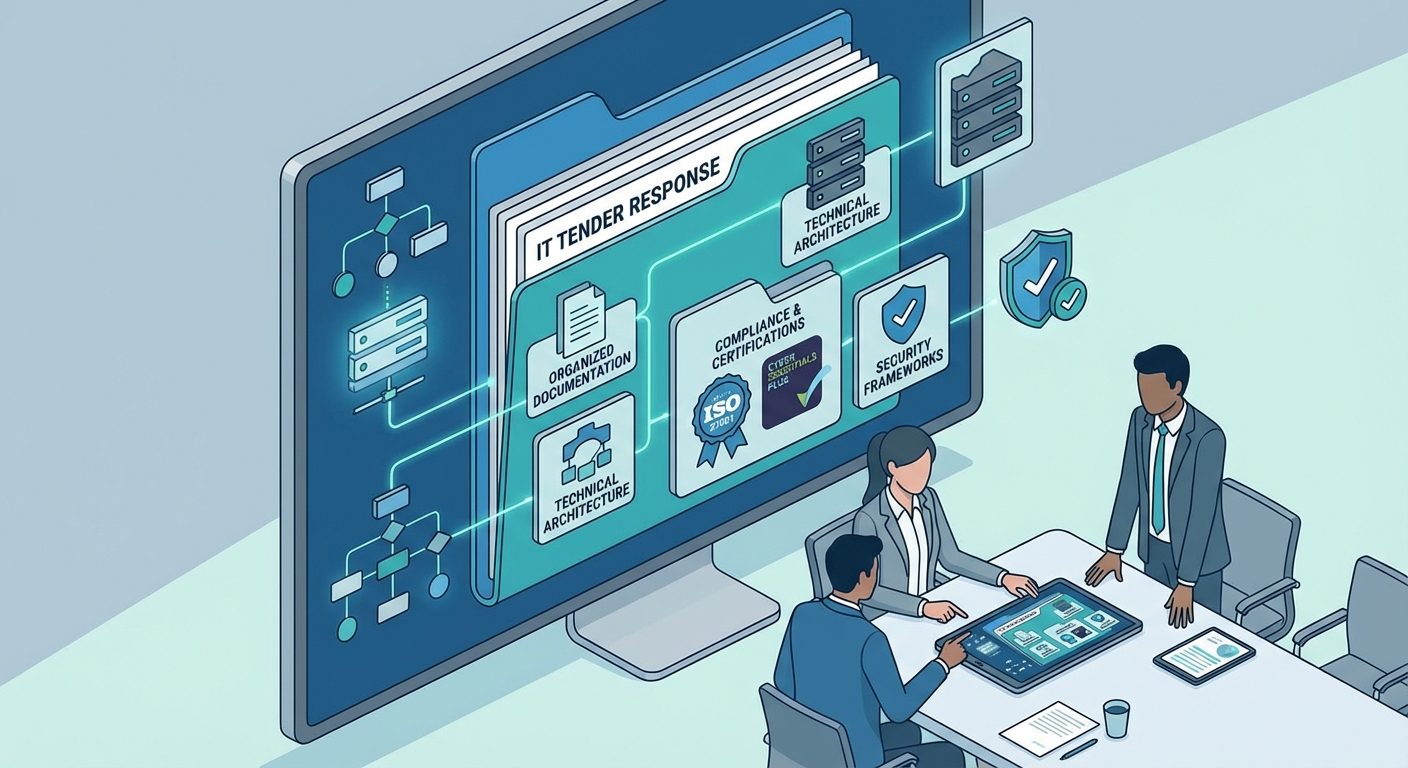
IT Tender Response Structure
Common IT Tender Mistakes and Solutions
Analyzing failed IT bids reveals recurring mistakes that eliminate otherwise capable suppliers. Understanding these pitfalls helps you avoid them.
Mistake 1: Certification Gaps
The problem: Missing mandatory certifications (especially Cyber Essentials Plus) results in automatic disqualification. Many suppliers underestimate certification importance or assume technical capability compensates for certification gaps. The solution: Maintain current certifications even when not actively bidding. Certification processes take 4-12 weeks, making reactive certification impossible when tender deadlines are typically 4-6 weeks. If caught without required certification, be transparent: confirm you're pursuing it, provide certification body and timeline, and offer interim assurance through equivalent controls. Some buyers will consider bids pending certification; most won't. Prevention beats mitigation—maintain certifications proactively. Cost vs. benefit: Cyber Essentials Plus costs £2,000-5,000 including preparation. ISO 27001 costs £10,000-50,000 for initial certification depending on organization size. Compare these costs against typical IT contract values (£50,000 to £5,000,000+) and win rate improvement—certifications often increase win rates by 20-40 percentage points for public sector work.Mistake 2: Generic Technical Responses
The problem: Template responses that don't address specific buyer requirements, environments, or challenges. Evaluators recognize generic content and score accordingly—if your response could apply to any tender, it's not competitive. The solution: Customize every technical response to the specific tender. Reference the buyer's current systems, stated challenges, and specific requirements. Use buyer's terminology rather than your preferred vendor jargon. Include environment-specific details (e.g., "Your current Cisco ASA firewall will integrate with our proposed Palo Alto NGFW through standard IPSec protocols"). Demonstrate you understand their context, not just generic best practices. Effort allocation: Plan 60-70% of response effort on technical sections for IT tenders (vs. 40-50% for other sectors). Buyers are technical; they'll scrutinize your solution deeply. Invest time in architecture diagrams, technical specifications, and detailed implementation approaches.Mistake 3: Ignoring Incumbent Advantage
The problem: Incumbent suppliers have intimate knowledge of buyer environments, relationships with stakeholders, and proven delivery track records. New entrants often underestimate incumbent advantage and submit responses that don't overcome incumbency bias. The solution: When bidding against incumbents, acknowledge their advantage and directly address it. Highlight incumbent weaknesses carefully (without disparagement): "While continuity has value, our approach offers performance improvements and cost reduction that justify transition." Prove you understand the buyer's environment through pre-procurement engagement: attend supplier days, ask clarification questions that demonstrate insight, conduct research on their technical architecture and challenges. Mobilization and transition: Make transition from incumbent as easy as possible. Provide detailed transition plans including knowledge transfer, shadow operation periods, and contingency plans for issues. Offer extended support during mobilization. Risk-averse buyers need confidence that changing suppliers won't cause service disruption.Mistake 4: Weak Evidence and Unsubstantiated Claims
The problem: Claims like "we deliver high-quality solutions" or "our team are experts" without supporting evidence. IT buyers are skeptical—they've seen failed projects and disappointed expectations. Assertions without evidence score poorly. The solution: Evidence every capability claim. Instead of "experienced team," provide "Our proposed team has 147 combined years of experience in [specific technology], including 23 large-scale implementations for [sector] organizations." Rather than "robust security," describe specific controls: "Our security operations center monitors client environments 24/7 using [specific SIEM platform], with average threat detection time of 3.2 minutes and average response time of 11 minutes." Quantify performance: Use metrics to demonstrate capability: uptime percentages, incident response times, customer satisfaction scores, project delivery on-time records. Compare your metrics to industry benchmarks when favorable. Include third-party validation where available: customer testimonials, audit results, certification achievements.Mistake 5: Poor Pricing Strategy
The problem: IT tenders increasingly use quality/price splits favoring quality (60/40 or 70/30). Yet many suppliers focus disproportionately on price, assuming cheapest wins. This results in underbidding that either loses quality evaluation or creates unsustainable contracts that fail during delivery. The solution: Understand the evaluation methodology before pricing. If quality weighs 70%, a 10% price increase only costs 3 overall points while technical improvements could gain 20+ points. Price competitively but not aggressively—focus effort on technical quality and maximize quality scores. Include cost breakdowns that demonstrate value—buyers often prefer transparent pricing that's slightly higher over cheapest bid with unclear cost basis. Total cost of ownership: Help buyers understand TCO rather than just initial price. For managed services, show how your service prevents costly outages or security incidents. For infrastructure, demonstrate energy efficiency or maintenance cost savings. Public sector buyers particularly appreciate TCO analysis as it helps justify selection decisions.Mistake 6: Ignoring Clarity and Readability
The problem: Technical experts write responses filled with jargon, acronyms, and dense technical specifications. Evaluators include non-technical procurement professionals and senior stakeholders who struggle with impenetrable technical language. The solution: Write for mixed audiences. Provide executive summaries for each section that non-technical readers can understand. Define acronyms on first use. Use diagrams and visual explanations for complex concepts. Structure responses clearly with headings, subheadings, and numbered lists. Technical depth matters but accessibility matters equally—the best technical solution scores zero if evaluators can't understand it. Review process: Have non-technical colleagues review your response. If they struggle to understand key points, evaluators will too. Invest in professional presentation—clean formatting, consistent styling, clear diagrams. A well-presented response is easier to evaluate and score favorably.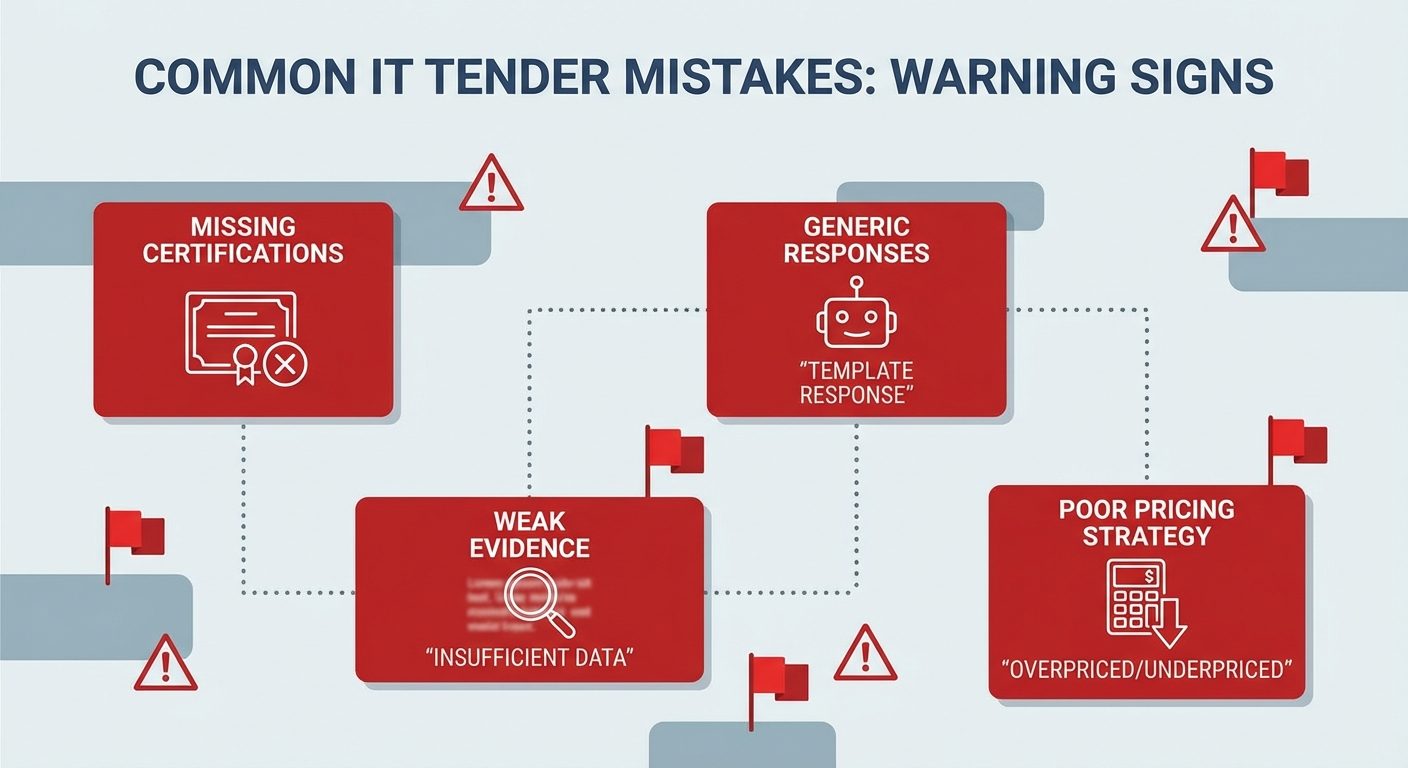
IT Tender Common Mistakes
Sector-Specific Strategies
Different IT sub-sectors require tailored approaches based on buyer priorities and evaluation patterns.
Managed IT Services and Helpdesk Contracts
Service delivery capability matters more than technical sophistication. Buyers evaluate operational maturity, service management processes, and track record of SLA achievement. Win rates correlate strongly with ITIL certification, service management tool sophistication, and demonstrated incident resolution performance.
Key winning factors: Current ITIL certification (preferably Foundation or Practitioner level for key staff). Detailed service catalog showing service levels, response times, and escalation procedures. Service management tooling (e.g., ServiceNow, Cherwell, JIRA Service Management) with dashboards and reporting capabilities. SLA achievement metrics from current contracts (e.g., "99.7% average SLA compliance across £2.3M of managed services contracts"). Customer satisfaction scores with methodology explained. Mobilization planning: Transition from incumbent suppliers is the highest-risk phase. Provide comprehensive transition plans including knowledge transfer, shadow operation periods, and contingency plans. Address common transition risks: data migration, configuration documentation, password and credential management, service continuity during handover. Buyers often weight mobilization 15-20% of total evaluation—detailed, realistic transition plans significantly improve scores.Cloud Migration and Hosting
Security architecture, data sovereignty, and vendor partnership strength dominate evaluation. Buyers scrutinize cloud platform expertise through certifications and reference architectures. Government buyers particularly focus on data location and Official-Sensitive handling capabilities.
Key winning factors: Cloud platform certifications (AWS Solutions Architect, Azure Administrator, Google Cloud Professional) with migration specializations. Published reference architectures for common migration patterns. Security design following cloud platform best practices (e.g., AWS Well-Architected Framework, Azure Security Benchmark). G-Cloud framework participation for public sector work. Clear data residency statements (UK-only hosting for government contracts). Disaster recovery capabilities with tested recovery procedures and documented RPO/RTO metrics. Cost optimization capability: Cloud migration business cases depend on cost optimization. Demonstrate capabilities beyond basic migration: right-sizing, reserved instance strategies, spot instance utilization, automated scaling. Provide case studies showing cost reduction achieved through optimization—typical claims are 20-40% savings vs. lift-and-shift approaches.Cybersecurity Consulting and Testing
Professional accreditations and clearances matter more than general IT capability. CHECK certification is increasingly mandatory for penetration testing contracts. CREST membership and technical certifications (OSCP, CEH, CISSP) demonstrate specialist capability.
Key winning factors: CHECK certification for security testing (mandatory for public sector penetration testing). CREST membership demonstrating assessment capability. Security clearances—SC and DV for sensitive projects. Technical certifications for proposed consultants. Methodology descriptions following industry standards (e.g., OWASP Testing Guide for application security, NIST Cybersecurity Framework for risk assessments). Reporting samples (anonymized) showing clear, actionable findings. Security tool capabilities: Buyers evaluate testing tools and platforms. Describe your security testing toolkit: vulnerability scanners, penetration testing tools, exploit frameworks, defensive security tools. For security operations, demonstrate SIEM platforms, threat intelligence feeds, and incident response playbooks.Software Development and Bespoke Applications
Delivery methodology, team capability, and ongoing support dominate evaluation. Agile delivery evidence, accessibility compliance, and user-centered design capability separate winners from losers.
Key winning factors: Demonstrated Agile delivery methodology with sprint velocity metrics and stakeholder engagement approaches. Portfolio of comparable applications with code quality evidence (automated testing, code coverage metrics, static analysis). Accessibility compliance—provide WCAG 2.1 AA evidence and describe testing processes. User-centered design capability through UX research, prototyping, and usability testing. Technical stack alignment with buyer's strategic direction (e.g., cloud-native, microservices, API-first). Code quality and DevOps: Describe development practices that ensure quality: code review processes, automated testing, continuous integration/deployment pipelines, static code analysis. Include metrics demonstrating quality: code coverage percentages, deployment frequency, mean time to recovery from incidents. Buyers increasingly evaluate DevOps maturity—demonstrate capability even if tender doesn't explicitly request it.Leveraging AI for IT Tender Responses
AI tools transform IT tender response development, particularly for technical documentation, compliance mapping, and response optimization. Specialized AI tools built for procurement outperform general-purpose AI significantly.
Automated Compliance Verification
IT tenders include extensive compliance matrices mapping requirements to responses. Manual verification is error-prone and time-consuming. AI tools automatically check requirement coverage, identify gaps, and highlight weak responses.
mytender.io approach: Upload tender documents and AI analyzes all requirements, generates compliance matrices, and flags requirements lacking clear responses. As you write responses, AI monitors coverage and alerts to gaps. This prevents disqualification due to missed requirements—a problem affecting 23% of IT tender submissions according to our analysis. Implementation: Feed complete tender documentation to AI at response planning stage. Use AI-generated requirement lists as response structure. As sections complete, verify AI confirms requirement coverage. Before submission, run final compliance check to catch any gaps introduced during response development.Technical Content Generation and Optimization
Describing technical architectures, methodologies, and security controls consumes significant technical resource time. AI accelerates content generation while maintaining technical accuracy and consistency.
mytender.io approach: Pre-trained on successful IT and cybersecurity tenders, mytender.io generates technical content tailored to specific requirements. Describe your solution approach and technical architecture; AI generates detailed technical descriptions, security controls documentation, and methodology explanations. The system suggests improvements based on evaluation patterns from past winning bids. Best practices: Use AI for first draft generation, then review and customize with project-specific details. AI excels at structure and comprehensiveness but needs your specific architectural decisions and technical choices. Combine AI efficiency with human expertise—AI generates foundation, you add differentiation and specific value propositions.Response Quality Analysis
Winning IT responses require clarity, completeness, and persuasiveness. AI analyzes response quality, readability, and competitive positioning.
mytender.io approach: AI scores each response section for clarity, completeness, and alignment with evaluation criteria. It identifies vague claims lacking evidence, detects overly technical language that non-technical evaluators won't understand, and suggests improvements based on successful response patterns. The system flags weak sections that risk low scores before submission. Continuous improvement: AI learns from your win/loss patterns. As you complete more tenders, the system identifies what works for your organization and suggests approaches that align with your strengths. This creates competitive advantage that compounds over time.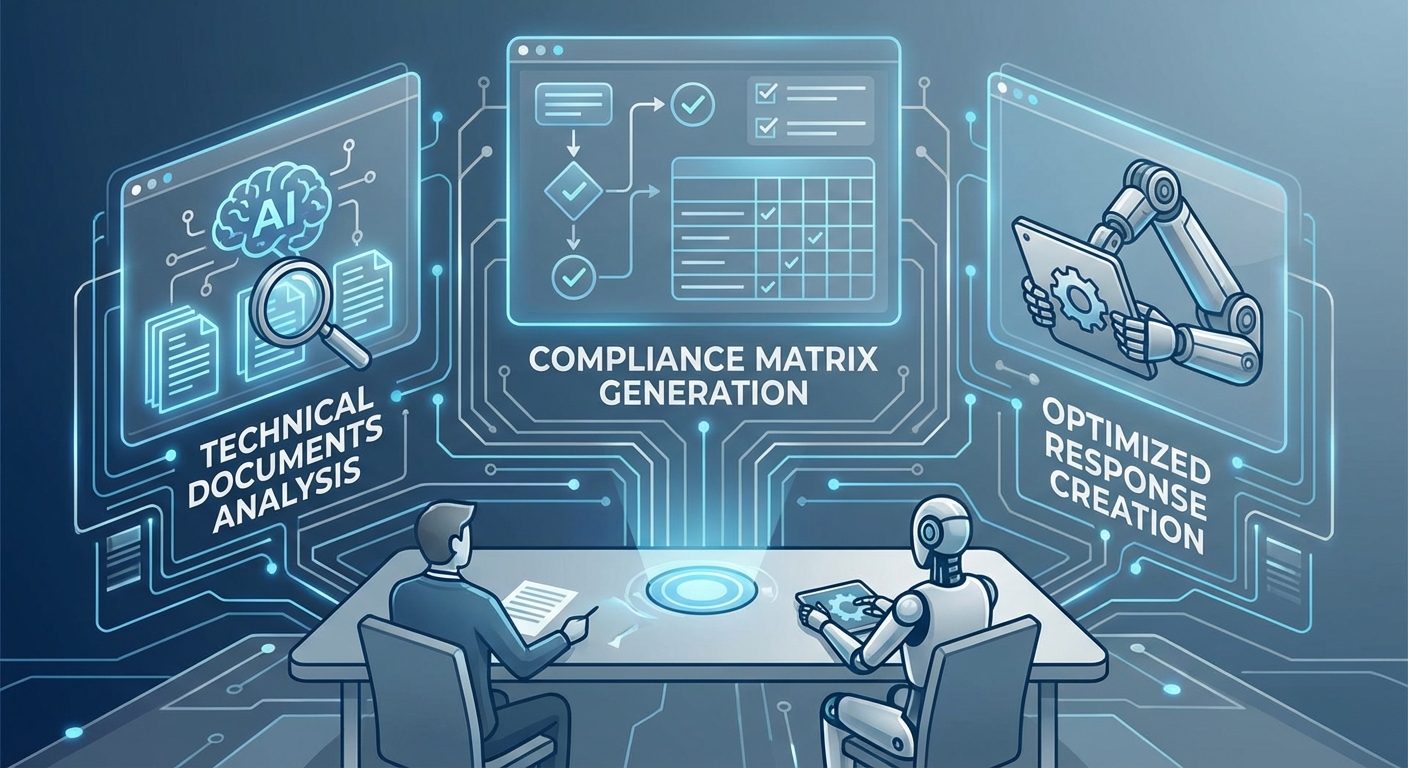
AI IT Tender Optimization
The Future of IT Procurement
Understanding emerging trends helps position your organization for future opportunities and adapt capability development accordingly.
Zero Trust Architecture Requirements
Zero Trust security models are transitioning from cutting-edge to expected. Government buyers increasingly specify Zero Trust principles; private sector adoption accelerates driven by hybrid working and cloud migration. Demonstrating Zero Trust capability—identity-centric security, micro-segmentation, continuous verification—will become table stakes for security and infrastructure contracts.
Preparation: Implement Zero Trust principles in your own infrastructure. Develop reference architectures following NCSC Zero Trust guidance. Obtain relevant certifications (e.g., Palo Alto Networks Zero Trust Architect). Build case studies of Zero Trust implementations for current clients.AI and Machine Learning Integration
Buyers expect AI/ML capabilities for security operations (threat detection, behavioral analytics), infrastructure management (predictive maintenance, capacity planning), and application development (intelligent automation, natural language interfaces). Demonstrating AI/ML capability increasingly differentiates winning bids.
Preparation: Develop AI/ML capabilities in your service offerings. Build partnerships with AI/ML specialists if not core to your business. Create demonstrators showing AI/ML value in relevant contexts. Obtain vendor certifications for AI platforms (AWS AI/ML Competency, Azure AI certifications, Google Cloud ML specialization).Sustainability and Green IT
Environmental impact evaluation grows beyond social value sections into technical evaluation. Buyers assess data center energy efficiency, hardware lifecycle management, and e-waste handling. Carbon reporting and reduction commitments increasingly influence contract awards.
Preparation: Measure and report your carbon footprint. Implement sustainability practices in operations (energy-efficient data centers, hardware recycling, renewable energy). Develop methodologies to measure and reduce client environmental impact through your services. Prepare sustainability credentials and metrics for tender responses.Skills and Capacity Challenges
IT sector skills shortages intensify. Buyers scrutinize resource capacity and recruitment capability more heavily. Demonstrating apprenticeship programs, training investments, and retention strategies addresses buyer concerns about whether you can actually staff the contract.
Preparation: Develop structured training and development programs. Create apprenticeship pathways. Build partnerships with educational institutions. Document your recruitment and retention approach. Include team stability metrics in responses (e.g., "Average tenure of technical staff is 6.2 years; voluntary turnover rate is 8% vs. industry average of 23%").Conclusion: Your IT Tender Success Roadmap
Winning IT and cybersecurity tenders requires methodical preparation, technical excellence, and strategic positioning. Success comes from systematic capability development, not last-minute bid writing.
Immediate actions:- Verify certifications: Ensure Cyber Essentials Plus and ISO 27001 (if relevant) are current and scope covers contract delivery. Plan recertification timelines.
- Document capability: Create case studies for each service area with metrics, technical details, and outcomes. Update regularly as you deliver projects.
- Develop templates: Build response templates for common sections (company overview, security controls, methodologies). Customize for each bid but don't start from blank pages.
- Strengthen partnerships: Formalize relationships with complementary suppliers for teaming opportunities. Obtain partner certifications from key vendors (Microsoft, AWS, Azure).
- Invest in AI tools: Evaluate specialized tender response tools like mytender.io that understand IT procurement requirements and accelerate response development.
- Address certification gaps (CHECK, CREST, vendor certifications)
- Develop security clearance pipeline for staff
- Build reference architectures for common solutions
- Create methodology documentation with evidence of application
- Develop social value and sustainability programs
- Strengthen financial position to support larger contract bidding
- Track public sector framework awards to identify winning competitors
- Monitor Contracts Finder and Find a Tender for market trends
- Analyze successful competitors' offerings and positioning
- Attend industry events and supplier engagement days
- Build relationships with procurement teams and technical buyers
IT and cybersecurity procurement rewards preparation and systematic capability development. Organizations that invest in certifications, methodology development, and response quality consistently win more work at better margins. Start building your capability today—the tender opportunities are substantial for well-prepared suppliers.
Ready to accelerate your IT tender writing and improve win rates? Discover mytender.io's specialized AI platform for IT and cybersecurity procurement - built specifically for technical tenders with compliance frameworks, security certifications, and technical architecture requirements already integrated.
Tags
Ready to Transform Your Tender Writing?
See how MyTender's AI can help you write winning tenders in a fraction of the time.