
Healthcare Sector Tender Writing: Complete Guide to Winning NHS and Medical Procurement Contracts in 2026
Master healthcare procurement with our comprehensive guide to winning NHS tenders, medical equipment contracts, and care service bids. Learn sector-specific requirements, compliance frameworks, and proven strategies for healthcare tender success.
mytender.io Research Team
Healthcare Procurement Specialists
The healthcare sector represents one of the most complex and lucrative procurement landscapes in the United Kingdom. With the NHS alone spending over £130 billion annually on goods and services, and private healthcare providers adding billions more, the opportunities for suppliers are substantial. However, winning healthcare tenders requires specialized knowledge, meticulous compliance, and a deep understanding of clinical governance frameworks.
This comprehensive guide explores the unique challenges of healthcare procurement, from NHS frameworks to CQC compliance, helping suppliers navigate the intricate requirements and develop winning tender responses that demonstrate both commercial capability and clinical understanding.

Healthcare procurement professional reviewing tender documentation
Understanding the Healthcare Procurement Landscape
The healthcare procurement ecosystem in the UK is fundamentally different from other sectors due to its regulatory complexity, patient safety imperatives, and multi-layered organizational structures. Understanding this landscape is essential before attempting to respond to any healthcare tender.
The NHS operates through Integrated Care Boards (ICBs) that replaced Clinical Commissioning Groups in 2022, fundamentally changing procurement dynamics. These ICBs manage approximately £120 billion of NHS England's budget, making procurement decisions for entire regions rather than individual practices. This consolidation has created larger, more complex tender opportunities with higher barriers to entry but greater potential value.
NHS Trusts procure services directly for their facilities, from acute hospital trusts managing major medical centers to community health trusts delivering localized care. Each trust operates semi-independently within national frameworks, meaning procurement approaches can vary significantly even for similar services. Foundation Trusts have additional commercial freedoms, sometimes creating unique procurement requirements not seen in standard NHS tenders.
Private healthcare providers including BUPA, Spire Healthcare, and Nuffield Health operate parallel procurement systems focused on different priorities. While NHS procurement emphasizes value for taxpayers and clinical effectiveness, private providers prioritize patient experience, operational efficiency, and commercial returns. Suppliers serving both markets must adapt their tender responses accordingly.
Social care procurement has become increasingly integrated with NHS commissioning, particularly following the Health and Care Act 2022. Local authorities procure care home placements, domiciliary care, and supported living services, often in collaboration with NHS partners. These tenders combine healthcare compliance requirements with social care quality frameworks, creating unique evaluation criteria.
NHS Frameworks and Procurement Routes
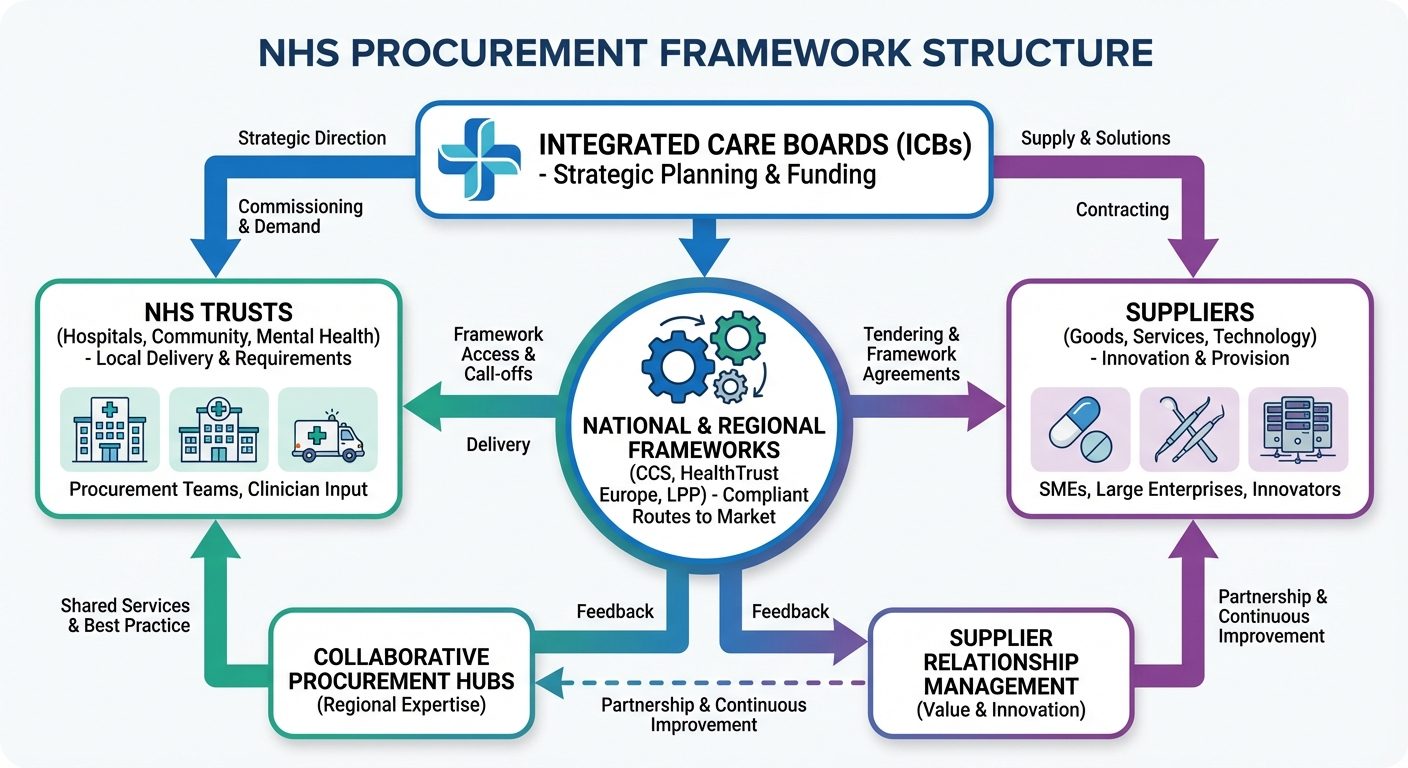
Healthcare procurement in the UK operates through multiple framework agreements designed to streamline purchasing and ensure value. Understanding which frameworks apply to your services is crucial for identifying tender opportunities and demonstrating procurement route compliance.
NHS Supply Chain operates the largest healthcare logistics operation in Europe, managing over £7 billion in annual procurement through various frameworks. The organization provides medical devices, surgical equipment, personal protective equipment, and clinical consumables to NHS organizations. Suppliers gain access through framework competitions that typically run for four years with optional extensions.
The Crown Commercial Service manages cross-government frameworks that include extensive healthcare categories. Framework RM6186 covers health and social care services worth billions annually, subdividing into lots for different service types. Framework RM3797 addresses workforce solutions including agency staff, while RM6089 covers technology services increasingly vital to digital health transformation.
NHS procurement framework structure diagram
Regional procurement hubs have emerged across England, with collaborative procurement initiatives like the South West Alliance and North of England Commercial Procurement Collaborative creating shared frameworks for their member trusts. These regional frameworks offer suppliers multi-trust contracts through single procurement processes, reducing tender costs while expanding market reach.
Dynamic Purchasing Systems (DPS) have become increasingly popular in healthcare procurement, particularly for services with evolving specifications like temporary staffing, specialized clinical services, and emerging medical technologies. Unlike traditional frameworks, DPS remain open for new supplier applications throughout their lifetime, allowing market entry without waiting for framework refreshes.
Direct award from framework agreements requires careful justification under procurement regulations. While frameworks simplify tendering, buyers must demonstrate that direct awards represent value for money, typically by comparing multiple framework suppliers or conducting mini-competitions. Understanding these requirements helps suppliers position themselves strategically within framework structures.
Clinical Governance and Quality Requirements
Healthcare tenders uniquely demand demonstrated clinical governance capabilities alongside commercial competence. Evaluators assess whether suppliers understand patient safety imperatives, clinical risk management, and quality assurance systems that protect vulnerable populations.
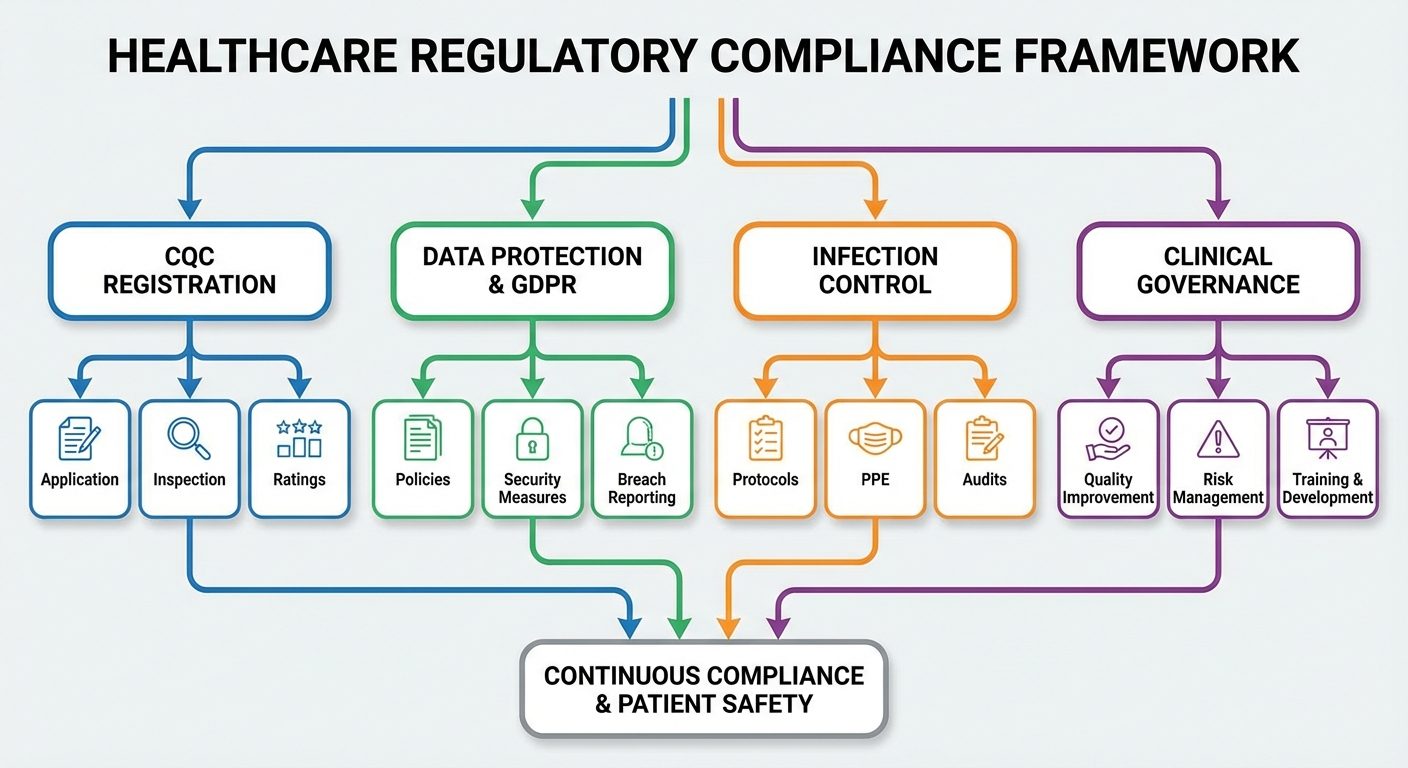
Care Quality Commission (CQC) registration is mandatory for regulated activities including personal care, treatment of disease, and diagnostic services. Suppliers must demonstrate current registration at the appropriate level, with recent inspection ratings often forming explicit evaluation criteria. Outstanding or Good ratings significantly strengthen tender responses, while Requires Improvement or Inadequate ratings may disqualify bids regardless of price competitiveness.
Clinical effectiveness evidence has become central to healthcare procurement evaluation. Buyers increasingly demand peer-reviewed research, clinical trial data, or real-world effectiveness studies demonstrating that proposed interventions deliver measurable health outcomes. The National Institute for Health and Care Excellence (NICE) guidelines frame expectations, with suppliers needing to align proposals with approved clinical pathways and evidence-based practice frameworks.
Safeguarding protocols receive intensive scrutiny in healthcare tenders, particularly those involving vulnerable adults or children. Suppliers must demonstrate robust safeguarding policies, staff training programs, and clear escalation procedures aligned with local safeguarding boards. The inability to evidence comprehensive safeguarding arrangements typically results in immediate disqualification from healthcare procurement processes.
Infection prevention and control capabilities grew even more critical following the COVID-19 pandemic. Healthcare tenders now routinely assess IPC policies, environmental cleaning protocols, personal protective equipment strategies, and outbreak management procedures. Suppliers must demonstrate how their operations minimize infection risks while maintaining service continuity during health emergencies.
Clinical governance structures within supplier organizations provide assurance to NHS buyers that clinical risks receive appropriate oversight. Tenders often require organizational charts showing clinical leadership, descriptions of clinical governance committees, and evidence of systematic clinical risk assessment processes integrated into operational delivery.
Mandatory Compliance and Regulatory Requirements
Healthcare procurement operates within the most stringent regulatory environment of any UK sector. Failure to demonstrate comprehensive compliance typically results in automatic disqualification, making this aspect of tender responses absolutely critical.
Regulatory compliance framework for healthcare suppliers
Information Governance and data protection requirements in healthcare exceed standard GDPR obligations due to the sensitive nature of health data. The NHS Data Security and Protection Toolkit (DSPT) provides the mandatory framework, with suppliers required to achieve satisfactory assessments before contract award. The toolkit addresses ten data security standards covering everything from staff training to incident management, requiring substantial evidence submissions.
NHS Standard Contract terms are non-negotiable in most NHS procurement, representing a take-it-or-leave-it contractual framework. The annual contract updates incorporate new requirements around quality, performance, and information sharing that suppliers must accept. Understanding these standard terms before tendering prevents bid withdrawal due to unacceptable contractual obligations discovered late in procurement processes.
Equality Act 2010 compliance receives particular emphasis in healthcare tenders, with buyers assessing how suppliers ensure accessible services for patients with protected characteristics. Tender responses must demonstrate reasonable adjustments processes, equality impact assessments, and evidence of inclusive service delivery. Many healthcare tenders include mandatory equality and diversity training requirements for all staff with patient contact.
Health and Safety Executive (HSE) regulations applicable to healthcare settings extend beyond standard workplace safety. Clinical waste management, Control of Substances Hazardous to Health (COSHH) compliance, and specific infection control regulations create additional obligations. Suppliers must demonstrate systematic risk assessments, safe systems of work, and regular auditing of health and safety performance.
Professional registration and qualification verification systems ensure that clinical staff possess appropriate credentials. Healthcare tenders typically require evidence of systematic checking processes for professional registration with bodies like the Nursing and Midwifery Council, Health and Care Professions Council, or General Medical Council. Robust verification systems that catch expired registrations or fitness-to-practice concerns demonstrate governance maturity.
Developing Winning Healthcare Tender Responses
Healthcare tender responses require a fundamentally different approach from commercial sector bids. Evaluators typically include clinical professionals alongside procurement specialists, meaning responses must balance technical clinical content with accessible explanations for non-clinical readers.
Understanding the evaluation panel composition helps tailor response style and technical depth. NHS tenders often involve multidisciplinary panels including clinicians, quality leads, information governance specialists, and procurement professionals. Each reader brings different priorities and technical understanding, requiring responses that work across these diverse perspectives.
Quality accounts for 60-70% of evaluation scoring in most NHS tenders, with price typically representing only 30-40%. This quality-focused evaluation reflects the healthcare sector's emphasis on patient safety and clinical effectiveness over cost minimization. Suppliers competing primarily on price rarely succeed in healthcare procurement without equally strong quality responses.
Case studies and evidence-based examples prove particularly powerful in healthcare tenders. Rather than stating capabilities, suppliers should describe specific situations where they delivered similar services, managed clinical risks, or improved patient outcomes. Quantified results using clinical metrics like infection rates, patient satisfaction scores, or waiting time reductions provide compelling evidence.

Healthcare tender response writing process
Method statements in healthcare tenders must demonstrate clinical understanding beyond operational capability. When describing service delivery approaches, suppliers should reference relevant clinical guidelines, explain how methods minimize clinical risks, and demonstrate awareness of patient experience considerations. Generic business process descriptions inadequate for commercial tenders completely fail in healthcare contexts.
Partnership approaches with NHS organizations strengthen tender responses considerably. Demonstrating consultation with local clinical leads, understanding of specific trust challenges, or proposed integration with existing clinical pathways shows commitment beyond transactional supply relationships. NHS buyers increasingly favor suppliers who position themselves as partners in service improvement rather than vendors of commodified products.
Pricing Strategy and Financial Evaluation
Healthcare tender pricing presents unique challenges due to the sector's focus on whole-life costs, quality-adjusted value, and complex funding mechanisms. Understanding NHS financial pressures while proposing sustainable pricing requires careful balance.
NHS tariff systems govern pricing for many clinical services, using Healthcare Resource Groups (HRGs) to standardize costs across different providers. Suppliers must understand how their services interact with tariff mechanisms, whether proposing entirely separate pricing models or demonstrating cost-effectiveness within existing tariff structures.
Social value weighting has grown significantly in NHS procurement, with the Public Services (Social Value) Act 2012 implementation becoming more sophisticated. Healthcare tenders typically allocate 10-20% of evaluation scoring to social value, assessing local employment creation, support for disadvantaged groups, and environmental sustainability. Suppliers should quantify social value commitments using recognized frameworks like the National TOMs (Themes, Outcomes, Measures).
Whole-life costing evaluation requires suppliers to project total costs of ownership beyond initial purchase prices. For medical equipment, this includes maintenance costs, consumables, staff training, and eventual disposal. For services, whole-life costs incorporate indirect expenses like clinical governance oversight, quality monitoring, and contract management. Transparent whole-life cost projections demonstrate commercial maturity and build buyer confidence.
Financial standing requirements in healthcare tenders often exceed other sectors due to the critical nature of services. Buyers assess liquidity ratios, credit ratings, and financial projections to ensure suppliers can sustain service delivery throughout contract periods. Healthcare contracts often run five to ten years, requiring demonstrated financial resilience through economic cycles.
Risk-sharing mechanisms increasingly appear in innovative healthcare contracts, particularly for outcomes-based services. Suppliers may propose gain-share arrangements where cost savings from improved efficiency get shared with NHS organizations, or outcome-based pricing where payments link directly to clinical effectiveness measures. These sophisticated commercial models require careful financial modeling and strong evidence of achievable outcomes.
Technology and Digital Health Requirements
Digital transformation in healthcare has accelerated dramatically, making technology integration capability essential for most healthcare suppliers. Even traditionally non-digital services now require robust digital interfaces with NHS systems.
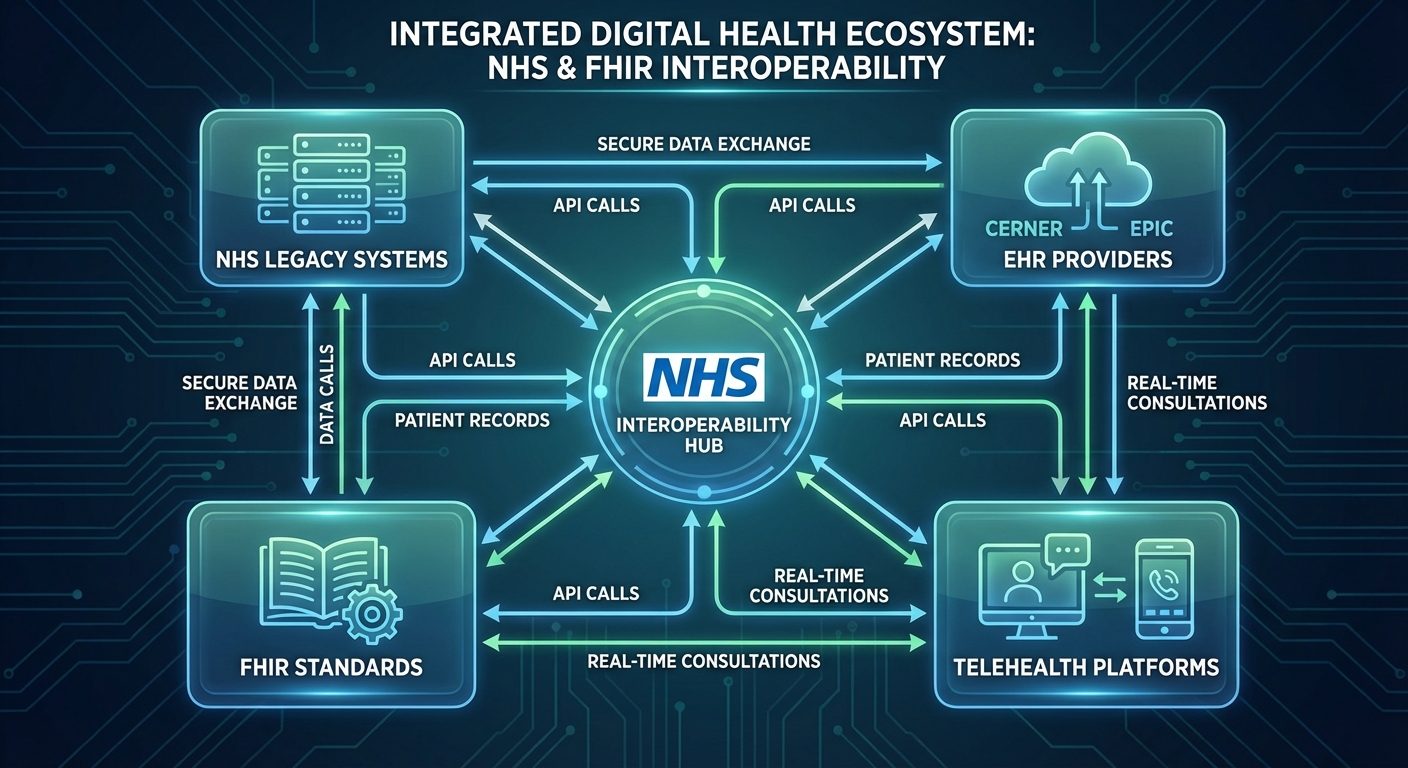
NHS interoperability standards mandate specific technical requirements for any systems connecting to NHS infrastructure. The NHS Digital Technology Assessment Criteria (DTAC) framework assesses digital health technologies across clinical safety, data protection, technical security, interoperability, and usability dimensions. Suppliers must demonstrate DTAC compliance or provide credible roadmaps toward compliance in tender responses.
Digital health technology integration diagram
HL7 FHIR (Fast Healthcare Interoperability Resources) has become the preferred standard for health data exchange across NHS systems. Suppliers developing healthcare software or proposing systems that exchange clinical data should demonstrate FHIR capability or clear migration plans. Legacy integration approaches using older standards like HL7 v2 may still be necessary but should be positioned as transitional.
Cyber security requirements in healthcare far exceed standard commercial expectations due to the catastrophic impacts of healthcare data breaches or system outages. NHS Digital's Cyber Security standard forms part of the Data Security and Protection Toolkit, requiring suppliers to demonstrate comprehensive security measures including penetration testing, incident response procedures, and business continuity planning.
Clinical safety standards under DCB0129 and DCB0160 apply to all health software regardless of classification as medical devices. These standards require systematic hazard analysis, clinical risk management processes, and safety case documentation. Suppliers must demonstrate that proposed systems won't introduce clinical risks or that identified risks receive appropriate mitigation.
Remote monitoring and telehealth capabilities have shifted from nice-to-have to essential in many healthcare services. The COVID-19 pandemic permanently changed expectations around digital service delivery, with tenders now routinely requiring hybrid models combining in-person and remote care. Suppliers must demonstrate secure video consultation capabilities, remote monitoring platforms, and digital patient engagement tools integrated seamlessly with core service delivery.
Supplier Challenges and How to Overcome Them
Healthcare procurement presents distinctive challenges that frequently trip up even experienced suppliers. Recognizing and proactively addressing these challenges substantially improves tender success rates.
Resource intensity of healthcare tender responses exceeds most other sectors. The combination of clinical governance requirements, extensive compliance evidence, and quality-focused evaluation means healthcare tenders often require 150-300 hours to complete properly. SMEs particularly struggle with this resource burden, sometimes withdrawing from otherwise winnable opportunities. Strategic investment in reusable content libraries, template method statements, and pre-compiled compliance evidence databases dramatically reduces response time while improving quality.
Clinical expertise gaps in tender writing teams create fundamental response weaknesses. Procurement or bid management professionals without healthcare backgrounds struggle to demonstrate clinical understanding that evaluators expect. Successful suppliers invest in clinical advisory relationships, bringing practicing or retired healthcare professionals into tender teams to provide clinical perspectives, review method statements, and ensure clinical credibility throughout responses.
Understanding local context and specific trust challenges separates winning from losing bids. Generic tender responses that could apply to any healthcare organization fail to resonate with evaluators who need confidence that suppliers understand their particular circumstances. Effective suppliers research target organizations thoroughly, examining recent CQC reports, trust annual reports, local health challenges, and existing service feedback to tailor responses demonstrating genuine understanding.
Keeping pace with regulatory changes in healthcare requires continuous learning investment. From NHS Standard Contract updates to new clinical guidelines, suppliers must track evolving requirements across multiple regulatory domains. Joining industry associations like the Association of British HealthTech Industries or Healthcare Supply Association UK provides networking and regulatory intelligence that keeps suppliers ahead of compliance curves.
Demonstrating innovation without appearing risky represents a delicate balance in healthcare procurement. NHS organizations want suppliers bringing improved approaches and emerging technologies, but simultaneously prioritize patient safety and service continuity over innovation for innovation's sake. Effective innovation proposals frame new approaches as evolutionary improvements built on proven foundations, supported by pilot evidence or successful deployments in similar settings.
Quality Assurance and Continuous Improvement
Healthcare contracts demand ongoing quality assurance and continuous improvement far beyond initial tender commitments. Building these capabilities into tender responses demonstrates long-term partnership thinking that resonates with NHS buyers.
Clinical audit programs provide systematic assessment of service quality against defined standards. Healthcare tenders should propose specific clinical audit schedules, describing audit methodologies, reporting frequencies, and how audit findings drive service improvements. Reference to established audit frameworks like those from the Healthcare Quality Improvement Partnership adds credibility.
Patient and public involvement (PPI) in service design and evaluation aligns with NHS constitutional requirements. Tender responses should describe mechanisms for capturing patient feedback, involving patients in service development, and demonstrating how patient voices influence service delivery. Many healthcare organizations now include patient representatives on evaluation panels, making PPI commitments particularly important.
Key performance indicators in healthcare contracts typically include clinical quality metrics alongside operational performance measures. Rather than waiting for buyers to specify KPIs, proactive suppliers propose comprehensive performance frameworks covering safety metrics, patient experience measures, clinical effectiveness indicators, and operational delivery standards. Demonstrating understanding of relevant clinical metrics shows sector expertise.
Benchmarking against sector standards provides external validation of quality performance. Referencing industry benchmarks from organizations like NHS England's Model Health System or specialty-specific clinical benchmarking programs demonstrates commitment to objective quality assessment. Suppliers should propose regular benchmarking against peer organizations and transparent reporting of comparative performance.
Continuous improvement methodologies from quality improvement science strengthen healthcare tender responses considerably. Describing Plan-Do-Study-Act (PDSA) cycles, statistical process control approaches, or lean healthcare methodologies demonstrates alignment with NHS quality improvement culture. Many NHS organizations have explicit quality improvement strategies that suppliers can reference and align with in tender responses.
Environmental Sustainability in Healthcare
Sustainability has become a central consideration in NHS procurement following the commitment to become the world's first carbon net zero health system. Healthcare tenders now routinely evaluate environmental sustainability commitments with increasing sophistication.
The NHS net zero commitment targets direct emissions reduction by 80% and indirect emissions by 50% by 2032, with full net zero by 2045. Suppliers must demonstrate how their proposals support these targets through reduced emissions, sustainable resource use, and circular economy approaches. Generic sustainability statements no longer suffice—buyers expect quantified carbon reduction commitments with clear delivery plans.
Sustainable procurement frameworks like the NHS Sustainable Development Assessment Tool (SDAT) provide structured approaches to evaluating and improving sustainability. Tender responses should reference SDAT assessments, describe sustainability governance within supplier organizations, and propose sustainability KPIs alongside clinical and operational measures.
Single-use plastics reduction has become a priority area in healthcare procurement, particularly following the COVID-19 pandemic's dramatic increase in disposable PPE consumption. Suppliers should propose strategies for minimizing single-use items, increasing reusable alternatives where clinically appropriate, and ensuring recycling of unavoidable plastic waste.
Pharmaceutical waste management receives particular scrutiny due to environmental impacts of medication entering water systems. Suppliers in pharmacy, medicines management, or care services should describe medication waste minimization strategies, returns management processes, and safe disposal mechanisms preventing environmental contamination.
Supply chain emissions increasingly fall within procurement evaluation as NHS organizations address Scope 3 carbon accounting. Suppliers should provide transparency about manufacturing locations, transportation methods, and supply chain carbon footprints. Describing decarbonization strategies across supply chains demonstrates sophisticated environmental management.
Conclusion: Building Long-Term Healthcare Tender Success
Winning healthcare tenders requires substantially more than competitive pricing and basic competence claims. The sector's unique combination of clinical governance requirements, complex regulatory frameworks, and quality-focused evaluation demands specialized knowledge and sustained capability development.
Suppliers serious about healthcare sector success should invest in building deep sector expertise rather than treating healthcare as just another market vertical. This means recruiting healthcare professionals into commercial teams, pursuing industry-specific accreditations, and building long-term relationships with NHS organizations beyond transactional supply arrangements.
The evolution toward integrated care systems, population health management, and outcomes-based commissioning will continue reshaping healthcare procurement. Suppliers who understand these strategic directions and position themselves as partners in health system transformation will capture increasing value from this essential market.
Healthcare procurement represents one of the UK's most significant commercial opportunities for suppliers who master its complexities. The combination of substantial contract values, long-term partnership potential, and social purpose mission makes healthcare tendering uniquely rewarding for organizations committed to excellence in this challenging and vital sector.
Frequently Asked Questions
How long does it typically take to win your first NHS contract?Organizations new to NHS procurement typically require 6-12 months from first tender submission to contract award, assuming multiple bid attempts and learning from unsuccessful submissions. The timeline includes building necessary compliance frameworks, obtaining required registrations, and developing sector-specific capabilities that evaluators expect.
Can small businesses compete effectively in NHS procurement?Yes, but success requires strategic focus on suitable opportunities. While major multi-million pound contracts favor large established suppliers, NHS procurement includes thousands of lower-value opportunities and specific SME-friendly lots within frameworks. Small suppliers should target local contracts, build track records through subcontracting arrangements, and leverage SBS (Small Business Support) initiatives designed to increase SME participation.
What's the most common reason healthcare tender responses fail?Inadequate demonstration of clinical governance and quality assurance capabilities causes more healthcare tender failures than any other single factor. Suppliers with strong commercial offerings fail when they cannot evidence systematic approaches to patient safety, clinical risk management, and regulatory compliance that healthcare evaluators require.
How important is prior NHS experience in tender evaluation?Very important but not insurmountable for new entrants. NHS experience provides understanding of operational realities, clinical governance expectations, and system integration requirements that generic experience cannot replicate. However, suppliers can mitigate limited NHS experience through partnerships with experienced subcontractors, clinical advisory arrangements, and thoroughly researched responses demonstrating deep understanding of NHS contexts.
Should we respond to every relevant healthcare tender we see?Absolutely not. Strategic bid qualification prevents wasting resources on unwinnable opportunities. Assess each tender against realistic win probability based on incumbent positions, your relevant experience, client relationships, and competitive landscape. Focus resources on opportunities where you have genuine differentiators and realistic win chances exceeding 25-30%.
Tags
Ready to Transform Your Tender Writing?
See how MyTender's AI can help you write winning tenders in a fraction of the time.