
Grounds Maintenance Tender Writing Guide 2026: Win More Landscaping Contracts
Master grounds maintenance tender writing with proven strategies for local authority, housing association, education, and commercial landscaping contracts. Expert guidance on compliance, scheduling, biodiversity requirements, and AI-powered bid writing.
mytender.io Research Team
Grounds Maintenance & Landscaping Procurement Specialists
Grounds Maintenance Tender Writing Guide 2026: Win More Landscaping Contracts
The UK grounds maintenance sector is worth approximately £3.8 billion annually, with public sector buyers — local authorities, housing associations, NHS trusts, schools, and central government agencies — accounting for nearly 60% of total spend. Yet win rates for grounds maintenance companies bidding on public contracts average just 15%, with most losses attributable not to price or operational capability but to weak bid submissions that fail to communicate value effectively.
This guide is for grounds maintenance and landscaping companies that want to win more contracts — whether you're an owner-managed business bidding for your first council grass-cutting contract or a regional operator pursuing multi-million-pound framework positions. The principles that win grounds maintenance tenders are consistent across contract sizes: rigorous compliance evidence, specific methodology, quantified performance, and compelling social value.

Grounds Maintenance Tender Writing Guide 2026
The Grounds Maintenance Contract Landscape in 2026
Understanding who you're bidding to and what they care about is the foundation of every winning tender response.
The four principal buyer types in grounds maintenance each have distinct priorities: Local authorities are the largest single buyer category, spending approximately £1.2 billion annually on parks, verges, playing fields, cemeteries, allotments, and highway greenery. Local authority grounds maintenance contracts are typically 3-7 years in duration, often with 2-year extension options, making them significant long-term revenue opportunities. These tenders typically weight quality at 40-60% of the total evaluation score, with price accounting for the remainder. Social value scoring has grown substantially — many councils now allocate 15-25% of total marks to social value criteria. Housing associations and registered social landlords (RSLs) spend around £680 million on grounds maintenance annually, covering communal gardens, play areas, estate landscaping, and tree maintenance. Housing association contracts are more commercially focused than local authority, with price typically weighted at 50-60%. However, tenant satisfaction scores are increasingly used as a key performance indicator, making customer-facing quality evidence particularly valuable. The social housing sector has seen significant consolidation through mergers, creating larger contracts that span multiple properties across wide geographies. Education sector buyers — maintained schools, academies, multi-academy trusts, further education colleges, and universities — spend around £420 million annually on grounds maintenance. School contracts typically cover playing fields, all-weather pitches, car parks, boundary maintenance, and ornamental areas. Safeguarding compliance is a pass/fail gateway for all school-facing grounds staff, and DBS checking policies receive as much scrutiny as technical methodology. Academic calendar alignment — ensuring grounds maintenance doesn't disrupt student activities — is a key differentiator in education bids. Healthcare and NHS buyers maintain substantial grounds portfolios across hospital campuses, mental health sites, and community health facilities. NHS grounds contracts often include specialist requirements around infection control (bio-waste disposal, contaminated land management), patient environment standards, and — increasingly — therapeutic horticulture programmes that contribute to patient wellbeing outcomes. The 2026 context: Three forces reshaping the market Biodiversity Net Gain (BNG) and ecological requirements have become the dominant new compliance dimension in grounds maintenance procurement. The mandatory BNG framework introduced under the Environment Act 2021, combined with growing buyer commitments to biodiversity improvement, means most new grounds maintenance tenders now require ecological surveys, species-rich wildflower management, reduced-cut regimes, and measurable biodiversity improvement targets. Companies that can demonstrate genuine ecological expertise — not just token wildflower patches — are commanding a significant competitive advantage. Net zero and decarbonisation commitments are translating directly into contract requirements. Local authorities with net zero targets are specifying electric or hybrid grounds maintenance equipment, transitioning away from petrol and diesel machinery. Buyers are asking for supplier carbon footprint data, fleet electrification roadmaps, and fuel consumption benchmarks. This is both a compliance requirement and an opportunity — companies investing in battery-powered equipment now are differentiating themselves while future-proofing against mandatory requirements. Digital and smart maintenance systems are becoming expected at higher contract values. GPS tracking for operative location and task completion, QR-code based ground condition recording, weather-triggered schedule adaptations, and digital customer portals for service requests and satisfaction feedback are increasingly specified in tenders above £250,000 per year. Paper-based systems that were acceptable five years ago now signal operational immaturity to evaluators.Evaluating Your Bid Before Writing a Word
The single most valuable pre-writing activity is a thorough read of the specification, weighting, and marking criteria. Most grounds maintenance companies start writing too quickly, producing responses that reflect their standard service rather than addressing what this specific buyer cares about.
Read the specification three times. First for general understanding. Second to identify every specific requirement — areas included, frequencies, performance standards, specialist tasks. Third to identify the evaluation criteria and their weightings. Map your writing effort to the marks. If a tender allocates 25% of total marks to social value and 35% to technical methodology, divide your writing effort accordingly. A social value section worth 25 marks deserves as much attention as a methodology section worth 35 marks. Most companies get this wrong, writing exhaustive methodology responses and submitting a perfunctory social value paragraph. Identify the differentiators. What does this buyer most care about beyond minimum requirements? For a council with active climate commitments, your electric fleet will score heavily. For a housing association with tenant engagement programmes, your customer communication approach matters. For a school with safeguarding requirements, your DBS and supervision policies are scrutinised. Read the specification for signals about buyer priorities — they're usually there. Perform a bid/no-bid assessment. Not every opportunity is worth pursuing. Assess: Does this contract fit our operational geography and capacity? Do we have relevant experience to reference? Is the contract value large enough to justify bid investment? Are the compliance requirements we can genuinely meet? For new sectors (e.g., a landscaping company bidding an NHS contract for the first time), factor in the time to build sector-specific credibility. Win rates in unfamiliar sectors are typically lower in the first year of pursuit.
Grounds Maintenance Local Authority Procurement
Compliance Requirements: What Every Grounds Maintenance Tender Checks
Grounds maintenance tenders have a consistent set of compliance requirements. Missing evidence in any of these areas typically results in immediate disqualification or very low gateway scores.
Pesticide and Herbicide Licensing
The application of pesticides, herbicides, and fungicides on public land requires specific qualifications under the Plant Protection Products (Sustainable Use) Regulations 2012 and the Biocidal Products Regulation. Buyers scrutinise pesticide certification closely — an operative without the correct PA (Pesticide Application) certificate illegally applying herbicide creates serious liability.
What buyers look for: Named operatives with current PA1 (foundation knowledge), PA2 (pedestrian equipment), PA6 (herbicide application), or other appropriate PA certificates. Company-level Basis or NPTC-approved register evidence. A clear procedure for ensuring only certificated staff apply chemicals. Integrated Pest Management (IPM) policies — increasingly mandatory in local authority contracts — showing pesticide use as a last resort with documented decision-making. Evidence of compliance with the Control of Pesticides Regulations and relevant Codes of Practice. Common failures: Providing out-of-date certificates. No clear mapping between which operatives hold which qualifications and which tasks they perform. No IPM policy when one is required. Using pesticides in areas where the specification prohibits them (many local authority contracts now specify pesticide-free zones in children's play areas, schools, or near water courses). Winning approach: Include a staff certification matrix listing each operative or team by name, their PA certificate levels, and expiry dates. Describe your procedure for ensuring certificates remain current. Present your IPM policy as a genuine strategic commitment — show buyers that pesticide application is logged, evidenced, and minimised, not routine.Arboricultural Compliance
Any grounds maintenance contract involving tree work — even routine crown lifting, pruning, or deadwood removal — requires qualified arboricultural operatives. Contracting organisations bidding for contracts with tree management components must demonstrate both qualifications and safe working systems.
Minimum requirements: For any aerial tree work, operatives must hold NPTC (Lantra) CS30 (chainsaw maintenance and crosscutting) and CS38 (aerial tree work) at minimum. Tree surveying requires Arboricultural Association Technician (TechArborA) or equivalent qualification. Fallen tree hazard removal may require CS31 (related forestry operations) certification. What buyers look for: Staff qualifications mapped to specific tree maintenance tasks. A written Tree Survey and Risk Assessment procedure — how do you identify, record, and manage tree hazards? Compliance with BS3998:2010 (Recommendations for Tree Work), which governs technical standards for tree surgery. Public liability insurance specifically covering arboricultural operations (some insurers exclude tree work — confirm explicitly). Winning approach: If your team holds any additional arboricultural accreditation — ISA Certified Arborist, Arboricultural Association approved contractor status — include it prominently. Approved contractor status demonstrates independent verification of your arboricultural standards and is valued by public sector buyers.Equipment Safety and Maintenance
All powered grounds maintenance equipment must be maintained in safe working condition under the Provision and Use of Work Equipment Regulations 1998 (PUWER) and Lifting Operations and Lifting Equipment Regulations 1998 (LOLER) where applicable. Machinery maintenance records are commonly requested as part of tender submissions.
What buyers look for: A documented plant and equipment inspection and maintenance schedule. Evidence of compliance with manufacturer's maintenance intervals. Pre-use daily inspection checklists (operators checking for defects before each use). Records of equipment defects identified and rectified. Calibration records for specialist equipment (spray equipment must be calibrated to ensure correct application rates). Winning approach: Present your maintenance schedule as a table showing equipment type, inspection frequency, most recent inspection date, and next scheduled inspection. Describe your defect reporting procedure — how operatives report issues, what the response process is, and how equipment is taken out of service when defects are found. This demonstrates operational maturity rather than ad-hoc maintenance.Environmental and Ecology Compliance
2026 marks a step-change in environmental compliance requirements for grounds maintenance contracts. Several compliance areas now form gateway criteria in local authority and NHS tenders:
Duty of Care waste licences: Grounds maintenance generates significant green waste, and improper disposal carries significant fines. Buyers require Waste Carrier Licences for all contractors removing waste from site, and evidence of disposal to licensed facilities. Include your Waste Carrier Licence number and describe your green waste disposal chain. Near-water working: Any maintenance near rivers, ponds, or drainage features requires compliance with Environment Agency regulations and often requires Ordinary Watercourse consent or agreement with the Lead Local Flood Authority. Describe your process for identifying near-water constraints and obtaining appropriate consents. Invasive non-native species: Japanese knotweed, giant hogweed, Himalayan balsam, and other invasive species require specialist management. Incorrect treatment or disposal is an offence under the Wildlife and Countryside Act 1981. Buyers with known invasive species on their estate will ask how you identify, manage, and dispose of invasive material. Protected species: Grounds maintenance operations can disturb protected species (nesting birds, hibernating hedgehogs, bat roosts). Buyers want evidence that operatives are trained to identify protected species risks and know the legal obligations for stopping work and reporting to Natural England. At minimum, include your ecological awareness training policy and the process for handling unexpected protected species encounters.Writing the Technical Methodology: What Evaluators Actually Score
The methodology section is where most grounds maintenance companies invest most of their effort — and where the greatest quality variation exists. The difference between a 40% score and an 80% score on methodology is almost entirely about specificity.
The golden rule: respond to the specification, not to your service offering. Evaluators score methodology sections by checking whether specific specification requirements have been addressed. If the specification identifies 47 hectares of amenity grass, 12 hectares of sports pitch, and 3.2 kilometres of hedgerow, your methodology must address all three area types with specific approaches. A frequency schedule is mandatory. Every winning grounds maintenance bid includes a detailed schedule showing the proposed visit frequency for every area and task type. Format it as a table: Area/Task | Annual Frequency | Visit Pattern | Notes. This demonstrates you've priced and planned the contract properly. Evaluators often check the frequency schedule against the specification minimum requirements — if you've proposed fewer visits than specified, your bid may be disqualified or heavily penalised. Seasonal planning: Grounds maintenance is inherently seasonal, and your methodology must reflect this. Grass growth rates, hedge trimming seasons (Legal Protection: no hedge cutting during nesting season, 1 March – 31 August except in exceptional circumstances), autumn leaf clearance, winter tree work windows — buyers expect your methodology to demonstrate understanding of seasonal constraints and how you plan around them. Adverse weather protocols: What happens when weather prevents scheduled maintenance? This is a common question in grounds maintenance tenders. Strong responses describe: a weather monitoring system, a clear decision-making authority for cancelling visits, a rescheduling protocol agreed with the contract manager, and a catch-up plan for delayed work. Vague assurances that "we will reschedule as appropriate" score poorly. Supervisor-to-operative ratios: Evaluators want to know how quality is maintained on a distributed workforce. Describe your supervision model: how often does a supervisor visit each site, what does a supervision visit include, how is remedial work identified and tracked? For larger contracts, name the proposed contract manager and include their CV or professional background. The biodiversity methodology differentiator: In 2026, the strongest grounds maintenance bids include a dedicated biodiversity management section that goes beyond minimum compliance. Describe specific measures: proposed reduced-cut zones for wildflower establishment, timing adjustments to protect nesting birds, identification and protection of existing ecological features, annual biodiversity walk methodology, and — for contracts with BNG requirements — how you'll measure and report on biodiversity unit performance. Buyers are often pleasantly surprised by grounds maintenance companies that treat biodiversity as a genuine priority rather than a compliance tick-box.
Grounds Maintenance Housing Association Contracts
Housing Association Contracts: Tenant-Focused Tender Writing
Housing associations and RSLs are a major and growing buyer of grounds maintenance services. These contracts have specific characteristics that differ from local authority procurement and reward tender writing that emphasises customer experience alongside operational capability.
Tenant Satisfaction as an Evaluation Criterion
The Social Housing Regulation Act 2023 introduced new tenant satisfaction measures (TSMs) that housing associations must report annually to the Regulator of Social Housing. Estate cleanliness and grounds quality directly affects TSM scores — meaning housing associations are increasingly asking grounds maintenance suppliers to contribute data to their TSM reporting.
What strong housing association bids include: A named Customer Liaison Contact (not just "your contract manager") who is the tenant's point of call for service requests and complaints. A defined service request response time — e.g., response to raised grass height complaints within 5 working days. A reporting framework that provides the housing association with data they can use for TSM reporting. Evidence from existing housing association contracts that tenants rate your service highly — include actual satisfaction survey data if you have it. Tenant communication: Many housing associations now require grounds maintenance contractors to communicate directly with tenants about forthcoming visits, seasonal changes to service, and disruptions. Describe how you'll achieve this — whether through the housing association's resident communications channels, your own app or text service, or physical notice boards on sites. Digital communication capability is increasingly specified.Estate-Level Planning
Housing association grounds maintenance contracts typically cover dozens or hundreds of separate sites (individual housing estates), each with different area types and access arrangements. A key differentiator is demonstrating that your planning systems can handle this complexity without quality falling through the cracks.
Site mapping and specification management: Strong bids include a description of how you maintain site-level records for each estate — area measurements, task lists, access arrangements, known constraints (e.g., seasonal flooding, narrow access for machinery), and any specialist requirements. GPS-enabled mobile workforce management systems that allow operatives to access site-specific information on their mobile devices score well. Operative continuity: Tenant satisfaction in grounds maintenance is closely correlated with consistent operatives — tenants who know the maintenance team by name report higher satisfaction scores. Describe how you achieve operative continuity (dedicated routes rather than floating gangs, incentive structures that reward low absence rates, estate-specific inductions for all operatives).Education Sector Contracts: Safeguarding and Beyond
Schools and educational establishments have specific requirements that extend beyond technical grounds maintenance capability. Getting these right is a prerequisite for competitive scoring.
Safeguarding Policy
Every operative working on a school site must hold a valid enhanced DBS check. This is non-negotiable — but winning education bids go further.
What strong safeguarding submissions include: A named Designated Safeguarding Contact for the contract. The safeguarding training requirement for all operatives (many successful education grounds contractors now provide basic child safeguarding awareness training to all school-site operatives, not just management). Supervision protocols ensuring no lone operative is in an area where pupils could be unsupervised. Your process for handling a safeguarding concern raised by an operative — who they report to, and how quickly. Importantly: Describe your approach when working near pupils. Do operatives stop noisy machinery when children are adjacent? How do you manage vehicle access to school sites during arrival and departure times? These operational details demonstrate you've thought about the school environment specifically.Playing Field Standards
School sports pitches are subject to specific standards, particularly for Football Association (FA), Rugby Football Union (RFU), or Cricket maintenance requirements where schools have affiliated clubs or inter-school fixtures.
Buyers with sports pitches will assess whether you understand pitch preparation standards — not just grass cutting but sward management, compaction testing, aeration schedules, goal post maintenance, line marking. If you don't have specific sports pitch management experience, be honest about it rather than over-claiming. Experienced buyers will ask follow-up questions.
All-weather pitches: Artificial grass pitches (AGPs) require specialist maintenance distinct from natural turf — rubber crumb redistribution, decompaction, line marking restoration, drainage inspection. If the contract includes AGP maintenance, demonstrate specific AGP experience and knowledge of Sport England or National Governing Body guidance for AGP upkeep.Pricing Strategy for Grounds Maintenance Tenders
Grounds maintenance pricing requires careful analysis of site conditions, visit patterns, and seasonal variation. Consistent pricing errors cause the most avoidable contract losses.
The Site Survey Imperative
Never price a grounds maintenance tender without visiting the sites. Areas on plans rarely match actual areas on the ground. Access constraints, gradient challenges, tree coverage affecting mowing equipment, hard-standing areas excluded from maintenance — these factors significantly affect cost, and pricing from plan alone leads to either over-priced bids (losing on price) or under-priced bids (losing money).
For large contracts covering many sites, prioritise survey time on the highest-value or most complex sites. For minor sites that appear straightforward, plan-based measurement may be acceptable — but build in a contingency.
What to record during site surveys: GPS-verified area measurements (mobile apps like FieldMargin or Arborgold allow in-app measurement). Operative access routes and any constraints (narrow gates, locked access, hazards). Equipment requirements (ride-on mowers accessible, or pedestrian-only due to gradients). Existing infrastructure relevant to maintenance (irrigation systems, boundary features, existing planting). Existing condition baseline that affects the mobilisation plan.Labour Cost Analysis
Labour is typically 60-70% of grounds maintenance contract cost. Accurate labour modelling requires:
Visit time per site: Based on site survey area measurements, with realistic productivity rates per operative per hour for each area type (amenity grass, sports turf, hard landscaping, hedges). Industry benchmarks from GreenBlue Urban or the Grounds Management Association (GMA) can calibrate productivity assumptions. Travel time: For contracts covering many dispersed sites, travel between sites can add 15-25% to total operative time. Route optimisation reduces this, but it must be costed. Supervision time: Supervisor visits, quality audits, client meetings, and administrative time (completing electronic work records, vehicle checks) adds 10-15% to direct labour. TUPE-inherited terms: For retender opportunities where the outgoing contractor's staff may transfer to you, the TUPE information pack may reveal wage rates, contractual holiday entitlements, or pension arrangements above statutory minimums that must be costed.Equipment and Materials
Equipment depreciation or hire, fuel or electricity costs, and consumables (seed, fertiliser, herbicide, line marking paint) typically represent 15-20% of grounds maintenance contract cost. With the shift toward electric equipment, battery-powered tools often have higher upfront costs but lower running costs — model both scenarios and be transparent in your pricing notes about assumptions.
The social value pricing tension: Commitments to Living Wage rates, apprenticeships, and enhanced employee terms are genuine differentiators in social value scoring — but they cost money. Price them into your submission honestly. Buyers who are serious about social value outcomes (and most public sector buyers now are) understand and accept pricing that reflects genuine commitments. An artificially low price that abandons Living Wage commitments after contract award is both a commercial and reputational risk.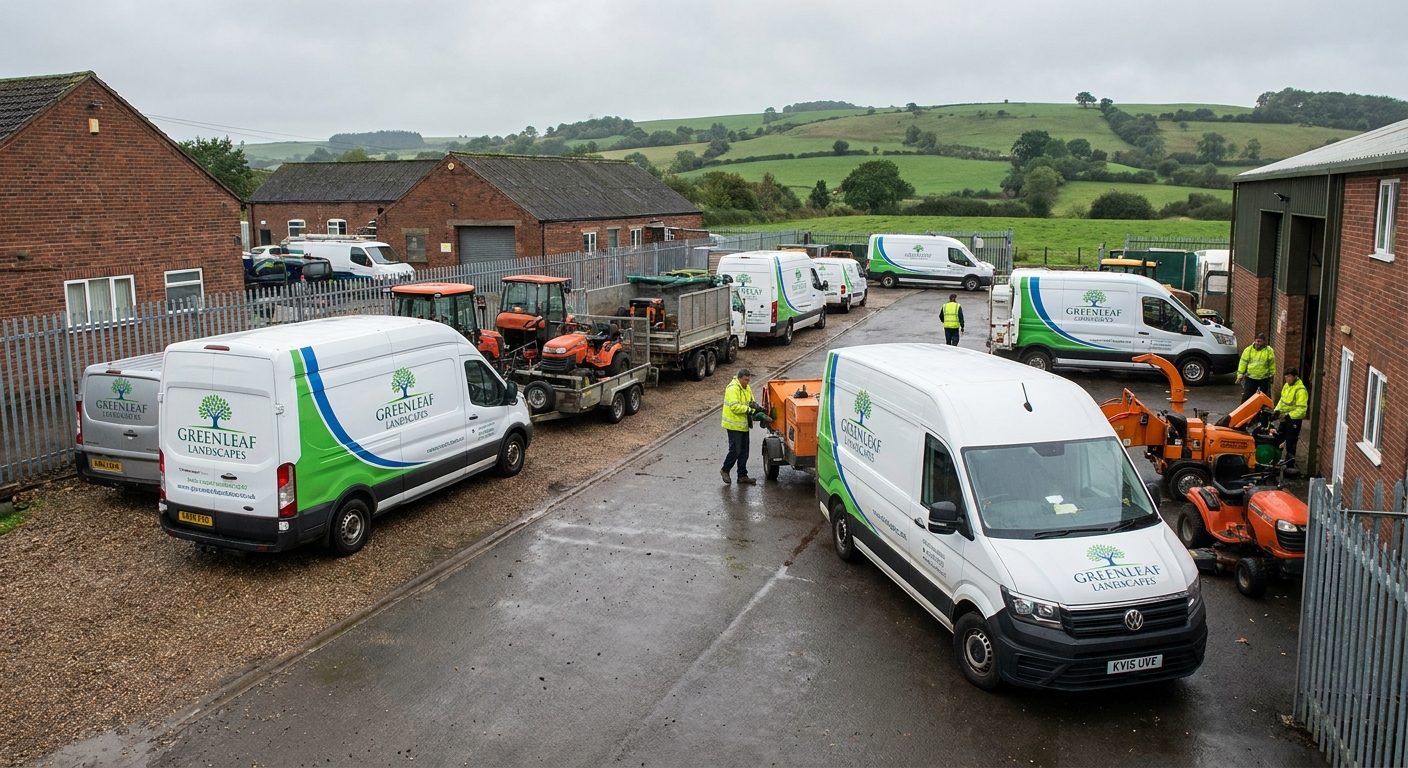
Grounds Maintenance Fleet and Equipment
Social Value: Where Grounds Maintenance Companies Win and Lose
Social value is worth 15-25% of the total evaluation score in most public sector grounds maintenance tenders. It's consistently the section where the widest scoring variation occurs — and where modest investment in preparation yields disproportionate competitive advantage.
The common approach that fails: A single paragraph stating "we are committed to supporting our local community and employ local people where possible." This typically scores 20-30% of available marks. The approach that wins: Specific commitments, quantified targets, named delivery mechanisms, and evidence of previous performance. Employment and skills: How many of your proposed contract staff will be local hires? Commit to a specific percentage (e.g., 80% recruited from within 15 miles of contract sites). Name the specific local employment channels you'll use — JobCentre Plus offices in the relevant town, local college partnership for apprentices, ex-offender employment programme links. If you're Living Wage Foundation accredited, say so and include your accreditation number. If you're not accredited but pay the Real Living Wage, confirm the rate and commit to maintaining it for the contract duration. Apprenticeships: The grounds maintenance sector has a significant skills shortage, and apprenticeship commitments resonate strongly with public sector buyers. If you run a horticultural or grounds maintenance apprenticeship programme (Horticulture Supervisor Level 3 or Arborist Level 3 apprenticeship standards), quantify it. If you don't, committing to a named apprentice as part of this contract's staffing model — with a start date and framework details — is often worth significant social value marks. Biodiversity and green spaces: Public sector buyers increasingly recognise that grounds maintenance has an educational and community engagement dimension. Grounds maintenance companies that run wild-flower identification walks for residents, host community volunteering days to plant new areas, or support local wildlife trusts with practical expertise score social value marks while building genuine community relationships. Environmental commitments: Quantify your environmental performance rather than describing aspirations. "Our 2025 fleet carbon footprint was 42 tonnes CO2e, and we're committed to reducing this to 28 tonnes by 2027 through EV equipment replacement" is compelling. "We're committed to reducing our environmental impact" scores close to zero.Framework Agreements: Getting on the Approved Lists
Many of the most valuable grounds maintenance contracts are accessed through framework agreements rather than standalone procurements. Getting onto the right frameworks is a strategic investment.
The major grounds maintenance frameworks: Procurement for Housing (PfH): The primary framework for housing association grounds maintenance procurement. PfH covers England, Scotland, and Wales and is widely used by RSLs of all sizes. Framework positions are reviewed periodically — the application process mirrors a full tender in rigour. Crown Commercial Service (CCS) Facilities Management Marketplace: Includes grounds maintenance as part of a broader FM scope. CCS frameworks give access to central government departments and arm's-length bodies. NHS Shared Business Services (NHS SBS) Estates and Facilities Framework: Covers NHS trust grounds maintenance requirements. The rigour of NHS framework applications is high, but successful positions deliver access to a large, stable buyer cohort. Local authority consortium frameworks: SCAPE, YPO, ESPO, and regional purchasing consortia operate grounds maintenance frameworks used by member local authorities. These are often more accessible entry points for smaller grounds maintenance companies than national frameworks, and they allow you to develop sector experience for use in subsequent framework applications. Application strategy: Apply for frameworks that align with your existing sector experience and geographical footprint. Framework applications require significant investment and are scored rigorously — applying for frameworks where you have weak evidence will be unsuccessful and consume bid resource that would be better deployed elsewhere. Build framework positions sector by sector.Using Technology to Win More Grounds Maintenance Tenders
Technology investment differentiates winning grounds maintenance bids in two ways: it makes your service delivery more effective (and you can evidence this), and it signals operational maturity to evaluators.
What Buyers Expect to See
At contract values above £150,000 per year, most public sector buyers now expect to see digital workforce management at minimum. This means: GPS tracking confirming operative attendance and location at each site, digital job cards recording tasks completed and time spent, and a client portal or regular digital report showing service delivery data.
Above £500,000 per year, expectations step up further: real-time dashboard access for the buyer's contract manager, digital condition reporting (photos of issues identified during site visits with GPS location tags), mobile inspection apps allowing quality audits to be logged and shared, and weather-triggered schedule adjustment systems.
What this means for your bid: Don't describe manual systems in detail for high-value contracts — it signals you're behind the market. Describe your digital system specifically: the platform you use, what data it captures, how it's shared with buyers, and how it enables responsive service delivery.AI-Powered Bid Writing for Grounds Maintenance Companies
The grounds maintenance sector has been slower than most to adopt AI bid-writing tools — which means early adopters benefit from a significant competitive advantage in submission quality.
Where AI genuinely helps grounds maintenance bids:The biggest challenge for grounds maintenance companies writing tenders is the content library problem. Companies have excellent operational knowledge — they know exactly how they manage sports pitches, tree surveys, and wet weather protocols — but struggle to translate that knowledge into consistent, well-structured written responses under time pressure. AI bid-writing platforms like mytender.io solve this by maintaining a library of previous best-performing responses that are adapted for each new opportunity rather than written from scratch.
For grounds maintenance companies pursuing multiple framework positions or responding to several annual tenders simultaneously, AI tools compress the time required for each bid by 60-70%. This makes aggressive pipeline development viable for companies that previously had to choose between opportunities due to bandwidth constraints.
Compliance verification: AI tools trained on procurement frameworks can identify missing compliance elements in a draft submission — flagging where pesticide qualifications haven't been evidenced, where an ecological awareness policy is missing, or where a social value commitment lacks a measurable target. This automated compliance checking prevents the avoidable disqualifications that cost grounds maintenance companies opportunities. The mytender.io approach: mytender.io allows grounds maintenance companies to upload their existing policies, case studies, equipment lists, and staff qualification records once. The platform then draws on this library automatically when responding to specific tender questions — suggesting the most relevant evidence from your own documentation and highlighting gaps. Companies using mytender.io report reducing bid preparation time from 35-50 hours per tender to 10-15 hours, while achieving win rate improvements averaging 28% over their first year on the platform.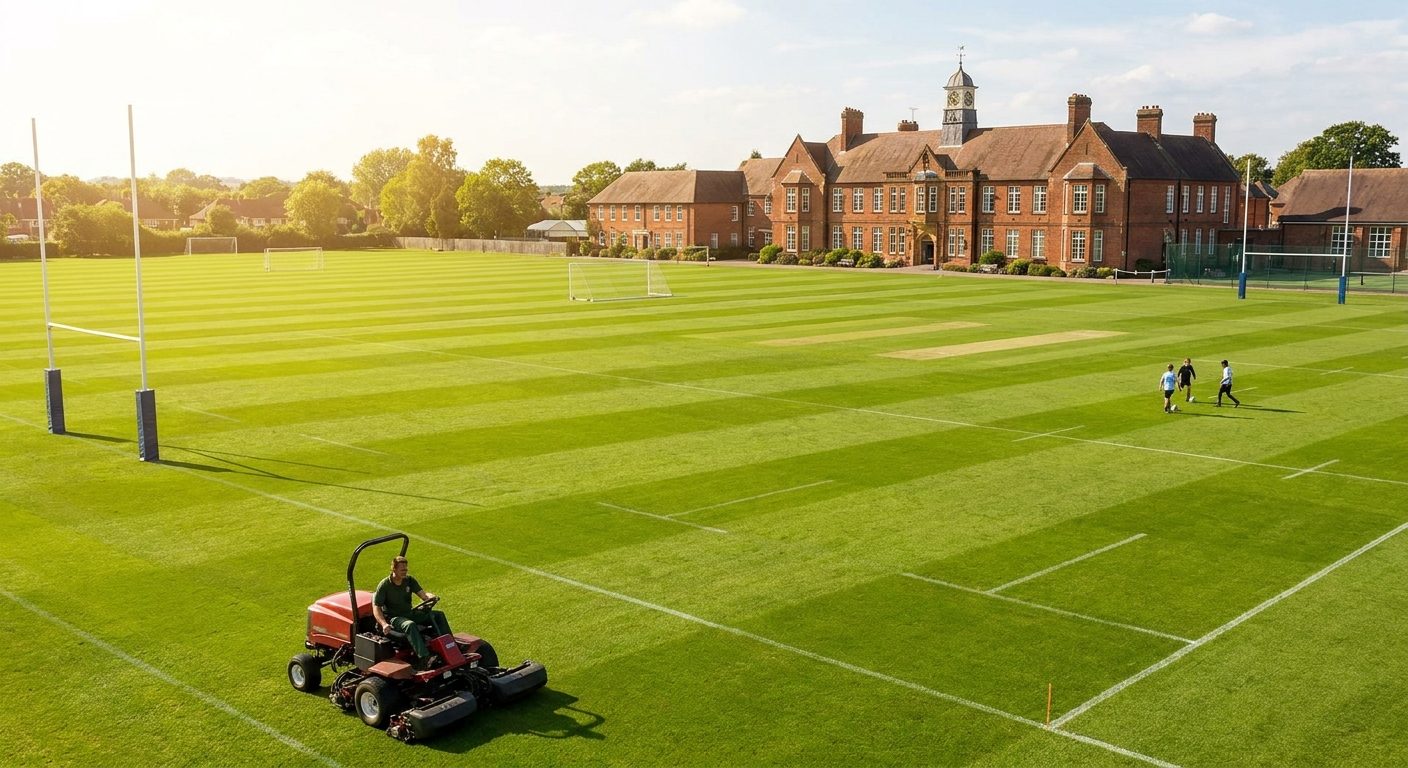
Education Grounds Maintenance School Contracts
Mobilisation: The Section That Separates Confident Operators from the Rest
Grounds maintenance contracts often have mobilisation challenges that buyers worry about: staff TUPE transfers, equipment procurement, site surveys, and systems setup — all within a compressed mobilisation window. A detailed, credible mobilisation plan directly addresses buyer concerns.
Typical mobilisation timescales:- Small commercial or residential contracts: 2-4 weeks
- Local authority or housing association contracts: 4-8 weeks
- Large or complex contracts with significant TUPE: 8-16 weeks
Common Mistakes That Eliminate Grounds Maintenance Bids
Generic methodology responses. The most common failure. Describing "our comprehensive approach to grounds maintenance" without addressing specific areas, frequencies, or requirements from the specification scores close to zero on most evaluation frameworks. Evaluators check methodology against the specification line by line. Missing or outdated compliance certificates. PA certificates, arboricultural qualifications, waste carrier licences, and insurance certificates all have expiry dates. Submitting out-of-date documentation, or failing to submit required documentation at all, typically results in automatic disqualification. No biodiversity content. In 2026, submitting a grounds maintenance tender with no ecological or biodiversity content signals that you haven't read current procurement requirements carefully. Even for contracts with minimal explicit biodiversity requirements, including a proactive ecological management approach differentiates you from competitors who treat it as irrelevant. Underbidding on TUPE. Pricing without accounting for inherited TUPE obligations is the most common cause of contract loss-making in grounds maintenance. Request the full TUPE information pack before pricing. If it isn't available, price in a contingency and state your assumption explicitly. Weak social value responses. Treating social value as a compliance exercise rather than a genuine differentiator leaves significant marks on the table. Social value sections worth 20-25% of total marks require proportionate writing effort. Late submission. Tender portals close automatically at the deadline. Build your timeline with a 48-hour buffer for final review and portal upload. No site surveys. Pricing from plans without visiting sites leads to inaccurate costings, over- or under-pricing, and methodology responses that miss obvious site-specific challenges. Evaluators with local knowledge spot generic, unvisited-site responses quickly.Measuring and Improving Your Bid Performance
Systematic performance measurement is the difference between grounds maintenance companies that grow their public sector pipeline and those that plateau.
Debrief every unsuccessful bid. Public sector buyers are obligated to provide debrief information to unsuccessful tenderers — but most grounds maintenance companies never request it. Debriefs give you specific scores against each criterion, evaluator comments on your strongest and weakest sections, and insight into the winning bid's characteristics. This intelligence directly improves your next submission. Track your win rate by sector and contract size. If you win 1 in 3 local authority bids but 1 in 6 housing association bids, that tells you something about where your experience and evidence base is stronger. Focus bid investment where your win rate is highest while building evidence in adjacent sectors. Update your evidence library continuously. When you win a contract, immediately capture the key details as a case study. When you complete a successful year of service, update with performance data — attendance rates, customer satisfaction scores, biodiversity outcomes, social value metrics delivered. When you receive a positive client testimonial, add it to your reference library. This library compounds in value over time and is the foundation of every winning tender response. Review your social value commitments at contract mid-point. If you've committed to employing three local apprentices and you're 18 months in with only one in post, you have a problem — both for this contract's performance and for your ability to claim that commitment in the next tender. Genuine social value delivery, tracked and evidenced, is the most powerful long-term differentiator in public sector grounds maintenance.---
The grounds maintenance companies consistently winning public sector contracts in 2026 are not necessarily the cheapest, the largest, or even the most operationally capable. They're the ones that communicate their capability most effectively, demonstrate ecological and compliance credentials most clearly, and tell a compelling story about social value and community impact.
The technical foundations — PA certification, arboricultural qualifications, COSHH management, TUPE compliance — are table stakes. Meeting them well gets you past the gateway. Winning requires demonstrating genuine expertise in biodiversity, a credible social value narrative, and a methodology specific enough to give buyers confidence that you've actually done the work of understanding their contract.
Invest in the pre-writing research. Build the evidence library. Treat social value as a genuine differentiator. And be specific — always be specific.
mytender.io helps grounds maintenance and landscaping companies win more public sector contracts through AI-powered bid writing, compliance management, and evidence library tools. See how we've helped grounds maintenance contractors improve win rates by an average of 28% — explore the platform today.Tags
Ready to Transform Your Tender Writing?
See how MyTender's AI can help you write winning tenders in a fraction of the time.