

Facilities Management Tender Writing Guide 2026: Win More FM Contracts
Complete guide to winning facilities management tenders in 2026. Learn compliance requirements, scoring strategies, technical specifications, and outcome-based proposals for FM contracts worth millions.
mytender.io Team
Facilities Management Specialists
The UK facilities management market reached £83.29 billion in 2026, driven by technological innovation, regulatory reform, and sustainability mandates. Winning FM tenders requires more than competitive pricing—you need compliance expertise, outcome-based proposals, and technology integration strategies that demonstrate measurable value.
This guide provides everything you need to win facilities management tenders in 2026, from understanding new regulatory frameworks to crafting proposals that score highly on quality criteria.
Understanding the 2026 FM Tender Landscape
The facilities management sector has transformed dramatically. Three major factors shape FM procurement in 2026:
Regulatory Compliance is Non-NegotiableThe Fire Safety Act 2021, Building Safety Act 2022, and Fire Safety (England) Regulations 2022 fundamentally changed FM responsibilities. Tenders now treat compliance and risk management as equally important as cost. Buyers expect detailed evidence of your compliance frameworks, audit trails, and risk mitigation strategies.
Technology Has Become MandatoryOver 70% of UK businesses adopted cloud-based FM solutions by 2026. Integrated CAFM systems, IoT sensors, predictive maintenance, and AI-powered optimisation are no longer differentiators—they're baseline expectations. Your tender must demonstrate technological capability.
Sustainability Carries Contractual WeightFM contracts now include direct carbon reduction responsibilities with auditable reporting and financial penalties for non-compliance. Your proposal needs quantified carbon impact, sustainability initiatives, and clear ESG alignment.
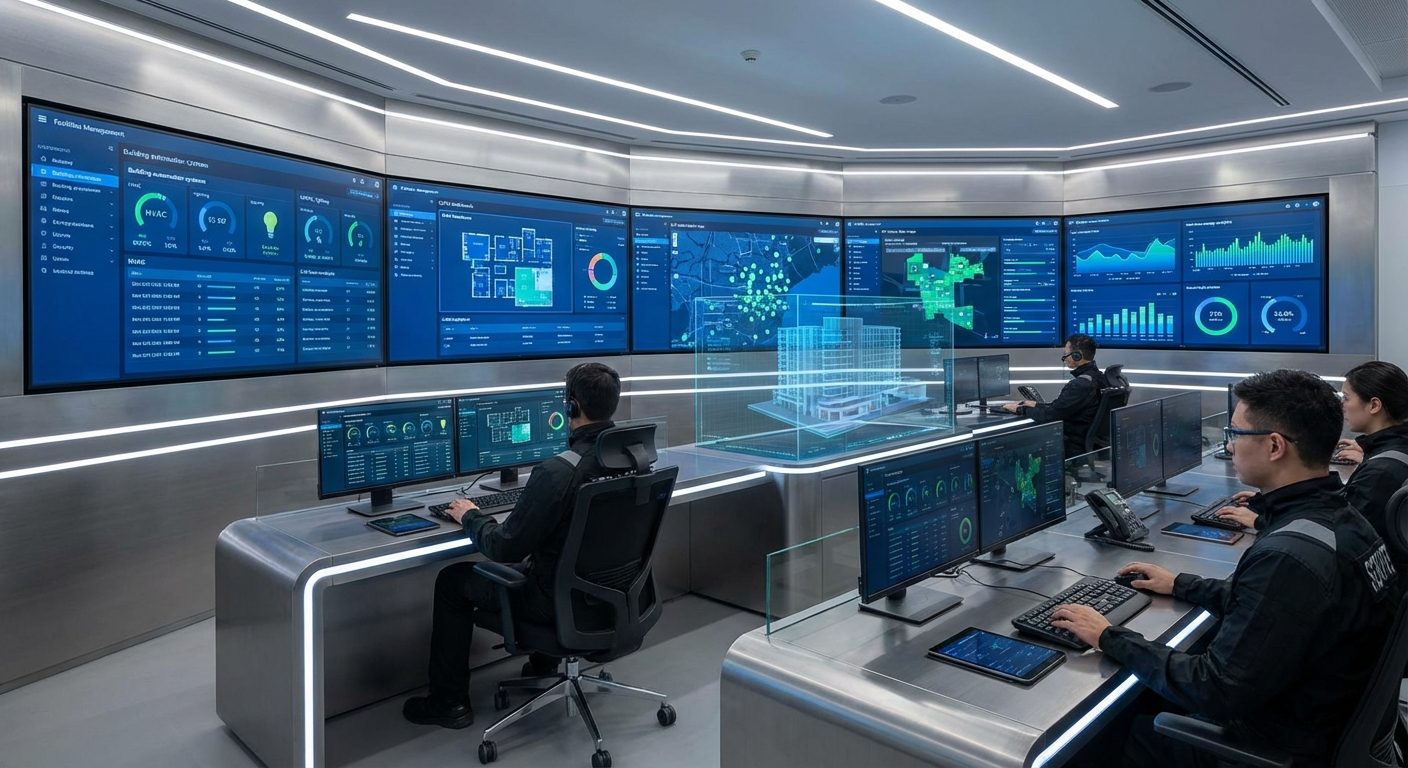
Modern facilities management control room with digital monitoring systems
The Procurement Act 2023: What Changed for FM Tenders
2026 marks the first full year under the Procurement Act 2023. Understanding these changes is critical for FM tender success.
From MEAT to MATThe shift from "Most Economically Advantageous Tender" to "Most Advantageous Tender" emphasises holistic value. Buyers evaluate best overall value, not just economic advantage. Your proposal must demonstrate value across multiple dimensions: service quality, risk management, innovation, social value, and sustainability.
Increased Transparency RequirementsThe Act requires greater transparency throughout procurement. Expect detailed KPI reporting requirements, performance monitoring frameworks, and public disclosure of contract outcomes. Your tender should proactively address how you'll meet these transparency obligations.
Enhanced Supplier ObligationsNew compliance measures require regular performance reporting, adherence to payment terms, and demonstrated social value. Structure your tender to show how you'll meet these ongoing obligations, not just initial contract requirements.
FM Tender Evaluation: Understanding the MEAT Framework
Quality criteria typically carry 60-70% weighting in FM tenders due to service criticality. Understanding evaluation criteria helps you target high-scoring sections.
Service Delivery and Reliability (20-25%)Buyers evaluate your track record, resource allocation, and contingency planning. Demonstrate reliability through:
- Case studies with verified uptime statistics
- Resource management plans showing adequate staffing
- Multi-layered contingency frameworks
- Real-time monitoring and response protocols
This section demands measurable commitments:
- Baseline carbon footprint with reduction targets
- Sustainable procurement policies for cleaning products and materials
- Energy efficiency initiatives with projected savings
- Waste reduction and recycling programmes
- Evidence of ISO 14001 or equivalent certification
Showcase your FM expertise and technology stack:
- CAFM system capabilities and integration
- Predictive maintenance methodologies
- Building Management System (BMS) optimisation
- Smart building technologies and IoT deployment
- Data analytics and reporting capabilities
This category has grown significantly. Address:
- Detailed compliance frameworks for Fire Safety Act, Building Safety Act
- Asset information management throughout building lifecycle
- Risk-based decision-making processes
- Audit trail systems and documentation protocols
- Insurance and liability coverage
Differentiate through genuine innovation:
- Unique technology applications
- Service delivery improvements
- Cost optimisation strategies
- Enhanced user experience initiatives
- Partnership and collaboration models
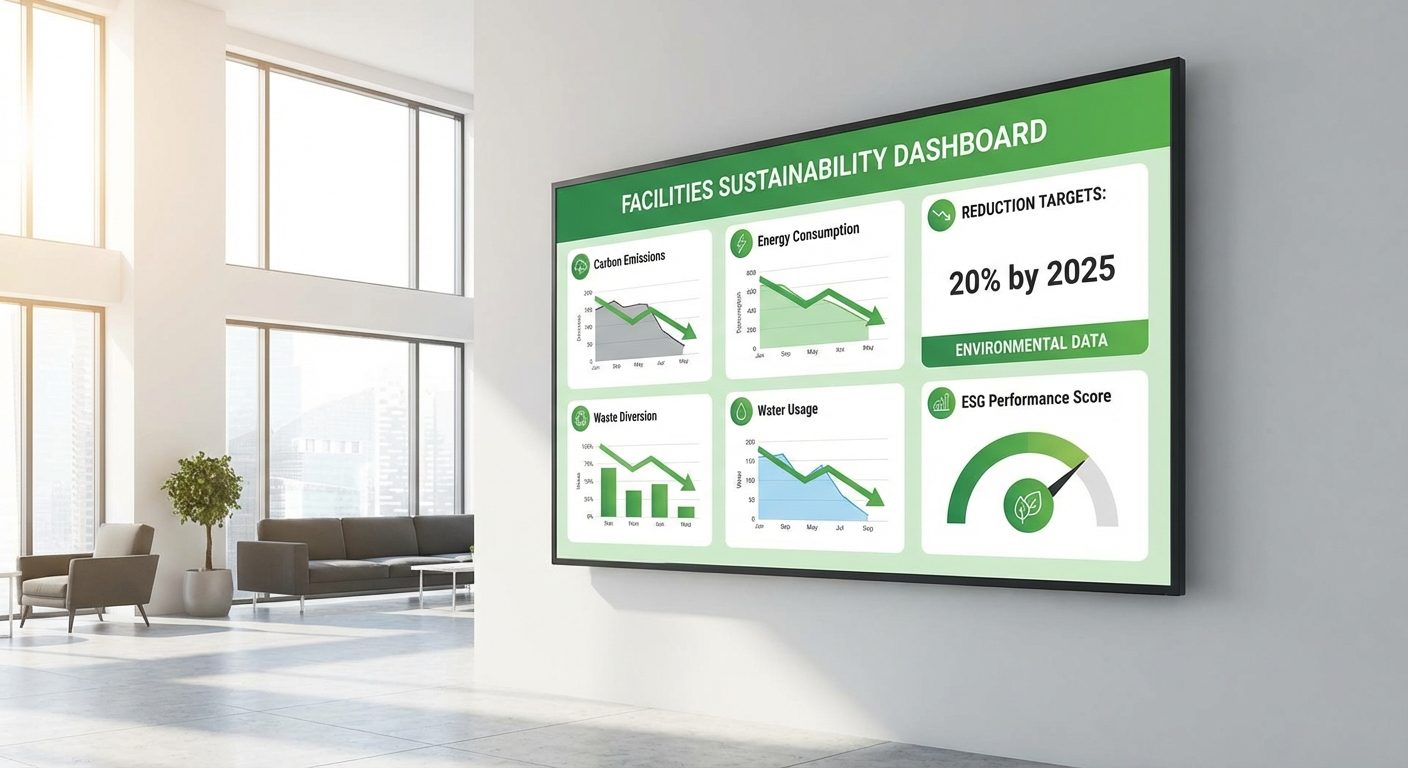
Facilities management sustainability dashboard showing carbon metrics
Essential Components of a Winning FM Tender
Your tender response must address multiple dimensions simultaneously. Here's how to structure each critical section.
Executive Summary: Set the Strategic Context
Your executive summary determines whether evaluators read your proposal with interest or scepticism. Make it count.
Open with specific understanding of their challenges. Reference their estate size, service complexity, current pain points, and strategic objectives. Demonstrate you've researched their organisation thoroughly.
State your core value proposition clearly: what measurable outcomes will you deliver? Use specific metrics—"reduce energy consumption by 18%," "achieve 99.7% planned maintenance compliance," "cut emergency callout response time to 2.3 hours."
Outline your strategic approach in three to four key pillars: technology integration, compliance assurance, sustainability delivery, and continuous improvement. Show how these interconnect to deliver superior outcomes.
Close with your differentiators—what makes your approach uniquely suited to their needs? This isn't a list of your company's achievements; it's evidence that you understand their specific context and have tailored solutions.
Service Delivery Methodology: Show How You'll Execute
Buyers want confidence you can deliver consistently. Your methodology section must balance comprehensiveness with clarity.
Integrated Service Delivery ModelDescribe your approach to integrating hard and soft services. Buyers increasingly prefer integrated FM for efficiency and single-point accountability. Show how your model coordinates mechanical and electrical maintenance, cleaning, catering, security, grounds maintenance, and waste management into seamless delivery.
Explain your management structure: who manages what, reporting lines, escalation procedures, and communication protocols. Include an organisational chart specific to this contract, not a generic template.
Resource Allocation and StaffingDetail your staffing plan with specific numbers: how many technicians, cleaners, supervisors, contract managers? Show how this compares to industry benchmarks and client requirements.
Address workforce challenges directly—the FM industry faces skilled labour shortages. Explain your recruitment, training, and retention strategies. Demonstrate investment in staff development with certification programmes and career progression paths.
Include contingency staffing arrangements for absence coverage, seasonal variations, and unexpected surges in demand.
Service Level Agreements and KPIsPresent clear, measurable SLAs for each service element. Use a structured table:
| Service Element | Response Time | Resolution Time | Performance Target |
|---|---|---|---|
| Emergency repairs | 1 hour | 4 hours | 95% achievement |
| Planned maintenance | N/A | As scheduled | 100% completion |
| Cleaning services | N/A | Daily | 98% quality score |
| Helpdesk response | 15 minutes | Varies by priority | 95% first-call resolution |
Technology and Innovation: Demonstrate Digital Capability
Technology sections increasingly separate winning from losing bids. Buyers expect detailed technical proposals, not marketing claims.
CAFM and Integrated SystemsSpecify your CAFM platform by name—Planon, IBM TRIRIGA, FM:Systems, or equivalent. Describe functionality: asset management, work order management, space management, document control, mobile access.
Explain integration with client systems: their finance software, HR systems, building management systems, and IoT sensors. Show architecture diagrams of data flow between systems.
Demonstrate real-world implementation: provide screenshots, dashboards, and case studies showing the system in action at similar contracts.
Smart Building TechnologiesDetail your IoT deployment strategy: sensor types, data collection frequency, analytics platforms, and actionable insights. Buyers want specifics:
- Environmental sensors for temperature, humidity, air quality, occupancy
- Energy monitoring systems with real-time consumption data
- Predictive maintenance algorithms for critical equipment
- Space utilisation analytics to optimise layouts
- Building performance dashboards for informed decision-making
Show how these technologies deliver measurable outcomes: energy savings percentages, maintenance cost reductions, improved occupant comfort scores.
Predictive Maintenance ApproachExplain your methodology for transitioning from reactive to predictive maintenance. This delivers significant value—buyers want to understand how.
Describe data collection: equipment sensors, historical performance data, manufacturer specifications, environmental factors. Detail your analytical approach: machine learning models, threshold alerts, failure prediction algorithms.
Provide evidence: case studies showing actual equipment failure prevention, maintenance cost savings, and extended asset life. Quantify the financial impact.

IoT sensors and predictive maintenance technology in building systems
Compliance and Risk Management: Prove You Understand the Rules
Compliance failures can terminate contracts and damage reputations. Buyers scrutinise this section carefully.
Regulatory Compliance FrameworkAddress each major regulation explicitly:
Fire Safety Act 2021 and Fire Safety (England) Regulations 2022: Detail your fire risk assessment process, responsible person identification, training programmes, evacuation procedures, and audit schedules. Show example documentation. Building Safety Act 2022: Explain how you'll maintain the golden thread of building information, support the Accountable Person, manage higher-risk buildings, and coordinate with the Building Safety Regulator. This Act transformed compliance requirements—demonstrate mastery. Health and Safety: Outline your health and safety management system, ideally certified to ISO 45001. Include risk assessment methodologies, method statements, toolbox talks, incident reporting, and continuous improvement processes. Environmental Regulations: Address waste management compliance, water hygiene (Legionella control), asbestos management, and hazardous substance handling. Asset Information ManagementBuilding Safety Act compliance requires accurate, accessible, and auditable asset information throughout the building lifecycle. Describe your approach:
- Digital asset registers with complete equipment histories
- Planned preventative maintenance schedules
- Document management systems for certificates, test results, and compliance records
- Change management processes to maintain information accuracy
- Regular audits to verify data integrity
Provide examples of your asset management system interface showing real compliance data.
Risk Management StrategyPresent your risk management framework: risk identification, assessment, mitigation, monitoring, and review. Use a structured risk register format:
| Risk Category | Specific Risk | Likelihood | Impact | Mitigation Strategy | Residual Risk |
|---|---|---|---|---|---|
| Service continuity | Staff shortage during peak | Medium | High | On-call pool, agency partnerships | Low |
| Compliance | Fire safety audit failure | Low | Critical | Monthly audits, certified personnel | Very Low |
| Financial | Supply cost inflation | High | Medium | Fixed-price contracts with suppliers | Medium |
Sustainability and ESG: Deliver Measurable Environmental Impact
Sustainability has moved from "nice to have" to "contractual requirement with penalties." Your proposal must demonstrate serious commitment backed by data.
Carbon Reduction StrategyStart with baseline assessment: quantify current carbon footprint across scope 1 (direct emissions), scope 2 (energy), and scope 3 (supply chain). Present a detailed reduction plan:
Year 1-2: Establish accurate monitoring, optimise existing systems, implement low-carbon procurement policies. Target: 10% reduction. Year 3-4: Deploy advanced technologies, retrofit inefficient equipment, expand renewable energy. Target: 25% cumulative reduction. Year 5+: Systematic transformation toward net-zero, innovative solutions, supply chain decarbonisation. Target: 40%+ cumulative reduction.Provide specific initiatives: LED lighting upgrades, HVAC optimisation, solar panel installation, electric vehicle fleet transition, sustainable materials procurement.
Show the financial case: carbon reduction often delivers cost savings through energy efficiency. Quantify projected savings against investment requirements.
Circular Economy and Waste ReductionDetail your approach to waste hierarchy: reduce, reuse, recycle, recover, dispose. Set specific targets:
- 70% waste diversion from landfill by year 1
- 80% by year 3
- Zero waste to landfill by year 5
Explain how you'll achieve this: segregation systems, staff training, supplier partnerships, innovative reuse programmes, composting, circular procurement.
Sustainable ProcurementYour supply chain determines much of your environmental impact. Describe sustainable procurement policies:
- Supplier environmental assessment criteria
- Preference for certified sustainable products
- Local sourcing to reduce transport emissions
- Packaging reduction requirements
- Lifecycle cost analysis including environmental externalities
Provide examples: switching to plant-based cleaning products reduced VOC emissions by 60%, partnering with certified sustainable suppliers cut embodied carbon by 35%.
ESG Reporting and TransparencyBuyers expect regular ESG reporting. Show your reporting framework:
- Monthly dashboard with key metrics: carbon emissions, waste diversion, energy consumption, water usage
- Quarterly detailed reports with trend analysis and improvement recommendations
- Annual sustainability reviews with stakeholder engagement
- Public disclosure aligned with TCFD or equivalent frameworks
Include dashboard mockups showing real environmental performance data from existing contracts.

Green building with solar panels and sustainable facilities management
Social Value: Demonstrate Community Impact
The Procurement Act 2023 emphasises social value more than ever. Your tender must show meaningful local impact.
Employment and SkillsDetail your commitment to local employment:
- Percentage of workforce recruited locally
- Apprenticeship programmes with target numbers
- Training and qualification support for staff
- Career progression pathways
- Living Wage accreditation
Quantify impact: "Our commitment creates 47 local jobs, including 8 apprenticeships, delivering £1.4M in local wages annually."
Community EngagementShow how you'll actively engage with the local community:
- Partnership with local schools for skills development
- Support for local charities through volunteering and donations
- Community facility access outside operating hours
- Local business engagement through supply chain
- Environmental improvement projects
Provide evidence from current contracts: "Our partnership with St. Mary's School provided work experience for 24 students and funded STEM equipment worth £15,000."
Supply Chain Social ValueYour suppliers contribute to social value. Explain your approach:
- Requirements for suppliers to demonstrate social value
- Preference for social enterprises and local businesses
- Fair payment terms supporting small suppliers
- Supplier diversity initiatives
Quantify the impact: "Our local supplier policy directs 35% of contract value to businesses within 30 miles, supporting 120 local jobs."
Mobilisation and Transition: Prove You Can Start Successfully
Buyers fear transition disruption. Your mobilisation plan must inspire confidence.
Mobilisation TimelinePresent a detailed Gantt chart covering pre-mobilisation, mobilisation, and stabilisation phases. Typical FM contract mobilisation spans 12-16 weeks:
Weeks 1-4 (Pre-mobilisation):- Contract finalisation and governance setup
- Mobilisation team deployment
- Detailed site surveys and asset audits
- TUPE consultation commencement
- Supply chain contracts finalisation
- Staff recruitment and TUPE transfers
- Training programmes for all personnel
- Technology system deployment and testing
- Supplier mobilisation and stock setup
- Health and safety inductions
- Service commencement with enhanced support
- Parallel running with incumbent (if applicable)
- Performance monitoring and rapid response
- Stakeholder communication and feedback
- Service normalisation
- Performance optimisation
- Continuous improvement implementation
- Full governance establishment
Identify transition risks and mitigation:
- TUPE staff integration: Comprehensive communication, cultural integration programmes, retention incentives
- Service continuity: Phased transition, enhanced staffing during changeover, 24/7 support desk
- Knowledge transfer: Structured handover from incumbent, detailed documentation, shadowing periods
- Technology migration: Thorough testing, parallel systems running, rollback procedures
Provide case studies: "Our mobilisation of the 450,000 sq ft Regional Hospital achieved 100% service commencement on day one with zero critical incidents during the 14-week transition."
Financial Proposal: Balance Cost and Value
While quality weighs heavily, your pricing must be competitive and justify the value you deliver.
Transparent Cost BreakdownStructure your pricing clearly:
- Fixed costs: Management overhead, contract administration, governance, reporting
- Variable costs by service line: Cleaning, maintenance, catering, security, grounds, waste management
- Technology costs: CAFM licensing, IoT sensors, analytics platforms
- Contingency: Typically 2-5% for unforeseen circumstances
Show unit costs where appropriate: cost per square metre for cleaning, cost per occupied workspace for soft services, cost per asset for maintenance.
Value for Money JustificationDon't just present costs—demonstrate value. Compare your proposal to industry benchmarks: "Our cost per square metre of £127 sits 6% below RICS benchmark while delivering enhanced service levels through technology efficiency."
Show cost avoidance and savings:
- Predictive maintenance reduces emergency repairs by 40%
- Energy optimisation saves £125,000 annually
- Sustainable procurement cuts waste disposal costs by 35%
- Integrated delivery eliminates duplicate management overhead
Quantify total cost of ownership over the contract term, including these savings.
Pricing Model FlexibilityOffer flexible commercial models: fixed-price, cost-plus, gain-share arrangements. Explain how each works and when it's most appropriate.
Consider offering innovation sharing: "If our technology initiatives deliver savings beyond the 18% projected, we propose a 50/50 gain-share arrangement to align incentives."
Quality Assurance and Continuous Improvement: Show Long-Term Commitment
Buyers want partners who continuously improve, not contractors who meet minimum standards.
Quality Management SystemDetail your quality framework, ideally certified to ISO 9001. Describe:
- Quality policy and objectives
- Documented procedures for all service elements
- Internal audit schedule and methodology
- Corrective and preventive action processes
- Management review and improvement cycles
Explain how you'll capture and act on feedback:
- Monthly satisfaction surveys with statistically valid samples
- Quarterly stakeholder forums with senior leadership
- Real-time feedback systems via mobile apps
- Annual comprehensive service reviews
- Complaints handling with response time commitments
Show evidence: "95% satisfaction scores across our portfolio, with 89% of complaints resolved within 48 hours."
Continuous Improvement FrameworkPresent a structured improvement methodology:
- Performance monitoring: Continuous KPI tracking, variance analysis, trend identification
- Root cause analysis: Systematic investigation of performance issues
- Improvement initiatives: Kaizen events, Six Sigma projects, innovation workshops
- Implementation: Pilot testing, rollout, effectiveness measurement
- Standardisation: Embed successful improvements into standard procedures
Provide examples: "Our continuous improvement programme at City Council delivered 127 implemented improvements over 3 years, saving £340,000 and improving satisfaction scores by 12 percentage points."

Facilities management team conducting building inspection with digital tablets
Industry-Specific FM Tender Considerations
Different sectors have unique FM requirements. Tailor your approach accordingly.
Healthcare Facilities Management
Healthcare FM demands the highest standards. Critical considerations:
Infection Control: Detail your enhanced cleaning protocols, PPE procedures, isolation room management, and pathogen prevention strategies. Reference HTM 03-01 and HTM 07-01 compliance. Critical Systems: Explain redundancy for power, heating, ventilation, water, and medical gas systems. Show 24/7/365 engineering coverage with response times under 30 minutes for critical failures. Regulatory Environment: Demonstrate understanding of CQC requirements, NHS Estates and Facilities standards, and medical device regulations. Operational Continuity: Healthcare facilities never close. Show how you maintain services during full operational loads with zero disruption tolerance.Education FM
Schools and universities have distinct patterns and priorities:
Seasonal Variations: Address holiday shutdown maintenance, term-time responsive services, and examination period sensitivities. Safeguarding: Demonstrate DBS checking, safeguarding training, secure contractor management, and child protection policies. Budget Constraints: Education often operates with tight budgets. Show value engineering, preventative maintenance to avoid costly failures, and energy savings that fund service improvements. Multiple Stakeholder Management: Balance needs of senior leadership, teaching staff, students, parents, and governors. Show communication strategies for each group.Commercial Office FM
Modern office environments prioritise user experience and flexibility:
Workplace Experience: Detail how your FM services enhance employee satisfaction: responsive helpdesks, amenity services, space booking systems, and environmental quality. Flexibility: Commercial offices reconfigure regularly. Show agile service adaptation, move management capabilities, and space planning support. Technology Integration: Office tenants expect seamless technology. Demonstrate AV support, connectivity infrastructure, smart building integration, and digital workplace platforms. Cost per Desk Optimisation: Commercial buyers focus on cost per workstation. Present detailed modelling showing competitive costs while delivering superior experience.Industrial and Manufacturing FM
Industrial facilities have unique technical demands:
Production Support: Show understanding that FM directly impacts production output. Emphasise uptime, rapid response to equipment failures, and alignment with production schedules. Compliance Environment: Address COMAH, DSEAR, ATEX, and industry-specific regulations. Show experience with HSE inspections and regulatory compliance. Technical Expertise: Industrial FM requires advanced technical capability. Detail your engineering qualifications, specialist certifications, and experience with complex industrial systems. Shift Patterns: Many industrial sites operate 24/7. Show flexible staffing models, shift coverage, and out-of-hours management.Common FM Tender Mistakes to Avoid
Learn from frequent failures that lose contracts:
Generic ResponsesSubmitting standard template responses without customisation screams "we don't care enough." Buyers spot generic content immediately. Every section must reference the specific client, their estate, their challenges, and their objectives.
Insufficient EvidenceClaims without proof don't score. "We deliver excellent service" means nothing. "We achieved 98.3% satisfaction scores across 15 comparable contracts, verified by independent surveys" demonstrates capability.
Every claim needs supporting evidence: case studies, data, testimonials, certifications, audit reports.
Underestimating ComplianceTreating compliance as a checkbox exercise loses contracts. Buyers need confidence you understand regulatory complexity and will protect them from compliance failures that could result in prosecution.
Demonstrate deep compliance knowledge with detailed frameworks, not brief assurances.
Weak Case StudiesCase studies must be relevant, detailed, and evidenced. Ineffective case studies are vague, outdated, or irrelevant. Effective case studies include:
- Contract value and scope comparable to the tender
- Specific challenges addressed with detailed solutions
- Measurable outcomes with verified data
- Client contact details for reference (with permission)
- Recent delivery (within past 3 years)
Answer what's asked, not what you want to talk about. Buyers use structured evaluation matrices. If the question asks for three examples, provide three—not two or five. If it specifies word limits, adhere to them.
Read questions carefully. Many tenders fail because responses don't address the actual question.
Poor PresentationContent matters most, but presentation affects readability. Poorly formatted tenders frustrate evaluators, potentially lowering scores.
Use clear headings matching the tender structure, tables for complex data, diagrams for processes, consistent formatting, and sufficient white space. Submit professionally presented documents.
Unrealistic PromisesOverpromising to win contracts damages your reputation when you can't deliver. Be ambitious but realistic. If you commit to 99.9% uptime, you must achieve it consistently.
Buyers prefer honest, achievable commitments over impressive claims they suspect you can't meet.
Writing Effective Case Studies for FM Tenders
Case studies often determine tender success. Here's how to write compelling examples.
Structure
Use STAR format: Situation, Task, Action, Result.
Situation: Set context. Describe the client, their estate, and challenges. "County Council manages 87 buildings totaling 340,000 sq metres across education, civic, and leisure facilities. Aging infrastructure, reactive maintenance, rising costs, and 68% satisfaction scores required transformation." Task: Define objectives. "Contract objectives: reduce operational costs by 15%, implement predictive maintenance, improve satisfaction to 85%, achieve 25% carbon reduction, deliver enhanced compliance." Action: Explain your solution. Detail your approach, technologies deployed, processes implemented, and innovations introduced. This is the longest section—show specifically what you did. Result: Quantify outcomes. Use specific numbers: "Delivered £420,000 annual savings (17% reduction), achieved 89% satisfaction scores, reduced emergency callouts by 43%, cut carbon emissions by 28%, maintained zero compliance incidents."Making Case Studies Compelling
Use Specific DataVague claims don't impress. Compare:
Weak: "We significantly improved performance and saved money."
Strong: "We reduced energy consumption by 22% (£176,000 annually), cut emergency maintenance by 38%, and improved uptime from 91% to 97.4%."
Show Challenges OvercomeEasy projects don't demonstrate capability. Highlight difficulties you navigated: tight timelines, complex TUPE transfers, aging infrastructure, budget constraints, regulatory challenges.
Explain how you overcame them with specific problem-solving approaches.
Include Client TestimonialsThird-party validation strengthens credibility. Include direct quotes:
"Their proactive approach transformed our facilities management. Response times improved dramatically, costs decreased, and crucially, our staff satisfaction with building services increased from 68% to 91%." — Facilities Director, City University
Obtain permission before using names and titles.
Make It RelevantChoose case studies closely matching the tender: similar sector, comparable size, analogous challenges. A case study managing 12 small offices doesn't demonstrate capability to manage a 500,000 sq ft hospital.
Submission Checklist: Ensure Nothing Gets Missed
Use this checklist before submitting every FM tender:
Compliance Requirements- [ ] All mandatory documents included
- [ ] Certificates and accreditations attached
- [ ] Insurance documentation current
- [ ] Financial information complete
- [ ] Company registration documents included
- [ ] Anti-bribery and modern slavery statements provided
- [ ] Every question answered completely
- [ ] Word limits observed
- [ ] No generic template language remains
- [ ] Client name appears throughout (correctly spelled)
- [ ] All claims supported by evidence
- [ ] Case studies relevant, detailed, and recent
- [ ] Pricing complete and clear
- [ ] All dates and numbers verified
- [ ] Calculations checked and correct
- [ ] Staff numbers match across sections
- [ ] KPI targets realistic and consistent
- [ ] Timelines feasible and detailed
- [ ] Contact details current
- [ ] Formatting consistent throughout
- [ ] Headings match tender structure
- [ ] Page numbers present
- [ ] Table of contents accurate
- [ ] All graphics clear and professional
- [ ] Spelling and grammar checked
- [ ] PDF exports correctly (if required)
- [ ] Submission before deadline with buffer time
- [ ] Correct submission portal/method used
- [ ] Confirmation of receipt obtained
- [ ] Internal copy saved for reference
- [ ] Team briefed on submission content
Winning FM Tenders in 2026: Final Thoughts
Facilities management tender success in 2026 requires mastering complexity across multiple domains: regulatory compliance, technology integration, sustainability delivery, outcome-based proposals, and continuous improvement commitment.
The buyers' priorities have evolved. Cost remains important but no longer dominates decisions. Quality, risk management, ESG performance, and social value now carry equal or greater weight. Your tender must address all dimensions convincingly.
Technology separates winners from losers. Integrated CAFM systems, predictive maintenance, IoT deployment, and data analytics are baseline expectations. Demonstrate genuine technical capability with specific systems, real implementations, and measured outcomes.
Compliance expertise is non-negotiable. Fire Safety Act, Building Safety Act, and Procurement Act 2023 fundamentally changed FM obligations. Buyers need confidence you'll protect them from compliance failures. Show detailed frameworks, not superficial assurances.
Sustainability has become contractual with penalties for non-compliance. Deliver credible carbon reduction strategies with specific targets, measurable initiatives, and transparent reporting. Generic environmental commitments won't score.
Evidence beats claims every time. Support every statement with data, case studies, certifications, or testimonials. Unsubstantiated assertions don't score points—verified proof does.
Tailor everything to the specific opportunity. Generic responses fail. Reference the client's estate, challenges, objectives, and strategic priorities throughout your proposal. Show you've invested time understanding their needs.
The UK facilities management market continues growing, creating opportunities for providers who master modern FM tender requirements. Apply these strategies systematically, learn from each submission, and continuously improve your approach.
Your next FM contract win starts with a proposal that demonstrates genuine understanding, technical capability, compliance mastery, and commitment to delivering measurable outcomes that extend far beyond basic service provision.
Tags
Ready to Transform Your Tender Writing?
See how MyTender's AI can help you write winning tenders in a fraction of the time.