
ESG Requirements in UK Tenders: Complete Compliance Guide for 2026
Master ESG compliance in UK public sector tenders. Learn how to demonstrate environmental performance, social impact, and governance standards to win contracts in 2026 and beyond.
mytender.io Team
ESG and Procurement Specialists
Environmental, Social, and Governance (ESG) criteria are no longer optional considerations in UK public sector procurement—they are becoming mandatory requirements that can make or break your tender success. As we move through 2026, organisations bidding for government contracts face increasingly rigorous ESG evaluation standards that demand concrete evidence, measurable outcomes, and genuine commitment to sustainable practices.
The shift represents a fundamental transformation in how public sector buyers evaluate tenders. Where ESG was once a differentiator that could earn extra points, it has evolved into a baseline expectation that unsuccessful bidders often cite as their primary obstacle. Understanding and effectively responding to these requirements is now critical for any organisation serious about winning public sector contracts.
This comprehensive guide examines the ESG landscape in UK tenders, providing practical strategies for demonstrating compliance, collecting necessary evidence, and positioning your organisation as a responsible, sustainable supplier worthy of public sector trust and investment.
Understanding the ESG Mandate in UK Procurement
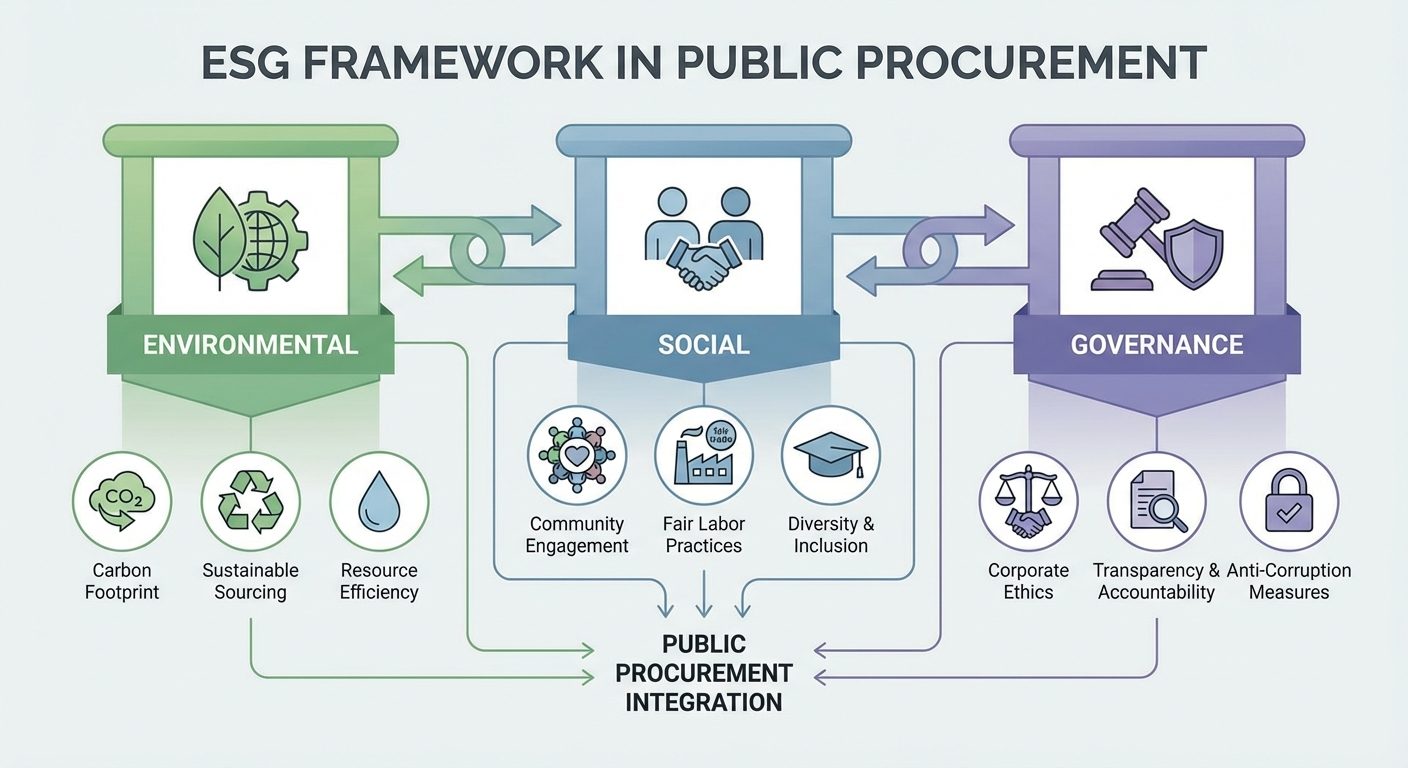
ESG framework components in public procurement
The integration of ESG into UK public procurement stems from multiple legislative and policy drivers. The Public Services (Social Value) Act 2012 established the foundation by requiring public authorities to consider social, economic, and environmental well-being when procuring services. The Procurement Act 2023, which came into full effect in February 2025, significantly strengthened these requirements by embedding ESG considerations throughout the entire procurement lifecycle.
Recent government policy has amplified this commitment. The National Procurement Policy Statement mandates that all central government departments and many public bodies must explicitly evaluate social value in tender assessments, typically accounting for at least 10% of the overall evaluation score. However, many contracting authorities now allocate 20-30% or more of total scores to combined ESG criteria, reflecting the growing importance of these factors.
The mandate extends beyond simple checkbox compliance. Buyers are increasingly sophisticated in their ESG evaluation methodologies, moving from accepting general policy statements to demanding detailed technical specifications, measurable Key Performance Indicators (KPIs), carbon intensity data, supply chain transparency, and evidence of genuine organisational commitment to environmental and social responsibility.
The Three Pillars: Environmental, Social, and Governance
Successful ESG tender responses require a comprehensive understanding of what each pillar entails and how contracting authorities evaluate performance across all three dimensions.
Environmental Criteria
Environmental requirements typically focus on your organisation's carbon footprint, resource efficiency, waste management, pollution prevention, and contribution to the UK's Net Zero by 2050 commitment. Buyers want to understand your environmental impact across the entire contract lifecycle—from material sourcing and manufacturing through delivery, use, and eventual disposal or recycling.
Carbon reporting has become particularly prominent. Many tenders now require bidders to provide Scope 1, 2, and increasingly Scope 3 emissions data. Scope 1 covers direct emissions from owned or controlled sources (company vehicles, on-site fuel combustion). Scope 2 encompasses indirect emissions from purchased electricity, heat, or steam. Scope 3 includes all other indirect emissions in your value chain, from purchased goods and services through employee commuting and end-of-life treatment of sold products.
Demonstrating environmental performance requires documented evidence. This might include ISO 14001 environmental management certification, carbon reduction targets with progress tracking, energy efficiency measures and their measurable impact, waste diversion rates and recycling percentages, use of renewable energy sources, sustainable procurement policies for your own supply chain, and environmental audits or assessments conducted by independent third parties.
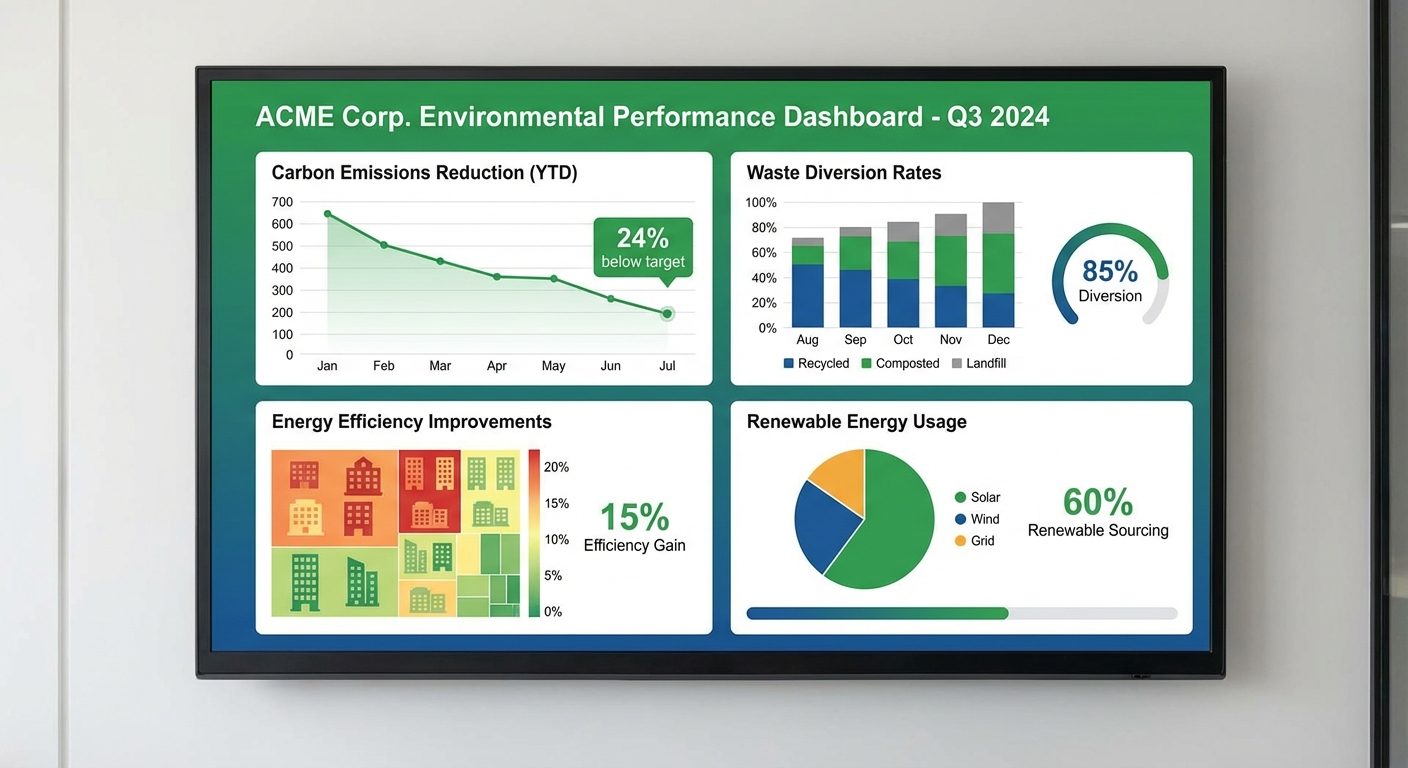
Environmental performance metrics dashboard
Water stewardship, biodiversity impact, and circular economy principles are gaining prominence in environmental evaluations. Contracting authorities increasingly ask how your proposal minimises water consumption, protects local ecosystems, incorporates recycled or recyclable materials, and extends product life through repair, refurbishment, or responsible end-of-life management.
Social Criteria
The social dimension of ESG encompasses a broad range of factors including labour standards, human rights, diversity and inclusion, community engagement, health and safety, skills development, and economic contribution to local communities.
Fair employment practices form a core component of social evaluation. Buyers want assurance that your organisation and your supply chain adhere to ethical labour standards. This includes paying at least the Real Living Wage (not just the statutory minimum), providing secure employment contracts rather than exploitative zero-hours arrangements, ensuring safe working conditions that exceed minimum health and safety requirements, respecting workers' rights to collective representation, and maintaining a diverse workforce with equitable opportunities for advancement.
Modern slavery and supply chain transparency receive particular scrutiny following the Modern Slavery Act 2015. Contracting authorities expect detailed evidence that you have mapped your supply chain to identify risks, implemented due diligence procedures to prevent forced labour or human trafficking, and established mechanisms for workers to report concerns without fear of retaliation.
Community benefit requirements are expanding beyond simply creating local jobs. Forward-thinking organisations demonstrate social value through apprenticeships and training programmes that develop future workforce capabilities, partnerships with local educational institutions to inspire career pathways, procurement from social enterprises and small businesses in disadvantaged communities, volunteer programmes that contribute employee time to community causes, and initiatives that address specific local challenges identified by the contracting authority.

Community engagement and social impact programmes
Diversity, equity, and inclusion (DEI) metrics are becoming standard evaluation criteria. Buyers want to see representation data across gender, ethnicity, disability, and other protected characteristics at all organisational levels, pay gap reporting and evidence of remediation efforts, inclusive recruitment and retention practices, accessibility commitments that go beyond legal minimums, and active participation in sector-wide initiatives to improve industry diversity.
Governance Criteria
Governance examines how your organisation is run, who makes decisions, how risks are managed, and whether robust systems ensure ethical, responsible, and transparent operations.
Corporate structure and decision-making transparency matter to public sector buyers investing taxpayer resources. They evaluate your organisational governance framework, looking for clearly defined roles and responsibilities, independent oversight mechanisms such as non-executive board members, risk management frameworks that identify, assess, and mitigate potential issues, and transparent reporting on financial performance, ESG metrics, and material risks.
Anti-corruption and business ethics receive heightened attention. Your tender response must demonstrate robust anti-bribery and corruption policies compliant with the Bribery Act 2010, whistleblowing procedures that protect employees reporting wrongdoing, conflicts of interest management, supplier code of conduct requirements, and regular ethics training for employees at all levels.
Data protection and cybersecurity governance have risen in prominence as public sector contracts increasingly involve sensitive data. Contracting authorities expect evidence of GDPR compliance frameworks, data protection impact assessments for the proposed contract, cybersecurity certifications such as Cyber Essentials Plus or ISO 27001, incident response plans and breach notification procedures, and regular security audits and penetration testing.
Tax compliance and financial transparency are baseline expectations. Buyers will verify that your organisation is registered with relevant tax authorities, has no outstanding tax obligations or unresolved disputes, publishes annual financial statements in accordance with applicable standards, and demonstrates financial stability sufficient to deliver the contract without undue risk of insolvency.
Navigating ESG Evaluation Criteria in Tender Documents
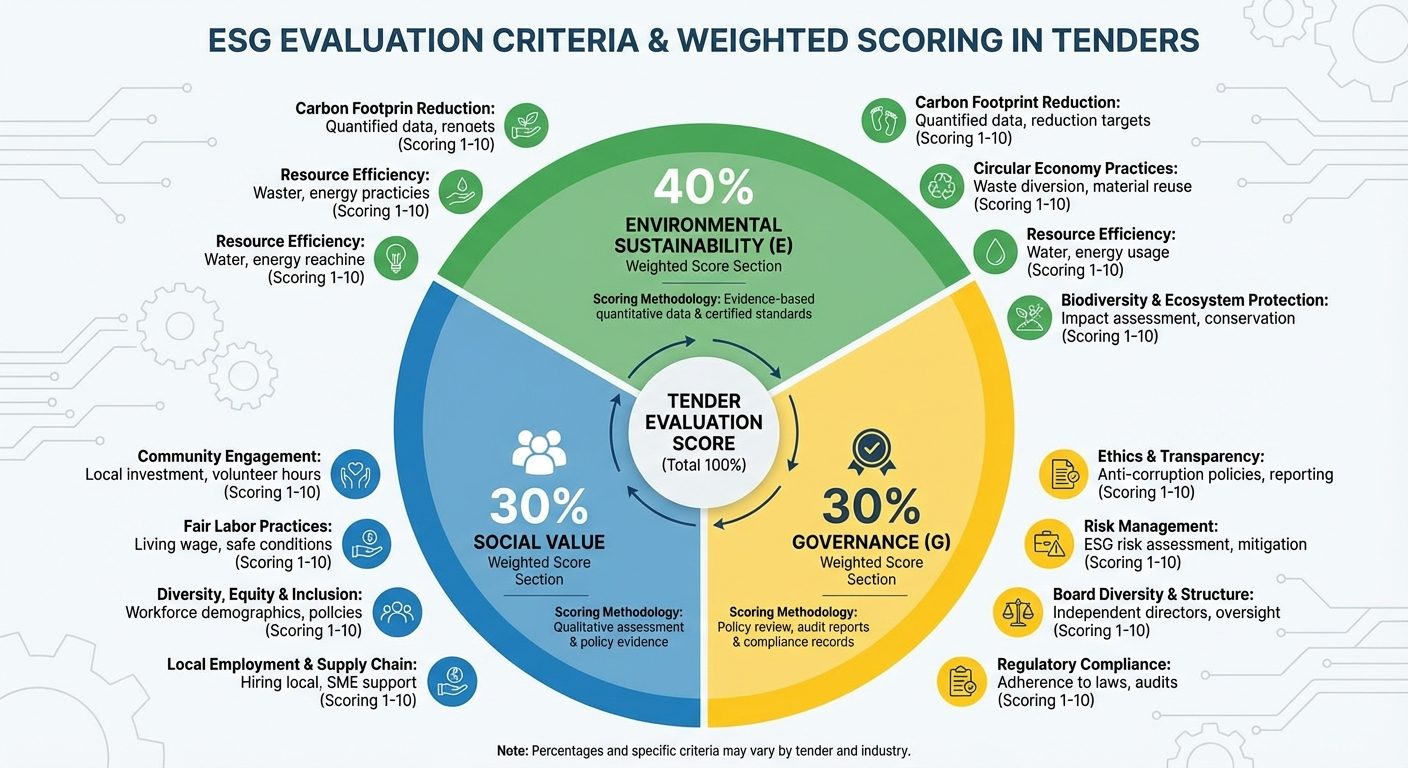
ESG evaluation criteria breakdown in tenders
Understanding how contracting authorities structure ESG evaluation is essential for crafting competitive responses. The Procurement Act 2023's introduction of the "Most Advantageous Tender" (MAT) framework gives buyers greater flexibility in how they weight and assess bids, often resulting in sophisticated multi-criteria evaluation models.
Decoding Evaluation Methodologies
Public sector tenders typically employ one of several evaluation approaches for ESG criteria:
Scored Questions: You receive a numerical score (commonly 0-5 or 0-10) based on how well your response addresses the question. Each score level has defined criteria—for example, a score of 5 might require "comprehensive evidence of exceptional performance with innovative approaches and measurable outcomes," while a 3 indicates "adequate evidence meeting requirements but limited detail on outcomes." Pass/Fail Requirements: Certain ESG criteria may be mandatory threshold requirements rather than scored elements. Failure to meet these standards results in automatic disqualification regardless of how competitive your price or other aspects of your bid might be. Weighted Scoring: ESG questions carry different weights reflecting their relative importance. A tender might allocate 25% of the total score to environmental sustainability, 15% to social value, and 10% to governance, with each category containing multiple sub-questions worth varying points. Outcome-Based Assessment: Increasingly common, this approach focuses on measurable outcomes you commit to deliver rather than processes or policies. For instance, instead of describing your carbon reduction policy, you commit to specific emissions reductions, waste diversion percentages, apprenticeship numbers, or community investment amounts.Read the tender's evaluation methodology section carefully, often found in the Instructions to Tenderers document. Understand precisely what evidence the buyer requires, how your response will be scored, and what differentiates a good response from an outstanding one.
Common ESG Question Types and Response Strategies
Tender documents typically include ESG questions across several categories:
Environmental Impact Questions might ask you to describe your approach to minimising carbon emissions throughout contract delivery, detail your waste management and circular economy strategies, explain how you will protect biodiversity or minimise pollution, or outline your sustainable procurement policy and how it applies to this contract.Strong responses provide specific, measurable commitments rather than vague promises. Instead of stating "we will reduce our carbon footprint," commit to "achieving a 25% reduction in Scope 1 and 2 emissions compared to our 2023 baseline by the end of the contract term, with annual reporting against interim targets." Support commitments with evidence of past performance—carbon reduction percentages achieved in previous contracts, innovations that delivered measurable environmental benefits, or third-party certifications validating your environmental management systems.
Social Value Questions typically explore employment and skills development contributions, economic benefit to local communities, support for disadvantaged groups or social enterprises, and community engagement initiatives.Tailor your social value offer to the specific geography and priorities identified by the contracting authority. If the buyer emphasises youth unemployment in their region, propose concrete commitments such as "creating 6 apprenticeship positions for local residents aged 16-24, with guaranteed employment upon successful completion" rather than generic training commitments.
Quantify your social value commitments using recognised methodologies. The National TOMs (Themes, Outcomes, and Measures) framework, developed by the National Social Value Taskforce, provides standardised metrics for measuring social value. Adopting TOMs or similar frameworks demonstrates sophistication and enables buyers to compare proposals consistently.
Governance and Ethics Questions often request your policies and procedures on anti-corruption, whistleblowing, data protection, or modern slavery due diligence, details of your organisational structure and decision-making processes, and your approach to risk management and compliance.Provide concrete examples rather than simply attaching policy documents. Describe how your policies work in practice—perhaps a specific instance where your whistleblowing procedure identified and remediated an issue, or how your modern slavery due diligence revealed and resolved a supply chain risk. This demonstrates that your governance frameworks are living systems, not dormant paperwork.
Building Your ESG Evidence Base
The most effective ESG tender responses draw on a well-maintained repository of evidence developed long before any specific tender opportunity emerges. Organisations that consistently win contracts with strong ESG requirements invest in building this evidence base as an ongoing strategic priority.
Essential Documentation and Certifications

Essential ESG certifications and standards
Certain certifications and documentation provide powerful third-party validation of your ESG performance:
Environmental Certifications:- ISO 14001 (Environmental Management Systems): Demonstrates systematic management of environmental responsibilities
- ISO 50001 (Energy Management): Shows commitment to energy efficiency and renewable energy adoption
- Carbon Neutral or Net Zero Certification: Validates achievement of carbon neutrality claims through recognised standards like PAS 2060
- B Corp Certification: Comprehensive third-party assessment of environmental and social performance
- Living Wage Employer Accreditation: Confirms payment of Real Living Wage to all employees and regular contractors
- Disability Confident Employer: Government scheme demonstrating inclusive recruitment and retention
- Investors in People: Validates commitment to employee development and wellbeing
- Fair Tax Mark: Demonstrates responsible tax practices and transparency
- ISO 27001 (Information Security Management): Particularly important for contracts involving data
- Cyber Essentials or Cyber Essentials Plus: Government-backed cybersecurity certification
- ISO 37001 (Anti-Bribery Management Systems): Demonstrates robust anti-corruption controls
- ISO 19600 (Compliance Management Systems): Shows systematic approach to legal and regulatory compliance
While certifications provide valuable credibility, they are not substitutes for demonstrated performance. Buyers want to see how certifications translate into concrete actions and measurable outcomes in contract delivery.
Developing Case Studies and Evidence
Compelling case studies form the backbone of successful ESG tender responses. Each case study should follow a clear structure:
Context: Briefly describe the previous contract, client, and relevant objectives or challenges. ESG Commitments: Detail specific environmental, social, or governance commitments you made. Actions Taken: Explain concrete steps implemented to meet those commitments. Measurable Outcomes: Provide quantified results—tonnes of CO2 reduced, number of apprenticeships created, percentage of local procurement spend, incident frequency rates, customer satisfaction scores, or other relevant metrics. Lessons Learned: Demonstrate continuous improvement by explaining what you learned and how that informs your approach to future contracts.Maintain a library of diverse case studies covering different industries, contract types, and ESG themes. This allows you to select the most relevant examples for each tender opportunity.
Data Collection and Performance Monitoring

ESG data collection and monitoring systems
Robust ESG tender responses require reliable data. Implement systems to track key metrics:
Environmental Data:- Energy consumption (electricity, gas, fuel) across all facilities and operations
- Greenhouse gas emissions calculations following recognised methodologies (GHG Protocol)
- Water usage and discharge
- Waste generation by type and disposal route (landfill, recycling, energy recovery)
- Materials consumption and percentage of recycled or sustainable sources
- Workforce demographics (gender, ethnicity, disability, age) across all organisational levels
- Pay gap data (gender, ethnicity)
- Training hours and investment per employee
- Health and safety metrics (accident frequency rates, lost time injuries, near misses)
- Employee turnover and retention rates
- Number and diversity of apprenticeships, work placements, and skills programmes
- Community investment (volunteer hours, charitable donations, pro bono services)
- Supply chain labour standards audits and findings
- Board and senior leadership composition and independence
- Ethics training completion rates
- Whistleblowing reports received and actions taken
- Data protection incidents and breaches
- Supplier due diligence assessments completed
- Audit findings and remediation status
Invest in appropriate tools for data collection and analysis. This might range from simple spreadsheet trackers for smaller organisations to comprehensive ESG management platforms for larger enterprises. The sophistication of your system matters less than consistency and accuracy in data capture.
Crafting Winning ESG Responses
With a strong evidence base established, you can craft compelling responses to ESG tender questions. The most effective responses share common characteristics:
Specificity and Measurability
Vague commitments undermine credibility. Instead of "We will minimise environmental impact," state "We will achieve ISO 14001 certification within 3 months of contract commencement, reduce Scope 1 and 2 emissions by 20% year-on-year, and ensure 75% of waste is diverted from landfill through recycling and energy recovery programmes."
Use SMART criteria for all commitments:
- Specific: Precisely define what you will do
- Measurable: Include quantifiable metrics
- Achievable: Base commitments on realistic capability and past performance
- Relevant: Align with the buyer's stated priorities and contract requirements
- Time-bound: Specify deadlines or milestones for delivery
Alignment with Buyer Priorities
Generic ESG responses that could apply to any tender rarely score highly. Study the tender documents, contracting authority's published strategies, and local context to understand specific priorities.
If the buyer emphasises youth unemployment in their region, your social value response should prioritise apprenticeships and youth training rather than generic skills development. If they highlight climate emergency declarations and carbon neutrality targets, your environmental response should demonstrate how your approach accelerates their journey toward those goals.
Many contracting authorities publish procurement strategies, social value frameworks, climate action plans, or economic development priorities. Review these documents during tender preparation to align your response with strategic objectives.
Innovation and Added Value
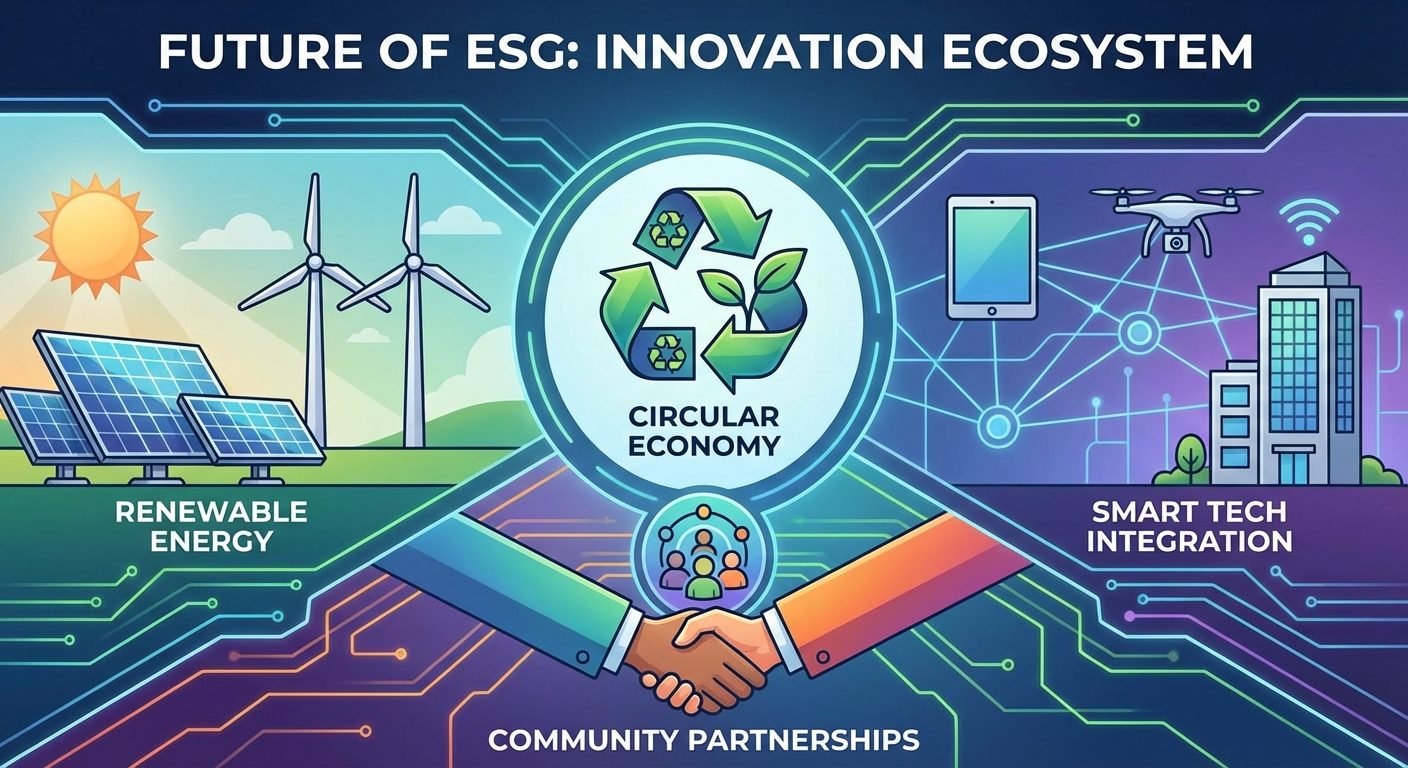
Innovation in ESG delivery approaches
Competitive ESG responses go beyond meeting baseline requirements to offer innovative approaches that deliver exceptional value. Consider how you might:
- Implement circular economy principles that eliminate waste entirely for specific material streams
- Deploy emerging technologies (renewable energy, electric vehicles, smart sensors) that exceed standard practice
- Create bespoke training or employment programmes addressing specific local challenges
- Establish community partnerships that amplify impact beyond what your organisation could achieve alone
- Develop innovative metrics or reporting dashboards that provide the contracting authority with greater visibility and control
Innovation should be substantive rather than superficial. Buyers can distinguish between genuine innovation grounded in expertise and capability versus buzzword-laden promises lacking credible delivery mechanisms.
Transparency About Challenges
Honest acknowledgment of ESG challenges, accompanied by credible mitigation strategies, builds trust more effectively than claiming perfect performance. If your industry faces inherent environmental challenges—high energy intensity, difficult-to-abate emissions, or complex global supply chains—acknowledge these realities while explaining your strategy for continuous improvement.
For example: "We recognise that our manufacturing processes remain carbon-intensive despite efficiency improvements, with current emissions intensity of X tonnes CO2 per unit produced. We are investing £Y in renewable energy generation and process electrification to reduce this to Z tonnes by 2028, validated by Science Based Targets initiative methodology. In the interim, we are offsetting residual emissions through verified UK woodland creation projects while prioritising absolute emissions reductions."
This approach demonstrates maturity and realistic understanding of your ESG journey rather than glossing over legitimate challenges.
ESG Throughout Contract Delivery
Winning the tender based on strong ESG commitments is only the beginning. Contracting authorities increasingly implement robust monitoring and performance management to ensure promised outcomes materialise.
Performance Monitoring and Reporting
Most contracts with significant ESG requirements include mandatory reporting schedules. Typical arrangements might require:
- Monthly or quarterly reporting against key ESG KPIs
- Annual comprehensive ESG performance reports
- Ad-hoc reporting for specific initiatives (apprenticeship recruitment, community projects, carbon reduction programmes)
- Participation in buyer-led audits or site visits to verify performance
Establish reporting processes and assign clear ownership before contract commencement. Designate an ESG lead responsible for coordinating data collection, preparing reports, and serving as the primary contact for the contracting authority on ESG matters.
Build reporting into your contract management rhythm from day one. Retrospectively collecting ESG data months after activities occur is inefficient and error-prone. Real-time or near-real-time data capture ensures accuracy and enables you to identify and address performance issues before they escalate.
Managing Performance Against Commitments
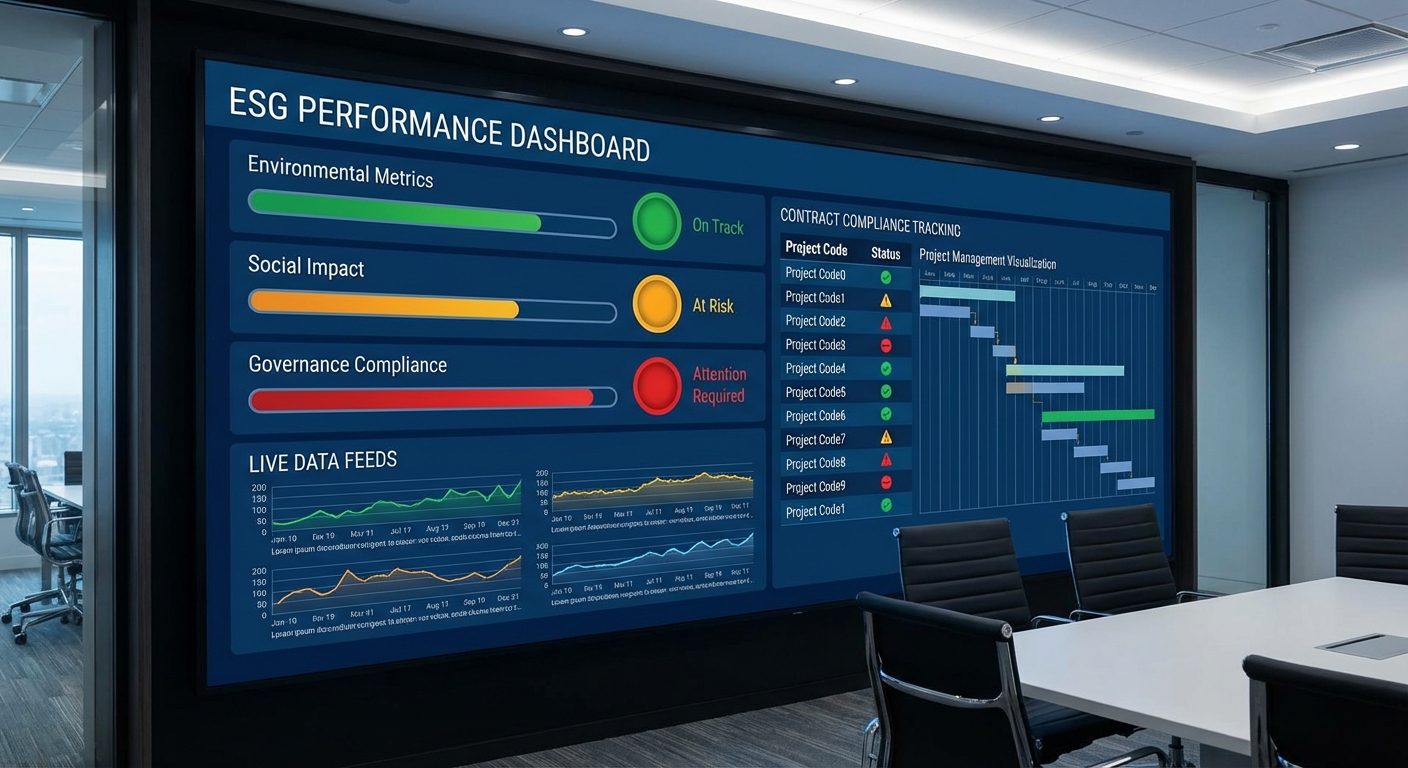
ESG performance tracking and management
Track progress against each ESG commitment made in your tender response. Implement traffic light systems (red/amber/green) or similar mechanisms to quickly identify commitments at risk of underperformance.
When challenges emerge that threaten delivery of an ESG commitment, proactive communication with the contracting authority is essential. Explain the issue, its root cause, and your proposed mitigation strategy. Buyers appreciate transparency and problem-solving orientation far more than discovering underperformance only when formal reports reveal shortfalls.
Many public sector contracts now include ESG-related performance deductions or bonus mechanisms. Failing to deliver committed apprenticeships, carbon reductions, or community benefits may trigger financial penalties. Conversely, exceeding commitments might earn bonus payments or increase likelihood of contract extensions or future awards.
Supply Chain Management
Your ESG performance depends substantially on your supply chain. Contracts increasingly require prime contractors to ensure subcontractors and suppliers meet equivalent ESG standards.
Implement supply chain due diligence processes including:
- Pre-qualification questionnaires covering ESG criteria
- Modern slavery risk assessments using sector-specific indicators
- Environmental and social audits of high-risk suppliers
- Inclusion of ESG requirements in subcontract terms and conditions
- Training and support for suppliers working toward certification or improved performance
- Regular performance reviews covering ESG alongside quality, cost, and delivery metrics
Collaborate with suppliers to improve collective ESG performance rather than simply imposing requirements. Smaller suppliers often lack resources for sophisticated ESG systems but have genuine commitment. Support might include sharing your carbon calculation tools, providing modern slavery awareness training, or jointly investing in resource efficiency improvements that benefit both parties.
Sector-Specific ESG Considerations
While ESG principles apply across all industries, specific sectors face unique challenges and opportunities requiring tailored approaches.
Construction and Infrastructure
The construction sector faces intense scrutiny over carbon emissions (responsible for approximately 25% of UK total), waste generation, local employment, and safety performance.
Key ESG priorities for construction tenders include:
- Whole-life carbon assessment covering embodied carbon in materials, construction emissions, and operational energy use
- Circular economy approaches maximising use of recycled materials and designing for disassembly and reuse
- Commitments to waste reduction (often 70%+ diversion from landfill targets)
- Sustainable transport plans minimising vehicle movements and emissions
- Skills development through apprenticeships (often specified as a percentage of project labour hours)
- Supply chain transparency regarding material sources and labour practices
- Biodiversity net gain demonstrating projects leave natural environment in measurably better state
Modern Methods of Construction (MMC) such as off-site fabrication can offer ESG advantages through reduced waste, better working conditions, and lower emissions compared to traditional on-site construction.
Facilities Management and Cleaning
Facilities management tenders emphasise environmental cleaning products, energy efficiency in building operations, fair employment practices (particularly important given historical exploitation in cleaning sectors), and community benefit through accessible employment opportunities.
Demonstrate ESG performance through:
- Eco-label certified cleaning products (EU Ecolabel, Nordic Swan, Cradle to Cradle)
- Energy management systems and smart building technologies reducing consumption
- Real Living Wage accreditation and secure employment contracts
- Investment in employee training and career progression (particularly significant in sectors with high turnover)
- Social value employment initiatives targeting disadvantaged groups
- Waste management and recycling services beyond baseline requirements
Healthcare and Social Care
Healthcare tenders prioritise patient safety, dignity in care, safeguarding, workforce wellbeing (critical given burnout and retention challenges), and equitable service access.
ESG excellence in healthcare includes:
- Rigorous safeguarding policies and staff DBS (Disclosure and Barring Service) checks
- Person-centred care approaches respecting dignity and autonomy
- Staff wellbeing programmes addressing mental health and work-life balance
- Diversity in workforce reflecting communities served
- Accessible services accommodating disabilities, language needs, and cultural preferences
- Sustainable clinical practices reducing single-use plastics and medical waste
IT and Professional Services
Digital sector tenders increasingly address data centre energy consumption, e-waste management, cybersecurity governance, and diversity in technology workforce.
Demonstrate ESG leadership through:
- Energy-efficient infrastructure and renewable energy-powered data centres
- Responsible e-waste disposal and equipment lifecycle extension
- Robust information security frameworks (ISO 27001, Cyber Essentials Plus)
- Active efforts to improve sector diversity (particular focus on gender and ethnicity gaps in technology roles)
- Transparent use of AI and algorithmic decision-making with appropriate oversight
- Digital inclusion initiatives ensuring technology serves all communities
Common ESG Pitfalls and How to Avoid Them
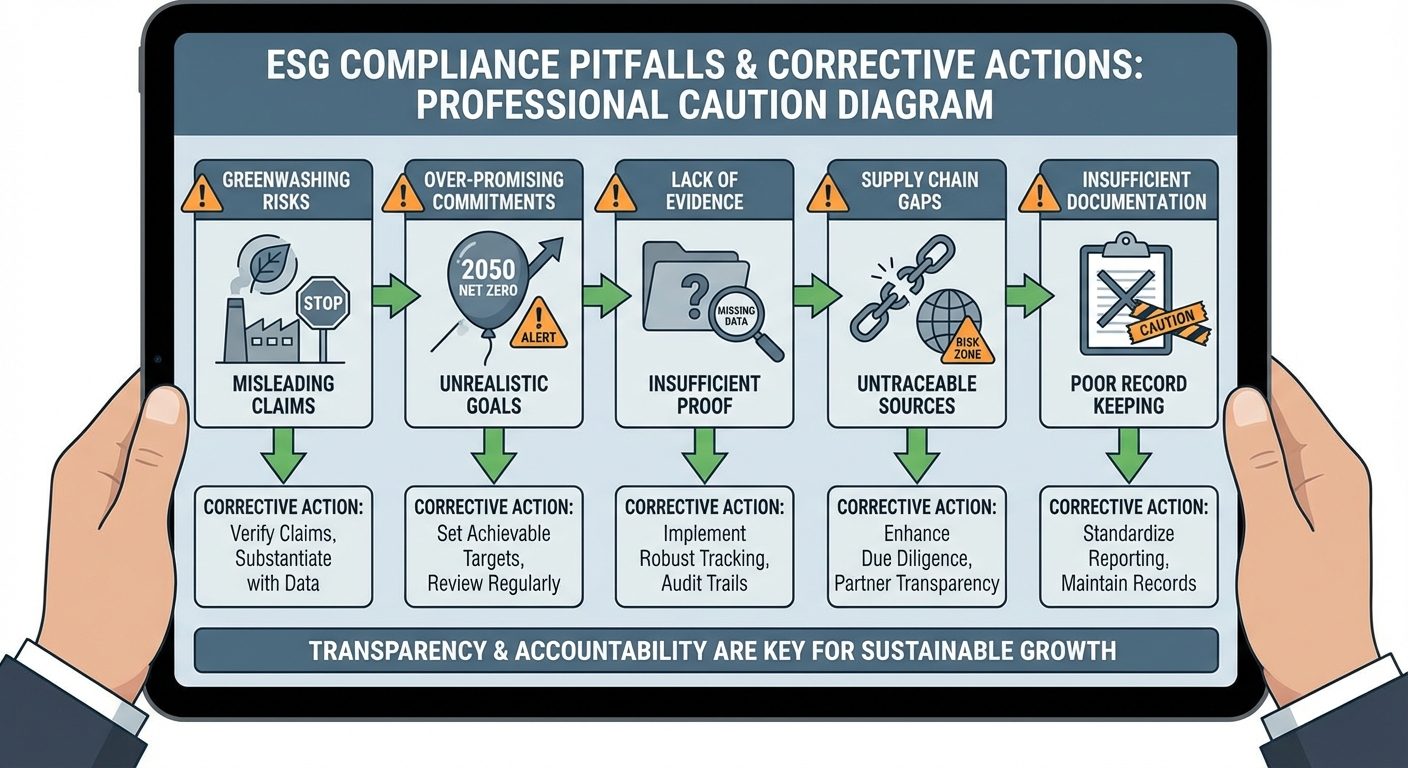
Common ESG compliance pitfalls
Even experienced bidders sometimes fall into ESG traps that undermine tender competitiveness or create contract delivery challenges:
Greenwashing and Unsubstantiated Claims
Making ambitious environmental or social claims without credible evidence constitutes greenwashing—deliberately misleading stakeholders about ESG performance. Public sector buyers have become sophisticated in detecting greenwashing through:
- Requesting third-party verification or certification
- Demanding detailed methodology explanations for sustainability claims
- Requiring granular data rather than accepting headline statements
- Conducting reference checks with previous clients to verify claimed performance
Avoid greenwashing by ensuring every claim is evidence-backed, quantified where possible, and verified by independent assessment where appropriate. If you use carbon offsetting, be transparent about this rather than implying absolute emissions reductions. If your supply chain ESG data has limitations, acknowledge gaps while explaining your improvement roadmap.
Over-Promising and Under-Delivering
The competitive pressure of tender processes sometimes leads organisations to make ESG commitments they cannot realistically deliver. This creates several risks:
- Contractual performance failures triggering penalties or termination
- Reputational damage affecting future tender opportunities
- Resource drain as you scramble to meet unrealistic commitments
- Employee cynicism undermining genuine ESG culture
Base commitments on realistic assessment of capacity, capability, and resources. Review commitments with operational teams who will deliver them, not just bid writers. If you promise 10 apprenticeships, ensure you have the supervision capacity, work volume, and recruitment infrastructure to deliver.
Treating ESG as a Tender Response Exercise
ESG cannot be retrofitted at bid stage. Organisations that treat ESG as a tender response exercise rather than embedded organisational practice struggle to demonstrate authentic commitment and usually produce weaker, less credible responses.
Develop ESG capabilities as long-term strategic priorities:
- Integrate ESG into corporate strategy and performance frameworks
- Assign board-level or senior leadership accountability for ESG outcomes
- Invest in systems, certifications, and capabilities during non-tender periods
- Build ESG considerations into routine operational decisions
- Create culture where employees at all levels understand and contribute to ESG objectives
Neglecting Supply Chain ESG
Your ESG performance is only as strong as your weakest supply chain link. Modern slavery in subcontractor labour, environmental violations by materials suppliers, or unethical practices by service partners reflect on your organisation even when you didn't directly cause them.
Implement robust supply chain ESG due diligence proportionate to risk levels. High-risk categories (labour-intensive services, complex global supply chains, sectors with known ethical issues) warrant detailed auditing. Lower-risk suppliers still require baseline assessments and contractual ESG clauses.
Insufficient Evidence and Poor Documentation
Buyers cannot give credit for ESG performance they cannot verify. Well-intentioned initiatives that lack documentation, measurement, or evidence generate minimal tender value.
Document ESG activities systematically:
- Photograph community engagement events and site sustainability initiatives
- Collect testimonials from apprentices, community partners, or beneficiaries
- Record metrics before, during, and after interventions to demonstrate impact
- Obtain written confirmation from clients regarding ESG performance on previous contracts
- Maintain organised libraries of policies, certifications, reports, and other evidence
The Future of ESG in UK Procurement
ESG requirements in public sector procurement will continue evolving. Several trends are likely to shape the landscape:
Increased Standardisation and Verification
Expect greater standardisation in ESG measurement methodologies, potentially including mandatory frameworks for carbon reporting, social value calculation, and governance assessment. This improves consistency and comparability while reducing bid preparation burden.
Third-party verification of ESG claims will become more common, similar to financial audit practices. Contracting authorities may require independent assurance over carbon data, modern slavery due diligence, or social value delivery.
Technology-Enabled Transparency
Digital technologies will enhance ESG transparency. Blockchain-based supply chain tracking could provide irrefutable evidence of ethical sourcing. IoT sensors might deliver real-time environmental performance data. AI analytics could identify patterns suggesting greenwashing or compliance risks.
Contracting authorities are developing sophisticated data analytics capabilities to monitor contractor ESG performance across portfolios, identifying best practice for replication and underperformance requiring intervention.
Broader ESG Scope
ESG boundaries are expanding. Emerging themes include:
- Biodiversity and nature-based solutions: Moving beyond carbon to consider broader ecosystem impacts and nature restoration
- Circular economy: Designing waste out of systems entirely rather than managing it more efficiently
- Just transition: Ensuring shift to sustainable economy doesn't disproportionately harm workers or communities dependent on legacy industries
- Digital ethics: Addressing algorithmic bias, AI governance, and digital rights
- Health and wellbeing: Recognising connections between environmental quality, social conditions, and public health outcomes
Outcome-Based Contracts
Future ESG requirements will likely shift from process compliance toward outcome delivery. Rather than requiring specific policies or certifications, contracts might specify outcome targets—absolute carbon reductions, number of apprenticeships achieving Level 3+ qualifications, percentage uplifts in local employment—with contractors having flexibility in delivery approaches but accountability for results.
Building Your ESG Capability
For organisations early in their ESG journey, the scope of requirements can seem overwhelming. A structured capability-building approach makes progress manageable:
Conduct an ESG Baseline Assessment
Understand your current state:
- What environmental data do you currently collect? What gaps exist?
- Which social metrics do you track? How does your performance compare to sector benchmarks?
- What governance frameworks do you have? Where do vulnerabilities exist?
- Which certifications do you hold? Which would be valuable to pursue?
- How does your ESG performance compare to competitors winning similar contracts?
Prioritise Based on Materiality and Tender Requirements
Not all ESG factors matter equally for your organisation and target markets. Prioritise based on:
- Materiality: Which ESG factors have greatest impact on your organisation and stakeholders?
- Tender frequency: Which requirements appear most commonly in tenders you pursue?
- Competitive gaps: Where do competitors outperform you on ESG criteria?
- Quick wins: Which improvements deliver significant benefit with modest investment?
Develop a Phased Implementation Roadmap
Create a realistic 12-36 month roadmap:
- Immediate (0-3 months): Establish data collection systems, assign ESG responsibilities, pursue quick-win improvements
- Short-term (3-12 months): Implement priority policies and procedures, pursue accessible certifications, develop initial case studies
- Medium-term (12-24 months): Pursue advanced certifications, embed ESG in operational processes, achieve measurable performance improvements
- Long-term (24-36 months): Demonstrate sustained performance, develop innovation capabilities, establish thought leadership
Engage Expertise Where Needed
ESG encompasses specialised domains. Consider external expertise for:
- Carbon accounting and Science Based Targets development
- Modern slavery risk assessment and supply chain auditing
- Social value measurement and TOMs framework application
- Certification preparation (ISO standards, B Corp, Living Wage)
- ESG tender response review and optimisation
Investment in professional guidance typically delivers faster progress and higher quality outcomes than entirely self-directed approaches.
Integrate ESG into Bid Processes
Update tender qualification and response processes to systematically capture and present ESG credentials:
- Maintain current ESG evidence libraries accessible to bid teams
- Include ESG review in bid/no-bid decision criteria (assess your competitiveness on ESG requirements)
- Allocate sufficient time in bid schedules for quality ESG responses
- Engage operational delivery teams in developing ESG commitments to ensure feasibility
- Conduct post-tender reviews analyzing ESG scoring and incorporating lessons learned
Measuring Return on ESG Investment
ESG capability development requires investment. Understanding returns helps justify continued commitment:
Tender Success Rates
Track whether ESG improvements correlate with higher tender success rates, particularly on contracts with significant ESG weighting. Even modest improvements in win rate deliver substantial returns given typical tender values.
Contract Performance and Extensions
Strong ESG performance during contract delivery often leads to extensions, additional work packages, or preferential consideration in future competitions. Track these outcomes as ESG returns.
Operational Efficiency
Many ESG initiatives deliver direct operational benefits:
- Energy efficiency reduces utility costs
- Waste reduction lowers disposal expenses
- Employee development improves productivity and retention
- Stronger governance reduces compliance incidents and associated costs
Risk Mitigation
ESG investment reduces exposure to:
- Regulatory penalties for environmental or labour violations
- Reputational damage from modern slavery or corruption scandals
- Supply chain disruptions from poorly managed partner relationships
- Contract termination for performance failures
Broader Market Access
ESG capabilities developed for public sector tenders often prove valuable in private sector work where corporate buyers increasingly apply similar requirements, or international markets where ESG standards may be even more rigorous than UK public sector.
Conclusion
ESG requirements in UK public sector tenders have evolved from peripheral considerations to central evaluation criteria that frequently determine tender outcomes. The transition reflects genuine commitment by government to leverage procurement for broader environmental, social, and economic policy objectives—a trend certain to intensify rather than reverse.
Success demands more than superficial compliance. Contracting authorities seek partners who demonstrate authentic commitment to sustainability, social responsibility, and ethical governance through concrete evidence, measurable outcomes, and continuous improvement orientation.
Building robust ESG capability requires sustained investment in systems, certifications, culture, and expertise. The returns—improved tender competitiveness, operational efficiency, risk mitigation, and enhanced reputation—justify the commitment for organisations serious about long-term success in public sector markets.
Begin by assessing your current ESG position honestly, prioritising improvements based on tender requirements and materiality, and developing a phased implementation roadmap. Engage your entire organisation in the ESG journey, because delivering tender commitments depends on operational teams far more than bid writers.
The organisations that will thrive in UK public sector procurement are those that view ESG not as a compliance burden but as an opportunity to demonstrate genuine value, responsible stewardship of public resources, and commitment to outcomes that extend beyond contractual minimums to create lasting positive impact for communities and environments.
The future of public procurement is sustainable, equitable, and transparent. Position your organisation at the forefront of that future through authentic ESG commitment translated into measurable performance that earns public sector trust and delivers outstanding value to the communities we all serve.
Tags
Ready to Transform Your Tender Writing?
See how MyTender's AI can help you write winning tenders in a fraction of the time.