

Energy Sector Tender Writing: Complete Guide to Winning Renewable Energy Contracts in 2026
Master energy sector tender writing with our comprehensive guide covering solar, wind, heat pumps, EV charging, and grid services. Learn how to win renewable energy contracts worth £billions in the UK public sector.
mytender.io Research Team
Energy Procurement Specialists
The UK energy sector is experiencing unprecedented transformation. With £200 billion committed to renewable energy infrastructure by 2030 and the government's legally binding net-zero target by 2050, public sector energy procurement has become one of the most lucrative and competitive tender markets in Britain.
Energy sector tenders span an extraordinary range from multi-million pound offshore wind installations to local authority solar panel contracts, from national grid modernisation to school heat pump installations. Each requires specialised knowledge, robust technical specifications, and compelling evidence of delivery capability.
This comprehensive guide provides energy sector suppliers, renewable energy contractors, and utilities companies with the strategic framework and tactical tools needed to win energy procurement contracts in 2026 and beyond. Whether you're tendering for your first local authority solar project or competing for national framework agreements, understanding the unique demands of energy sector procurement is essential.
Understanding the UK Energy Procurement Landscape in 2026
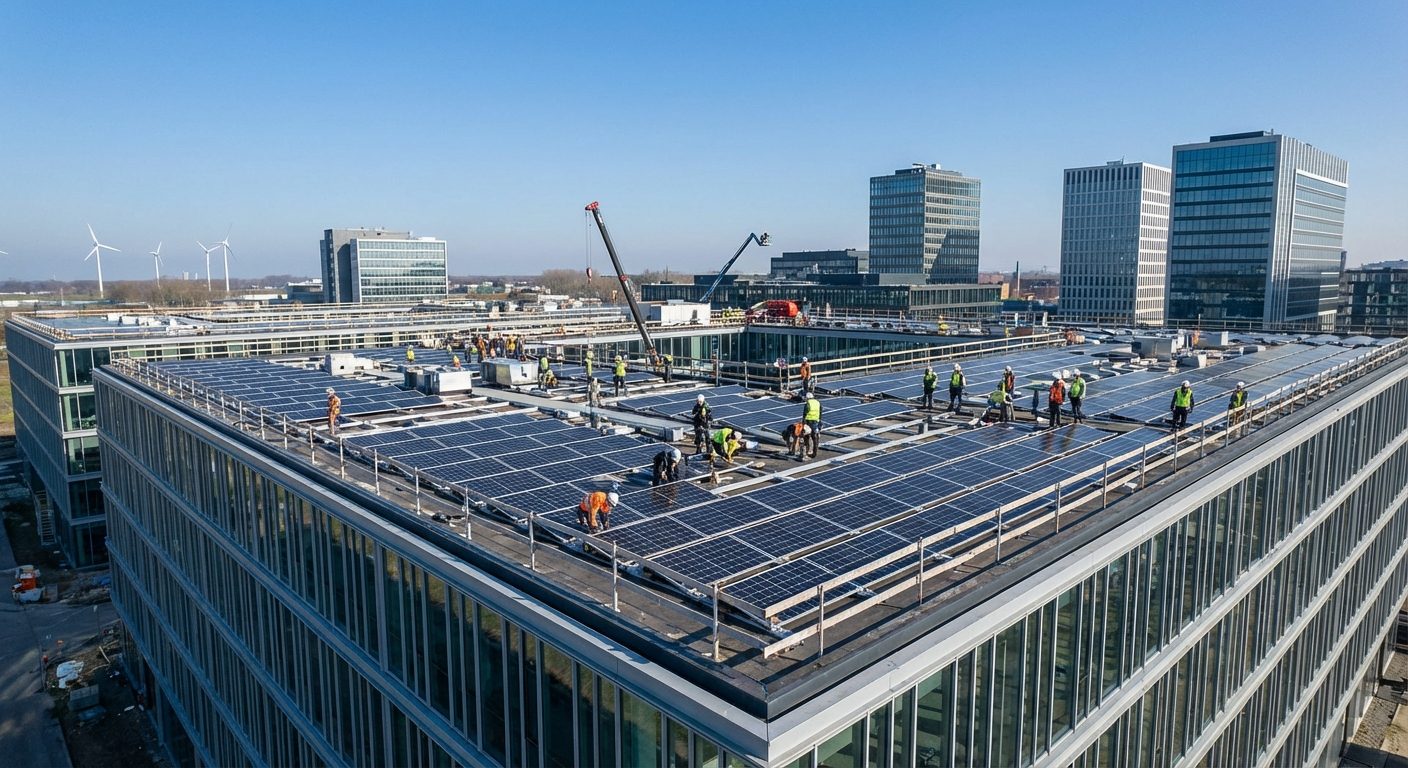
Professional solar panel installation on commercial building roof
The energy procurement landscape has fundamentally shifted over the past five years. Public sector organisations are no longer simply buying electricity and gas—they're investing in generation capacity, storage solutions, demand management systems, and integrated energy services that deliver both carbon reduction and cost savings.
The scale of opportunity is substantial. The Crown Commercial Service reports over £12 billion in annual public sector energy spending, with renewable energy and decarbonisation projects accounting for a rapidly growing proportion. Local authorities alone are expected to invest £3.4 billion in renewable energy infrastructure between 2026 and 2028, while NHS trusts are mandated to achieve net-zero carbon emissions by 2040, driving massive investment in energy efficiency and on-site generation.
Energy sector tenders typically fall into several distinct categories. Energy supply contracts remain significant, with public bodies procuring electricity and gas for thousands of sites through frameworks like the Crown Commercial Service RM6011. However, the real growth lies in capital projects: solar photovoltaic installations, wind turbine developments, heat pump retrofits, battery storage systems, and EV charging infrastructure.
Understanding buyer priorities is crucial. While cost remains important, energy tenders increasingly emphasise whole-life value, carbon reduction impact, technical performance guarantees, and innovation. A solar tender might score technical quality at 60%, social value at 20%, and price at just 20%—completely inverting traditional procurement weightings.
The regulatory environment adds complexity. Energy projects must navigate planning permissions, grid connection agreements, distribution network operator approvals, and strict electrical safety regulations. Your tender response must demonstrate not just technical capability but comprehensive regulatory expertise and risk management.
Procurement routes vary significantly. Some local authorities run open competitions for individual sites. Others use framework agreements like the Local Energy Advice Programme or Salix Finance's low-carbon framework. Central government departments often procure through Crown Commercial Service frameworks, while health sector buyers use NHS Supply Chain energy frameworks.
The competitive landscape is equally diverse. You might face multinational energy companies with unlimited resources, specialist renewable energy contractors with deep technical expertise, and facilities management companies expanding into energy services. Differentiation requires more than just competitive pricing—it demands demonstrable expertise, strong local supply chains, and compelling case studies.
Essential Technical Requirements for Energy Tenders
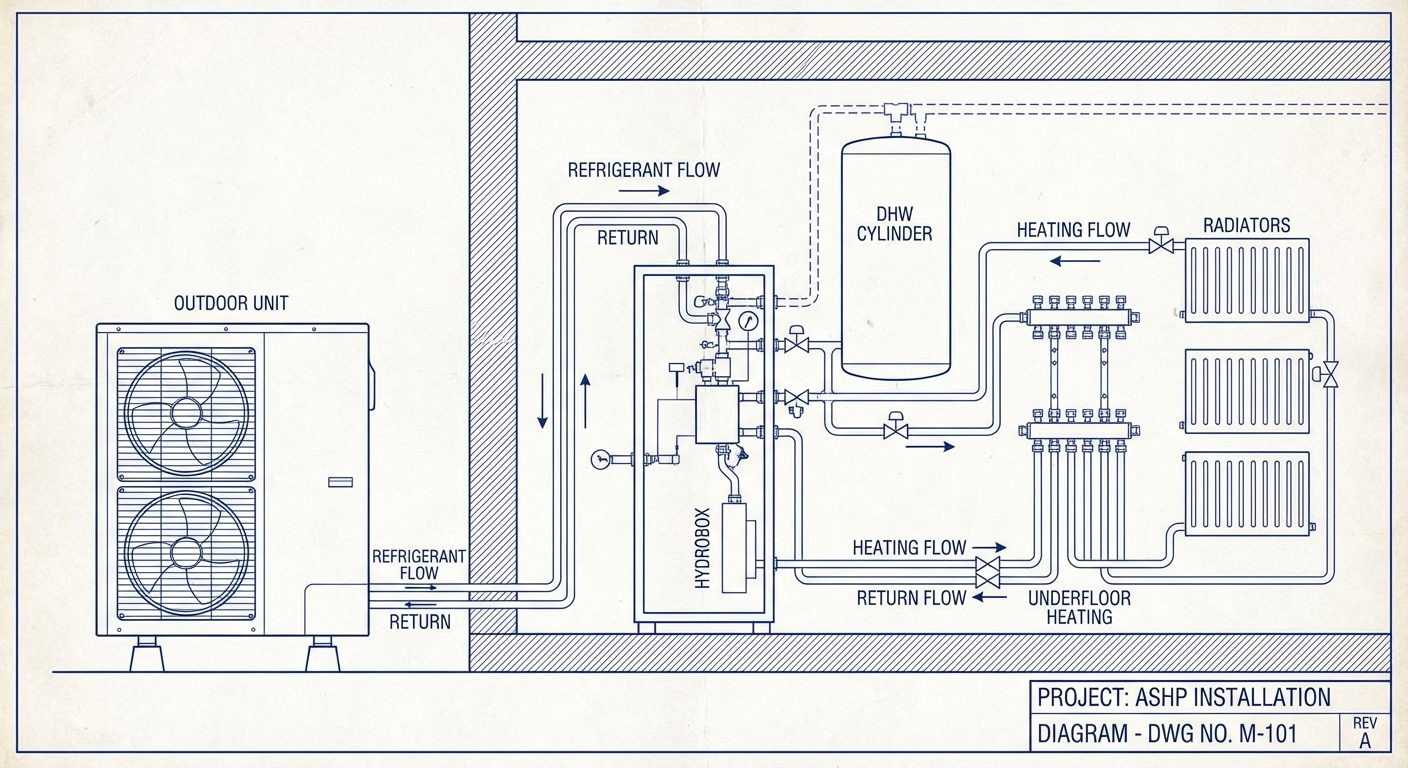
Technical diagram of air source heat pump system
Energy sector tenders impose rigorous technical requirements that often determine success or failure before evaluators even consider price. Understanding and addressing these requirements comprehensively is non-negotiable.
Electrical qualifications and accreditations form the foundation. For any grid-connected work, you'll need personnel with ECS (Electrotechnical Certification Scheme) cards, typically at Approved Electrician or Installation Electrician level. Many tenders mandate that your electrical supervisors hold City & Guilds 2391 (Inspection and Testing) certification, while design work often requires qualified personnel with HNC/HND in Electrical Engineering or equivalent.
For specific renewable technologies, additional certifications apply. Solar PV installations typically require MCS (Microgeneration Certification Scheme) certification, which involves both company accreditation and individual installer certification. Heat pump installations similarly require MCS certification for heat pumps. Wind turbine projects may require GWO (Global Wind Organisation) certification for personnel working at height on turbines.
Insurance requirements for energy projects are substantial. Public liability insurance typically needs minimum cover of £10 million, while professional indemnity often requires £5 million minimum coverage. Contractors All Risks insurance is frequently mandated for capital projects, with policy limits matching or exceeding the contract value. Some buyers require specific environmental liability insurance or cyber insurance for projects involving building management systems.
Health and safety credentials receive intense scrutiny in energy tenders. SSIP (Safety Schemes in Procurement) membership through schemes like CHAS, Constructionline, or SafeContractor is usually mandatory. Buyers expect robust method statements demonstrating how you'll manage electrical safety, working at height, confined space entry, and asbestos management. Your RIDDOR (Reporting of Injuries, Diseases and Dangerous Occurrences Regulations) record over the past three years will be examined, with any serious incidents requiring detailed explanation.
Quality management systems provide essential credibility. ISO 9001 certification for quality management is frequently mandatory, while ISO 14001 (environmental management) and ISO 45001 (occupational health and safety) are increasingly expected. For specialised work like heat networks or battery storage, additional standards like ISO 50001 (energy management) may be required.
Technical design capabilities require careful presentation. Buyers want evidence of qualified electrical engineers who can produce compliant designs, detailed electrical schematics, structural calculations for roof-mounted equipment, and comprehensive energy performance modelling. If your tender includes design responsibility, expect detailed questions about your design processes, quality assurance procedures, and professional indemnity insurance specifically covering design liability.
Grid connection expertise separates experienced contractors from newcomers. Buyers need confidence that you understand DNO (Distribution Network Operator) application processes, G98 and G99 grid connection requirements, export limitation versus export enabled systems, and the complexities of metering arrangements. Your tender should demonstrate previous successful grid connection applications and your relationships with DNOs.
Performance monitoring and maintenance capabilities are equally important. Modern energy tenders expect remote monitoring systems with real-time performance data, proactive fault detection, and rapid response maintenance. Your tender should detail monitoring platforms, data visualisation capabilities, performance alerting systems, and your maintenance response protocols including guaranteed attendance times.
Strategic Approaches to Different Energy Tender Types
Energy tenders span a remarkable diversity, from small-scale solar installations to complex energy-as-a-service arrangements. Each tender type requires adapted strategic approaches.
Solar photovoltaic tenders represent the most common renewable energy procurement in the UK public sector. These range from small domestic-scale installations on council buildings to multi-megawatt solar farms on public land. Your strategic approach should emphasise proven installation track record, MCS certification, detailed yield predictions using PVGIS or similar validated tools, and comprehensive operations and maintenance offerings.
Local authorities increasingly favour solar tenders that include battery storage, allowing energy generated during the day to be stored and used during expensive evening peak periods. If competing for solar-plus-storage tenders, your response must address both PV and battery technologies, demonstrate understanding of optimisation algorithms that maximise self-consumption, and provide realistic financial modelling that accounts for both generation income and grid import savings.
Heat pump tenders—particularly for public building decarbonisation—are experiencing explosive growth as gas boiler replacements become urgent for net-zero compliance. These tenders demand different expertise than solar. Buyers need confidence in your heat loss calculations, refrigerant handling certifications (F-Gas), understanding of heat pump sizing principles that balance capital cost against operational efficiency, and detailed noise assessments given that heat pumps can generate acoustic issues if poorly specified.
Heat pump projects often involve building fabric improvements first—insulation, draught-proofing, window upgrades—to reduce heat demand before installing heat pumps. Your tender should demonstrate understanding of this 'fabric first' approach and potentially include building survey capabilities, thermal imaging, and retrofit coordination expertise. Many buyers value contractors who can deliver the entire building energy efficiency package rather than just the heat pump installation.

Modern EV charging station infrastructure
EV charging infrastructure tenders have become ubiquitous as local authorities, NHS trusts, schools, and government departments electrify their vehicle fleets and provide public charging facilities. These tenders require understanding of different charging speeds (3kW, 7kW, 22kW, 50kW rapid, 150kW+ ultra-rapid), backend management systems, payment integration, electricity supply capacity assessments, and DNO applications for supply upgrades.
EV charging tenders often include ongoing operations and maintenance, creating recurring revenue opportunities. Your response should address fault monitoring, payment system reliability, user support helplines, and guaranteed uptime percentages. Increasingly, buyers want data on charging session usage, electricity consumption, and carbon savings—your backend platform capabilities are as important as the hardware you install.
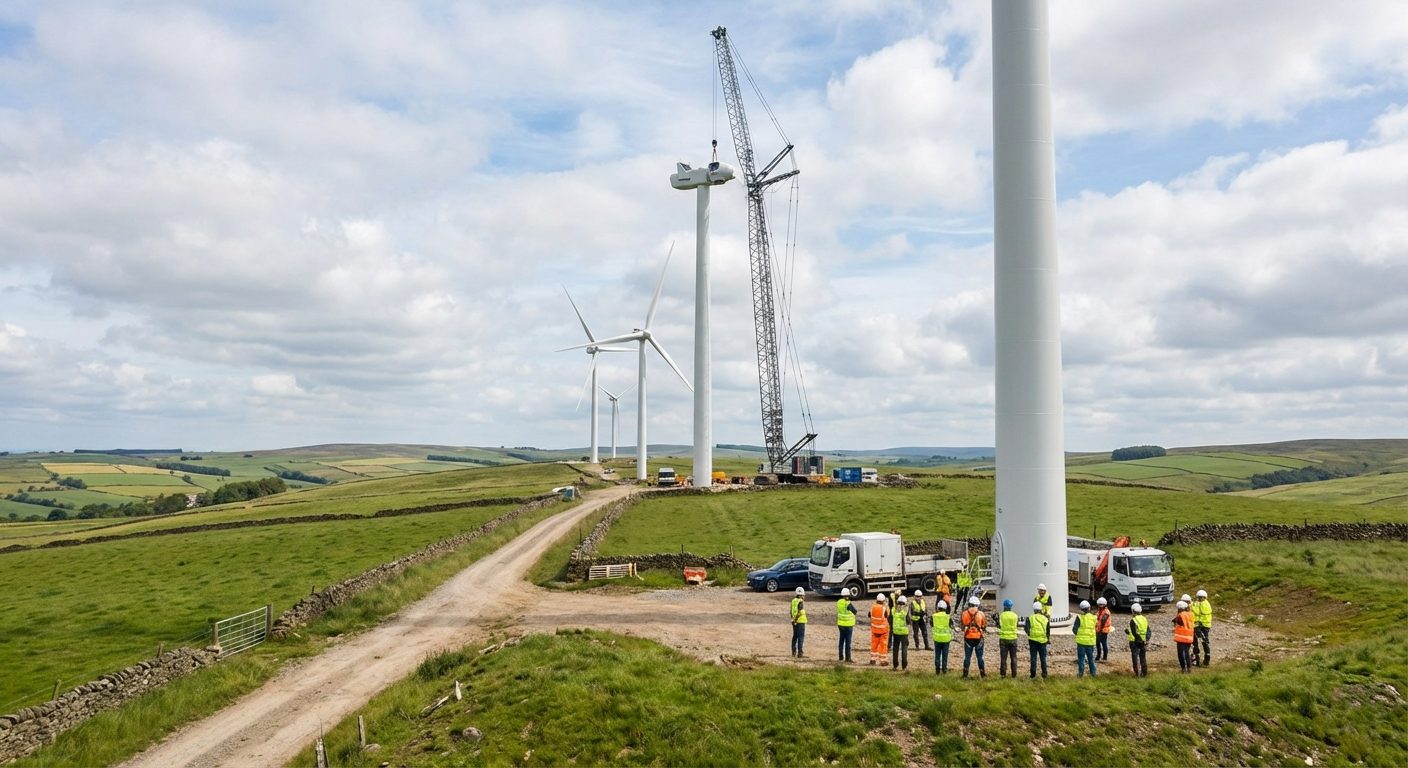
Wind turbine installation with construction equipment
Wind turbine tenders are less common than solar but can be highly lucrative. Local authorities with suitable sites sometimes procure small-scale wind installations (typically 500kW to 5MW). These tenders demand specialist expertise in wind resource assessment, complex planning navigation including aviation safeguarding, noise impact studies, grid connection arrangements for larger generators, and turbine selection that balances capital cost against annual energy yield.
Wind projects face more challenging planning environments than solar, with greater community engagement requirements. Your tender should demonstrate extensive experience with planning applications, community consultation processes, and addressing common objections around visual impact and noise. Case studies of successful community wind projects with planning consent significantly strengthen your credibility.
Energy efficiency and building retrofit tenders encompass a wide range of technologies—LED lighting, insulation, heating controls, building management systems, voltage optimisation, and more. These tenders typically emphasise whole-life value rather than capital cost, requiring detailed financial modelling of energy savings over 10-25 year periods. Your response must include robust measurement and verification protocols—buyers want guaranteed savings, not hopeful projections.
Many energy efficiency tenders are structured as Energy Performance Contracts where you guarantee specific energy savings, sometimes taking payment from those savings. This shifts risk from the buyer to the supplier, requiring sophisticated financial modelling, performance monitoring capabilities, and strong balance sheet capacity to absorb potential underperformance risk. If competing for these contracts, your tender must address risk-sharing mechanisms, baseline energy use determination, savings calculation methodologies, and dispute resolution procedures.
Energy supply tenders—procuring electricity and gas for public sector sites—remain significant but are typically handled through framework agreements like Crown Commercial Service RM6011 or sector-specific frameworks. If your company supplies energy, your strategic approach should emphasise competitive pricing while highlighting renewable energy certificates, power purchase agreements (PPAs) that support UK renewable generation, flexible contract terms, and value-added services like energy data analytics or carbon reporting.
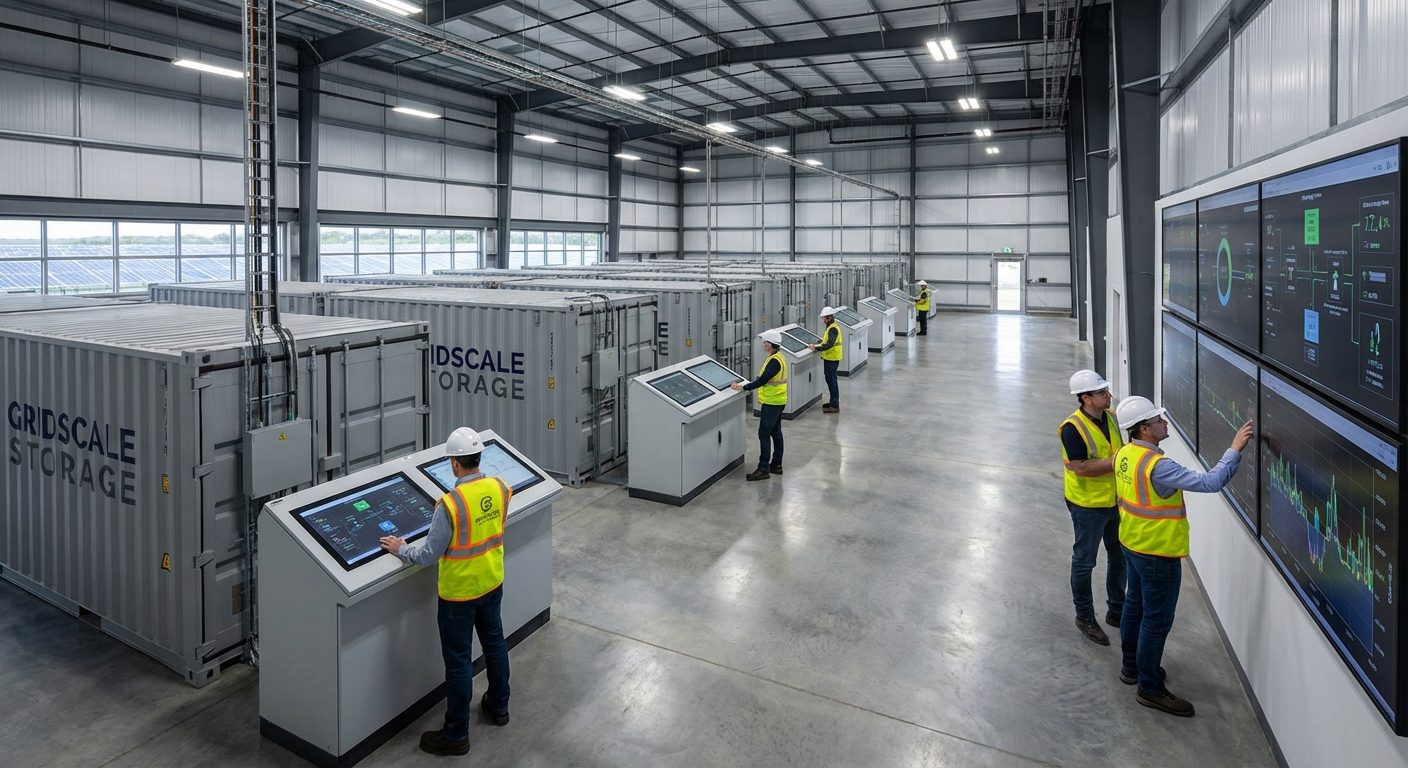
Commercial battery energy storage system
Battery storage tenders are emerging as local authorities and large institutions seek to maximise self-consumption of on-site generation and provide grid services like frequency response. These highly technical tenders require expertise in battery technologies (lithium-ion chemistry variations), inverter specifications, energy management systems, and diverse revenue streams including arbitrage, frequency response, triad avoidance, and capacity market participation.
Crafting Compelling Technical Solutions and Method Statements
Energy tenders live or die on the quality of technical solutions and method statements. Generic responses fail—buyers need comprehensive, site-specific proposals that demonstrate deep technical understanding.
Your technical solution should begin with thorough site analysis. For solar projects, this means detailed roof surveys including structural loading capacity calculations, shading analysis using software like SketchUp with PVGIS data, electrical supply assessment, and roof condition evaluation. For heat pump projects, it requires comprehensive heat loss calculations room-by-room, assessment of existing heating distribution systems for low-temperature compatibility, and hot water demand analysis.
Present your proposed system design with exceptional clarity. Buyers aren't always technical experts—they need clear explanations of why you've specified particular equipment, how the system will perform, and what benefits they'll receive. Use visual aids extensively: site layout drawings, electrical single-line diagrams, 3D visualisations of how installations will look, and performance graphs showing expected generation or savings across different seasons.
Equipment selection requires detailed justification. Why have you specified that particular solar panel model? What efficiency advantages does it offer? How does the warranty compare to alternatives? For heat pumps, explain your chosen refrigerant (R290, R32, etc.), the implications for performance and environmental impact, and why the SCOP (Seasonal Coefficient of Performance) makes it the optimal choice for this building's usage patterns.
Your methodology should demonstrate systematic project delivery. Start with mobilisation—how will you prepare the site, coordinate with the client, and establish health and safety protocols? Detail your installation sequence step-by-step: groundworks, electrical supply arrangements, structural mounting installation, equipment positioning, electrical connections, and commissioning procedures. Buyers value contractors who show clear project thinking, identifying potential challenges and your mitigation strategies upfront.
Quality assurance processes throughout installation build confidence. Explain your inspection points: structural mounting inspections before panel installation, electrical testing protocols following IET Wiring Regulations, insulation resistance testing, earth fault loop impedance testing, and functional testing of all components. Detail how you'll document compliance, what test certificates you'll provide, and how defects will be managed.
Commissioning procedures receive significant attention in energy tenders. Buyers need confidence that systems will be fully tested, optimised, and handed over in perfect working order. Your method statement should detail commissioning tests for each technology: witness testing of solar inverters, heat pump refrigerant pressure checks and performance coefficient testing, EV charger load testing and payment system verification, or battery storage charge/discharge cycle testing.
Training and handover often determine long-term project success. Your proposal should include comprehensive training for the client's facilities team: how to monitor system performance, troubleshoot common issues, perform basic maintenance, and interpret monitoring data. Create detailed operation and maintenance manuals tailored to the specific installation, not generic manufacturer documentation.
Performance guarantees differentiate strong proposals. Rather than vague promises, offer specific commitments: "Solar system will generate minimum 245,000kWh in year one" or "Heat pump installation will achieve SCOP of 3.2 or higher." Explain your methodology for calculating these guarantees (solar irradiation data sources, heat pump performance assumptions at specific temperatures) and what remediation you'll provide if guarantees aren't met.
Risk management demonstrates professional maturity. Identify potential risks explicitly—weather delays, supply chain issues, grid connection timeline uncertainties, building condition unknowns—and explain your mitigation strategies. Buyers appreciate contractors who think ahead rather than those who pretend challenges don't exist.
Programme delivery requires realistic timelines with clear milestones. Break the project into phases: design finalisation (2 weeks), equipment procurement (4-6 weeks), DNO application (6-8 weeks for G99 projects), installation (2-4 weeks depending on scale), and commissioning and handover (1 week). Acknowledge dependencies between phases and external approvals that might impact timelines.
Social value opportunities in energy projects deserve thorough exploration. Can you provide apprentice opportunities on the installation? Will you work with local supply chains? Can the project include educational visits for local schools? Will you employ local labour? Quantify these commitments using National Social Value Measurement Framework metrics—apprentice hours, local spend percentage, educational engagement hours. Energy projects often score 15-25% on social value, making this crucial for winning competitive tenders.
Building Credible Experience Portfolios and Case Studies
Energy sector buyers want proof of capability through detailed, relevant case studies that demonstrate you've successfully delivered similar projects. Generic experience lists won't suffice—you need compelling narratives that showcase problem-solving, technical expertise, and client outcomes.
Structure each case study to tell a complete story. Start with the client context: what challenge they faced, why they procured the project, and what outcomes they sought. For a local authority solar case study, you might explain that the council needed to decarbonise operations while generating income to fund other services, with limited capital budget requiring a solar-with-battery solution that maximised self-consumption.
Detail the project scope comprehensively. Don't just say "installed 500kWp solar system"—explain the site complexity, installation location (roof-mounted across multiple buildings or ground-mounted on brownfield land), grid connection arrangements, whether batteries were included, monitoring systems implemented, and any building fabric improvements completed alongside.
Highlight technical challenges you overcame. Did you need to navigate complex asbestos management during roof preparation? Did the grid connection require costly reinforcement that you value-engineered away? Was the structural capacity marginal, requiring innovative lightweight mounting systems? Buyers want to see that you can solve problems, not just install equipment when everything goes smoothly.
Quantify project outcomes rigorously. For solar projects, provide annual generation achieved versus predicted (buyers want to see you meet forecasts), carbon savings calculated using UK grid carbon intensity figures, and financial returns achieved. For heat pumps, show actual SCOP achieved, annual energy savings versus the previous gas system, and occupant comfort improvements. For EV charging, present utilisation rates, charging sessions delivered, and user satisfaction scores.
Include client testimonials that address specific concerns typical of energy buyers. Ideally, testimonials should mention project delivery to time and budget, quality of installation, professionalism of installation teams, thoroughness of handover and training, and responsiveness when issues arose. Direct quotes from named individuals (with permission) carry far more weight than anonymous praise.
Demonstrate scale-appropriate experience carefully. If tendering for a large 2MW solar installation, case studies of 50kWp domestic installations won't provide confidence. Conversely, if pursuing a small local authority heat pump contract, emphasising your experience with major NHS hospital energy centres might make you seem overqualified or uninterested in smaller work. Select case studies that match the tender scale closely.
Show relevant sector experience where possible. Local authorities prefer seeing other local authority projects. NHS trusts value experience in healthcare settings where minimal disruption and infection control are critical. Schools want to see school projects where safeguarding and working around children was managed professionally.
Include photographic evidence extensively. Before-and-after images, installation progress photos, completed installations, monitoring dashboards showing performance data, and client facility teams trained on the equipment all add credibility. Ensure photographs are high-quality and showcase professional installations—poor photos undermine even strong projects.
Address lessons learned to demonstrate continuous improvement. If a previous project encountered unexpected challenges, explain what you learned and how you've improved processes as a result. This maturity impresses evaluators more than pretending every project was flawless.
Diversify your case study portfolio to address different buyer priorities. Include some focused on technical excellence, others emphasising social value delivery, some showing rapid mobilisation when buyers had urgent needs, and others demonstrating long-term maintenance partnerships. Different tenders emphasise different priorities—your portfolio should allow you to select the most relevant examples for each opportunity.
Financial Modelling and Whole-Life Value Calculations
Energy tenders increasingly emphasise whole-life value rather than capital cost alone. Your proposal must include sophisticated financial modelling that demonstrates long-term value, return on investment, and carbon savings over the asset lifetime.
Start with transparent capital cost breakdowns. Rather than a single lump sum, detail equipment costs, installation labour, electrical infrastructure upgrades, grid connection charges, design and project management, commissioning, and training. This transparency builds trust—buyers appreciate understanding what they're paying for.
For technologies with ongoing revenue, model income streams rigorously. Solar installations generate income through either export payments, Renewable Energy Guarantees of Origin (REGOs), or Smart Export Guarantee (SEG) tariffs. Model generation month-by-month using validated solar irradiation data (MCS recommends PVGIS), apply realistic performance degradation (0.5% annually for quality panels), and use conservative export price assumptions.
Energy savings calculations require baseline establishment. For heat pump replacements of gas boilers, calculate current gas consumption from invoices or meter readings, convert to kWh, then model heat pump electricity consumption using seasonal COP figures (COP of 2.5 in winter, 3.5 in shoulder seasons, 4.0+ in summer). The difference, multiplied by respective energy prices, gives annual savings. Show your working—buyers want to verify your assumptions.
Maintenance costs must be included in whole-life calculations. Solar typically has minimal maintenance—perhaps annual inverter inspections, panel cleaning every 2-3 years, and eventual inverter replacement around year 10-12. Heat pumps require annual refrigerant checks and filter replacements. EV chargers need backend system subscriptions and occasional repair costs. Battery systems may require capacity augmentation or replacement at years 10-15. Include realistic cost estimates for all maintenance over the evaluation period (usually 25 years for solar, 15-20 years for heat pumps).
Net present value (NPV) and internal rate of return (IRR) calculations are expected in energy tenders. Discount future cash flows appropriately—HM Treasury Green Book recommends 3.5% for years 0-30, declining thereafter. Calculate NPV over the asset life: solar might show NPV of £800,000 on £1.2 million investment over 25 years; heat pumps might show £450,000 NPV on £200,000 investment over 20 years through energy savings.
Carbon savings quantification is increasingly as important as financial returns. Calculate annual carbon reduction using UK grid carbon intensity (currently around 180g CO2e/kWh, declining annually toward net-zero 2050). For solar generating 250,000kWh annually, that's 45 tonnes CO2e saved per year. Over 25 years with grid decarbonisation, the cumulative saving might be 850 tonnes. Present this in relatable terms: equivalent to 170 cars removed from roads annually.
Sensitivity analysis strengthens financial credibility. Show how your NPV and payback calculations change if energy prices rise slower/faster than forecast, equipment degrades faster than expected, or maintenance costs are higher. If your project still delivers positive returns even under pessimistic assumptions, buyer confidence increases significantly.
Comparison with alternative solutions can be powerful. If proposing air source heat pumps, show how they compare financially and environmentally with alternatives like gas boilers, ground source heat pumps, or district heating connections. Your technology may not win every comparison, but showing you've considered alternatives demonstrates thorough analysis.
Funding and financing options add value when buyers have capital constraints. Can the project be financed through Salix Finance interest-free loans? Does it qualify for Public Sector Decarbonisation Scheme grants? Could you offer a lease arrangement or energy performance contract where you retain asset ownership? Buyers increasingly want suppliers who understand and can facilitate project financing.
Navigating Regulatory, Planning, and Grid Connection Requirements
Energy projects face substantial regulatory complexity. Demonstrating comprehensive understanding of permissions, approvals, and compliance requirements separates professional contractors from those who will struggle to deliver.
Grid connection requirements are often the most challenging aspect. For solar, heat pumps, or battery systems connecting to the electricity network, you must understand G98 and G99 regulations. G98 covers small-scale generation up to 3.68kW per phase (essentially domestic-scale), which requires notification to the DNO but not formal approval. G99 covers larger installations requiring full DNO application, connection agreement, and potentially grid reinforcement costs.
Your tender response should demonstrate DNO application expertise. Explain the application process: preliminary enquiry, detailed design submission, connection agreement negotiation, protection coordination studies for larger installations, and witness testing requirements. Critically, address timeline expectations—DNO applications typically take 8-16 weeks, longer if reinforcement is required. Buyers need realistic expectations, not promises that you'll be generating power within 4 weeks if that's technically impossible.
Planning permission requirements vary significantly by project type and scale. Solar panels on existing buildings often fall under permitted development rights, requiring no formal planning permission. However, listed buildings, conservation areas, or panels visible from highways frequently require full planning applications. Ground-mounted solar installations almost always require planning consent, involving ecological surveys, landscape impact assessments, and agricultural land classification considerations if on farmland.
Wind turbines face particularly stringent planning requirements. Even small turbines often require full planning applications, with Environmental Impact Assessments mandatory for turbines exceeding 15 metres to blade tip in sensitive areas or 20 metres elsewhere. Your tender should acknowledge planning complexity and, if you'll manage the planning application, detail your approach: pre-application consultation with planners, community engagement, noise impact assessments, aviation safeguarding coordination, and planning statement preparation.
Building regulations compliance is mandatory for most energy projects. Solar installations may require building control notification for electrical work and structural alterations. Heat pump installations definitely require building control approval covering electrical installation, refrigerant containment, and system commissioning. Your tender should explain how you'll manage building regulations approval—whether through local authority building control or approved inspector routes—and include these costs in your price.
Electrical safety regulations are non-negotiable. All work must comply with IET Wiring Regulations (BS 7671), with electrical installation certificates issued by qualified personnel. For grid-connected generation, additional compliance with Engineering Recommendation G99 (or G98) standards is mandatory, covering protection equipment, loss of mains detection, and power quality management.
Refrigerant regulations apply to heat pump and some battery thermal management systems. Anyone handling fluorinated greenhouse gases must hold valid F-Gas certification. Your tender should confirm that all refrigerant handling will be performed by F-Gas certified engineers, refrigerant quantities will be recorded, and annual leak checking (for systems above 5 tonnes CO2 equivalent) will be implemented.
CDM (Construction Design and Management) Regulations apply to most energy projects. As a contractor, you'll typically be the Principal Contractor for smaller projects, carrying responsibilities for health and safety management, coordination, and documentation. Your tender should include your approach to CDM compliance: pre-construction information review, construction phase plan preparation, health and safety file compilation, and ongoing site safety management.
Environmental permitting rarely applies to standard renewable energy installations but may be relevant for larger projects. Significant ground-mounted solar might require environmental permits for land disturbance. Heat networks may require environmental permits for heat generation plant. Battery storage exceeding certain capacities may require environmental permits. Your tender should demonstrate awareness of when permits apply and experience obtaining them if relevant to the project.
Fire safety considerations are particularly important for battery storage installations. Large lithium-ion battery systems require detailed fire risk assessments, often installation in dedicated battery containers with fire suppression systems, and separation distances from occupied buildings. Your tender should address fire safety comprehensively, with evidence of compliance with Energy Storage System Safety Standards.
Warranty and insurance requirements protect buyers from defects and failures. Energy buyers typically require substantial equipment warranties—25 years for solar panels, 10+ years for inverters, 5-10 years for heat pumps, 10+ years for battery systems. Your tender should clearly state all warranty periods, what they cover (performance degradation versus complete failure), and whether warranties require specific maintenance regimes. Product and public liability insurance documentation will be required.
Maximising Social Value and Sustainability Commitments
Social value scoring often determines tender outcomes in public sector energy procurement. With typical weightings of 15-25%, strong social value proposals can overcome price disadvantages worth hundreds of thousands of pounds on large projects.
Employment and skills development offers the strongest social value opportunity. Commit to apprentice employment, specifying person-weeks of apprentice labour on the project. Use National Themes, Outcomes, and Measures (TOMs) framework for quantification: each apprentice week has an assigned proxy value (currently around £796), allowing conversion to social value monetary terms.
Local employment commitments resonate strongly with local authority buyers. Commit to recruiting local labour where possible, define "local" as a specific radius (typically 20-30 miles from the project site), and quantify as percentage of total workforce. Local employment reduces carbon emissions from workforce travel while supporting local economies.
Supply chain commitments extend local benefits beyond direct employment. Commit to using local subcontractors for scaffolding, electrical materials from local suppliers, and site welfare facilities from local providers. Quantify local supply chain spend as percentage of contract value and geographic definition of "local."
Educational engagement creates substantial social value, particularly for energy projects where renewable technology can inspire young people toward STEM careers. Offer school visits where students can tour solar installations, arrange apprentice talks at local schools, provide work experience placements, or deliver workshops on renewable energy and climate change. Each hour of educational engagement has TOMs proxy value—perhaps £88 per hour per person—allowing quantification across 200 students attending a site visit.
Community benefit programs can differentiate your proposal. Offer to support community energy organisations, donate surplus equipment to local initiatives, provide discounted energy efficiency advice for local residents, or establish volunteer opportunities for installation projects. These commitments show genuine community engagement beyond box-ticking.
Carbon reduction beyond the project scope demonstrates leadership. Commit to carbon-neutral project delivery through electric vehicle use for site transport, renewable energy for site welfare facilities, sustainable material selection, waste reduction targets, and carbon offsetting for unavoidable emissions. Quantify these commitments in tonnes CO2e avoided.
Fair work practices provide social value through ethical employment. Living Wage Foundation accreditation, commitment to paying all staff real Living Wage rates (not just National Living Wage), guaranteed hours contracts, and comprehensive employee benefits all contribute. Modern slavery statement compliance and supply chain ethical auditing demonstrate responsible procurement.
Diversity and inclusion commitments show progressive employment practices. Set targets for employment from underrepresented groups, support for employees with disabilities, gender balance in technical roles, and partnerships with organisations supporting disadvantaged groups into employment. Quantify commitments with specific percentage targets and monitoring mechanisms.
Innovation commitments can score social value when they benefit the wider sector. Offer to share learning from the project, publish case studies, present at industry events, or contribute to industry knowledge. If piloting new technologies or approaches, commit to transparent reporting of outcomes to benefit future projects.
Circular economy initiatives demonstrate environmental leadership. Commit to using recycled content materials where possible, designing for disassembly at end-of-life, returning used equipment to manufacturers for refurbishment, and achieving specific recycling rates for construction waste (typically 90%+ for solar installations).
Quantification using recognised frameworks is essential. The National TOMs framework provides standardised proxy values for social value outcomes, allowing monetary comparison across different commitments. A proposal offering 16 apprentice weeks (£12,736 social value), local employment at 60% (£45,000 proxy value), and educational engagement for 300 students (£26,400 value) generates £84,136 total social value using TOMs methodology.
Evidence and verification mechanisms increase credibility. Don't just promise—explain how you'll measure and verify delivery. Offer regular reporting, third-party verification, photographic evidence, and financial penalties for non-delivery of commitments. Social value commitments without verification mechanisms receive lower scores.
Technology-Specific Considerations for Major Energy Systems
Different renewable energy technologies require specialised knowledge. Your tender response must demonstrate depth in the specific technology you're proposing.
For solar photovoltaic systems, module selection fundamentally impacts performance and bankability. Monocrystalline panels offer higher efficiency (20-22%+) than polycrystalline, crucial for space-constrained roofs. Bifacial modules capture reflected light from below, increasing yield by 5-15% when installed over reflective surfaces. Half-cut cell technology reduces resistive losses and improves shade tolerance. Your tender should explain module selection rationale, not just specify a part number.
Solar inverter selection requires equally careful consideration. String inverters are cost-effective for large installations with minimal shading. Module-level power electronics (MLPE) like microinverters or power optimizers maximize generation where shading, orientation variations, or module mismatch is present, but add cost and potential points of failure. Central inverters suit very large ground-mounted arrays. Battery-ready or hybrid inverters facilitate future battery storage addition. Your specification should match inverter topology to site conditions.
Mounting system design for solar demands structural expertise. Roof-mounted systems must account for wind uplift forces, snow loading in northern regions, and roof construction type (pitched tile, flat membrane, standing seam metal, etc.). Ballasted systems for flat roofs avoid penetrations but impose higher structural loads. Fixed-tilt ground-mounted systems are cheapest but tracking systems increase generation by 15-25% at significant cost premium. Your tender should include structural calculations certified by chartered engineers for any installation above trivial scale.
Heat pump technology selection requires matching to building characteristics. Air source heat pumps are most common, with lower capital cost but performance declining in cold weather. Ground source heat pumps maintain consistent efficiency year-round but require expensive ground array installation (boreholes or horizontal loops). Water source heat pumps suit properties near rivers or large ponds. High-temperature heat pumps can deliver flow temperatures up to 70-80°C for poorly insulated buildings, though at efficiency cost. Your tender must specify heat pump type, flow temperature, SCOP at relevant operating conditions, and noise levels.
Heat pump sizing is critical—oversized units cycle frequently, reducing efficiency and comfort; undersized units fail to heat adequately. Your tender should include room-by-room heat loss calculations following EN 12831 methodology, account for thermal mass, document assumption basis (occupancy patterns, thermostat settings), and explain any supplementary heating provision for extreme cold periods.
Buffer tanks and hot water cylinders for heat pumps require careful specification. Larger buffer volumes reduce cycling and improve efficiency but add cost and space requirements. Hot water cylinders must be sized for household occupancy with consideration that heat pumps deliver lower temperature heat, requiring larger cylinders than gas boiler equivalents. Your tender should specify volumes, insulation ratings, and heat exchanger configurations.
Battery energy storage systems introduce complexity around chemistry, capacity, power rating, and control systems. Lithium iron phosphate (LFP) batteries offer longer cycle life and better safety than lithium nickel manganese cobalt (NMC), though lower energy density. Capacity must balance cost against desired autonomy or self-consumption targets—residential batteries typically 5-15kWh, commercial installations 50-500kWh. Power rating determines how quickly the battery charges/discharges, crucial for optimisation. Your tender should specify usable capacity (not just installed), depth of discharge, warranty basis (throughput or calendar life), and efficiency (round-trip efficiency typically 85-95%).
Battery control strategies determine financial returns. Simple self-consumption maximisation charges batteries from solar, discharges for evening load. Time-of-use optimisation exploits electricity price differentials, charging during cheap overnight periods and discharging during expensive evening peaks. Grid services like frequency response or capacity market participation can generate additional revenue but require sophisticated control systems and grid service contracts. Your tender should explain control strategy, optimisation approach, and revenue assumptions behind each function.
EV charging infrastructure involves choices between charging speeds, connection types, payment systems, and backend platforms. Slow charging (3-7kW) suits overnight charging, fast charging (22-50kW) enables 1-2 hour charging, and rapid charging (50-150kW+) allows 20-30 minute charging. CCS and CHAdeMO connectors serve different vehicle types. Tethered chargers (cable attached) are simpler but less flexible than socketed units. Your tender should specify charge speeds, connector types, any load balancing between multiple chargers, and electricity supply capacity requirements.
EV charging backend platforms manage access control, payment processing, remote monitoring, fault alerting, and usage reporting. Open Charge Point Protocol (OCPP) compliance allows backend platform switching. Roaming agreements enable drivers from different providers to use your chargers. Your tender should specify backend platform capabilities, any monthly subscription costs, payment methods supported (RFID cards, smartphone apps, contactless card readers), and data reporting capabilities.
Mytender AI: Transforming Energy Tender Response Speed and Quality
Energy sector tender writing presents unique challenges: simultaneous technical depth and commercial clarity, rapid turnaround times for frameworks opportunities, and adaptation of corporate capability into site-specific proposals. Mytender AI addresses these challenges through specialised AI optimised for procurement contexts.
Unlike generic AI writing tools, Mytender AI understands tender evaluation criteria and public sector procurement priorities. When you input technical specifications, Mytender AI structures responses to address technical quality, methodology, risk management, and social value—the key evaluation areas that score marks. Generic AI tools produce content that reads well but fails to demonstrate the specific competencies evaluators are scoring.
Energy sector expertise is embedded in Mytender AI's training. The system understands MCS certification requirements, DNO application processes, Heat Pump Association best practices, electrical regulations, and typical energy procurement evaluation criteria. Rather than producing generic text that you must heavily edit, Mytender AI generates content that demonstrates sector knowledge immediately.
Speed advantages are transformative for energy contractors juggling multiple opportunities. Framework agreements often require responses within 2-3 weeks, covering technical capability, case studies, pricing, and social value across 60-80 questions. Traditional approaches might consume 100-150 person-hours. Mytender AI reduces this to 20-30 hours—drafting responses from your input data within minutes, allowing you to focus effort on refinement rather than creation.
Consistency across large tender responses improves through AI assistance. When responding to 75 framework questions, maintaining consistent terminology, quality standards, and message clarity manually is challenging. Mytender AI ensures consistent voice, avoids repetition, and maintains professional writing quality throughout, creating more polished submissions.
Case study generation from project data becomes efficient with AI support. Provide Mytender AI with basic project parameters—client name, technology installed, project value, outcomes achieved—and the system generates compelling case study narratives following best practice structures: client context, technical solution, challenges overcome, outcomes quantified, and client testimonial integration. What might take an hour per case study manually reduces to 10-15 minutes.
Social value response development, often a weak area for technical contractors, improves with AI assistance. Mytender AI can suggest relevant social value commitments based on project type, quantify commitments using TOMs framework values, and structure responses that directly address evaluation criteria. Rather than vague commitments, your proposal includes specific, quantified, and credible social value plans.
Technical methodology refinement through AI review identifies weaknesses before submission. Upload your draft method statement and Mytender AI analyzes for completeness: Have you addressed quality assurance? Is commissioning sufficiently detailed? Are risks identified and mitigated? This review function catches gaps that might otherwise lose marks.
Pricing narrative that connects price to value is often poorly articulated in energy tenders. Contractors know their prices are competitive and deliver value but struggle to articulate why. Mytender AI helps craft pricing narratives that explain cost breakdowns, highlight whole-life value, and position price within context of quality and risk reduction—strengthening price justification.
Compliance checking against tender requirements prevents costly omissions. Mytender AI can compare your response against buyer's specification, identifying missing requirements, word count compliance, and formatting errors—the basic mistakes that can invalidate otherwise strong submissions.
Learning from past submissions accelerates improvement. Mytender AI stores your successful tender responses, enabling rapid adaptation for similar opportunities. Responding to a local authority solar framework when you've previously submitted to an NHS solar framework? Mytender AI can adapt your proven NHS content to the local authority context in minutes, maintaining what worked while adjusting sector-specific elements.
Competitive Positioning Against Major Energy Sector Incumbents
Energy sector procurement is intensely competitive. Small to medium contractors often compete against multinational energy services companies, national utilities, and well-resourced facilities management incumbents. Winning requires strategic differentiation.
Specialisation beats generalisation in energy tenders. Rather than positioning as "we do everything," emphasise focused expertise: "specialist solar and battery storage contractor" or "heat pump retrofit experts." Buyers prefer specialists for complex technical projects—they want contractors who do heat pumps every day, not companies where it's an occasional sideline.
Local presence and relationships create competitive advantage against national companies. Emphasise local supply chains, local workforce, faster emergency response times than competitors operating from distant regions, and understanding of local conditions (ground conditions for ground source heat pumps, local grid constraints, building stock characteristics). Local authorities particularly value contractors invested in their area rather than parachuting in from London for lucrative contracts.
Technical innovation differentiates from commodity competitors. If you offer advanced monitoring systems, innovative mounting solutions, superior warranty terms, or proprietary optimisation software, these become competitive differentiators. However, innovation must deliver client value—innovation for its own sake won't win tenders.
Client service excellence throughout the customer journey is often undervalued. Many energy contractors deliver good installations but poor client communication, slow response to queries, inadequate training, and minimal aftercare. If you can demonstrate exceptional client service—responsive project management, comprehensive handover, proactive maintenance, and accessible ongoing support—this differentiates significantly.
Financial stability and bankability matter for large projects. Buyers assess financial health through filed accounts, turnover, creditworthiness checks, and bank references. If competing against much larger companies, you might lack their balance sheet. Counter this by emphasising project-specific resources, relevant insurance, performance bonds, or parent company guarantees if applicable.
Partnership approach versus transactional contracting appeals to many public sector buyers. Position yourself as a long-term partner invested in client success, not just a contractor delivering a one-off project. Offer extended aftercare, training refreshers, performance reviews, and support with reporting obligations. This consultative approach differentiates from purely transactional competitors.
Price positioning requires careful judgment. Being cheapest rarely wins energy tenders scored 40-60% on quality factors—low price raises quality concerns. Position in the 75-85th percentile on price (i.e., 15-25% cheaper than most expensive but not cheapest) while maximising quality score. If you are genuinely lower cost through efficiency advantages, explain these advantages clearly so low price doesn't indicate low quality.
Risk mitigation emphasis reassures cautious buyers. Public sector buyers are risk-averse—reputational damage from failed projects is severe. If you can demonstrate superior risk management through comprehensive insurance, performance guarantees, tried-and-tested technology choices (not bleeding edge), and strong safety record, this reduces perceived risk and strengthens your position.
Sector-specific experience trumps generic experience. An NHS trust evaluating heat pump tenders will score NHS heat pump projects far higher than care home or office projects, even if technically similar. Invest effort in building sector-relevant case studies, understanding sector-specific requirements (NHS infection control, school safeguarding), and using sector language in proposals.
Common Energy Tender Pitfalls and How to Avoid Them
Even experienced energy contractors make recurring mistakes in tender responses. Understanding these pitfalls enables avoidance and competitive advantage.
Underestimating DNO timelines causes delivery failures. Many contractors promise installation completion within 8 weeks, forgetting that G99 DNO applications alone take 8-16 weeks. Be realistic about external dependency timelines and build appropriate contingency. Buyers prefer realistic timelines over optimistic promises that won't be met.
Overstating performance predictions damages credibility. Some contractors model solar generation using overly optimistic assumptions (perfect south orientation when it's southeast, no shading when trees are nearby, higher-than-realistic performance ratios). When systems underperform predictions, disputes arise and reputation suffers. Use validated modelling tools like PVGIS, conservative assumptions, and clearly document assumption basis.
Inadequate site survey before tendering creates problems. Many tenders are based on desktop surveys, with full intrusive surveys only after award. This risks discovering structural inadequacy, asbestos presence, or grid capacity limitations that fundamentally change project cost and feasibility. If possible, request site access during tender period for basic inspection; if not possible, include appropriate contingencies and clearly qualify assumptions.
Generic case studies rather than relevant examples lose marks. A contractor responding to a local authority solar tender who only presents domestic solar case studies will score poorly on experience. Tailor case study selection to match tender sector, scale, and technical specifications as closely as possible. If you lack perfect matches, explain how your experience translates.
Weak social value responses undermine otherwise strong proposals. Many technical contractors treat social value as an afterthought, offering vague commitments ("we'll employ locally where possible"). Given 15-25% scoring weight, weak social value loses tenders. Develop concrete commitments, quantify using TOMs framework, and provide evidence of past delivery.
Insufficient attention to evaluation criteria causes point loss. If a tender allocates 15 points to "project management methodology" and 10 points to "risk management," your response should reflect this weighting—more content, detail, and emphasis on project management than risk management. Many responses treat all questions equally regardless of scoring, leaving points on the table.
Poor writing quality damages professional perception. Tender evaluators form impressions about your professionalism partly from writing quality. Spelling errors, poor grammar, inconsistent formatting, and unclear structure all undermine confidence. Invest in thorough proofreading and consider AI writing assistance to maintain quality across lengthy responses.
Missing mandatory requirements invalidates responses. If a tender mandates MCS certification and you don't explicitly confirm you hold it, your response may be rejected regardless of quality. Create a compliance checklist at tender start, ensure every mandatory requirement is addressed explicitly, and cross-reference requirement locations in your response.
Unclear pricing structures create evaluation difficulties. If a tender requests itemised pricing but you submit a lump sum, evaluators struggle to assess value. Follow specified pricing formats exactly, provide requested breakdowns, and explain pricing components clearly. Pricing ambiguity rarely works in your favour—evaluators may assume the worst-case interpretation.
Overly technical language alienates non-technical evaluators. While technical depth is important, remember that some panel members may be finance, legal, or sustainability specialists without deep energy sector knowledge. Explain technical concepts clearly, use visual aids, avoid unexplained acronyms, and structure responses for readability.
Conclusion: Winning Your Next Energy Sector Tender
The UK energy sector presents extraordinary opportunities for contractors who can navigate its technical complexity, regulatory requirements, and competitive intensity. With hundreds of billions committed to renewable energy and decarbonisation over the coming decade, energy procurement will remain one of the UK's most lucrative tender markets.
Success requires more than technical capability—it demands sophisticated tender writing that demonstrates expertise, builds buyer confidence, and differentiates you from well-resourced competitors. The contractors winning consistently are those who've invested in professional tender responses, built comprehensive case study portfolios, and positioned themselves strategically within specific energy sector niches.
Technology is transforming tender response capabilities. Mytender AI enables smaller contractors to compete effectively with larger competitors by accelerating response development, ensuring quality consistency, and embedding procurement expertise into your writing process. The competitive advantage previously held by large companies with dedicated bid teams is diminishing as AI writing tools democratise professional tender writing.
Start strengthening your energy sector tender capability today. Audit your case study library—do you have diverse, well-documented examples that demonstrate relevant experience? Review past tender responses—where did you lose points and how can future responses improve? Consider AI writing tools that can amplify your expertise without requiring expanded bid teams.
The energy transition represents a generational business opportunity. Public sector organisations need your expertise to deliver net-zero commitments, install renewable generation, retrofit buildings, and build charging infrastructure. But they can only buy from contractors who can articulate capability through compelling tender responses. Win those tenders, deliver exceptional projects, build your reputation, and position your business at the heart of Britain's energy transformation.
Tags
Ready to Transform Your Tender Writing?
See how MyTender's AI can help you write winning tenders in a fraction of the time.