
Cybersecurity Requirements in Tender Responses: Complete Compliance Guide 2026
Master cybersecurity compliance in public sector tenders with our comprehensive guide covering Cyber Essentials, CAF, GDPR, ISO 27001, and practical response strategies for winning secure contracts in 2026.
mytender.io Editorial Team
Content Team
Cybersecurity has evolved from a technical afterthought to a mandatory gateway for public sector contracts. In 2026, the landscape has fundamentally shifted: organisations without robust cybersecurity credentials increasingly find their tender responses rejected before evaluators even read the quality questions. With cyber threats costing UK businesses an estimated £87 billion annually and public sector data breaches making headlines weekly, contracting authorities now treat security compliance as non-negotiable.
The UK government's Procurement Policy Note (PPN) 01/24 crystallised this shift, making Cyber Essentials certification mandatory for contracts involving sensitive data, IT systems, or government networks. This isn't box-ticking bureaucracy—it's a recognition that supply chain vulnerabilities represent one of the most significant security risks facing public services. When a third-party contractor suffers a breach, it can compromise entire government departments, exposing citizen data and critical infrastructure.
This guide provides a comprehensive roadmap for navigating cybersecurity requirements in tender responses. Whether you're pursuing your first public sector contract or refining established processes, understanding these requirements determines whether your bid reaches the evaluation stage. We'll examine mandatory certifications, framework compliance, practical response strategies, and emerging trends shaping the 2026 procurement landscape.
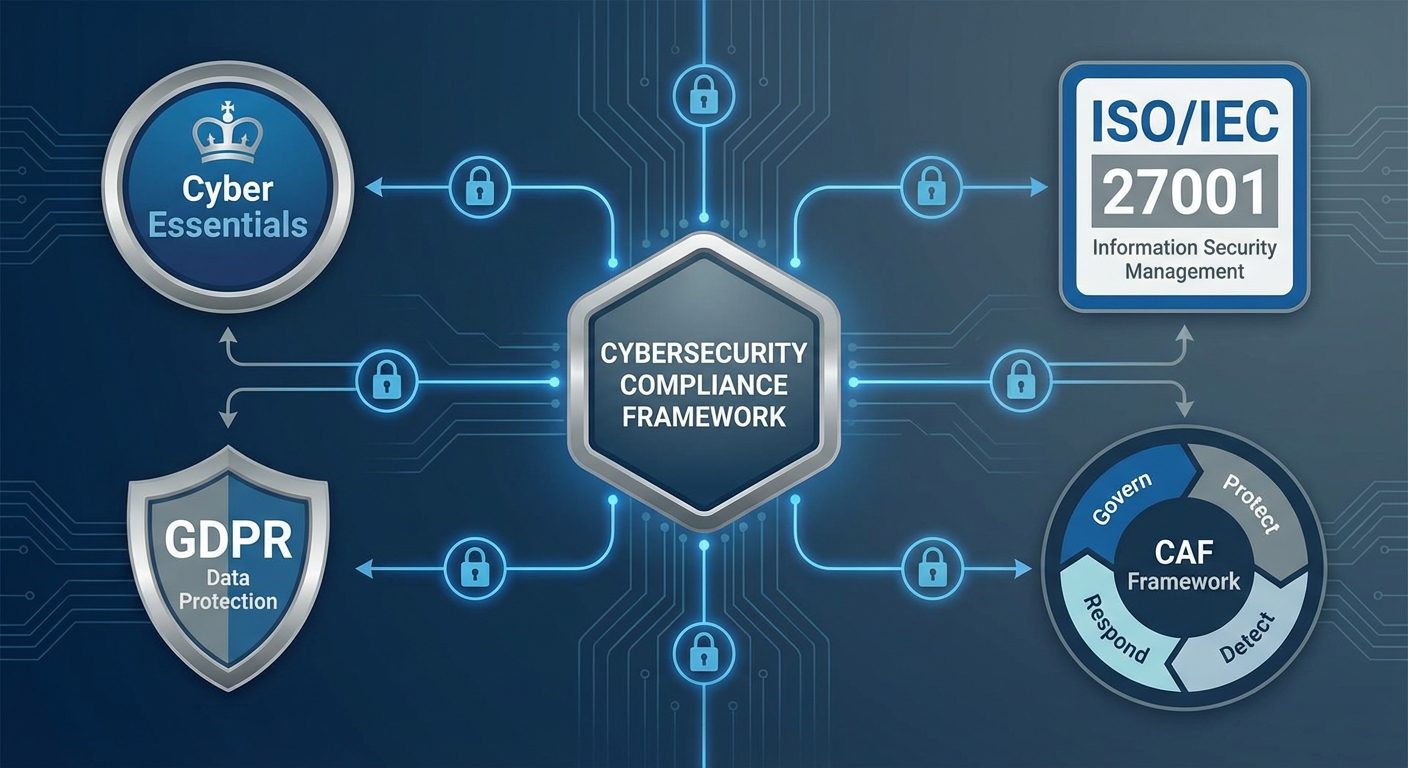
Cybersecurity compliance framework overview showing interconnected security standards
The Mandatory Foundation: Cyber Essentials Certification
Cyber Essentials has become the baseline cybersecurity credential for UK public sector contracting. Launched by the National Cyber Security Centre (NCSC) and backed by government mandate, this scheme protects organisations against approximately 80% of common cyber attacks through five fundamental security controls. For tender purposes, understanding both the certification requirements and how to leverage them strategically in your responses is essential.
Understanding the Two Certification Levels
Cyber Essentials represents the entry-level certification, involving a self-assessment questionnaire verified by an independent certification body. Organisations answer detailed questions about their security controls, provide evidence of implementation, and undergo external validation. The process typically takes two to four weeks and costs between £300-£500 depending on organisation size and certifying body. This level suffices for most public sector contracts involving basic data handling or IT services. Cyber Essentials Plus provides enhanced assurance through independent technical auditing. After completing the questionnaire, a qualified assessor conducts hands-on testing of your systems, performing vulnerability scans and attempting to identify security weaknesses. This penetration testing validates that your claimed controls actually function as described. Cyber Essentials Plus typically costs £1,000-£3,000 and takes four to six weeks, but many high-value or sensitive contracts—particularly those with the Ministry of Defence, NHS, or intelligence agencies—explicitly require this higher certification level.The distinction matters significantly in tender responses. If a contract specifies Cyber Essentials Plus and you only hold basic Cyber Essentials, your bid will typically be rejected regardless of technical merit or pricing. Always verify the exact certification level required before committing resources to a tender response.
The Five Core Security Controls
Understanding what Cyber Essentials actually tests helps you write more credible and detailed security responses. The scheme focuses on five technical areas:
Boundary Firewalls and Internet Gateways form your first line of defence, controlling traffic between your network and the internet. Cyber Essentials requires properly configured firewalls on all internet-facing connections, with unnecessary services disabled and rules regularly reviewed. In tender responses, describe your firewall architecture, update procedures, and how you monitor and respond to suspicious traffic patterns. Secure Configuration ensures devices are set up securely, with default passwords changed, unnecessary software removed, and security features enabled. This extends to computers, servers, mobile devices, and network equipment. The "secure by default" principle means new systems should be secure from the moment they're deployed, not require extensive hardening afterwards. Detail your configuration standards, build processes, and compliance verification methods in tender security questions. User Access Control limits who can access what data and systems, following the principle of least privilege. Every user should have only the access necessary for their role, with administrative privileges tightly restricted and regularly audited. Multi-factor authentication (MFA) is increasingly expected for remote access and privileged accounts. Explain your access request and approval workflows, regular access reviews, and how quickly you can revoke access when employees leave or change roles. Malware Protection defends against viruses, ransomware, and other malicious software through up-to-date anti-malware solutions on all devices. Cyber Essentials requires automatic updates enabled and regular scans scheduled. Describe your chosen anti-malware platforms, update mechanisms, incident response procedures when malware is detected, and how you handle devices that can't run traditional anti-malware (such as operational technology or legacy systems). Patch Management keeps software current by applying security updates promptly. Unpatched vulnerabilities represent one of the most common attack vectors—the WannaCry ransomware attack that crippled the NHS in 2017 exploited a vulnerability for which patches had been available for months. Detail your patch testing and deployment schedules, how you prioritise critical security updates, and your approach to systems that can't be easily patched due to compatibility or operational constraints.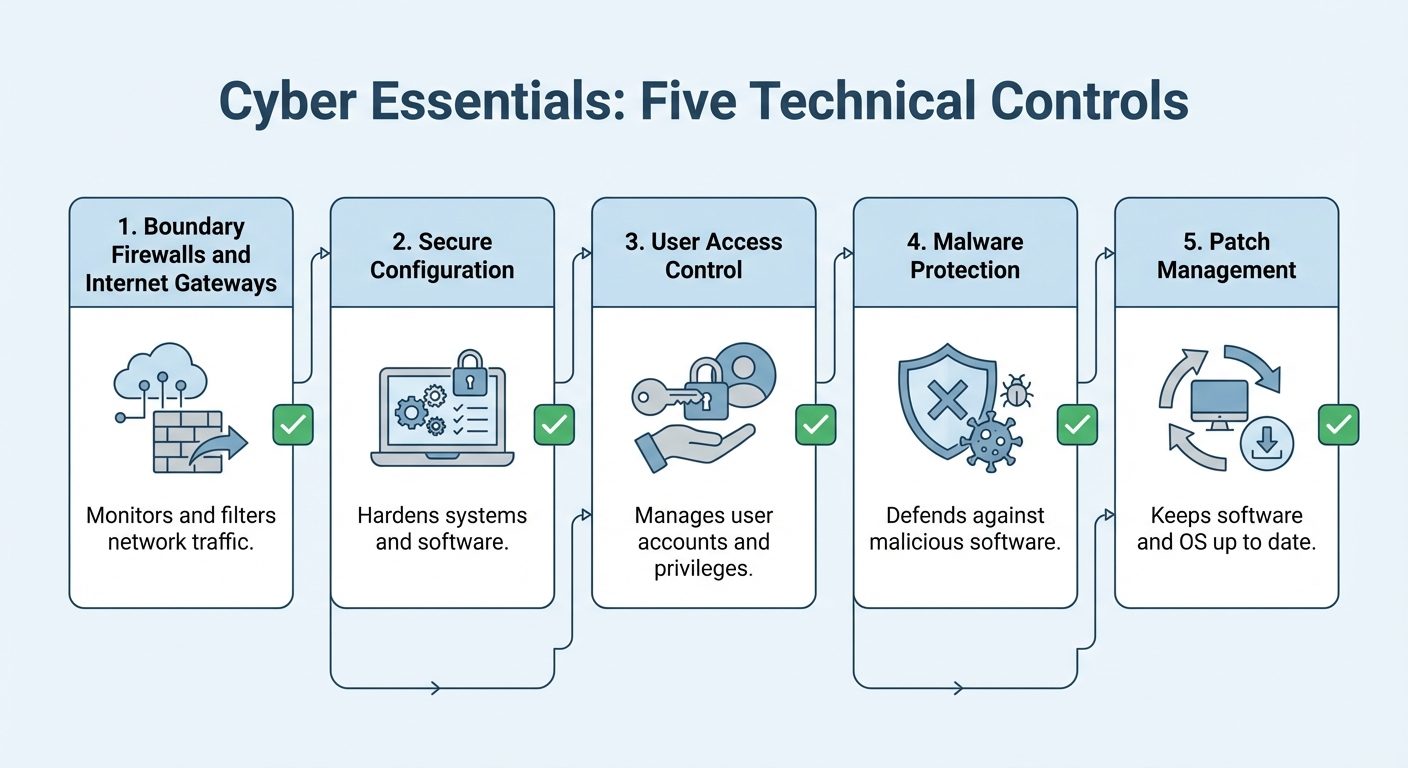
Cyber Essentials five security controls with implementation checklist
When Certification Becomes Mandatory
Cyber Essentials certification is typically mandatory for UK central government contracts that involve handling personal information, providing certain ICT products and services, or processing government data. The threshold isn't about contract value—a £50,000 contract handling citizen data requires certification just as much as a £5 million systems integration programme.
Specific scenarios virtually always trigger certification requirements include contracts involving citizens' personal data (names, addresses, financial information), access to government networks or systems, development or maintenance of software used by government, cloud services hosting government data, IT support or managed services, and provision of connected devices or IoT systems.
Local government, NHS trusts, and other public bodies increasingly adopt similar requirements even when not strictly mandated by central government policy. Many use Cyber Essentials as a minimum qualification criterion, automatically excluding bidders without valid certification. Some frameworks operated by Crown Commercial Service and other procurement bodies now require certification for supplier registration, not just individual contract awards.
Private sector organisations also increasingly request Cyber Essentials from their suppliers, recognising that supply chain security directly impacts their own risk profile. The certification has become a de facto industry standard, signalling basic cybersecurity competence to any potential client.
Addressing Cyber Essentials in Tender Responses
When a tender requires Cyber Essentials, you'll typically need to provide your certificate number, certification body name, issue date, and expiry date. Certificates are valid for twelve months, so timing matters—if your certification expires during the contract delivery period, clarify your renewal plans proactively.
Beyond simply stating your certification status, leverage it strategically throughout your response. When answering quality questions about security measures, reference how your Cyber Essentials controls underpin your approach. For example: "Our patch management process aligns with Cyber Essentials requirements, with critical security updates deployed within 14 days of release and comprehensive monthly patching cycles for all other updates."
If a question asks about specific security controls covered by Cyber Essentials, provide detail beyond the certification. Evaluators know Cyber Essentials represents a minimum standard—differentiate yourself by explaining how you exceed these baseline requirements. Perhaps you implement additional controls, have more frequent review cycles, or use more sophisticated tools than the minimum needed for certification.
For organisations holding Cyber Essentials Plus, emphasise this in responses to questions about security assurance, independent validation, or risk management. The fact that your controls have been independently tested and verified provides significantly stronger assurance than self-assessment alone.
Advanced Frameworks: Cyber Assessment Framework (CAF)
While Cyber Essentials provides the foundation, more complex or sensitive contracts often require alignment with the Cyber Assessment Framework (CAF). Developed by the NCSC for government use, CAF represents a comprehensive, outcome-focused approach to cybersecurity assessment. Unlike Cyber Essentials' control-based model, CAF evaluates whether organisations can achieve specific security outcomes regardless of the exact technical controls implemented.
CAF Structure and Objectives
The Cyber Assessment Framework organises security requirements around four fundamental objectives, each containing multiple principles and associated Indicators of Good Practice (IGPs):
Objective A: Managing Security Risk focuses on understanding and managing the cyber security risks to your organisation and the services you provide. This includes establishing governance structures, defining risk appetites, identifying assets and threats, and implementing proportionate security measures. Tender responses addressing risk management should demonstrate how your governance frameworks align with CAF principles, showing clear accountability, regular risk assessments, and risk-based decision making. Objective B: Protecting Against Cyber Attack covers the controls and measures that prevent or reduce the likelihood of cyber attacks succeeding. This encompasses secure architecture, system security, network security, and supply chain security. When describing protective measures in tenders, structure responses around CAF's principle-based approach rather than simply listing technical controls. Explain why you've chosen specific measures and how they address identified threats. Objective C: Detecting Cyber Security Events ensures organisations can identify when attacks or security incidents occur. This requires security monitoring, anomaly detection, logging, and audit capabilities. Tender questions about incident detection or security monitoring benefit from CAF-aligned responses explaining what you monitor, how you analyse security events, and what triggers investigations or escalations. Objective D: Minimising Impact addresses how organisations respond to and recover from incidents. This includes incident response plans, business continuity, disaster recovery, and lessons learned processes. When responding to questions about resilience or incident management, demonstrate that you've thought beyond prevention to encompass detection, containment, recovery, and improvement.CAF Assessment Levels
CAF uses a maturity model with three levels: Foundation represents basic security measures appropriate for standard services; Enhanced requires stronger security for important or sensitive services; and High demands very strong security for critical national infrastructure or services handling highly sensitive information.
Most public sector tenders won't explicitly reference CAF levels, but understanding this framework helps position your security capabilities appropriately. If a contract involves critical services or sensitive data, align your response with Enhanced or High level practices even if not specifically requested. This demonstrates security maturity and reduces contracting authority concerns about your ability to protect their information.
Demonstrating CAF Alignment in Tender Responses
While full CAF assessments are typically reserved for the most sensitive government work, many public sector organisations now structure their security requirements around CAF principles. You might see questions like "How do you manage security risks to the services you provide?" (Objective A) or "Describe your approach to detecting security incidents" (Objective C).
When responding, mirror the questioner's language and structure. If they reference CAF objectives or principles, align your response explicitly. Use CAF terminology where appropriate—terms like "security risk management framework," "defence in depth," "security monitoring and analysis," and "incident response capability" resonate with evaluators familiar with the framework.
Provide evidence and examples rather than generic claims. Don't just say you have an incident response plan—explain how it's structured, how staff are trained, how often you test it, and what improvements you've made based on exercises or real incidents. Concrete evidence of capability carries far more weight than assertions of compliance.
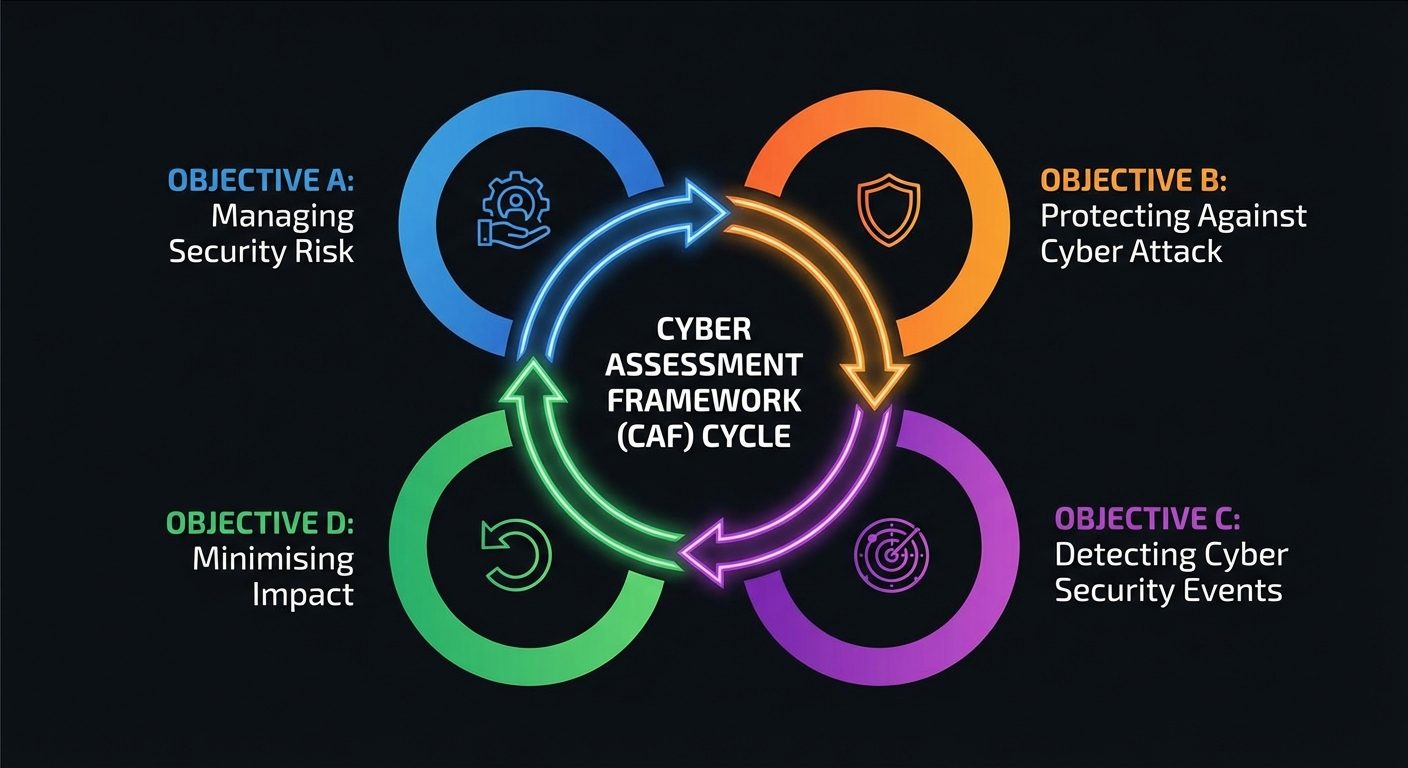
Cyber Assessment Framework four objectives mapped to tender response sections
Data Protection and GDPR Compliance
Data protection requirements represent another critical dimension of cybersecurity in tender responses. The UK General Data Protection Regulation (UK GDPR) and Data Protection Act 2018 establish legal obligations for organisations processing personal data, with serious financial and reputational consequences for non-compliance. Public sector contracting authorities take these obligations extremely seriously—a contractor's data breach becomes their data breach, potentially exposing them to regulatory action, compensation claims, and public scrutiny.
Understanding Data Protection Fundamentals
UK GDPR establishes seven key principles for personal data processing: lawfulness, fairness and transparency; purpose limitation; data minimisation; accuracy; storage limitation; integrity and confidentiality; and accountability. Tender responses addressing data protection should demonstrate understanding of these principles and how you implement them operationally.
The "integrity and confidentiality" principle has particular relevance to cybersecurity questions, requiring appropriate technical and organisational measures to protect personal data against unauthorised or unlawful processing, accidental loss, destruction or damage. This overlaps significantly with cybersecurity controls but emphasises the legal context and consequences of failures.
Key GDPR Requirements for Contractors
When responding to tenders involving personal data processing, several specific GDPR requirements typically feature prominently:
Data Protection Impact Assessments (DPIAs) are mandatory for high-risk processing activities. If the contract involves large-scale processing of sensitive data, systematic monitoring, or innovative technologies, you'll likely need to conduct a DPIA. Tender responses should explain your DPIA process, provide examples of past assessments, and clarify when you'd conduct one for the proposed contract. Data Protection Officers (DPOs) may be required depending on the nature and scale of processing. Public authorities must appoint DPOs, and some contracts require contractors to have their own DPO or designated data protection contact. Be clear about your DPO arrangements and how the contracting authority can raise data protection concerns. Data Processing Agreements define the legal relationship between the contracting authority (data controller) and you (typically acting as data processor). These agreements specify what data you'll process, for what purposes, what security measures you'll implement, and how you'll handle data breaches or subject access requests. Tender responses should confirm your willingness to enter into appropriate data processing agreements and flag any standard terms you can't accept. International Data Transfers require special attention if you'll process data outside the UK or EU, or use subcontractors located overseas. Explain how you'll ensure adequate protection through mechanisms like UK GDPR adequacy decisions, Standard Contractual Clauses, or other approved transfer mechanisms. Data Subject Rights (access, rectification, erasure, restriction, portability, objection) must be supported. Tender responses should explain how you'll facilitate the contracting authority's compliance with data subject requests, including your response timeframes and any technical measures to enable rights like data portability.Describing Data Security Measures
When tender questions ask about data security, structure responses around the lifecycle of data within your organisation:
Data Collection and Receipt: Explain how you'll securely receive personal data from the contracting authority. Will data be transferred via secure file transfer, encrypted email, dedicated VPN connections, or API integrations? What controls prevent interception or unauthorised access during transmission? Data Storage and Processing: Detail where and how you'll store personal data. Is it in UK data centres? What encryption is applied at rest and in transit? Who has access to production data, and how is access controlled and audited? If using cloud services, name the provider, their certification status (ISO 27001, SOC 2, etc.), and data centre locations. Data Retention and Disposal: Clarify how long you'll retain personal data and what happens at contract end. Secure deletion isn't just about pressing delete—it requires ensuring data is irrecoverably destroyed from all systems, backups, and archives. Describe your data sanitisation standards and procedures, ideally referencing recognised standards like NIST SP 800-88. Breach Prevention and Response: Explain your measures to prevent data breaches and, critically, what happens if a breach occurs. UK GDPR requires notifying the Information Commissioner's Office (ICO) within 72 hours of becoming aware of certain breaches. Tender responses should detail your breach detection capabilities, internal notification procedures, investigation processes, and how you'll support the contracting authority in meeting their notification obligations.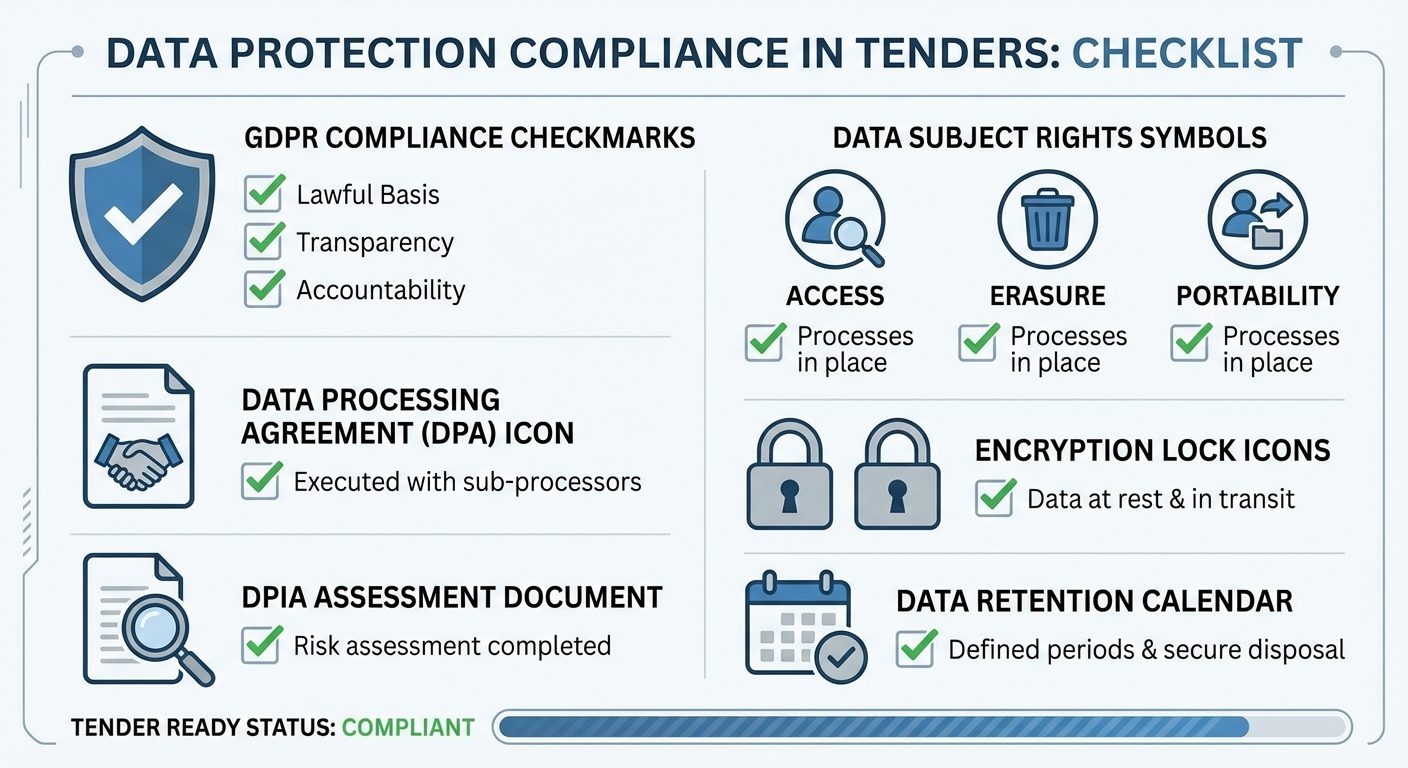
Data protection compliance checklist for tender responses
ISO 27001 and Other International Standards
While Cyber Essentials addresses UK government requirements and UK GDPR establishes legal obligations, ISO 27001 certification provides internationally recognised evidence of information security management maturity. This standard, developed by the International Organization for Standardization, defines requirements for establishing, implementing, maintaining, and continually improving an Information Security Management System (ISMS).
The Value of ISO 27001 Certification
ISO 27001 certification demonstrates several things that Cyber Essentials alone cannot. First, it shows you've implemented a comprehensive information security management system covering not just technical controls but also policies, procedures, risk management, and continuous improvement. Second, certification requires annual surveillance audits and triennial recertification, providing ongoing assurance that your security posture is maintained and improved over time. Third, ISO 27001 is globally recognised, beneficial if you work with international organisations or pursue contracts beyond the UK.
In tender responses, ISO 27001 certification provides strong evidence for questions about security management, risk management frameworks, continuous improvement, and independent assurance. It's particularly valuable for higher-value contracts, those involving sensitive data, or tenders from organisations with mature procurement functions that recognise the standard's significance.
However, ISO 27001 certification isn't cheap or quick. Depending on organisation size and complexity, certification can cost £10,000-£50,000+ and take six months to a year from initial planning to certification. The ongoing costs for maintaining certification (annual audits, documentation updates, training) also represent significant investment. Only pursue ISO 27001 if you regularly bid for contracts where it provides competitive advantage or is specifically required.
Other Relevant Security Standards and Certifications
Beyond Cyber Essentials and ISO 27001, several other standards and certifications may enhance your tender competitiveness or be explicitly required for specific contracts:
ISO 27017 extends ISO 27001 with cloud service-specific controls, relevant if you provide cloud services or extensively use cloud infrastructure in service delivery. It addresses cloud computing security concerns like virtual machine security, cloud service customer-provider responsibilities, and secure deletion of cloud-based data. ISO 27018 focuses specifically on protecting personally identifiable information (PII) in public cloud environments, complementing UK GDPR requirements. This certification is particularly relevant for organisations providing Software-as-a-Service or cloud storage solutions to public sector clients. SOC 2 (Service Organization Control 2) reports, particularly Type II reports covering a period of time, provide detailed assurance about security, availability, processing integrity, confidentiality, and privacy controls. Developed by the American Institute of CPAs, SOC 2 has gained international recognition especially in the technology sector. While less common than ISO 27001 in UK public sector tenders, SOC 2 reports can provide valuable supporting evidence of security maturity. PCI DSS (Payment Card Industry Data Security Standard) is mandatory if you'll process, store, or transmit payment card data. Any contract involving payment handling requires PCI DSS compliance, with specific certification levels depending on transaction volumes. NHS Data Security and Protection Toolkit (DSPT) is essential for organisations working with NHS England or accessing NHS systems and data. The toolkit assesses how well organisations comply with data security and protection requirements, with submission required annually. Healthcare sector tenders typically mandate DSPT completion at specific assurance levels.Leveraging Certifications Strategically
When you hold relevant certifications, integrate them throughout your tender response rather than merely listing them in an appendices. When describing your security management approach, reference your ISO 27001 ISMS. When discussing cloud security, mention ISO 27017 certification. When addressing data protection, cite how your controls exceed Cyber Essentials baseline requirements.
Provide certificate numbers, certification body details, and certification dates to enable verification. Consider including certification badges or logos where appropriate, though ensure these don't compromise page limits or professional presentation.
If you lack certifications that tender specifications mention or competitors likely hold, address this gap directly rather than hoping evaluators won't notice. Perhaps you're pursuing certification (state timeline and commitment), implement equivalent controls verified differently, or can obtain certification before contract commencement if awarded. Transparency about gaps, coupled with mitigation plans, scores better than silence.
Writing Effective Security Responses in Tender Documents
Understanding cybersecurity requirements represents only half the challenge—translating that knowledge into compelling, credible tender responses determines whether you win contracts. Security questions often carry significant weighting in public sector evaluations, and poorly crafted responses can sink otherwise strong bids. Effective security writing requires balancing technical accuracy with accessibility, providing concrete evidence whilst remaining concise, and demonstrating both compliance and differentiation.
Structuring Security Responses for Maximum Impact
Most tender security questions follow predictable patterns, allowing you to develop robust response templates that can be tailored for specific opportunities. A well-structured security response typically includes these elements:
Opening Statement: Begin with a direct, confident assertion addressing the question. For example, "We maintain comprehensive cybersecurity controls that exceed industry standards and comply with all relevant regulations, providing robust protection for your data and systems throughout the contract lifecycle." This immediately assures evaluators that you understand the importance and have appropriate measures in place. Framework and Standards Alignment: Quickly establish your security credentials by referencing relevant certifications and frameworks. "Our approach is underpinned by ISO 27001 certification (certificate number: ISO27001-123456, BSI, valid until March 2027) and Cyber Essentials Plus certification (renewed annually), ensuring independent validation of our security controls." This provides objective evidence and credibility. Detailed Description of Controls: Provide specific information about the security measures you'll implement. This is where technical detail matters—generic claims like "we use firewalls and encryption" don't differentiate you. Instead: "We implement defence-in-depth with next-generation firewalls at network boundaries, application-layer firewalls for web services, endpoint detection and response on all devices, and network segmentation isolating different security zones. All data is encrypted using AES-256 at rest and TLS 1.3 in transit." Operational Processes: Describe how controls are operated and maintained. Security isn't just technology—it's people and processes. "Our security operations team monitors systems 24/7 using a centralised SIEM platform, with automated alerting for suspicious activities. We conduct quarterly vulnerability scans, annual penetration tests by CREST-certified testers, and weekly security patching cycles with expedited deployment for critical vulnerabilities." Governance and Oversight: Explain who's responsible and how security is managed at organisational level. "Our Chief Information Security Officer reports directly to the board, presenting quarterly security metrics and risk assessments. We maintain a formal information security steering group with representatives from technical teams, legal, procurement, and operations, ensuring security considerations inform business decisions." Evidence and Validation: Provide concrete evidence of effectiveness. "Over the past three years, we've maintained zero data breaches, achieved 100% security update compliance, and improved our security maturity score from 7.2 to 9.1 out of 10 in independent assessments. Our most recent ISO 27001 surveillance audit identified zero non-conformities and three opportunities for improvement, all addressed within six weeks." Relevance to This Contract: Connect your security measures specifically to the contract requirements. "For this contract, we'll establish a dedicated security zone within our infrastructure for your data, implement role-based access controls ensuring only named personnel can access your information, and provide monthly security reports detailing access logs, security events, and control effectiveness."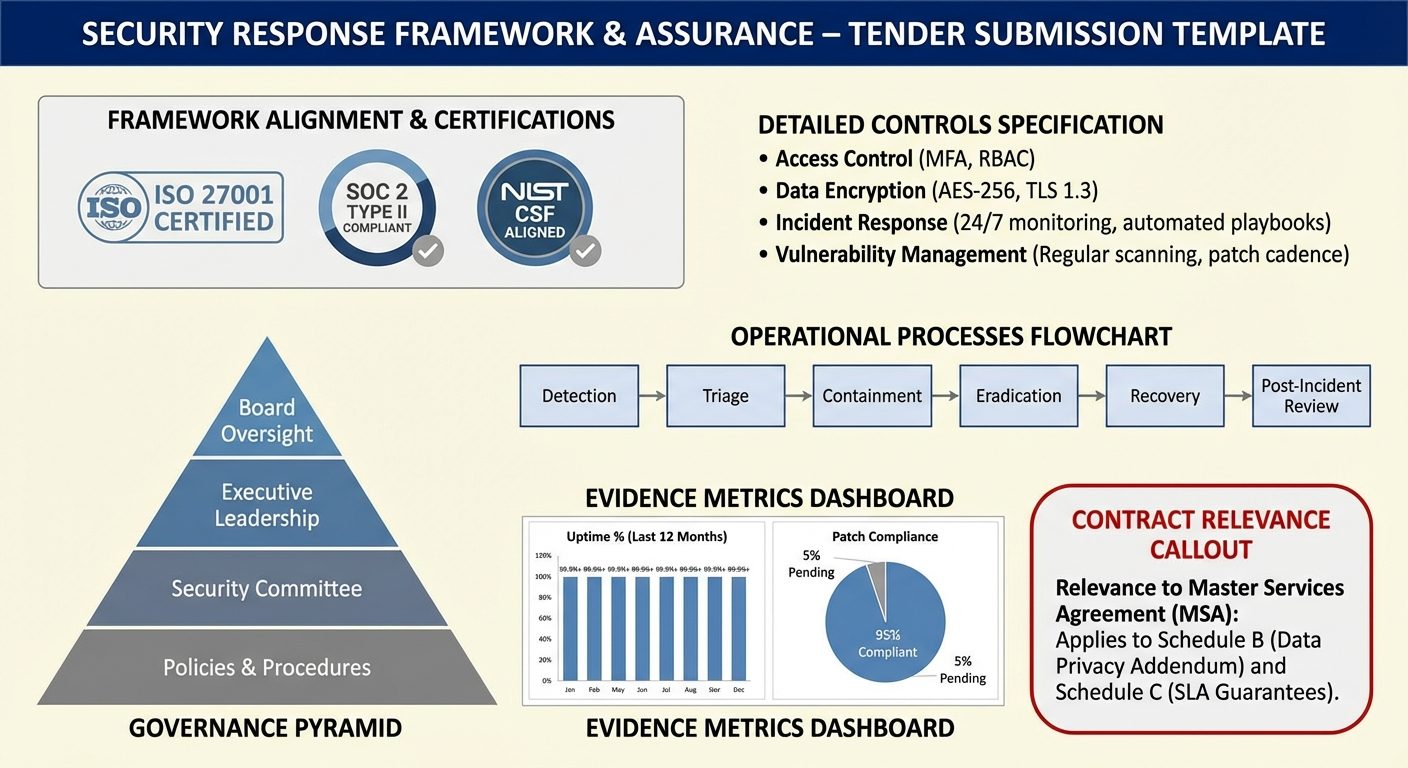
Example security response structure showing how to layer evidence and detail
Common Security Questions and How to Answer Them
Certain security questions appear frequently in public sector tenders. Developing strong template responses for these common scenarios accelerates bid writing while ensuring consistency:
"Describe your approach to information security management": Outline your ISMS structure, key policies, risk management approach, governance arrangements, and continuous improvement mechanisms. Reference ISO 27001 if certified, or explain how your approach aligns with ISO 27001 principles if not. Include specific examples of how your ISMS has identified and mitigated risks. "How will you protect our data from unauthorised access?": Cover access controls (authentication, authorisation, privilege management), physical security, network security, encryption, monitoring and logging, and user access review processes. Be specific about technologies and methods—MFA using hardware tokens versus SMS-based OTPs makes a difference. "What is your approach to incident response and business continuity?": Describe your incident response plan structure, roles and responsibilities, escalation procedures, communication protocols, and post-incident review processes. Detail your business continuity arrangements including backup systems, recovery time and point objectives, failover procedures, and testing schedules. Provide examples of how you've successfully responded to and recovered from past incidents. "How do you manage supply chain security?": Explain your supplier assessment process, contractual security requirements you impose on subcontractors, monitoring and audit rights, and how you'll ensure end-to-end security across the supply chain for this contract. The Procurement Act 2023 places increased emphasis on supply chain transparency and security. "Describe your data protection and UK GDPR compliance measures": Cover your legal basis for processing, data protection policies, data subject rights procedures, DPIA process, breach notification procedures, data retention and disposal, and international transfer safeguards if relevant. Reference your DPO or data protection lead and their accessibility to the contracting authority. "How do you keep systems and software secure and up to date?": Detail your vulnerability and patch management processes, including identification of vulnerabilities, risk assessment, testing, deployment, and verification. Explain how you handle systems that can't be patched immediately due to compatibility or operational constraints, and what compensating controls you implement.Avoiding Common Security Response Mistakes
Several pitfalls frequently undermine otherwise solid tender responses:
Vagueness and Generic Claims: Saying you "take security seriously" or "use industry best practices" provides no real information. Evaluators read dozens or hundreds of responses—specificity stands out. Replace "we use strong encryption" with "we implement AES-256-GCM encryption at rest with keys stored in FIPS 140-2 Level 3 validated hardware security modules." Overreliance on Certifications: Having ISO 27001 or Cyber Essentials is valuable, but simply stating certification numbers without explaining how your controls address the specific contract requirements wastes the opportunity to demonstrate real understanding and capability. Certifications provide the foundation; your response must build on them. Technical Jargon Without Explanation: Tender evaluators might include non-technical personnel. Balance technical accuracy with accessibility. If using specialised terms, briefly explain them or describe their purpose: "SIEM (Security Information and Event Management) systems aggregate logs from all IT systems, enabling our security team to identify patterns indicating potential attacks or policy violations." Lack of Evidence: Claims without supporting evidence lack credibility. If you say you conduct regular security testing, specify how often, by whom, what standards they follow, and what you do with findings. If you've never had a data breach, say so and explain why (not just luck—what controls prevent breaches). Inadequate Tailoring: Using completely generic responses that could apply to any contract signals lack of effort or understanding. Even if using template content, tailor it to reference specific contract requirements, data types, systems, or risks mentioned in the tender documentation. Ignoring the Question: Ensure your response actually answers what was asked. If the question asks about incident response and you spend most of your answer describing preventative controls, you've missed the point. Address the specific question directly before providing contextual information. Length Mismanagement: Tender questions usually specify word or page limits. Going significantly under limit suggests insufficient detail; exceeding limits may result in content being cut off or evaluated negatively. Aim for 90-100% of the limit for important, high-scoring questions.Emerging Trends and Future Requirements
The cybersecurity landscape in public sector procurement continues evolving rapidly. Understanding emerging trends helps organisations prepare for future requirements, position themselves competitively, and avoid being caught off-guard by new mandates or expectations. Several significant developments are shaping the 2026-2027 procurement environment.
Zero Trust Architecture Adoption
Zero Trust—the security model that assumes no user or system is inherently trustworthy—is transitioning from cutting-edge concept to expected practice. The UK government's Zero Trust Architecture (ZTA) Design Principles, published in 2023, increasingly inform public sector security requirements. Unlike traditional "castle and moat" security that trusts users and devices inside the network perimeter, Zero Trust requires continuous verification of every access request regardless of location.
Tender responses increasingly need to demonstrate Zero Trust principles: implementing strong authentication for every access request (typically MFA); authorising based on identity, device health, and contextual factors; encrypting all communications; logging and monitoring all access; and assuming breach when designing security controls.
If you haven't yet implemented Zero Trust architecture, address how you're moving in that direction. Perhaps you've deployed MFA, implemented network segmentation, adopted identity-based access controls, or deployed endpoint detection and response solutions. Position these as steps toward Zero Trust rather than final destinations.
AI and Machine Learning in Cybersecurity
Artificial intelligence transforms both threats and defences. Nation-state actors and sophisticated criminals increasingly use AI to craft more convincing phishing emails, identify vulnerabilities faster, and automate attacks at scale. Simultaneously, defenders leverage AI for threat detection, anomaly identification, and automated response.
Tender responses should address how you use AI/machine learning to enhance security without creating new risks. Perhaps you deploy AI-powered security information and event management systems that identify unusual patterns in log data, use machine learning to detect anomalous user behaviour indicating compromised credentials, or employ AI to prioritise vulnerability patching based on threat intelligence.
Also address AI risks if you'll use AI/machine learning in service delivery. How do you secure AI systems? What data is used for training? How do you prevent adversarial attacks on AI models? How do you ensure AI-driven decisions remain explainable and auditable? These questions increasingly appear in tenders for contracts involving data analytics or intelligent systems.
Supply Chain Security Intensification
High-profile supply chain attacks—like the SolarWinds compromise that affected thousands of organisations through a single software update—have driven intense focus on supply chain security. The Procurement Act 2023 mandates increased supply chain transparency, and contracting authorities now routinely ask detailed questions about subcontractors, software components, and the security of your entire delivery ecosystem.
Expect tender questions about your supplier security assessment processes, contractual security requirements imposed on subcontractors, monitoring and audit arrangements, and incident response coordination across the supply chain. You'll need to demonstrate not just your own security posture but your ability to ensure security throughout your supplier network.
If you use open-source software components, be prepared to discuss how you assess their security, monitor for vulnerabilities, maintain appropriate versions, and respond when vulnerabilities are discovered. Software Bill of Materials (SBOM) requirements—detailed inventories of all software components—are emerging in critical contracts.
Quantum Computing Implications
While large-scale quantum computers capable of breaking current encryption remain years away, government agencies are already planning for this "quantum threat." The National Cyber Security Centre published guidance on quantum-ready cryptography, and forward-thinking organisations are beginning crypto-agility initiatives to prepare for post-quantum cryptography standards.
Currently, tender responses rarely address quantum security explicitly, but this will change. Understanding quantum risks and having a plan for crypto-agility—the ability to quickly transition to new cryptographic algorithms when needed—will become differentiators. Even mentioning awareness of quantum threats and tracking of post-quantum cryptography standardisation demonstrates strategic security thinking.
Increased Focus on Resilience Over Prevention
The security paradigm is shifting from "if we're attacked" to "when we're attacked." Contracting authorities increasingly recognise that perfect prevention is impossible and focus evaluation on detection and response capabilities. This means tender responses must address not just how you prevent incidents but how quickly you detect them, how effectively you contain and remediate them, and how resilient your services remain during and after attacks.
Describe your disaster recovery capabilities, backup and restore procedures, failover mechanisms, incident response team composition and availability, and post-incident improvement processes. Provide evidence of testing—annual disaster recovery exercises, tabletop incident response scenarios, or penetration testing that simulates sophisticated attacks.
Cyber insurance has become increasingly relevant, with some contracts now asking about coverage. While insurance doesn't prevent attacks, it demonstrates risk management maturity and provides financial resources for incident response. If you carry cyber insurance, mention coverage amounts and scope, though this shouldn't replace discussion of preventative and detective controls.
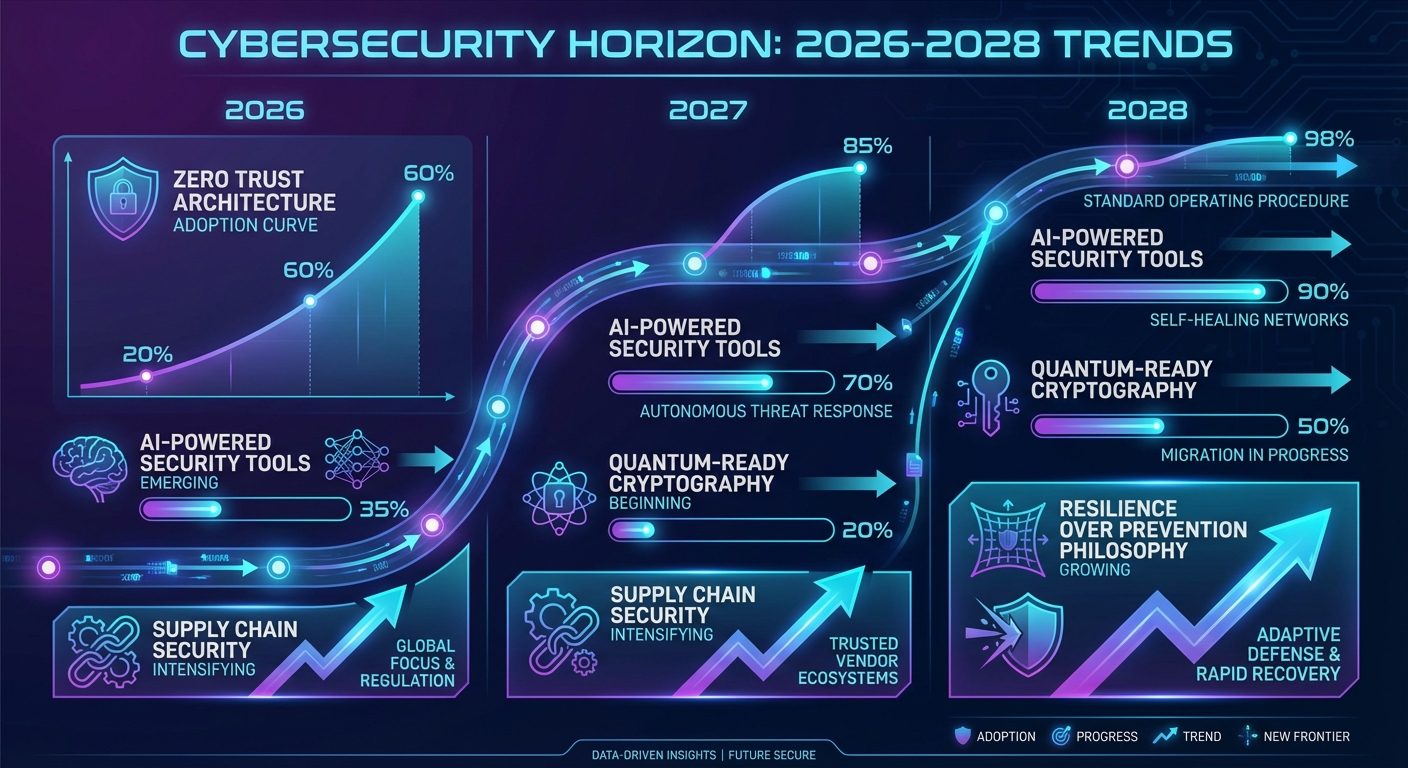
Future cybersecurity trends timeline showing adoption curves for emerging requirements
Practical Action Plan: Preparing Your Organisation
Understanding cybersecurity requirements is worthless without implementation. This section provides a practical, sequenced approach to building the security posture and documentation needed for successful tender responses. Adapt this roadmap to your organisation's size, resources, and target contracts, but resist the temptation to skip fundamental steps.
Phase 1: Assess Current State (Weeks 1-2)
Before implementing new controls or pursuing certifications, understand where you stand. Conduct a realistic assessment of your current security posture using a structured framework—the NCSC's Cyber Assessment Framework or ISO 27001 Annex A controls provide excellent starting points even if you're not pursuing formal certification.
Document existing controls, policies, and procedures. Map what you have against Cyber Essentials requirements—this is your certification readiness assessment. Identify gaps between current state and Cyber Essentials, Cyber Essentials Plus, and other relevant standards. Prioritise gaps based on certification requirements, risk severity, and implementation complexity.
Engage your technical teams in this assessment but also involve operations, HR, legal, and procurement. Security isn't just an IT function—effective controls require organisation-wide coordination.
Phase 2: Address Critical Gaps (Weeks 3-8)
Focus initially on gaps that would prevent Cyber Essentials certification or represent critical security weaknesses. This typically includes ensuring all devices have up-to-date anti-malware, implementing boundary firewalls with appropriate configurations, establishing formal patch management processes, removing unnecessary administrator privileges, and implementing basic access controls.
Document security policies even if you've historically operated on informal understanding. You need written policies covering acceptable use, access control, incident response, data protection, and business continuity. These needn't be elaborate initially—clear, concise policies you'll actually follow beat comprehensive documents that sit ignored on SharePoint.
Train your staff on security basics and their responsibilities. Cyber Essentials requires demonstrating that users understand security policies. Phishing simulation exercises identify who needs additional training and provide evidence of security awareness to tender evaluators.
Phase 3: Pursue Certification (Weeks 8-16)
Once critical gaps are addressed, pursue Cyber Essentials certification. Research certification bodies (IASME, CREST members, others), comparing costs, timelines, and support provided. Complete the self-assessment questionnaire carefully and honestly—attempting to hide weaknesses typically backfires during verification.
If the certification body identifies issues, address them promptly and request reassessment. If you fail initial certification, this isn't disastrous—use it as a learning experience, fix the identified problems, and reapply. The important thing is achieving certification before you need it for tender submissions.
Consider Cyber Essentials Plus if you target higher-value or more sensitive contracts. The additional assurance provided often justifies the increased cost and effort. The independent testing also identifies vulnerabilities you might have missed, improving your actual security rather than just your certification status.
Phase 4: Build Response Library (Weeks 16-20)
Develop a library of template security responses covering common tender questions. Don't write these in isolation—involve subject matter experts who implement and operate the controls. Templates should be 70-80% complete, requiring tailoring for specific tenders rather than complete rewriting.
Create a central repository of security documentation that can be quickly accessed during tender responses: current certificates with numbers and expiry dates; policy documents; system architecture diagrams showing security zones and controls; data flow diagrams indicating encryption and access controls; recent security assessment reports (sanitised if necessary); and incident response plan summaries.
Develop case studies demonstrating security capability. Perhaps you successfully responded to a security incident, implemented new controls to address emerging threats, or achieved certification in challenging circumstances. Real examples resonate far more strongly than abstract claims.
Phase 5: Continuous Improvement (Ongoing)
Security isn't a one-time achievement but an ongoing practice. Establish regular review cycles: quarterly security policy reviews; monthly access right reviews; weekly vulnerability scans; annual penetration testing; and continuous monitoring of security events and incidents.
Track regulatory and standard changes. Subscribe to NCSC alerts, ISO updates, and procurement policy notifications. When new requirements emerge, assess impact and develop implementation plans early rather than scrambling when a tender drops.
Conduct regular security training for all staff, with additional specialised training for technical teams, management, and anyone regularly involved in tender responses. Security awareness degrades without reinforcement.
Most importantly, learn from every tender submission. After each response, conduct a brief wash-up: What security questions were asked? How well did our response address them? What gaps did we identify? What improvements should we make? Use this feedback to refine templates, address weaknesses, and build organisational capability.
Conclusion: Security as Competitive Advantage
Cybersecurity in tender responses has fundamentally shifted from technical appendix to competitive differentiator. Organisations that view security requirements as bureaucratic burden versus those that embrace them as opportunity separate into winners and also-rans. The public sector needs partners who genuinely understand security, implement effective controls, and can articulate their approach clearly and credibly.
Strong cybersecurity posture provides benefits far beyond tender success. It protects your own organisation from costly breaches, builds customer confidence, enables work with security-conscious private sector clients, and attracts talented staff who want to work for responsible organisations. The investment in certifications, controls, and documentation pays dividends across multiple dimensions.
The 2026 landscape demands more than checkbox compliance. Contracting authorities increasingly recognise that security certificates alone don't guarantee security—they want evidence of security maturity, resilient operations, and continuous improvement. This means tender responses must go beyond stating certifications to demonstrating deep understanding, providing concrete evidence, and showing how your approach specifically addresses their requirements and risks.
Start your security journey now rather than when a critical tender emerges. Building robust security posture takes time—achieving Cyber Essentials certification, implementing comprehensive controls, developing policies and procedures, training staff, and creating response documentation requires months of focused effort. Organisations that make this investment in advance respond to tender opportunities quickly and confidently, while competitors scramble to address security questions they've neglected.
Remember that security is a team sport requiring coordination across technical, operational, legal, and commercial functions. Security professionals design controls, but effectiveness requires everyone from receptionist to CEO to understand their role. This organisational approach to security naturally translates into stronger tender responses that demonstrate genuine capability rather than isolated technical measures.
The threat landscape will continue evolving—new attack vectors emerge, regulations change, and contracting authorities raise expectations. But organisations with solid foundations—comprehensive security management systems, continuous improvement mindsets, and cultures that genuinely value security—adapt successfully. They don't just respond to requirements; they anticipate them and position themselves as the secure partners public sector organisations need.
Your next tender may be the one where security determines the outcome. Make sure when that moment comes, your security posture and response capability give evaluators confidence rather than concern. The public sector can't afford partners who treat security casually—make sure you're the partner they trust.
Tags
Ready to Transform Your Tender Writing?
See how MyTender's AI can help you write winning tenders in a fraction of the time.