
Contract Handover Plans in Tenders: How to Prove Day-One Control Before Award
A practical guide to writing contract handover plan tender responses that reassure evaluators on continuity, risk, mobilisation, data, people and governance.
mytender.io Research Team
Tender Writing & Bid Management Specialists
Contract Handover Plans in Tenders: How to Prove Day-One Control Before Award
A contract handover plan is where the buyer decides whether your bid feels safe.
The solution can be clever. The pricing can be sharp. The case studies can be impressive. But if the evaluator cannot see how you will move from award to live service without dropping the ball, they start adding risk in their head.
That risk costs marks.

Bid team planning a contract handover timeline before public sector award
Handover is not just a mobilisation admin task. In public sector tenders, it is evidence that you can protect continuity, manage people, control data, work with the incumbent, and give the authority confidence from day one.
This guide explains how to write a contract handover plan tender response that scores. It is written for bid managers, operations leads and the accidental bid writer who has been handed the transition question at the worst possible moment.
Why handover is getting more scrutiny
Public buyers are more cautious than they used to be.
That is not surprising. The Procurement Act 2023 has pushed procurement towards more transparency, stronger contract management and clearer performance expectations. Buyers are also publishing more information across the contract lifecycle, including pipeline notices, performance information and payment data in different parts of the regime.
That changes how tenders are read.
An evaluator is not only asking, “Can this supplier write a good answer?” They are asking, “Will this supplier make my life harder after award?”
The handover section is where that fear shows up.
A good response reassures them on five things:
- continuity of service
- control of risks and dependencies
- clear ownership during mobilisation
- clean information transfer
- readiness for contract management after go-live
What a handover plan is really proving
A weak handover answer lists tasks.
A strong handover answer proves control.
That difference matters. Most bidders can write a generic timeline with contract award, kick-off meeting, document review, mobilisation, go-live and review. It looks tidy, but it does not tell the buyer how the hard parts will be managed.
A proper contract handover plan should prove that you understand:
- what must be protected during transition
- who needs to be involved
- what information must move between parties
- where service failure could happen
- how decisions will be made quickly
- what evidence will show readiness before go-live
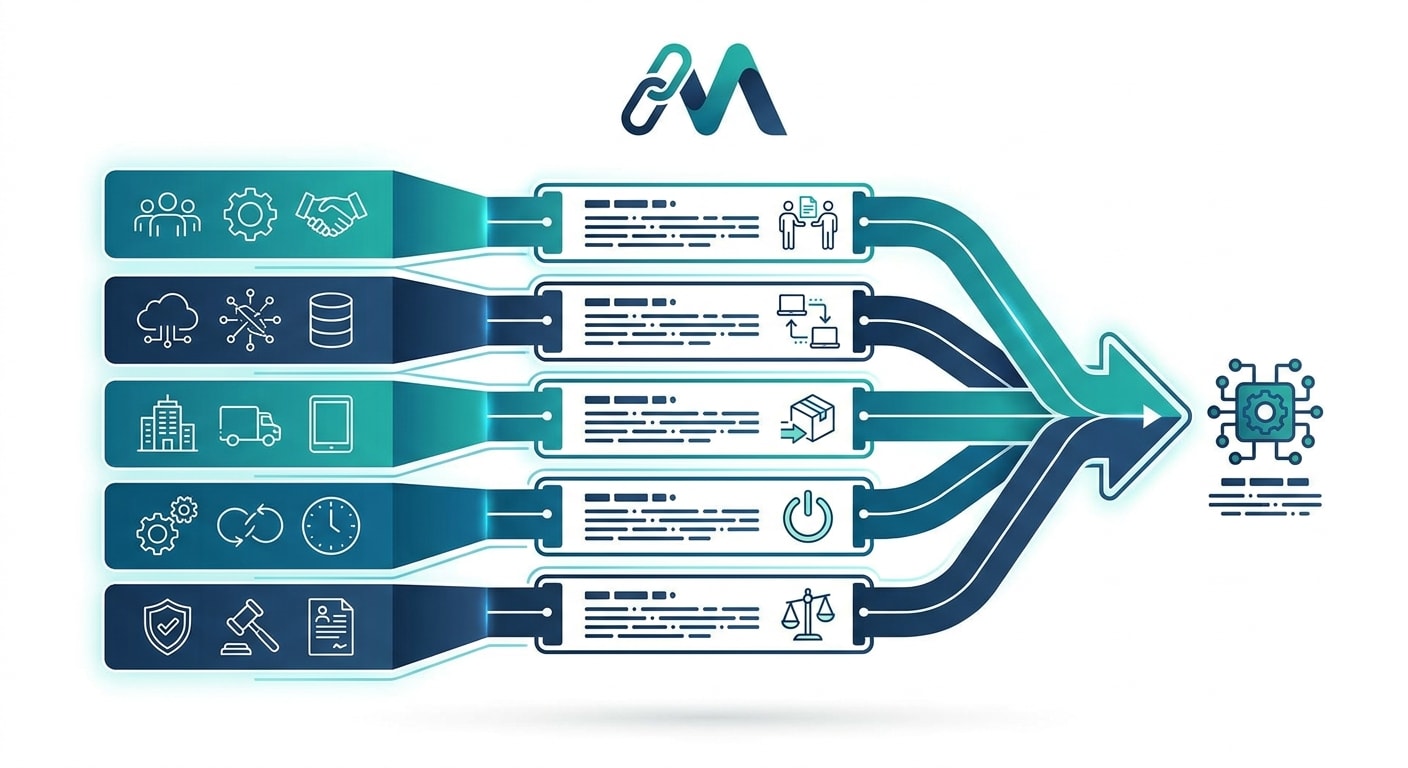
Contract handover framework showing people, data, assets, service continuity and governance workstreams
Think of it as a bridge between the bid promise and the live contract.
If the bridge looks flimsy, the evaluator doubts the promise.
Start with the buyer’s biggest fear
Before writing the answer, ask one question: what would make this handover painful for the buyer?
That answer changes by sector.
In facilities management, the fear might be a messy incumbent exit, missing asset data, TUPE confusion, or site teams not knowing who to call on day one.
In waste and environmental services, it might be missed collections, depot readiness, route transfer, vehicle availability, communications with residents, or data quality from the previous operator.
In construction and maintenance frameworks, it might be open works, warranty obligations, live-site access, incomplete drawings, unresolved defects, or unclear escalation routes.
In professional services, it might be knowledge transfer, stakeholder mapping, access to systems, incomplete files, or loss of momentum between award and mobilisation.
Do not start with your process. Start with their anxiety.
Then write the plan around removing it.
The five workstreams every handover plan needs
Most strong handover responses can be built around five workstreams.
You can rename them to fit the tender, but the logic is useful.
1. Governance and decision-making
This is the control layer.
Set out who owns mobilisation, who attends the kick-off meeting, how progress is reported, and how decisions are escalated. The buyer wants to know that problems will not bounce around inboxes for a week.
Include:
- mobilisation sponsor
- mobilisation manager
- workstream leads
- buyer-side contacts
- meeting rhythm
- RAID log ownership
- decision and escalation route
- sign-off gates before go-live
Avoid vague wording like “regular meetings will be held”. Say weekly mobilisation meetings, daily stand-ups during the final go-live week, and a named route for urgent decisions.
If you cannot name individuals yet, name roles.
2. Service continuity
This is the no-dropped-balls section.
Explain how you will protect live service during the move from old arrangement to new contract. That includes understanding what is already in flight, what cannot be interrupted, and what needs special treatment in the first 30 days.
Useful evidence includes:
- critical service list
- continuity risk register
- incumbent dependency log
- first-week operating plan
- temporary controls for high-risk services
- fallback arrangements if information is incomplete
3. People and responsibilities
Handover is usually a people problem before it is a process problem.
Evaluators want to know who is doing what, how client stakeholders will be supported, and how front-line teams will understand the new arrangement.
For people-heavy contracts, this may include TUPE, consultations, staff briefings, training, vetting, right-to-work checks, DBS checks, inductions and union engagement.
For less people-heavy contracts, it may still include account team structure, stakeholder mapping, communication protocols and role clarity.
Use a simple RACI if the tender allows it.
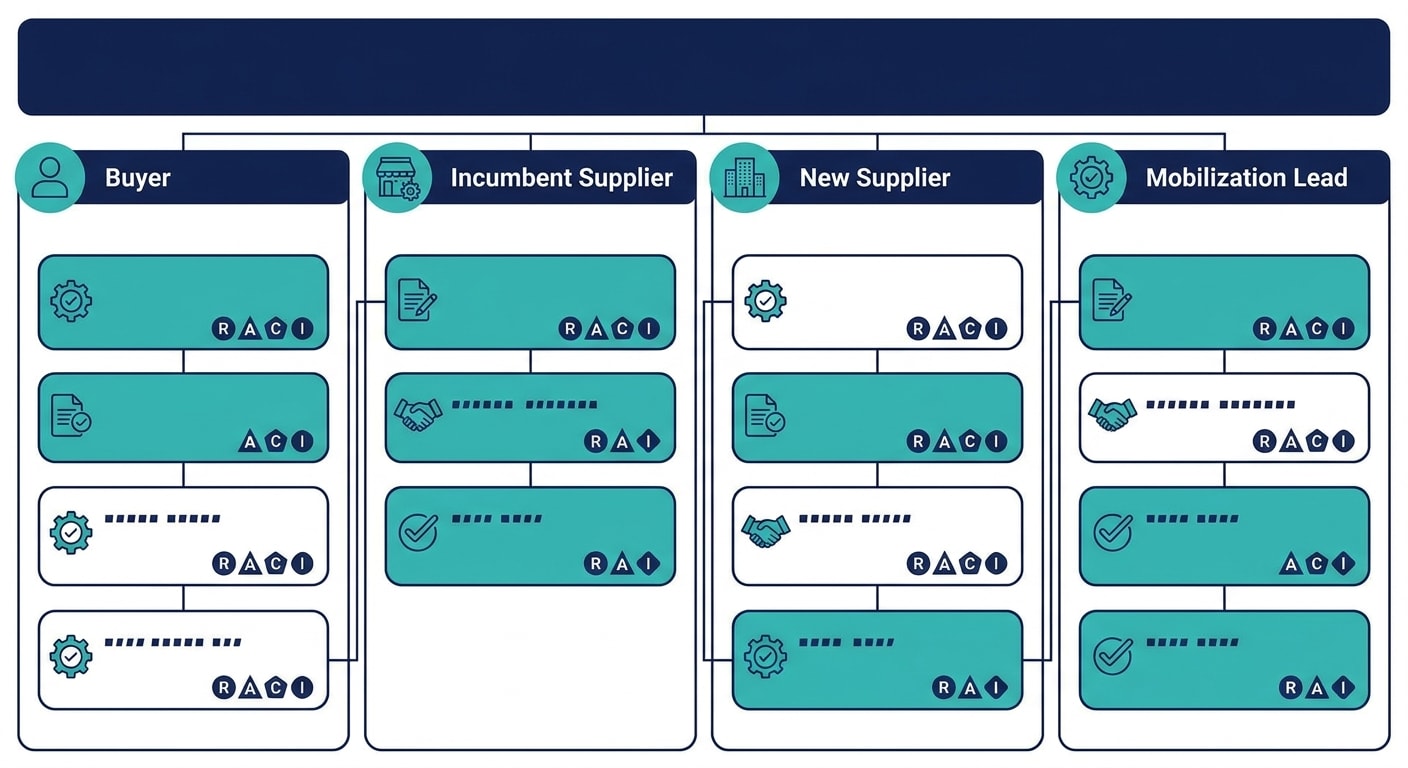
RACI-style handover map showing buyer, incumbent, new supplier and mobilisation leads across transition tasks
The evaluator should be able to see where every major responsibility sits.
4. Data, documents and assets
This is where many handovers go wrong.
Suppliers often write warmly about collaboration, then barely mention the information needed to run the service. That is a problem because bad data can derail the first month of delivery.
Cover the main categories:
- contract documents
- asset registers
- site lists
- open issues and defects
- service history
- performance reports
- access credentials
- compliance certificates
- pricing assumptions
- user lists and permissions
- reporting templates
Then explain how you will check quality.
For example: “Within five working days of receipt, we will validate the asset register against site walkaround findings, flag gaps in a data query log, and agree owners and deadlines for correction with the authority.”
That is much stronger than “we will review all documentation”.
Build the timeline around gates, not dates
Many handover plans fail because the timeline is too neat.
Week 1: kick-off. Week 2: review documents. Week 3: train staff. Week 4: go live.
Fine, but what happens if the TUPE data is late? What if asset information is wrong? What if IT access takes ten working days? What if the incumbent will not engage until formal notice is issued?
A better timeline uses readiness gates.

Contract handover timeline with readiness gates from award to go-live and post-mobilisation review
For example:
- Gate 1: mobilisation kick-off complete
- Gate 2: critical information received and reviewed
- Gate 3: people and access requirements confirmed
- Gate 4: operational readiness check passed
- Gate 5: go-live approval agreed
- Gate 6: first 30-day stabilisation review complete
You can still show dates. Just make clear that go-live confidence comes from evidence, not optimism.
This is especially important where the buyer has a fixed start date. If the date cannot move, the controls around the date need to be stronger.
Show how you will work with the incumbent
Incumbent handover is awkward.
Everyone knows it. Few bidders say it properly.
The outgoing supplier may be helpful, neutral or defensive. They may have strong records, patchy records or no usable records at all. They may be leaving because the contract ended naturally, because they lost the competition, or because performance was poor.
Your answer should sound mature about this.
Do not attack the incumbent. Do not imply they will fail. Do not pretend there will be no friction.
Instead, explain the controls:
- single point of contact for incumbent liaison
- agreed information request list
- tracker for received and missing items
- dependency log for buyer decisions
- site verification where data is incomplete
- contingency planning for missing records
- respectful communications with transferring staff
This gives the buyer confidence without sounding political.
Link handover to contract management
Handover does not end at go-live.
The first 30, 60 and 90 days are where the buyer discovers whether the mobilisation was real. A good tender response shows how lessons, issues and early performance will be absorbed into contract management.
Include a stabilisation period.
For example:
- daily issue review during week one
- weekly operational reviews during month one
- KPI baseline review at day 30
- service improvement plan for recurring issues
- benefits and social value mobilisation check at day 60
- formal lessons learned review at day 90
This matters under the current procurement regime because buyers are more focused on performance records, supplier accountability and contract outcomes.
If you have strong contract review templates, mobilisation dashboards or KPI reporting examples, mention them.
Evidence that makes a handover answer believable
Evaluators know when a handover plan has been written from scratch by someone who has never lived through one.
The quickest way to avoid that is to use evidence.
Good evidence includes:
- mobilisation plan from a similar contract
- anonymised transition RAID log
- first 30 days checklist
- client kick-off agenda
- communications plan
- training matrix
- data request template
- operational readiness checklist
- implementation dashboard
- case study from a comparable takeover
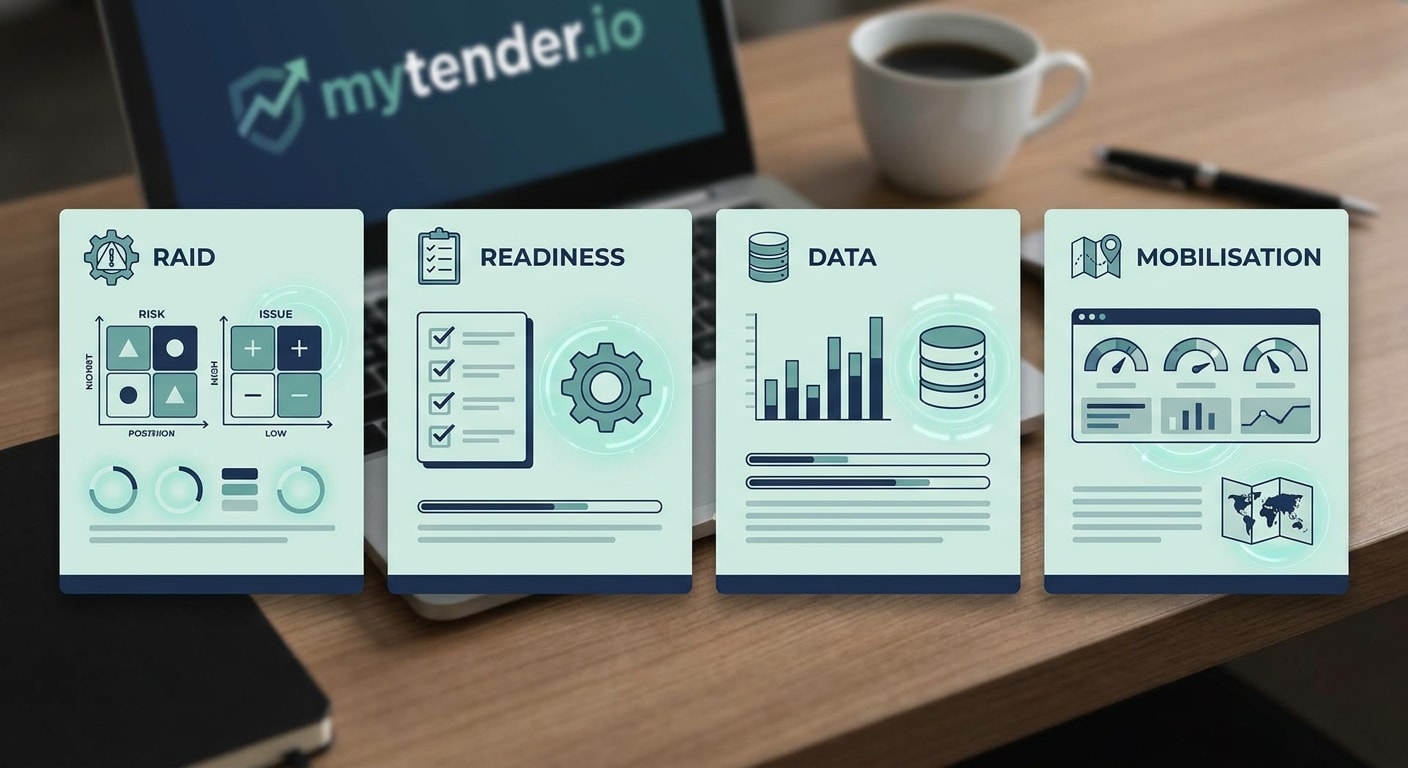
Evidence pack for a tender handover response including RAID log, readiness checklist, data tracker and mobilisation dashboard
You do not need to attach everything. Often, a short description of the evidence is enough if the tender response has a tight word count.
The key is to make the plan feel used, not invented.
Common mistakes that lose marks
Most weak handover sections make one of seven mistakes.
They confuse mobilisation with handover
Mobilisation is the wider move from award to delivery. Handover is the transfer of information, responsibility and control.
They overlap, but they are not identical.
If the question asks about handover, do not only write about mobilisation tasks.
They ignore the incumbent
If there is an outgoing provider, name the dependency and explain how it will be managed.
A plan that assumes perfect incumbent cooperation sounds naive.
They write a timeline with no owners
A timeline without owners is decoration.
Every major task needs a role, a decision point or a sign-off.
They forget data quality
A buyer may forgive a supplier for needing data. They will not forgive a supplier for failing to notice the data is wrong.
Build validation into the plan.
They overpromise continuity
“No disruption” is rarely credible.
Write about controlled disruption, contingency triggers and clear communications instead.
They bury communication
A handover can be technically sound and still feel chaotic if stakeholders do not know what is changing.
Explain who will be told what, when, and through which channel.
They fail to show day-one readiness
The evaluator needs confidence that someone can pick up the contract on the first live day and know what to do.
Add a day-one operating model: contacts, rota, reporting route, priority tasks and escalation path.
A simple structure you can use
If the tender gives you a blank box, use this structure.
1. Objective
Open with the outcome: a controlled transfer from award to live service, with continuity protected and clear accountability.
2. Governance
Set out mobilisation roles, meeting rhythm, escalation and reporting.
3. Workstreams
Cover people, data, assets, service continuity, systems, communications and compliance.
4. Timeline and gates
Show the award-to-go-live journey, including readiness gates and sign-off points.
5. Risk management
Identify the realistic risks and the controls. Include late data, incumbent availability, access delays, staffing, supply chain and client dependencies.
6. Day-one readiness
Explain the first live day and first week. Make it concrete.
7. Stabilisation
Show how the contract will settle after go-live and how early performance will be reviewed.
That structure is simple enough to adapt to most sectors.
Example wording for a stronger response
Here is a useful before-and-after.
Weak version:
“We will hold a mobilisation meeting following award and agree a handover plan with the authority. Our team will review all relevant documents and ensure the service is ready for commencement.”
Stronger version:
“Within two working days of award, our Mobilisation Manager will hold a kick-off meeting with the Authority’s Contract Manager to confirm handover owners, critical service dependencies, information requirements and go-live gates. We will maintain a shared mobilisation RAID log, reviewed weekly until go-live and daily during the final week. All received service data will be checked against site findings, incumbent records and contract requirements, with gaps recorded in a data query tracker and escalated through the agreed decision route.”
The second version is not longer for the sake of it. It gives the evaluator something to score.
How AI can help without making the answer generic
AI is useful for handover responses, but only if it works from your real evidence.
A generic model can produce a polished mobilisation plan in seconds. That is also the problem. It will sound like everyone else.
The better use is to feed the system your actual mobilisation templates, previous handover plans, RAID logs, contract review notes, client debriefs and sector examples. Then ask it to shape the response around the specific tender question.
That is where platforms like mytender.io are useful. The point is not to replace the operational judgement. It is to bring the right evidence into the answer quickly, so the bid team is not rewriting the same transition logic from memory every time.
The human still needs to check the claims. Especially around TUPE, systems, dates, access and named roles.
Final checklist before you submit
Before submitting a handover response, check these points:
- have you named the buyer’s main continuity risks?
- have you separated handover from wider mobilisation?
- have you shown governance, owners and escalation?
- have you included data and document validation?
- have you explained incumbent dependencies without sounding combative?
- have you used readiness gates, not just a pretty timeline?
- have you described day-one and first-week control?
- have you linked go-live to stabilisation and contract management?
- have you included evidence from previous handovers?
- have you removed generic phrases that could apply to any supplier?
If the answer still reads like a project plan template, sharpen it.
The evaluator should finish the section thinking: they have done this before, they know where it goes wrong, and they have a plan for keeping us safe.
The useful next step
If you are preparing for a public sector opportunity and want to see what else is live in your sector, the mytender.io Tender Finder is free to use.
Use it to spot upcoming contracts early, then give your bid team enough time to build the handover evidence before the tender clock starts shouting at everyone.
Tags
Ready to Transform Your Tender Writing?
See how MyTender's AI can help you write winning tenders in a fraction of the time.