
Bid Capacity in 2026: How Procurement Act Transparency Changes the Way Teams Choose What to Bid
Procurement Act transparency gives suppliers more early warning, but it also creates more noise. This guide shows bid teams how to turn notices, performance data and payment information into better bid capacity decisions.
mytender.io Research Team
Tender Writing & Bid Management Specialists
Bid Capacity in 2026: How Procurement Act Transparency Changes the Way Teams Choose What to Bid
Most bid teams do not have a pipeline problem. They have a capacity problem.
This article is part of our Procurement Act series. For an overview of what changed and links to every guide in the series, see our Procurement Act 2023 supplier's guide.
There are more public sector opportunities to track, more notices to read, more frameworks to monitor, more buyer activity to interpret, and more internal people asking whether something is "worth a look". The work arrives earlier now. It also arrives noisier.
The Procurement Act has made public procurement more visible. That is useful. It is also dangerous if your team treats visibility as a reason to chase everything.
The best suppliers in 2026 will not be the ones with the longest opportunity list. They will be the ones that turn early transparency into earlier decisions.

Bid team reviewing procurement notices and capacity planning dashboard for 2026 public sector tenders
This guide is for bid managers, commercial leaders and accidental bid writers who are trying to protect team time without missing good public sector work.
Why transparency is changing bid capacity
The Procurement Act 2023 was designed to make procurement simpler, more flexible and more transparent. For suppliers, the transparency piece is the one that changes day-to-day bid behaviour most quickly.
More information is becoming visible across the procurement lifecycle. Pipeline notices, tender notices, transparency notices, contract details, payment information and performance reporting all give suppliers a better view of what buyers are doing.
That sounds like a pure win.
It is not quite that simple.
More visibility means more possible signals. More signals mean more decisions. More decisions mean more pressure on already stretched bid teams.
A commercial director sees a pipeline notice and asks for an early view. A sales lead spots a contract award and wants to know who won. A bid manager sees a buyer publishing performance information and wonders whether an incumbent is vulnerable. A sector lead sees a future opportunity and wants a relationship plan.
None of those requests is unreasonable. Together, they create a hidden workload.
Transparency does not automatically create capacity. It creates earlier work.That is the shift teams need to plan for.
The old model: wait for the tender, then panic
Traditional bid planning was often reactive.
An alert came in. Someone downloaded the documents. The team checked the deadline, skimmed the specification, found the scoring model and booked a qualification call.
If the tender looked winnable, everyone moved quickly. If it looked marginal, people still spent half a day working that out.
This model was never ideal, but it was manageable when the first serious signal was the tender notice.
In 2026, waiting for the tender is too late for many strategic opportunities. By the time the documents land, the better-prepared suppliers may already understand the buyer, the incumbent, the likely risks, the social value angle, the mobilisation constraints and the evidence they need.
That does not mean you need to write every bid before it is issued. That would be absurd.
It means you need a lighter pre-tender decision process.
The question is no longer just "should we bid?" It is also:
- should we track this?
- should we research this buyer?
- should we warm the relationship?
- should we prepare evidence?
- should we ignore it until a real tender appears?
Those are capacity decisions too.
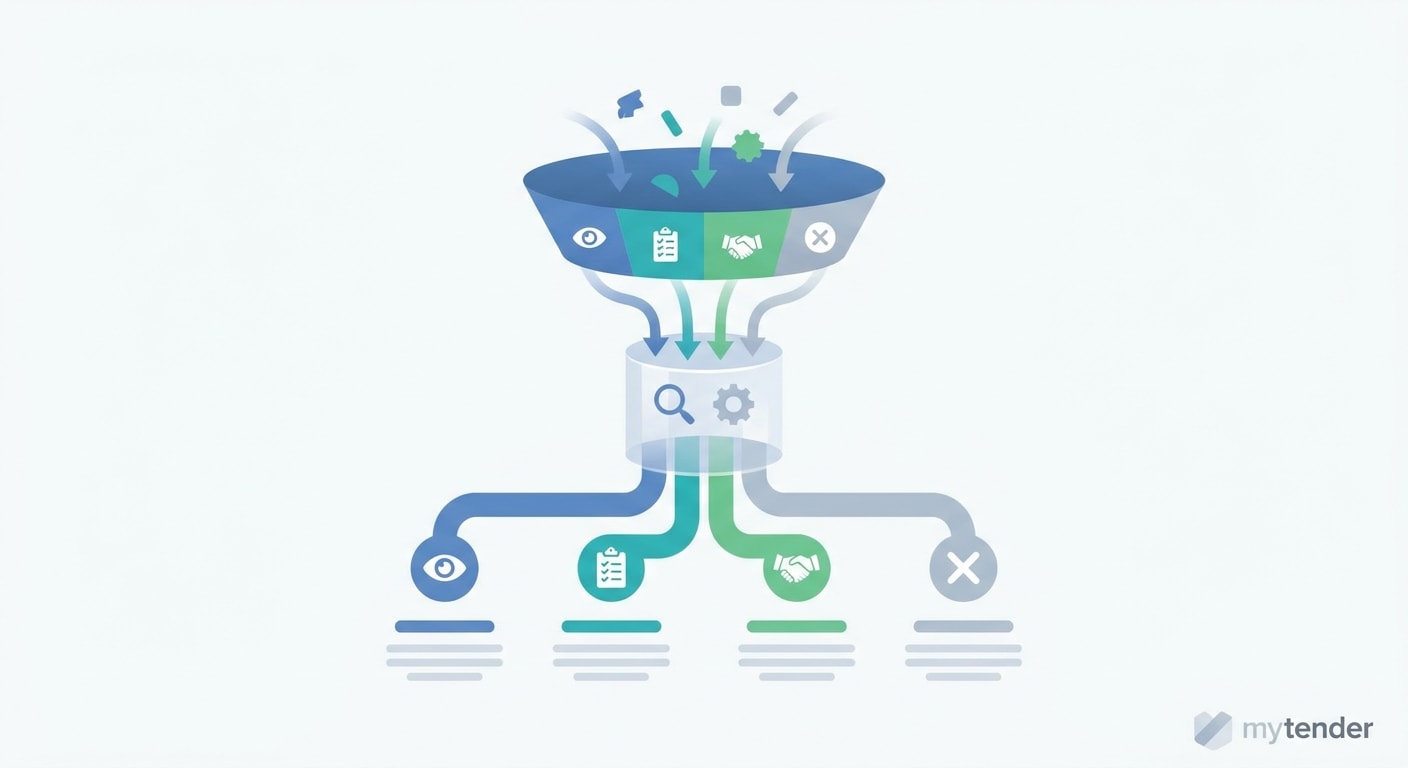
Procurement transparency funnel showing early notices, tracking decisions, bid qualification and final submission choices
The new signals suppliers should watch
Not every procurement notice deserves the same attention.
A strong bid capacity process separates signals into useful categories. That prevents the team from treating every update like an urgent tender.
Pipeline notices
Pipeline notices can show future procurements before the formal competition starts. For suppliers, they are useful because they create time to prepare.
That preparation should be proportionate.
A high-fit, high-value pipeline notice might justify buyer research, internal account planning, evidence preparation and early partner conversations. A weak-fit notice might only need tagging and light monitoring.
The mistake is to put every pipeline notice into the same follow-up bucket.
Preliminary market engagement
Market engagement gives suppliers a chance to understand the buyer's thinking before the tender is locked.
It can also become a time sink.
If your team attends every webinar, answers every survey and joins every supplier day without a qualification filter, you are not doing strategy. You are doing procurement tourism.
Market engagement is worth deeper attention when you can shape the requirement, test buyer priorities, understand risk, or decide early that the opportunity is not for you.
Tender notices
Tender notices remain the main decision point, but they should not be the first time you think about strategic opportunities.
By tender notice stage, your process should be quick:
- confirm the scope matches what you expected
- check the scoring model
- test deadline and resource fit
- validate price and margin logic
- decide whether to bid, no-bid, or hold for clarification
If the team is starting buyer research from scratch at this stage, the early signals were wasted.
Transparency and contract award notices
Award information helps you understand buyer behaviour and competitor patterns without naming competitors in your content, proposals or internal strategy decks where it is not needed.
You can still learn from the shape of awards:
- contract values
- lot structures
- buyer priorities
- award timing
- route to market
- incumbent stability
- repeat purchasing patterns
That information helps future bid decisions. It also helps you avoid wasting time on buyers whose procurement routes rarely fit your business.
Contract performance notices
Performance information matters because it can show where buyers care most about delivery risk.
If a public body is publishing performance measures around response times, service availability, complaints, carbon, payment, mobilisation or contract governance, suppliers should read that as a clue.
The clue is not "copy the KPI into the bid". The clue is "this is what the buyer will worry about when choosing a supplier".
Payment transparency
Payment information is easy to overlook. Do not.
Late payment, payment reporting and significant payment publication can affect cash flow planning, risk appetite and contract attractiveness. For SMEs especially, a contract that looks profitable on paper can become painful if payment processes are slow, disputed or admin-heavy.
Bid capacity is not just writing capacity. It is business capacity.
If a tender will stretch cash, operations, mobilisation or account management, the bid decision needs to know that before the team spends 40 hours writing.
Build a three-level opportunity system
The simplest way to handle more transparency is to stop using one pipeline list.
One list becomes messy fast. Everything looks equally alive. People ask for updates on opportunities that are not real yet. Bid managers waste time explaining why something is being watched but not worked.
Use three levels instead.

Three-level opportunity system for bid capacity: watch, prepare and bid
Level 1: Watch
Watch opportunities are relevant enough to monitor, but not strong enough to consume meaningful time.
Typical examples:
- possible future contracts in a target sector
- buyer activity that may become relevant later
- low-detail pipeline notices
- frameworks where the route is still unclear
- awards that help market mapping but do not need action
The rule for Watch is simple: no writing, no meetings, no internal chasing unless a trigger changes.
Add the opportunity to your tracking system. Capture the buyer, category, likely timing, source link and reason for watching. Then move on.
Level 2: Prepare
Prepare opportunities justify light, focused pre-bid work.
This is where transparency becomes valuable. You are not writing the tender response yet. You are reducing future scramble.
Prepare work might include:
- reading prior notices
- checking the buyer's current supplier arrangements
- mapping likely decision-makers and stakeholders
- preparing two or three relevant case studies
- reviewing accreditations and policies
- identifying delivery risks
- checking whether partners or subcontractors are needed
- drafting likely clarification questions
- building a rough price logic
Put a time cap on this stage. Two to five hours is often enough for a medium-value opportunity. For strategic contracts, it may be more.
The point is to prepare just enough to make the eventual bid/no-bid decision faster and better.
Level 3: Bid
Bid opportunities have passed qualification. They deserve proper writing capacity.
At this point, the team needs a response plan, owners, evidence, review dates, pricing inputs and submission checks.
The Bid level should be protected. If too many weak opportunities reach this stage, the whole system fails.
A good rule: moving from Prepare to Bid should require a named owner and a written reason.
Not a vibe. A reason.
Use a bid capacity score before a bid/no-bid score
Most teams have some kind of bid/no-bid framework. Fewer have a capacity score.
That is a gap.
A tender can be strategically attractive and still arrive at the wrong time. If the team is already handling two priority submissions, a renewal, three clarification sets and a framework mini-competition, adding one more bid may reduce the quality of everything.
Capacity needs its own score.
Use five questions:
- Do we have the people to write this properly?
- Do we have the evidence ready, or can we get it without drama?
- Can subject matter experts support it before the deadline?
- Can pricing, legal and operations review it properly?
- Will bidding this damage a higher-priority opportunity?
Score each from 1 to 5. Anything under 15 needs a senior decision before the team commits.
This is not bureaucracy. It is honesty.
Bid teams are often praised for heroics, then blamed when quality drops. A capacity score makes the trade-off visible before the damage is done.
How to read pipeline notices without overreacting
Pipeline notices are useful because they create time.
They are dangerous because they can create false urgency.
A pipeline notice is not a tender. It may change. It may be delayed. It may be bundled into a framework. It may be split into lots. It may disappear into a different route to market.
Your response should be staged.
First, classify the fit:
- core fit: directly aligned to your strongest offer
- adjacent fit: plausible, but needs evidence or partner support
- weak fit: interesting market information, not a likely bid
Second, classify the value:
- strategic: opens a target buyer, sector, geography or reference
- commercial: attractive margin or contract size
- defensive: protects an existing relationship or framework position
- low value: useful to know, unlikely to justify preparation
Third, set the next action:
- monitor only
- research buyer
- prepare evidence
- attend market engagement
- schedule account planning
- ignore unless tender notice appears
That final option matters. Ignoring something deliberately is better than half-tracking it forever.
Turn performance notices into evidence planning
Contract performance notices can help suppliers prepare stronger evidence.
If buyers publish or reference performance measures, those measures tell you what proof they may trust. For example:
- If response times are prominent, prepare time-stamped service data.
- If complaints matter, prepare complaint reduction evidence and root-cause examples.
- If mobilisation has been difficult, prepare transition plans and first-90-day controls.
- If carbon or waste appears in reporting, prepare measured environmental outcomes.
- If payment and subcontractor treatment are visible, prepare supply chain payment controls.
This is where bid capacity and bid quality meet.
You do not need to draft the answer early. You need the right evidence ready so drafting does not become a scavenger hunt.
Most bid delays are not caused by writing. They are caused by missing proof.
The writer knows what they want to say. The problem is finding the audit result, project metric, client quote, mobilisation timeline, KPI report, safety figure or social value outcome that makes the answer credible.
Transparency gives you clues about which proof to prepare.
Protect the bid library from becoming a dumping ground
More transparency can make the bid library worse if nobody controls it.
People start saving everything: old notices, award summaries, buyer notes, policies, portal screenshots, framework documents, draft answers and half-finished case studies. Six months later, nobody trusts the library because nobody knows what is current.
A bid library should help capacity, not consume it.
For 2026, organise evidence around decisions and scoring themes:
- buyer insight
- sector proof
- mobilisation
- contract management
- performance improvement
- social value
- sustainability
- risk and compliance
- pricing assumptions
- lessons learned
Each item should have an owner, date, source and reuse note.
The reuse note is the important bit. It should say when the evidence is suitable and when it is not.
A case study from a single-site cleaning contract might be perfect for a small local authority facility. It may be weak for a multi-site integrated FM tender. A construction project with excellent social value outcomes may not prove CDM competence. A strong software implementation may not prove public sector data migration at scale.
Good bid libraries prevent lazy reuse.
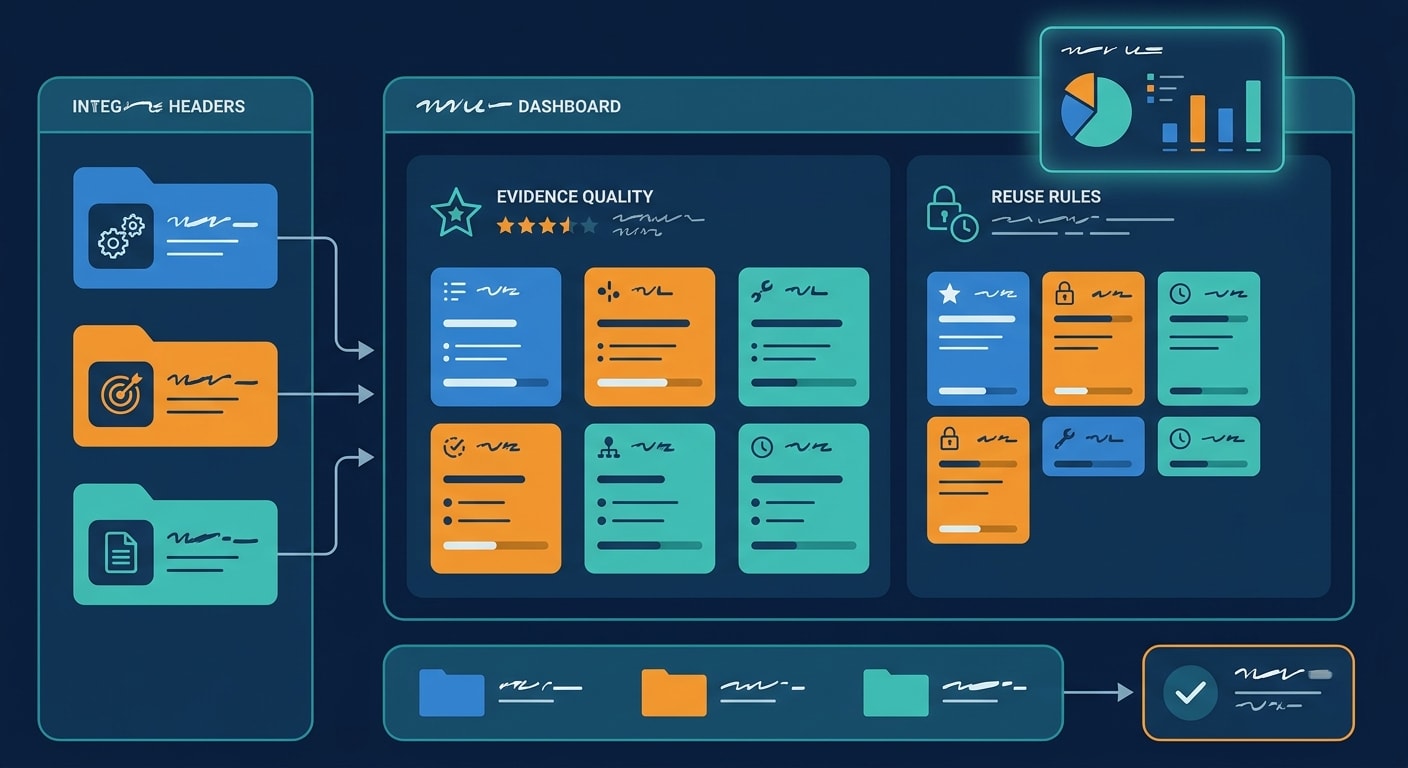
Bid library organised by scoring themes, evidence quality and reuse rules
Make the commercial decision earlier
Bid capacity is often treated as a writing issue. It is usually a commercial issue first.
The team says, "Can we write this by Friday?" when the better question is, "Would we actually want to win this?"
That question should be asked earlier now.
Transparency can show warning signs before the tender lands:
- contract values that do not match the likely service requirement
- lots that are too broad or too narrow
- geography that creates delivery drag
- payment terms that strain cash flow
- performance demands that exceed available margin
- incumbent arrangements that look hard to displace
- buyer behaviour that suggests heavy admin for low return
None of these automatically means no-bid.
They do mean the commercial owner should be involved before the bid team starts writing.
A tender is not free because the documents are free. Every bid uses capacity that could be spent somewhere else.
Give accidental bid writers a simpler rule
Not every organisation has a mature bid function.
In many SMEs, the person dealing with tenders is also the sales director, marketing lead, operations manager or founder. They do not need a complex governance model. They need a rule that stops them losing two evenings to the wrong opportunity.
Use this:
If we cannot explain why we can win in five sentences, we should not start writing.The five sentences are:
- This buyer needs [specific outcome].
- We are a strong fit because [relevant proof].
- The main risk is [risk], and we can control it by [method].
- The contract is worth bidding because [commercial or strategic reason].
- We can submit a strong response by the deadline because [capacity reason].
If those sentences are vague, the bid is not ready.
That does not mean abandon it forever. It may move to Watch or Prepare. But it should not consume full writing time yet.
What AI can and cannot fix
AI can help with bid capacity. It can summarise notices, extract deadlines, compare requirements, draft compliance matrices, suggest clarification questions and organise evidence.
That is useful.
It does not replace judgement.
The risky version of AI is using it to make every opportunity feel writable. If a tool can produce a decent first draft quickly, teams may say yes to more bids than they should. That creates the same old capacity problem with shinier formatting.
The better use is to make qualification sharper.
AI can help you answer:
- what has changed since the last notice?
- what evidence does this tender require?
- which sections look high effort?
- where are the compliance traps?
- what buyer priorities appear repeatedly?
- which previous case studies might fit?
That saves time before the bid decision, not just during drafting.
Tools like mytender.io are most useful when they help teams connect opportunity tracking, evidence and response quality. The point is not to write more bids for the sake of it. The point is to write the right bids with less chaos.
A practical weekly rhythm
A transparency-led capacity process does not need to be heavy.
For most teams, a weekly rhythm is enough.
Monday: review new signals
Check new pipeline notices, market engagement updates, tender notices, framework activity and relevant contract awards.
Sort each into Watch, Prepare, Bid or Ignore.
Do not let this become a general browsing session. Use saved searches and sector filters.
Tuesday: prepare evidence for priority opportunities
For anything in Prepare, identify the evidence gaps.
Do you need an updated case study? A mobilisation example? A KPI extract? A social value outcome? A current accreditation? A named project lead?
Assign evidence work before the tender lands.
Wednesday: review live bid capacity
Look at live submissions and ask whether the team can actually deliver them properly.
If capacity is tight, escalate early. Reduce scope, bring in support, move deadlines, or no-bid lower-priority work.
Do not wait until the final review to admit the answer is undercooked.
Thursday: update buyer and sector intelligence
Capture what you learned from notices, awards, clarification questions, feedback and published performance information.
Keep this short. The goal is reusable insight, not a research essay.
Friday: clean the pipeline
Remove stale opportunities. Downgrade weak ones. Confirm next actions.
A clean pipeline is a kindness to next week's version of your team.
The metrics that matter
If you want to know whether your capacity process is working, measure behaviour.
Useful metrics include:
- percentage of opportunities rejected before full tender review
- time spent in Watch and Prepare stages
- number of bids no-bid after tender release
- average days between first signal and bid decision
- live bids per writer or proposal lead
- evidence gaps found during drafting
- win rate by source stage
- reasons for no-bid
- post-submission quality issues
Do not obsess over volume.
A team that writes fewer bids and wins more revenue is healthier than a team that submits constantly and celebrates activity.
The most important metric is this: how often did we make the right decision early enough to protect quality?
Common mistakes to avoid
The first mistake is treating every notice as an opportunity. Some notices are only market intelligence.
The second is letting sales enthusiasm override evidence. If the team cannot prove fit, the bid will not become strong just because the contract looks attractive.
The third is preparing too much too early. Pre-bid work should reduce future uncertainty, not become a shadow tender response.
The fourth is ignoring operational capacity. Winning a contract your delivery team cannot mobilise properly is not success. It is a future contract management problem.
The fifth is failing to learn from no-bids. A no-bid reason should improve the next decision. If the same poor-fit tenders keep reaching the writing stage, the filter is not working.
A simple template for your next pipeline review
Use this for each opportunity:
Opportunity: buyer, title, source, likely date and estimated value. Stage: Watch, Prepare, Bid or Ignore. Fit: core, adjacent or weak. Why we can win: one specific reason, supported by evidence. Main concern: the biggest delivery, commercial or evidence risk. Capacity impact: estimated hours and named owner. Next action: one action with a deadline. Stop trigger: what would make us downgrade or no-bid.The stop trigger is powerful. It gives the team permission to walk away when facts change.
Without it, opportunities drift forward because nobody wants to be the person who kills them.
Where this fits in the wider bid strategy
Bid capacity planning sits upstream of tender writing.
It affects win rate because it decides which opportunities get your best thinking. It affects morale because it prevents constant deadline panic. It affects commercial performance because it stops low-fit work from crowding out better contracts.
The Procurement Act's transparency changes do not remove the need for judgement. They make judgement more important.
Suppliers now have more information earlier. The winners will use it to make better choices, not just bigger spreadsheets.
Final thought
The most mature bid teams in 2026 will look calmer from the outside.
Not because they have less to do. Because they have better rules for what deserves attention.
They will watch more intelligently, prepare more selectively and bid more deliberately. They will use transparency to reduce panic, not increase it.
That is the real capacity advantage.
If you want to see live public sector opportunities matched to your sector, the Tender Finder is free to use. Start there, then be ruthless about which opportunities deserve the team's best hours.
Tags
Ready to Transform Your Tender Writing?
See how MyTender's AI can help you write winning tenders in a fraction of the time.