

AI-Powered Tender Writing: How Automation is Transforming Procurement in 2026
Discover how artificial intelligence is revolutionising tender writing and procurement processes in 2026. From predictive analytics to automated workflows, explore the technologies reshaping how organisations win contracts.
Evie
PA & Office Admin at mytender.io
AI-Powered Tender Writing: How Automation is Transforming Procurement in 2026
The procurement landscape is experiencing its most significant transformation in decades. Artificial intelligence has moved from experimental novelty to essential infrastructure, fundamentally changing how organisations approach tender writing, supplier evaluation, and contract management. In 2026, AI-powered tender writing isn't just a competitive advantage—it's rapidly becoming table stakes.
This comprehensive guide explores how automation is reshaping procurement, the practical applications of AI in tender writing, and what organisations need to know to stay competitive in an increasingly digital marketplace.
The AI Revolution in Procurement: Beyond the Hype
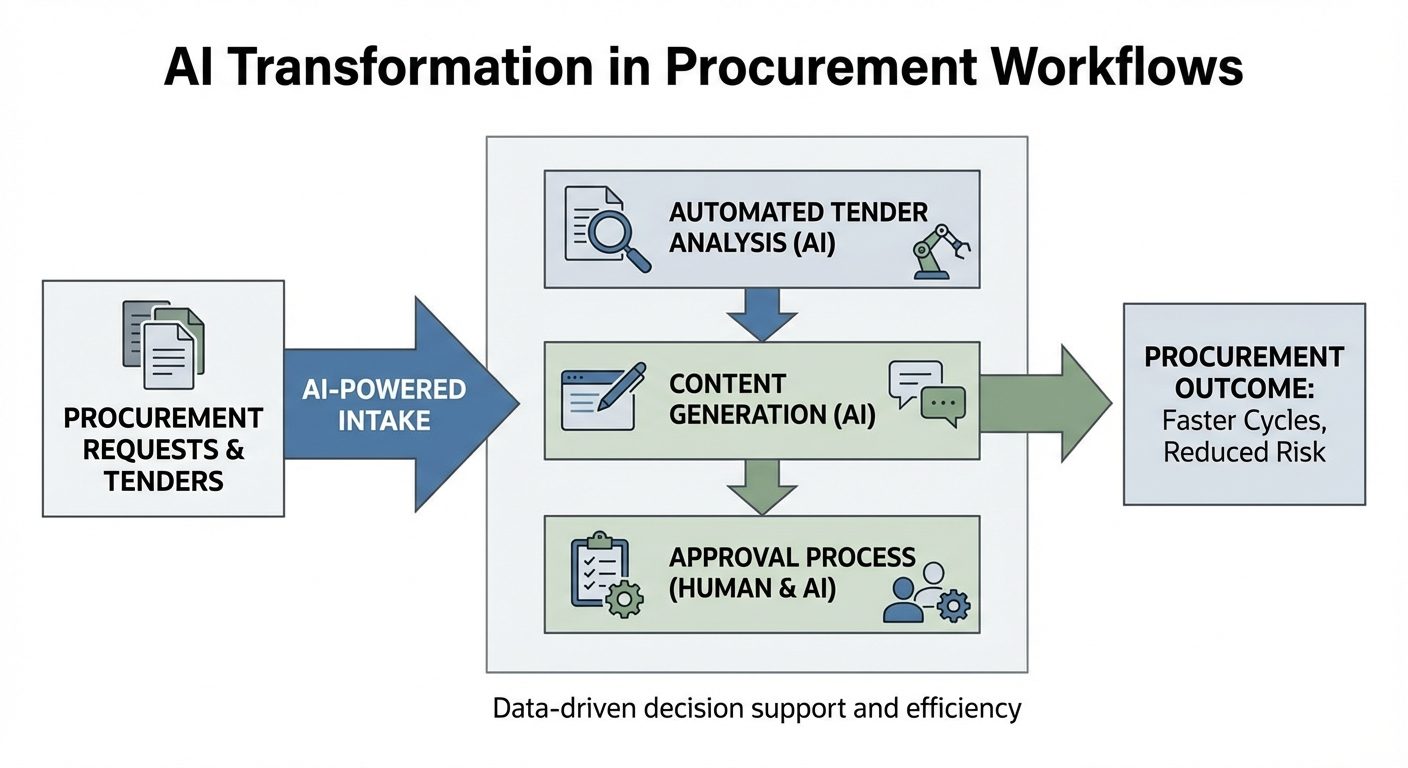
AI transformation in procurement workflows
The integration of AI into procurement represents more than incremental improvement. We're witnessing a fundamental shift from reactive, administrative processes to proactive, strategic operations. According to recent industry analysis, organisations implementing AI-native procurement platforms are seeing cycle time reductions of 40-60% alongside significant improvements in win rates and proposal quality.
What makes 2026 different from previous years of AI discussion? The technology has matured beyond simple automation of repetitive tasks. Modern AI systems now offer explainable decision-making, governable processes, and secure architectures that meet enterprise compliance requirements. The emphasis has shifted from "AI can do this" to "how do we implement AI responsibly and effectively?"
The Strategic Imperative
Chief Procurement Officers increasingly report that their role has evolved from cost control to strategic value creation. AI enables this transformation by handling routine tasks that previously consumed 60-70% of procurement team time. This frees professionals to focus on relationship building, strategic sourcing, and innovation.
The competitive landscape reflects this shift. Organisations still relying on manual tender processes find themselves at a measurable disadvantage. The time required to research requirements, draft responses, gather evidence, and coordinate internal stakeholders creates bottlenecks that AI-enabled competitors simply don't face.
How AI is Transforming Tender Writing Workflows
The practical applications of AI in tender writing span the entire procurement lifecycle. Understanding these capabilities helps organisations identify where automation delivers maximum value.
Intelligent Document Analysis
Modern AI systems excel at parsing complex tender documents, identifying requirements, and extracting evaluation criteria. Natural language processing algorithms can analyse RFPs and ITTs to:
- Identify mandatory versus desirable requirements
- Extract scoring criteria and weightings
- Flag ambiguous language requiring clarification
- Cross-reference requirements against previous submissions
- Highlight compliance obligations and certifications needed
This analysis happens in minutes rather than hours, providing procurement teams with structured requirement frameworks before they begin drafting responses. The accuracy of AI document analysis has improved dramatically, with enterprise systems now achieving 95%+ precision in requirement extraction.
Automated Content Generation
AI-powered content generation represents one of the most visible applications in tender writing. However, the sophistication extends far beyond simple template filling. Advanced systems now:
- Generate tailored responses based on specific client contexts
- Adapt tone and style to match tender requirements
- Incorporate relevant case studies and evidence automatically
- Maintain consistency across multi-section proposals
- Ensure compliance with word limits and formatting requirements
The key to effective AI content generation lies in training and context. Systems like mytender.io learn from an organisation's knowledge base, previous successful submissions, and industry best practices to produce genuinely relevant content rather than generic boilerplate.
Predictive Analytics and Win Probability
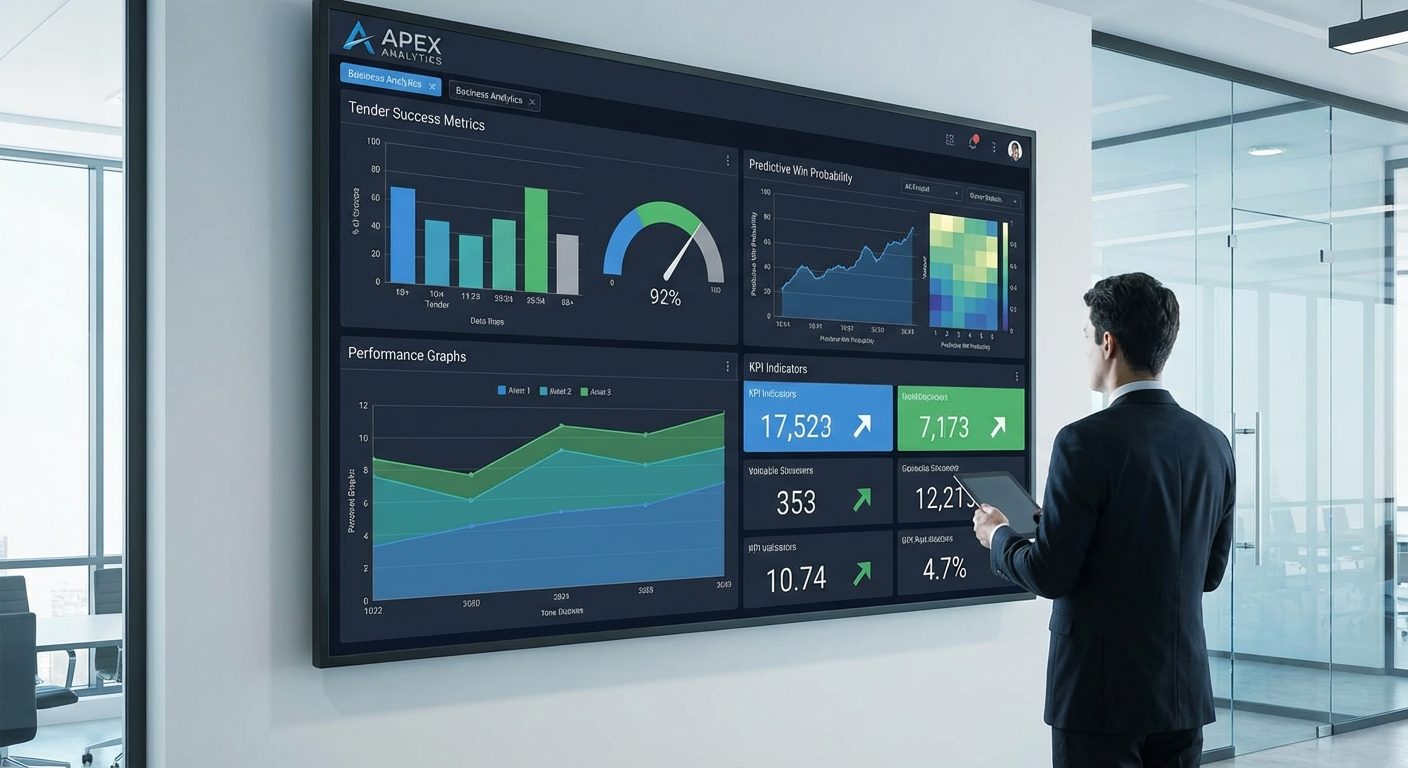
Predictive analytics dashboard for tender success
One of AI's most powerful capabilities in procurement is predictive analysis. By analysing historical tender data, organisations can now:
- Assess win probability before committing resources to a bid
- Identify the factors most strongly correlated with success
- Benchmark proposed solutions against competitors
- Optimise resource allocation across multiple opportunities
- Predict which evaluation criteria will carry greatest weight
This data-driven approach transforms bid/no-bid decisions from gut feelings to informed strategic choices. Organisations report that improved opportunity selection alone delivers ROI on AI investments, even before considering efficiency gains in actual proposal development.
Real-Time Collaboration and Version Control
AI systems increasingly incorporate intelligent workflow management that coordinates complex team collaboration. Features include:
- Automated task assignment based on expertise and availability
- Real-time conflict detection when multiple contributors edit overlapping sections
- Version control with intelligent merge capabilities
- Progress tracking against submission deadlines
- Automated escalation of bottlenecks and blockers
These capabilities address one of tender writing's most persistent challenges: coordinating contributions from subject matter experts across technical, commercial, legal, and operational domains.
The Technology Stack: What Powers AI Tender Writing
Understanding the underlying technologies helps organisations evaluate solutions and set realistic expectations. Modern AI tender writing platforms typically integrate several distinct but complementary technologies.
Natural Language Processing (NLP)
NLP forms the foundation of document analysis and content generation. Recent advances in large language models have dramatically improved systems' ability to understand context, nuance, and domain-specific terminology. Enterprise NLP systems now handle:
- Semantic search across historical proposals and knowledge bases
- Entity extraction (requirements, deadlines, contact details)
- Sentiment analysis of client communications
- Automatic summarisation of lengthy documents
- Translation across multiple languages while maintaining technical accuracy
Machine Learning and Pattern Recognition
Machine learning algorithms identify patterns in successful tender submissions, enabling systems to recommend approaches with higher win probability. Applications include:
- Requirement-response matching based on previous successful bids
- Optimal response length prediction for different question types
- Identification of commonly requested evidence and certifications
- Recognition of evaluator preferences based on feedback history
- Anomaly detection to flag unusual or risky tender terms
Knowledge Graphs and Semantic Understanding
Advanced AI platforms build knowledge graphs that capture relationships between concepts, projects, case studies, and capabilities. This semantic understanding enables more intelligent content retrieval and generation, ensuring responses demonstrate genuine understanding rather than keyword matching.
Integration and Orchestration
The practical value of AI depends on seamless integration with existing systems. Modern platforms connect with:
- CRM systems for client intelligence
- Document management for case studies and credentials
- Project management tools for capacity planning
- Compliance databases for certifications and policies
- Collaboration platforms for team coordination
This integration eliminates manual data transfer and ensures AI systems work with current, accurate information.
Implementing AI in Your Procurement Process
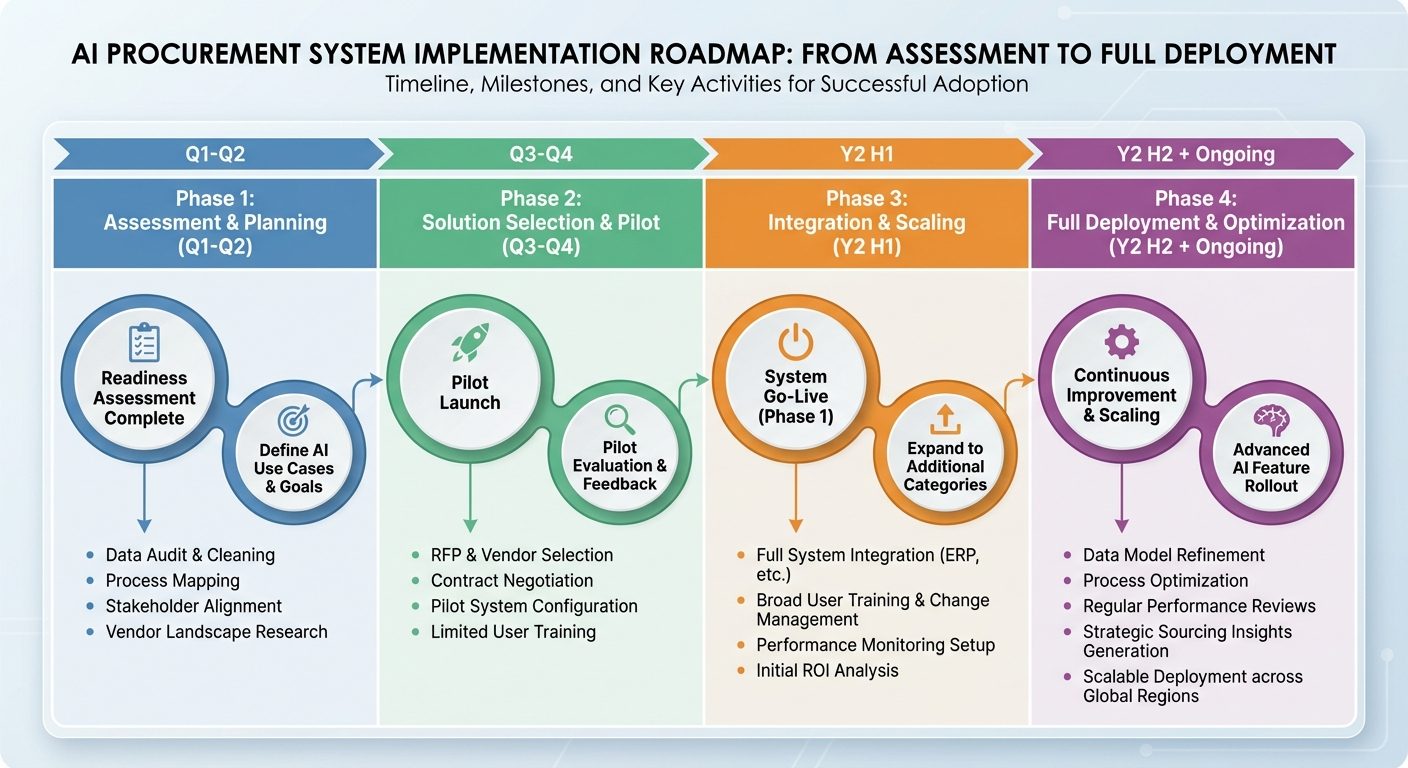
Implementation roadmap for AI procurement systems
Successful AI implementation requires more than selecting software. Organisations achieving best results follow structured approaches that balance technology deployment with change management and skill development.
Assessment and Planning
Begin by mapping current tender writing processes to identify pain points and opportunities. Key questions include:
- Which manual tasks consume most team time?
- Where do quality issues most frequently occur?
- What information is difficult to access or reuse?
- How long does a typical tender response require?
- What percentage of bids progress to detailed submission?
- How do win rates compare to industry benchmarks?
This assessment establishes baseline metrics for measuring AI impact and helps prioritise implementation focus areas.
Data Preparation and Knowledge Base Development
AI systems require quality training data to deliver value. Organisations should audit and prepare:
- Historical tender submissions (successful and unsuccessful)
- Case studies and project descriptions
- Technical specifications and methodologies
- Company policies and certifications
- Subject matter expert contact information
- Client intelligence and relationship history
Cleaning and structuring this information represents significant upfront work, but it's essential for AI effectiveness. Many organisations underestimate this requirement and face disappointment when systems trained on poor data deliver mediocre results.
Pilot Implementation and Iteration
Rather than attempting organisation-wide deployment, effective implementations typically start with controlled pilots. Select opportunities that:
- Allow meaningful testing without excessive risk
- Provide clear success metrics
- Include engaged team members willing to provide feedback
- Represent typical tender types and requirements
- Offer comparison with traditional approaches
Pilot phases reveal gaps in training data, highlight integration requirements, and identify necessary process adjustments before full-scale deployment.
Skills Development and Training
AI doesn't eliminate the need for skilled procurement professionals—it changes what skills matter most. Organisations should invest in developing:
- AI literacy: Understanding what systems can and cannot do
- Prompt engineering: Crafting effective queries and instructions
- Data quality management: Maintaining training data and knowledge bases
- Strategic analysis: Interpreting AI recommendations and making informed decisions
- Ethical oversight: Ensuring AI systems operate within appropriate guardrails
The most successful implementations treat AI as an augmentation tool that amplifies human expertise rather than a replacement for professional judgment.
The Strategic Advantages of AI-Powered Tender Writing
Beyond operational efficiency, AI-enabled tender writing delivers strategic advantages that reshape competitive positioning.
Scalability Without Proportional Resource Growth
Traditional tender writing scales linearly—more opportunities require proportionally more people. AI breaks this constraint. Organisations report handling 2-3x bid volumes with the same team size after implementing AI systems. This scalability proves particularly valuable for growth-focused businesses and those expanding into new markets.
Consistency and Quality Control
Human-produced tenders inevitably vary in quality based on author experience, time pressure, and information access. AI systems maintain consistent quality standards regardless of circumstances. They don't experience fatigue, forget to include relevant case studies, or miss requirements buried in appendices.
This consistency extends to compliance. AI systems trained on regulatory requirements and tender terms reduce the risk of non-compliant submissions that lead to disqualification.
Knowledge Capture and Institutional Memory
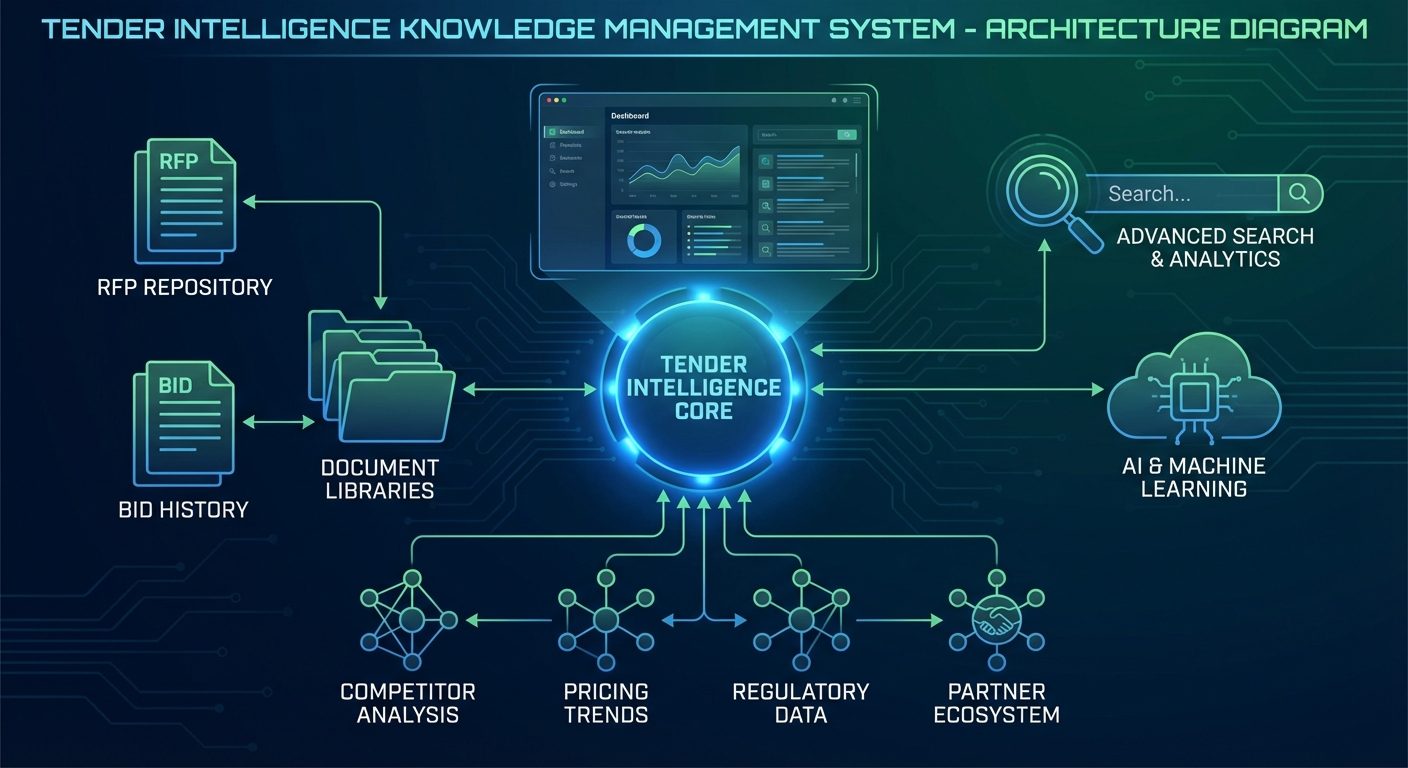
Knowledge management system for tender intelligence
One of procurement's persistent challenges involves knowledge loss when experienced team members leave or transition roles. AI systems capture institutional knowledge in structured, searchable formats. Every tender becomes a learning opportunity, with successful approaches automatically added to the knowledge base for future reference.
This capability proves particularly valuable in organisations with distributed teams or those experiencing turnover. New team members can access the collective wisdom of previous submissions rather than starting from zero.
Data-Driven Continuous Improvement
AI platforms generate detailed analytics on tender performance, enabling systematic improvement over time. Organisations can track:
- Which response strategies correlate with higher scores
- How different evaluators weight various criteria
- Which case studies resonate most strongly in different contexts
- Where competitors consistently outperform in specific areas
- Which capability gaps most frequently prevent bid progression
This feedback loop transforms tender writing from an art into an increasingly scientific discipline.
Addressing Common Concerns and Challenges
Despite clear benefits, organisations often hesitate to implement AI tender writing due to legitimate concerns. Understanding these challenges helps organisations address them effectively.
Quality and Authenticity
The most frequent concern involves whether AI-generated content sounds authentic and demonstrates genuine understanding. Early AI systems produced stilted, generic text that experienced evaluators could easily identify. Modern systems have largely overcome this limitation through advanced language models and proper training.
However, quality depends critically on implementation. AI systems trained on generic public data produce generic output. Systems trained on an organisation's specific knowledge, successful submissions, and domain expertise produce content that reflects genuine capability and understanding.
Best practice involves using AI for initial drafts and structure, with human experts reviewing, refining, and adding specific insights that demonstrate deep expertise. This hybrid approach combines AI efficiency with human authenticity.
Data Security and Confidentiality
Tender submissions often contain sensitive commercial information, client details, and proprietary methodologies. Organisations rightfully question whether cloud-based AI systems adequately protect this data.
Enterprise AI platforms address these concerns through:
- End-to-end encryption for data in transit and at rest
- Private deployment options including on-premise installation
- Role-based access controls and audit trails
- Data residency options to comply with regional requirements
- Contractual commitments regarding data use and retention
Organisations should thoroughly evaluate security architectures and ensure AI vendors meet the same standards applied to other business-critical systems.
Dependency and Skill Degradation
Some organisations worry that reliance on AI will erode tender writing capabilities over time. This concern has historical precedent—calculator availability has arguably reduced mental arithmetic skills. However, the analogy doesn't quite hold for professional tender writing.
AI handles routine, time-consuming tasks like requirement extraction, evidence retrieval, and initial draft generation. It doesn't reduce the need for strategic thinking, client understanding, or technical expertise. If anything, by freeing professionals from administrative burdens, AI enables them to focus on the higher-order skills that truly differentiate winning submissions.
Organisations can address skill degradation concerns through:
- Maintaining human review and refinement of all AI outputs
- Regular training on tender writing fundamentals
- Rotating team members through different proposal roles
- Encouraging critical evaluation of AI recommendations
Cost and Return on Investment
AI platform costs vary widely based on deployment model, feature set, and organisation size. Common pricing approaches include subscription fees, per-user licensing, or transaction-based charges. Organisations should evaluate total cost of ownership including:
- Platform licensing or subscription fees
- Implementation and integration costs
- Training and change management investment
- Ongoing maintenance and updates
- Potential infrastructure requirements
ROI calculations should consider both hard savings (reduced time requirements, lower opportunity costs) and strategic benefits (increased win rates, ability to pursue more opportunities, improved quality). Most organisations report ROI within 6-12 months of full deployment, with accelerating returns as teams become more proficient with the technology.
The Future of AI in Procurement: What's Next?
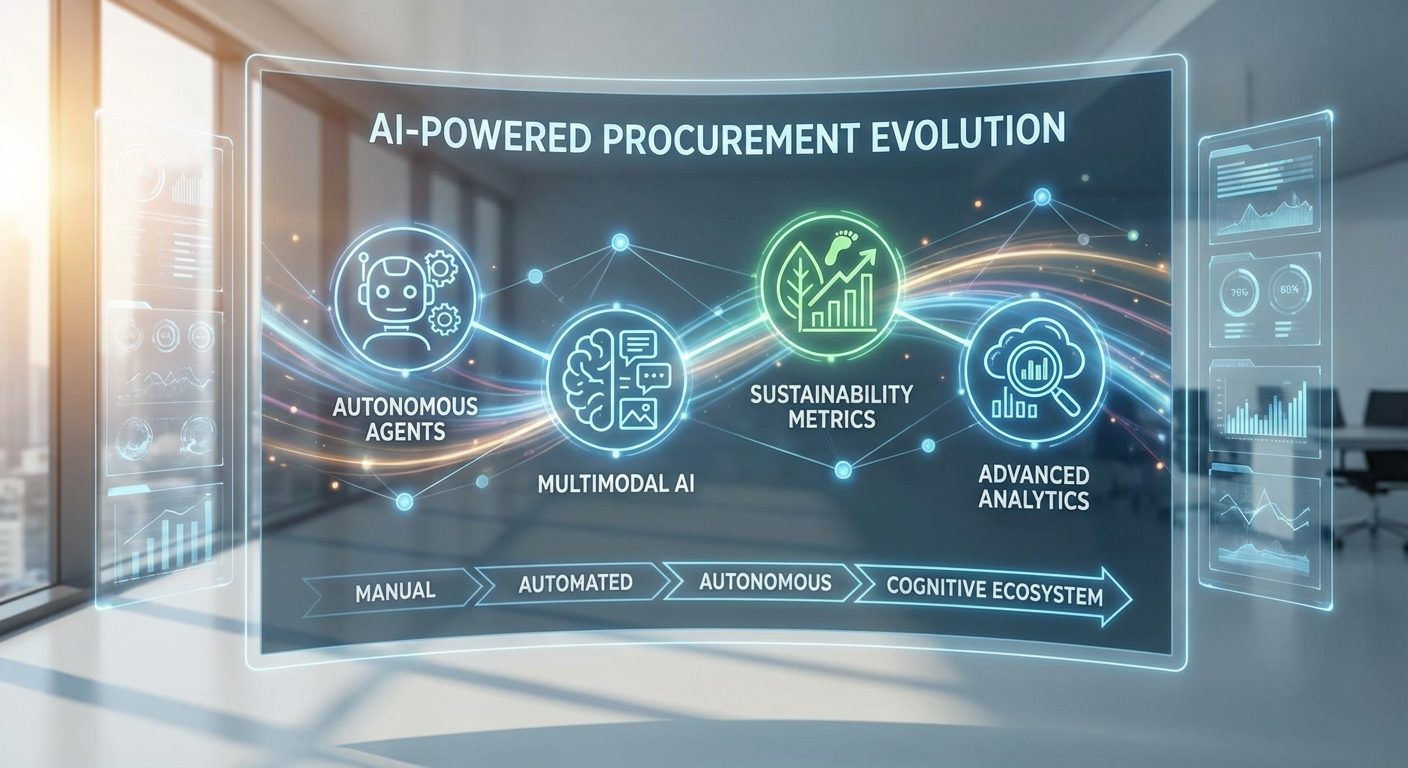
Future trends in AI-powered procurement
The rapid pace of AI advancement makes prediction challenging, but several trends appear likely to shape procurement in the coming years.
Multimodal AI and Visual Intelligence
Current AI systems primarily work with text. Emerging multimodal models can process and generate images, diagrams, charts, and other visual content. For tender writing, this capability enables:
- Automatic generation of process diagrams and workflows
- Visual representation of complex technical solutions
- Infographics that communicate key messages effectively
- Analysis of visual content in tender requirements
These capabilities will further reduce the time required to produce compelling, professional submissions.
AI-Powered Supplier Intelligence
Beyond tender writing, AI is transforming supplier evaluation and relationship management. Systems can now:
- Monitor supplier financial health and risk indicators in real-time
- Track supplier performance across multiple dimensions
- Identify optimal supplier combinations for complex procurements
- Predict supply chain disruptions before they occur
- Recommend diversification strategies to improve resilience
This intelligence feeds into tender responses, enabling more credible commitments around delivery, risk management, and supply chain resilience.
Autonomous Procurement Agents
The next frontier involves AI agents that can independently handle entire tender processes for routine, well-defined procurements. These agents would:
- Monitor tender publication feeds for relevant opportunities
- Assess strategic fit and win probability
- Generate complete proposal responses
- Coordinate internal approvals and reviews
- Submit completed tenders within deadlines
- Handle routine follow-up queries
Human oversight would focus on strategy, relationship management, and complex negotiations rather than administrative execution.
Enhanced Ethical and Sustainability Analysis
As ESG considerations become mandatory rather than optional in procurement, AI systems are evolving to:
- Assess supplier environmental performance and carbon footprints
- Verify social value commitments and track delivery
- Identify potential ethical concerns in supply chains
- Generate sustainability reports and impact assessments
- Recommend approaches that balance commercial and ethical objectives
These capabilities help organisations meet increasingly stringent procurement regulations while demonstrating genuine commitment to responsible business practices.
Practical Steps: Getting Started with AI Tender Writing Today
For organisations ready to explore AI-powered tender writing, practical first steps include:
1. Audit Your Current Process
Document how tender responses currently work, from opportunity identification through submission. Identify specific bottlenecks, quality issues, and resource constraints. This baseline provides context for evaluating AI solutions and measuring improvement.
2. Assess Your Data Readiness
Review available training data including previous submissions, knowledge assets, and documentation. Identify gaps and develop plans to structure information for AI consumption. Quality data preparation directly determines AI effectiveness.
3. Define Success Metrics
Establish clear measures for evaluating AI impact. Metrics might include cycle time reduction, win rate improvement, team capacity expansion, quality consistency, or cost per submission. Specific, measurable objectives help maintain implementation focus and demonstrate value.
4. Evaluate Solution Options
Research available AI platforms with particular attention to:
- Capabilities matching your specific requirements
- Integration with existing systems
- Security and compliance features
- Vendor track record and financial stability
- Total cost of ownership
- Support and training availability
Platforms like mytender.io specialise in tender writing and procurement, offering capabilities specifically designed for this domain rather than generic AI tools adapted for purpose.
5. Start Small and Learn
Begin with a focused pilot covering a subset of tender types or a single business unit. This approach limits risk while providing valuable learning. Gather feedback systematically, refine approaches, and expand gradually based on demonstrated value.
6. Invest in Change Management
Technology alone doesn't deliver transformation. Invest time in helping teams understand AI capabilities, address concerns, develop new skills, and adapt processes. The organisations achieving best results treat AI implementation as a change programme rather than purely a technology project.
Conclusion: Embracing the AI-Powered Future
The transformation of procurement through artificial intelligence represents opportunity rather than threat for forward-thinking organisations. AI doesn't replace the strategic thinking, relationship management, and deep expertise that characterise excellent procurement professionals. Instead, it eliminates the administrative burden that prevents those professionals from focusing on what they do best.
The competitive landscape in 2026 increasingly divides between organisations that have embraced AI-powered tender writing and those still relying on manual processes. The gap in capability, efficiency, and effectiveness will only widen as AI systems continue improving and organisations refine their implementation approaches.
For procurement teams, the question is no longer whether to adopt AI but how to implement it effectively. The organisations that invest in understanding the technology, preparing their data and processes, and developing their teams' AI literacy will find themselves well-positioned for success in an increasingly competitive marketplace.
The future of tender writing combines the best of human expertise with the power of artificial intelligence. Organisations that master this combination won't just survive the transformation—they'll lead it.
Tags
Ready to Transform Your Tender Writing?
See how MyTender's AI can help you write winning tenders in a fraction of the time.